Charging the 2022 Polestar 2 Long Range Dual Motor: What Owners Need to Know
The 2022 Polestar 2 Long Range Dual Motor pairs a 78 kWh (usable) NMC lithium-ion battery with dual electric motors producing 408 horsepower and a 4.5-second 0-60 mph time. EPA-rated range sits at 260 miles, though real-world highway driving at 70+ mph typically yields 220-240 miles, and cold-weather conditions can reduce that to 180-200 miles. Efficiency clocks in at 92 MPGe combined (36 kWh/100mi) per fueleconomy.gov.
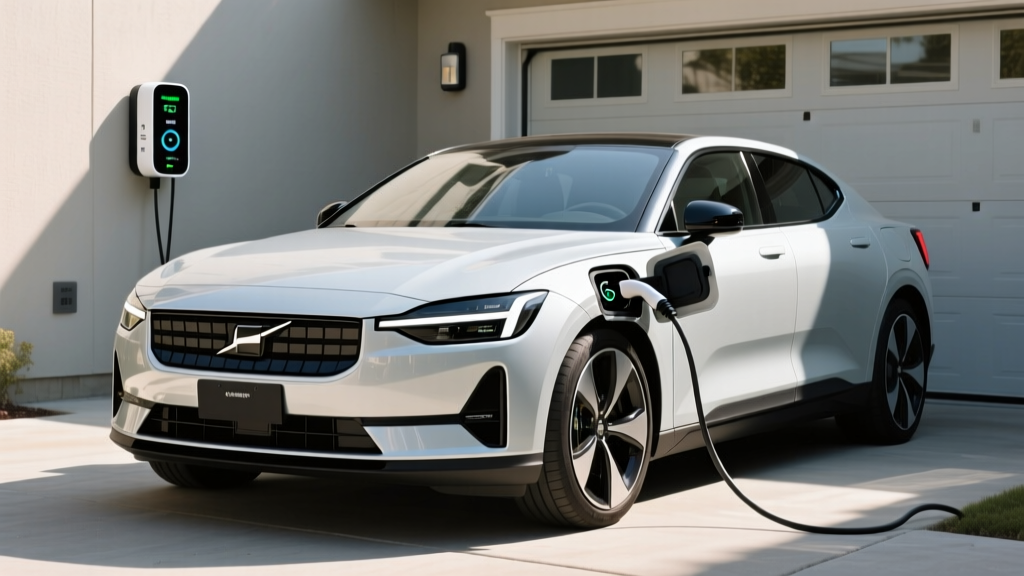
But owning this car means understanding how to charge it efficiently — at home, on road trips, and at public stations. The Polestar 2 uses a CCS1 connector for DC fast charging and a J1772 inlet for Level 2 AC charging (or NACS with the 2024+ adapter retrofit program). Below, we break down every charging scenario, the real costs, and the equipment you need.
kW (kilowatts) measures power — the rate at which electricity flows into your car. Think of it as the size of the pipe. kWh (kilowatt-hours) measures energy — the total amount of electricity stored in your battery. Think of it as the size of the tank. Your 2022 Polestar 2 has a 78 kWh battery and can accept up to 200 kW of charging power.
Charging Levels Explained: Speeds and Range Added Per Hour
Every EV owner deals with three charging tiers. Here's how each applies to the Polestar 2 Long Range Dual Motor:
| Level | Power (kW) | Miles of Range Added Per Hour | 10-80% Charge Time | Best Use Case |
|---|---|---|---|---|
| Level 1 (120V household outlet) | 1.2-1.4 kW | 3-4 miles/hr | ~45+ hours (impractical) | Emergency/top-up only |
| Level 2 (240V home/public) | 7.2-11 kW | 22-35 miles/hr | ~5-7.5 hours | Daily home charging |
| DC Fast Charging | Up to 200 kW peak | ~550+ miles/hr (at peak) | ~30 minutes (10-80%) | Road trips, rapid top-ups |
Real-world charging curve note: The Polestar 2 peaks near 200 kW only between roughly 10-30% state of charge. From 30-60%, it sustains around 120-150 kW. Above 80%, charge speed drops sharply to protect the battery — expect 50 kW or less, which is why we recommend charging to 80% on road trips and moving on rather than waiting for a full charge.
Home Level 2 Charger Installation: Requirements, Costs, and Upgrades
Installing a Level 2 home charger is the single most impactful upgrade for Polestar 2 ownership. Here's what the electrical work involves and what you'll spend.
Electrical Requirements
The 2022 Polestar 2's onboard charger accepts up to 11 kW on three-phase power (available in Europe) but is limited to approximately 7.2 kW on single-phase 240V/32A in North America. To max this out, you need:
- A dedicated 240V circuit with a 40-amp breaker (NEC code requires the circuit to be rated 125% of the continuous load, so a 32A charger requires a 40A breaker)
- 6 AWG copper wire (or 4 AWG aluminum) for runs up to ~50 feet
- A NEMA 14-50 outlet (if using a plug-in charger) or a hardwired connection
- GFCI protection — required by NEC 2020+ for EV outlets in garages
Panel Upgrade Considerations
Many older homes have 100A or 150A electrical panels. Adding a 40A dedicated circuit may require a panel upgrade to 200A, especially if you already run electric heating, a dryer, and an oven. A panel upgrade adds $1,500-$3,500 to your project. Have a licensed electrician perform a load calculation before committing.
| Component | Cost Range | Notes |
|---|---|---|
| Level 2 charger (hardware) | $350 - $700 | Smart Wi-Fi chargers cost more |
| Electrician labor (standard install) | $500 - $1,500 | Depends on wire run length and complexity |
| Permit and inspection | $50 - $250 | Varies by municipality |
| Electrical panel upgrade (if needed) | $1,500 - $3,500 | Required for older/smaller panels |
| Total (no panel upgrade) | $900 - $2,450 | Most homes with 200A panels |
| Total (with panel upgrade) | $2,400 - $5,950 | Older homes with 100A/150A panels |
Federal incentive: The IRS §30D-related Alternative Fuel Vehicle Refueling Property Credit (Form 8911) may cover up to 30% of home charger equipment and installation costs (capped at $1,000 for residential). Eligibility depends on census-tract requirements. Consult a tax professional and see irs.gov for current rules.
Connector Compatibility: CCS1, NACS, and Adapter Options
The 2022 Polestar 2 was built with a CCS1 (Combo) DC fast charging port and a J1772 AC charging inlet. Here's what that means for your charging options in 2026:
| Connector Type | Native on 2022 Polestar 2? | Network Access | Adapter Needed? |
|---|---|---|---|
| CCS1 | Yes (native) | Electrify America, EVgo, ChargePoint, Ionity | No |
| NACS (Tesla) | No | Tesla Supercharger network | Yes — CCS-to-NACS adapter (~$200-$250) |
| J1772 (Level 2 AC) | Yes (native) | Most public Level 2 stations, home chargers | No |
| CHAdeMO | No | Legacy Nissan/Mitsubishi stations | No adapter available — avoid |
Supercharger access in 2026: Polestar has confirmed Supercharger network access for CCS-equipped vehicles via a certified CCS-to-NACS adapter. Polestar owners can purchase the approved adapter and use the Tesla or Polestar app to initiate charging at Supercharger stalls. This dramatically expands your road-trip charging network, particularly in rural areas where Electrify America coverage is sparse.
Recommended Home Chargers for the Polestar 2
Since the Polestar 2's onboard charger maxes at ~7.2 kW (single-phase, 32A) in North America, you don't need a 48A charger — but buying a 40A or 48A unit gives you headroom for a future EV with a larger onboard charger. Here are three proven options:
ChargePoint Home Flex
- Power: Up to 12 kW (50A) — configurable down to 32A
- Connector: J1772 (25-foot cable)
- Smart features: Wi-Fi, app scheduling, Alexa integration, energy tracking
- Price: ~$550-$650
- Why it works: Adjustable amperage means you can set it to match your circuit exactly. UL-listed, NEMA 4 outdoor-rated.
Emporia Level 2 Smart Charger
- Power: Up to 11.5 kW (48A)
- Connector: J1772 (24-foot cable)
- Smart features: Wi-Fi, real-time energy monitoring, solar integration, load management
- Price: ~$350-$400
- Why it works: Best value smart charger. Ideal if you have solar panels and want to charge on excess production.
Tesla Wall Connector (with J1772 adapter)
- Power: Up to 11.5 kW (48A)
- Connector: NACS native — requires Tesla J1772 adapter for Polestar 2
- Smart features: Wi-Fi, OTA updates, power sharing between two units
- Price: ~$420 (charger) + ~$40 (adapter)
- Why it works: Sleek design, reliable hardware. Best if you plan to add a Tesla to your household later.
Safety and code note: All three chargers above are UL-listed. If installing outdoors, ensure the unit carries a NEMA 4 (or higher) rating for weather resistance. Your electrician must pull a permit and schedule an inspection — this protects your home insurance coverage and ensures code compliance.
Charging Cost Per Mile: Polestar 2 vs. Gas Equivalent
One of the strongest ownership arguments for the Polestar 2 is fuel cost savings. Here's what charging actually costs across different scenarios, benchmarked against a comparable gas sedan averaging 28 MPG combined on $3.50/gallon regular:
| Charging Scenario | Rate ($/kWh) | Cost Per Mile | Annual Cost (12,000 mi) |
|---|---|---|---|
| Home off-peak (utility time-of-use rate) | $0.09/kWh | $0.032/mi | $389 |
| Home standard rate | $0.16/kWh | $0.058/mi | $691 |
| Public Level 2 (ChargePoint, etc.) | $0.25-$0.35/kWh | $0.09-$0.13/mi | $1,080-$1,512 |
| DC Fast Charging (Electrify America, EVgo) | $0.35-$0.55/kWh | $0.13-$0.20/mi | $1,512-$2,376 |
| Gas equivalent (28 MPG, $3.50/gal) | — | $0.125/mi | $1,500 |
The bottom line: If you charge primarily at home on off-peak rates, the Polestar 2 costs roughly $300-$1,100 less per year to "fuel" than a comparable gas car. If you rely exclusively on DC fast charging, you may actually spend more than gas. Home charging access is the economic linchpin of EV ownership.
Public DC Fast Charging: Road-Trip Realities
On a road trip, the Polestar 2's 200 kW peak DC fast charging capability is solid but not class-leading. Here's what to expect at a 150+ kW station:
- 10-80% in approximately 30 minutes at a 150-200 kW charger
- 10-80% in approximately 40-45 minutes at a 50 kW CHAdeMO/CCS station
- Preconditioning: The Polestar 2 does not have a dedicated battery preconditioning toggle like some competitors. Navigate to a DC fast charger using the built-in Google Maps navigation, and the car will begin warming the battery automatically to optimize charge speed upon arrival. In cold weather (below 40°F), arriving without preconditioning can add 10-15 minutes to your charge time.
Network reliability tip: Electrify America and EVgo stations vary widely in uptime. Before a road trip, check PlugShare or A Better Routeplanner for recent station status reports. Tesla Superchargers (via adapter) tend to offer the most consistent uptime, which is why the CCS-to-NACS adapter is a worthwhile investment for frequent travelers.
Battery Longevity and Warranty
Polestar warranties the 2022 Polestar 2's high-voltage battery for 8 years or 100,000 miles, whichever comes first, with a capacity retention threshold of 70%. Real-world data from similar NMC packs (Volvo/Polestar share battery architecture) suggests typical degradation of 8-12% over 100,000 miles when following best practices:
- Keep daily charging to 80% state of charge (set this in the Polestar app)
- Avoid frequent DC fast charging when Level 2 is available
- Don't let the battery sit at 100% or below 10% for extended periods
- Precondition in cold weather before charging
Frequently Asked Questions
How much does it cost to install a home EV charger for the Polestar 2?
Expect $900-$2,450 for a standard Level 2 installation (charger + electrician + permit) if your electrical panel has spare capacity. If you need a panel upgrade from 100A to 200A, total costs can reach $2,400-$5,950. Always get a load calculation from a licensed electrician first.
How fast will each charging level add range to the Polestar 2?
Level 1 (120V) adds 3-4 miles per hour — only useful for overnight top-ups. Level 2 (240V, 32A) adds approximately 22-25 miles per hour, fully replenishing the battery in 8-10 hours. DC fast charging at 150+ kW can add up to 150+ miles in 15 minutes during the peak portion of the charge curve.
Which connector and charger is compatible with my 2022 Polestar 2?
Your car has a native CCS1 DC fast charging port and a J1772 AC inlet. Any J1772 Level 2 home charger works. For DC fast charging, use Electrify America, EVgo, or ChargePoint CCS stations. To access Tesla Superchargers, you need a certified CCS-to-NACS adapter (approximately $200-$250).
How much does charging the Polestar 2 cost per mile vs. a gas car?
At home on off-peak rates ($0.09/kWh), the Polestar 2 costs about $0.032 per mile — roughly 75% less than a 28 MPG gas car at $3.50/gallon ($0.125/mi). Even on standard home rates ($0.16/kWh), you'll save around 50%. Exclusive DC fast charging at $0.45/kWh pushes cost per mile to ~$0.16, which is slightly more than gas.
What electrical upgrades might I need for a home charger?
The most common upgrade is a panel replacement from 100A or 150A to 200A ($1,500-$3,500) if your existing panel lacks spare capacity for a 40A dedicated circuit. Other potential upgrades include replacing a Federal Pacific or Zinsco panel (known fire hazards), running new conduit for long wire runs, or adding a sub-panel if your garage is far from the main service panel.
Does the 2022 Polestar 2 qualify for the federal EV tax credit?
The 2022 Polestar 2 was eligible for up to $7,500 under the pre-IRA rules at the time of purchase. Under current IRS §30D rules for 2026, used Polestar 2 models may qualify for up to $4,000 under the pre-owned clean vehicle credit (30% of sale price, capped at $4,000) if purchased from a dealer, the sale price is under $25,000, and buyer income falls below $75,000 (single) / $150,000 (joint). Consult a tax professional for your specific eligibility.
Sources: EPA fueleconomy.gov, Polestar US Specifications, IRS Clean Vehicle Credits.