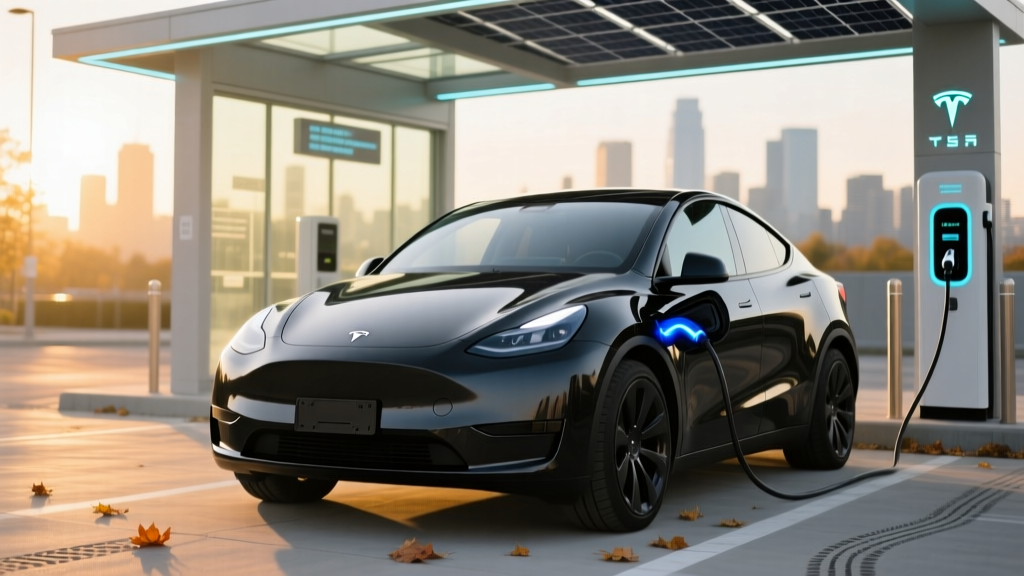
If you own or are considering a used 2022 Tesla Model Y Performance, understanding its real-world range and charging behavior is essential for daily driving and road trips alike. The EPA sticker says 303 miles, but actual range depends heavily on speed, temperature, and terrain. This guide breaks down exact charging speeds, home installation costs, connector compatibility, and per-mile energy costs so you can plan confidently.
2022 Model Y Performance: Range, Battery & Efficiency Specs
| Spec | Value |
|---|---|
| EPA Range | 303 miles |
| Battery Capacity (usable) | ~75 kWh (NMC chemistry) |
| EPA Efficiency | 122 MPGe (28 kWh/100 mi) |
| Peak DC Fast Charge Rate | 250 kW (V3 Supercharger) |
| 10–80% DC Fast Charge Time | ~27 minutes |
| Level 2 Charge Rate (max) | 11.5 kW (48A onboard) |
| 0–60 mph | 3.5 seconds |
| Horsepower | 456 hp (combined dual motor) |
| Battery/Drive Unit Warranty | 8 years / 120,000 miles |
| Original MSRP | ~$65,990 (before incentives) |
Charging Levels Explained: Speeds in kW and Miles Per Hour
EV charging is measured in kW (kilowatts), which represents power — the rate at which energy flows into the battery. The battery itself stores energy measured in kWh (kilowatt-hours). Think of kW as the width of the pipe and kWh as the size of the tank. Here's what each level delivers for a Model Y Performance:
| Charging Level | Voltage / Amperage | Power (kW) | Miles of Range Added Per Hour | Best For |
|---|---|---|---|---|
| Level 1 (120V outlet) | 120V / 12A | ~1.4 kW | ~3–4 mi/hr | Emergency / overnight trickle |
| Level 2 (240V home/public) | 240V / 48A | ~11.5 kW | ~37–44 mi/hr | Daily home charging |
| DC Fast Charging | 400V+ architecture | Up to 250 kW | ~1,000+ mi/hr (peak) | Road trips, rapid top-ups |
On a 240V / 48A Level 2 circuit, the 2022 Model Y Performance's onboard charger accepts up to 11.5 kW, adding a full ~75 kWh battery from 10% to 100% in roughly 7–8 hours. On a V3 Tesla Supercharger (250 kW peak), the 10–80% sprint takes approximately 27 minutes, though charge speed tapers significantly above 80% to protect the NMC cells.
Home Charger Installation: Electrical Requirements & Costs
Installing a Level 2 home charger is the single most impactful upgrade for EV ownership. For the Model Y Performance, you'll want a 240V circuit capable of delivering at least 40A (to yield ~9.6 kW) or ideally 60A (to yield the full 11.5 kW the car can accept).
Electrical Requirements
- Circuit: Dedicated 60A breaker (for 48A continuous draw — NEC requires circuits rated 125% above continuous load)
- Wire gauge: 6 AWG copper (or 4 AWG aluminum) for a 60A circuit
- Panel capacity: Minimum 200A main service recommended; older homes with 100A panels may require a panel upgrade ($1,500–$3,500)
- Permit: Required in most jurisdictions; typically $50–$200
- GFCI protection: NEC 2020+ requires GFCI for EV outlets; hardwired chargers often include built-in ground fault protection
| Cost Component | Low Estimate | High Estimate |
|---|---|---|
| Level 2 Charger Equipment | $350 | $700 |
| Electrician Labor (standard install, panel to garage <50 ft) | $600 | $1,500 |
| Permit & Inspection Fees | $50 | $200 |
| Panel Upgrade (if needed — 100A to 200A) | $1,500 | $3,500 |
| Total (no panel upgrade) | $1,000 | $2,400 |
| Total (with panel upgrade) | $2,500 | $5,900 |
Homes built after 2000 typically have 200A panels with spare breaker slots, making installation straightforward. If your home has a 100A panel or the run from panel to garage exceeds 50 feet, costs climb. Always get a licensed electrician to perform a load calculation before committing to a 60A circuit.
Connector Compatibility: NACS, CCS, and Adapter Options
The 2022 Model Y Performance was built with Tesla's proprietary connector, which in late 2022 was formally renamed the North American Charging Standard (NACS). This is the same connector used at all Tesla Superchargers and Destination Chargers.
| Connector Type | Native on 2022 Model Y? | Adapter Available? | Network Access |
|---|---|---|---|
| NACS (Tesla) | Yes — built in | Not needed | Tesla Supercharger, Destination Chargers |
| CCS1 | No | Tesla CCS Adapter (~$250) | Electrify America, EVgo, ChargePoint DC stations |
| CHAdeMO | No | Setec CHAdeMO adapter (~$400) | Limited; mostly legacy Nissan Leaf infrastructure |
| J1772 (Level 2 public) | No | Tesla J1772 adapter (included with car) | Public Level 2 stations, hotels, workplaces |
For road trips beyond the Supercharger network, the Tesla CCS adapter is a worthwhile $250 investment, unlocking thousands of Electrify America and EVgo stations. Tesla also includes a J1772 adapter in the glovebox for public Level 2 charging.
Cost to Charge: Per-Mile Economics vs. Gas
Charging cost depends heavily on where and when you plug in. Here are realistic $/kWh scenarios for a 2022 Model Y Performance (28 kWh/100 mi efficiency):
| Charging Scenario | Avg $/kWh | Cost to Add 100 Miles | Cost Per Mile |
|---|---|---|---|
| Home (off-peak utility rate) | $0.10 | $2.80 | $0.028 |
| Home (avg US residential rate) | $0.17 | $4.76 | $0.048 |
| Public Level 2 (ChargePoint, etc.) | $0.25–$0.35 | $7.00–$9.80 | $0.070–$0.098 |
| Tesla Supercharger (avg) | $0.28–$0.36 | $7.84–$10.08 | $0.078–$0.101 |
| Electrify America DC (peak) | $0.40–$0.48 | $11.20–$13.44 | $0.112–$0.134 |
| Gas equivalent (25 MPG, $3.50/gal) | — | $14.00 | $0.140 |
Even at the most expensive public DC fast chargers, the Model Y Performance costs less per mile than a comparable gas vehicle averaging 25 MPG. Home charging at off-peak rates is roughly 5x cheaper per mile than gasoline. According to fueleconomy.gov, the 2022 Model Y Performance achieves 122 MPGe combined, translating to annual fuel costs of approximately $600–$700 for 15,000 miles of mixed home and public charging.
Recommended Home Charging Equipment
Tesla Wall Connector (Gen 3)
- Power Output: Up to 11.5 kW (48A) on a 60A circuit
- Connector: NACS native — no adapter needed
- Cable Length: 24 feet
- Smart Features: Wi-Fi enabled, OTA firmware updates, power sharing between two units, load management
- Price: ~$475
- Best For: Tesla owners wanting seamless integration and max charge speed
ChargePoint Home Flex
- Power Output: Up to 12 kW (50A) on a 60A circuit; configurable down to 16A for smaller panels
- Connector: J1772 (use included Tesla adapter) or NACS version available
- Cable Length: 23 feet
- Smart Features: App scheduling, Alexa integration, flexible amperage dial
- Price: ~$699
- Best For: Multi-EV households or renters who may move and want flexibility
Emporia Vue Level 2 Charger
- Power Output: Up to 11.5 kW (48A) on a 60A circuit
- Connector: J1772 (Tesla adapter required)
- Cable Length: 24 feet
- Smart Features: Energy monitoring, solar integration, time-of-use scheduling
- Price: ~$399
- Best For: Budget-conscious buyers who want energy tracking and solar pairing
For a 2022 Model Y Performance owner, the Tesla Wall Connector is the clear default — native NACS plug, maximum 11.5 kW throughput, and no adapter fumbling in the cold. If you share the garage with a non-Tesla EV, the ChargePoint Home Flex's configurable amperage and dual-vehicle support make it the smarter pick.
Safety and Electrical Code Considerations
EV charging draws sustained high current for hours — this is fundamentally different from intermittent loads like a dryer or oven. Key safety requirements include:
- Dedicated circuit: Your Level 2 charger must be on its own dedicated breaker — never share a circuit with other appliances
- Continuous load derating: Per NEC Article 625, EV charging is classified as a continuous load, meaning the circuit must be rated at 125% of the charger's maximum draw (a 48A charger requires a 60A breaker)
- GFCI protection: Required for receptacle-based (plug-in) installations per NEC 2020; hardwired units typically have integrated ground-fault protection
- Outdoor rating: If installing outside, ensure the charger is NEMA 4 rated (rain/sleet resistant) — the Tesla Wall Connector and ChargePoint Home Flex both carry outdoor ratings
- Permit and inspection: Most jurisdictions require an electrical permit and post-installation inspection; skipping this can void homeowner's insurance coverage for electrical fires
Frequently Asked Questions
How much does it cost to install a home EV charger for a 2022 Model Y Performance?
Expect $1,000–$2,400 for a standard installation (60A circuit, <50 ft run from panel, no panel upgrade). If your home needs a 100A-to-200A panel upgrade, total costs can reach $2,500–$5,900. The Tesla Wall Connector itself costs ~$475.
How fast will each charging level add range to my Model Y Performance?
Level 1 (120V) adds roughly 3–4 miles per hour — essentially unusable for daily driving. Level 2 (240V/48A) adds 37–44 miles per hour, enough to fully replenish overnight. DC fast charging at a V3 Supercharger (250 kW peak) can add up to 175 miles in 15 minutes, though the charge curve tapers above 50–60% state of charge.
Which connector and charger is compatible with the 2022 Model Y Performance?
The 2022 Model Y uses NACS natively for both Level 2 and DC fast charging. For CCS1 stations (Electrify America, EVgo), you need the Tesla CCS adapter (~$250). A J1772 adapter (included with the vehicle) handles public Level 2 stations.
How much does charging cost per mile compared to gas?
Home charging at the US average residential rate ($0.17/kWh) costs approximately $0.048 per mile — about one-third the cost of gas at $3.50/gallon in a 25 MPG vehicle ($0.14/mile). Off-peak home rates ($0.10/kWh) drop this to under $0.03 per mile.
What electrical upgrades might I need for a Level 2 charger?
If your home has a 200A panel with available breaker spaces, you likely need only a new 60A breaker and a wire run to the garage. Homes with 100A service, full panels, or long distances between the panel and charger location may require a panel upgrade, subpanel installation, or trenching — each adding $1,000–$3,500 to the project.
What is the real-world highway range of the 2022 Model Y Performance?
While the EPA rates it at 303 miles, sustained highway driving at 70–75 mph in moderate weather typically yields 260–280 miles. Cold weather (below 30°F) can reduce this to 200–230 miles. Using seat heaters instead of cabin heat and preconditioning the battery before Supercharger stops can recover 10–15% of lost range.
Does the 2022 Model Y Performance qualify for any tax credits today?
As a used vehicle purchase, the 2022 Model Y Performance may qualify for the IRS §25E used EV credit — up to $4,000 or 30% of the sale price (whichever is lower), subject to buyer income caps ($75K single / $150K joint) and a dealer sale price below $25,000. The original $7,500 §30D new-vehicle credit is no longer available for this model year. Consult a tax professional for eligibility specifics.
The 2022 Model Y Performance remains one of the most capable electric SUVs on the road — 303 EPA miles, 250 kW peak charging, and 3.5-second 0–60 times. Pair it with a properly installed 60A Level 2 home charger and off-peak utility rates, and your per-mile energy cost drops to pennies. Plan your charging infrastructure before the car arrives, and every trip — daily commute or cross-country — becomes routine.