Quick Charging Profile: 2022 Tesla Model 3 Long Range
The 2022 Tesla Model 3 Long Range remains one of the most efficient EVs on the road, pairing an EPA-rated 358 miles of range with a ~75 kWh usable battery (NMC chemistry) and a peak DC fast-charge rate of 250 kW. Whether you're setting up a home charger, planning a road trip on Tesla's Supercharger network, or calculating your monthly electricity bill, understanding how this car actually charges — not just the spec-sheet numbers — is essential.
| Spec | Value |
|---|---|
| EPA Range | 358 miles (real-world highway ~300-320 mi; cold weather ~260-280 mi) |
| Battery Capacity | ~75 kWh usable (NMC) |
| Onboard Charger | 11.5 kW (48A) AC |
| Max DC Fast Charge | 250 kW peak (V3 Supercharger) |
| 10-80% DC Fast Charge | ~27 minutes (at V3 Supercharger) |
| Connector | NACS (native Tesla, no adapter needed for Superchargers) |
| EPA Efficiency | 132 MPGe combined / 25 kWh/100mi |
| 0-60 mph | 4.2 seconds |
Real-World Range Note: The EPA 358-mile figure assumes a mix of city and highway driving at moderate temperatures. Expect roughly 300-320 miles on sustained highway runs at 70+ mph, and 260-280 miles in sub-30°F weather due to battery resistance and cabin heating demands. Tesla's heat pump on the 2022 model helps, but cold still cuts range 15-25%.
Charging Levels Explained: How Fast Can You Add Miles?
The single most important distinction in EV charging is between kW (power — how fast energy flows) and kWh (energy — how much the battery stores). Think of kW as the flow rate of a hose and kWh as the size of the bucket. Your 2022 Model 3 Long Range has a ~75 kWh bucket. How fast you fill it depends on the hose.
| Level | Voltage | Max kW | Miles Added/Hour | Best Use Case |
|---|---|---|---|---|
| Level 1 (120V) | 120V / 12A | ~1.4 kW | ~4-5 mi/hr | Emergency / overnight trickle (adds ~40 mi in 10 hrs) |
| Level 2 (240V Home) | 240V / 48A | 11.5 kW | ~44 mi/hr | Daily home charging (full charge in ~7 hrs) |
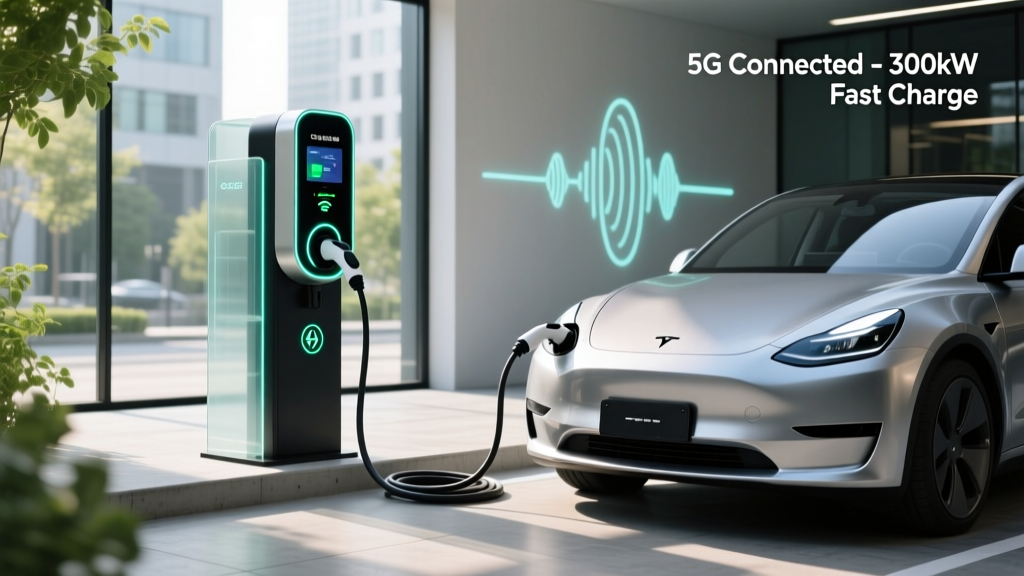
| DC Fast (V3 Supercharger) | 400V DC | 250 kW peak | ~1,000+ mi/hr (peak) | Road trips (10-80% in ~27 min) |
| DC Fast (V2 Supercharger) | 400V DC | 150 kW peak | ~600 mi/hr (peak) | Older Supercharger stations |
The 2022 Model 3 Long Range's onboard AC charger maxes out at 11.5 kW (48 amps). Even if you install a 60A or 80A Level 2 wall connector, the car will only accept 48A — so a 60A circuit with a 48A charger is the sweet spot for this vehicle. Going higher on the charger side won't speed things up, but it future-proofs for a next EV.
Home Charger Installation: Electrical Requirements and Costs
Charging at home is where EV ownership makes the most sense — you wake up every morning with a full battery, and electricity costs a fraction of gasoline. But installation isn't just plugging in a box. Here's what the 2022 Model 3 Long Range actually needs.
Electrical Requirements
To hit the Model 3's maximum 11.5 kW AC charge rate, you need a 240V / 60A dedicated circuit (the breaker is rated at 60A; continuous draw is limited to 80%, or 48A). This requires:
- A double-pole 60A breaker in your electrical panel
- 6 AWG copper wire (or 4 AWG aluminum) run from panel to charger location
- A NEMA 14-50 outlet (if using a plug-in charger) or hardwired connection
- A GFCI breaker if required by local code (NEC 2017+ generally requires it for outlets)
Panel Upgrade Reality
Many homes built before 2000 have 100A or 150A electrical panels. Adding a 60A EV circuit may push total load beyond the panel's capacity, especially if you have electric heating, an electric dryer, and an electric oven. An electrician will perform a load calculation to determine if your panel can handle it. If not, a panel upgrade to 200A typically costs $1,500-$3,000 before any EV wiring begins.
| Component | Cost Range | Notes |
|---|---|---|
| Level 2 Charger (Equipment) | $250 - $600 | Tesla Wall Connector, ChargePoint, Emporia |
| Electrician Labor (standard install) | $500 - $1,500 | Short wire run, accessible panel, no panel upgrade |
| Permit & Inspection | $50 - $200 | Varies by municipality |
| Panel Upgrade (if needed) | $1,500 - $3,000 | 100A → 200A service upgrade |
| Total (no panel upgrade) | $800 - $2,300 | Most homes with 200A panels |
| Total (with panel upgrade) | $2,300 - $5,300 | Older homes with 100A/150A service |
Safety and Code Considerations
- Dedicated circuit: EV chargers must be on their own dedicated breaker — never shared with other appliances.
- GFCI protection: Required for plug-in receptacles (NEMA 14-50) under NEC 2017 and later. Hardwired installations may not require GFCI depending on jurisdiction.
- Outdoor rating: If your charger is installed outside, ensure it carries a NEMA 4 or NEMA 4X rating for weather resistance.
- Wire gauge: Undersized wire is a fire hazard. Always follow the electrician's spec — never DIY the electrical run.
Connector Compatibility: NACS, CCS, and Adapters
The 2022 Model 3 Long Range uses the North American Charging Standard (NACS) connector — Tesla's proprietary plug that has since been adopted by Ford, GM, Rivian, Volvo, and most major automakers starting in 2025. For you, this means:
| Network / Standard | Compatible? | Adapter Needed? |
|---|---|---|
| Tesla Supercharger (NACS) | Yes — native | None |
| Tesla Destination Charger (NACS/J1772) | Yes — native | None (most Destination chargers have Tesla connector) |
| CCS1 Public DC Fast Chargers (Electrify America, EVgo) | Yes | Tesla CCS Adapter (~$175-$250) |
| CHAdeMO (Nissan Leaf standard) | Yes | Tesla CHAdeMO Adapter (~$400, limited availability) |
| J1772 Public Level 2 | Yes | Tesla J1772 Adapter (included with vehicle) |
For daily charging, the included J1772 adapter handles virtually every public Level 2 station. For road trips beyond the Supercharger network, the CCS adapter unlocks Electrify America and other CCS networks — a worthwhile investment if you frequently travel to areas with sparse Supercharger coverage.
Cost to Charge: Home vs. Public vs. Gas
Electricity prices vary widely, but the 2022 Model 3 Long Range's 25 kWh/100mi efficiency (per fueleconomy.gov) keeps running costs low. Here's what charging actually costs in common scenarios:
| Scenario | Rate | Cost per Full Charge (75 kWh) | Cost per Mile |
|---|---|---|---|
| Home Off-Peak (national avg) | $0.12/kWh | $9.00 | $0.025 |
| Home Peak (some utilities) | $0.22/kWh | $16.50 | $0.046 |
| Tesla Supercharger (avg 2025-2026) | $0.28-$0.36/kWh | $21.00-$27.00 | $0.059-$0.075 |
| Electrify America / Public DC | $0.35-$0.55/kWh | $26.25-$41.25 | $0.073-$0.115 |
| Gasoline Car (30 MPG, $3.50/gal) | — | — | $0.117 |
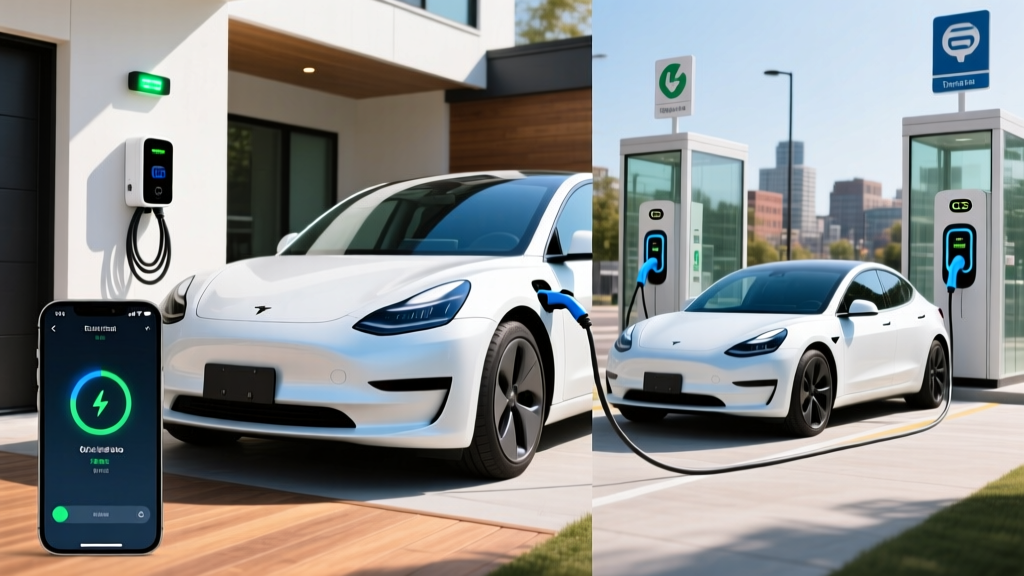
Even at peak Supercharger rates, the Model 3 Long Range costs roughly half per mile compared to a 30 MPG gas car at $3.50/gallon. Home off-peak charging is where the economics truly shine — roughly $9 for 300+ miles of real-world range. If your utility offers time-of-use (TOU) rates or an EV-specific plan, scheduling charges between 10 PM and 6 AM can cut costs further.
DC Fast Charging in Practice: The Charge Curve Reality
Tesla advertises 250 kW peak charging on V3 Superchargers, but no EV sustains peak rate for the entire session. The 2022 Model 3 Long Range follows a typical charge curve:
- 10-30% SoC: Peaks near 250 kW — fastest segment of the charge
- 30-50% SoC: Steps down to ~170-200 kW
- 50-70% SoC: Further taper to ~120-150 kW
- 70-80% SoC: Drops to ~80-100 kW
- 80-100% SoC: Slows dramatically to ~20-40 kW (avoid charging past 80% on road trips unless necessary)
This means a 10-80% session takes approximately 27 minutes, but a 10-100% session can stretch past 55 minutes. For road trips, charge to 80%, drive, and stop again — it's faster overall than waiting for the last 20%.
Preconditioning matters. When you navigate to a Supercharger in the Tesla app or in-car navigation, the car automatically warms the battery to optimal temperature. Without preconditioning (e.g., arriving at a non-navigated charger in cold weather), your peak charge rate may be limited to 100-150 kW for the first several minutes.
Best Home Chargers for the 2022 Model 3 Long Range
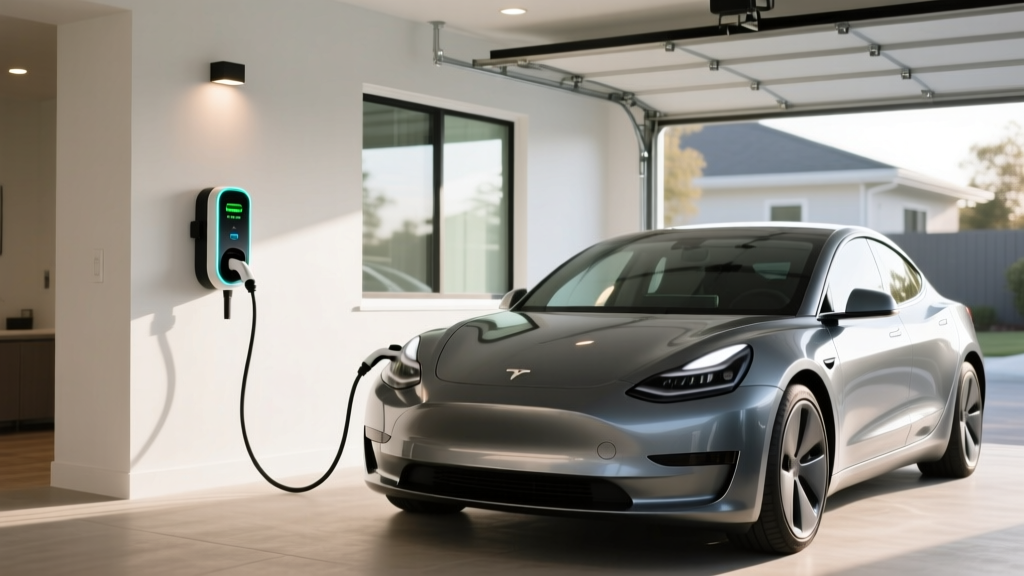
Since the Model 3 caps AC charging at 11.5 kW (48A), you want a charger that delivers at least 48A on a 60A circuit. Here are top picks based on real-world reliability, features, and value:
Tesla Wall Connector (Gen 3)
- Power Output: Up to 11.5 kW (48A)
- Connector: NACS (native Tesla — no adapter)
- Cable Length: 24 ft
- Smart Features: Wi-Fi, OTA updates, load sharing (pair two units on one circuit), Tesla app integration
- Price: ~$475
- Verdict: The obvious default. Seamless integration, cleanest aesthetic, and load sharing is ideal for two-EV households.
Emporia Vue EV Charger
- Power Output: Up to 11.5 kW (48A)
- Connector: J1772 (use Tesla J1772 adapter) or NACS version available
- Cable Length: 24 ft
- Smart Features: Energy monitoring via Emporia Vue panel integration, scheduled charging, solar-aware charging
- Price: ~$400
- Verdict: Best for solar owners or anyone who wants granular energy data. The whole-home energy monitor integration is unmatched.
ChargePoint Home Flex
- Power Output: Up to 12 kW (50A) — car will cap at 48A
- Connector: J1772 (use Tesla adapter) or NACS pigtail version
- Cable Length: 23 ft
- Smart Features: Wi-Fi, Alexa integration, ChargePoint app scheduling, adjustable amperage (16A-50A via DIP switches)
- Price: ~$550-$700
- Verdict: Most versatile for multi-EV households where one car is Tesla and another uses J1772. Adjustable amperage is great for older panels.
For a dedicated Tesla household, the Tesla Wall Connector is the clear winner — no adapter needed, lowest friction, and the load-sharing feature lets you install two units on a single 60A circuit. If you anticipate owning a non-Tesla EV in the future, the ChargePoint Home Flex offers the most flexibility.
Charging the 2022 Model 3 Long Range: Frequently Asked Questions
How much does it cost to install a home EV charger for a Model 3?
Expect $800-$2,300 for a standard installation on a 200A panel (equipment + electrician + permit). If your home needs a panel upgrade from 100A to 200A, total costs can reach $2,300-$5,300. Always get a load calculation from a licensed electrician before committing.
How fast will Level 2 charging add range to the 2022 Model 3 Long Range?
At the car's maximum 11.5 kW (48A), you'll add roughly 44 miles of range per hour. A full charge from near-empty takes about 7 hours. Overnight charging (8-10 hours) easily replenishes a full battery.
Do I need an adapter to use non-Tesla chargers?
For Level 2 public chargers (J1772 standard), the Tesla J1772 adapter is included with your car. For CCS DC fast chargers like Electrify America, you'll need the Tesla CCS adapter (~$175-$250). Tesla Superchargers require no adapter.
How much does charging cost per mile versus gas?
At the national average home electricity rate of ~$0.15/kWh, the Model 3 Long Range costs about $0.038 per mile. A comparable 30 MPG gas car at $3.50/gallon costs $0.117 per mile — roughly three times more. Even at Supercharger rates ($0.28-$0.36/kWh), you're still paying less per mile than gasoline.
What electrical upgrades might I need for a home charger?
The most common upgrade is a panel replacement (100A to 200A) if your home's total electrical load can't accommodate a new 60A circuit. Other potential costs include running a new conduit for long wire runs (50+ feet from panel to garage), upgrading the meter socket, or installing a sub-panel in a detached garage. An electrician's load calculation will determine exactly what's needed.
Should I charge to 100% every night?
No. The Model 3 Long Range uses NMC battery chemistry, which degrades faster when held at 100% state of charge. Tesla recommends setting the daily charge limit to 80-90% and only charging to 100% before long road trips. This practice significantly extends long-term battery health.
Does the 2022 Model 3 Long Range qualify for any tax credits?
The IRS §30D federal tax credit rules for 2022 purchases were different from current rules. If you purchased new in 2022, the Model 3 qualified for up to $7,500 (subject to the manufacturer phase-out cap, which Tesla had already exceeded by then — so the credit was $0 for 2022 purchases). For used purchases in 2026, the used EV credit offers up to $4,000 (30% of sale price, capped at $4,000) if the vehicle sells for $25,000 or less and buyer income is under $75,000 (single) / $150,000 (joint). Consult a tax professional for your specific eligibility.