The 2022 Audi e-tron (and its sleeker sibling, the e-tron Sportback) represents a pivotal moment in luxury electric vehicles. While Audi has since rebranded the lineup as the Q8 e-tron for the 2024+ model years with larger batteries, thousands of 2022 e-trons remain on the road and on the used market. If you own one or are shopping for one, understanding how to charge it efficiently is the single biggest factor in your daily satisfaction.
The 2022 Audi e-tron range sits at an EPA-estimated 222 miles for the standard SUV and 218 miles for the Sportback variant. That's a usable battery of approximately 86.5 kWh (from a 95 kWh gross pack). In real-world driving, expect closer to 190–205 miles on the highway and potentially less in cold weather. But range is only half the equation — how quickly and cheaply you can replenish that battery determines whether the e-tron fits your lifestyle.
EPA Estimate: 222 miles (SUV) / 218 miles (Sportback)
Highway (70–80 mph): ~190–205 miles
Cold Weather (below 32°F): ~165–185 miles
Mixed City/Suburban: ~210–225 miles (regen-friendly)
Source: fueleconomy.gov
Charging Levels Explained: How Fast Will Each Level Add Range?
Before we discuss specific equipment, you need to understand the three charging levels and what they mean for your e-tron's 95 kWh battery. The distinction between kW (kilowatts — the rate of power delivery, like water pressure) and kWh (kilowatt-hours — the total energy stored, like gallons in a tank) is the most critical concept in EV ownership.
| Level | Power Source | Max kW | Miles Added/Hour | 10–80% Time (e-tron) |
|---|---|---|---|---|
| Level 1 | 120V standard outlet | 1.4–1.9 kW | 3–5 mi/hr | ~60+ hours (impractical) |
| Level 2 | 240V (dryer-style outlet or hardwired) | 7.2–19.2 kW | 20–55 mi/hr | ~9.5 hrs (7.2 kW) / ~5 hrs (11.5 kW) |
| DC Fast Charging | 480V+ commercial station | Up to 150 kW | ~300+ mi/hr (peak) | ~30 minutes |
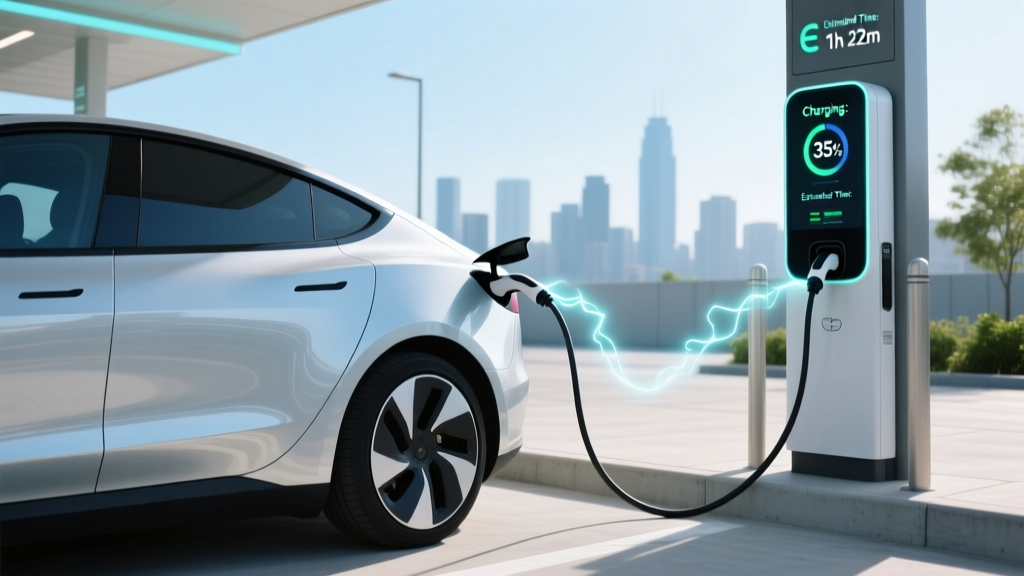
The 2022 Audi e-tron's onboard charger accepts up to 11.5 kW on Level 2 (some early 2019 models were limited to 7.2 kW, but by 2022 all trims support the faster rate). On DC fast charging, the e-tron was a class leader at launch, accepting up to 150 kW peak with a remarkably flat charge curve — it sustains close to 150 kW all the way to about 80% state of charge before tapering. This means its real-world 10–80% time of roughly 30 minutes is one of the best among 2022-era EVs.
Home Charger Installation: Electrical Requirements & Costs
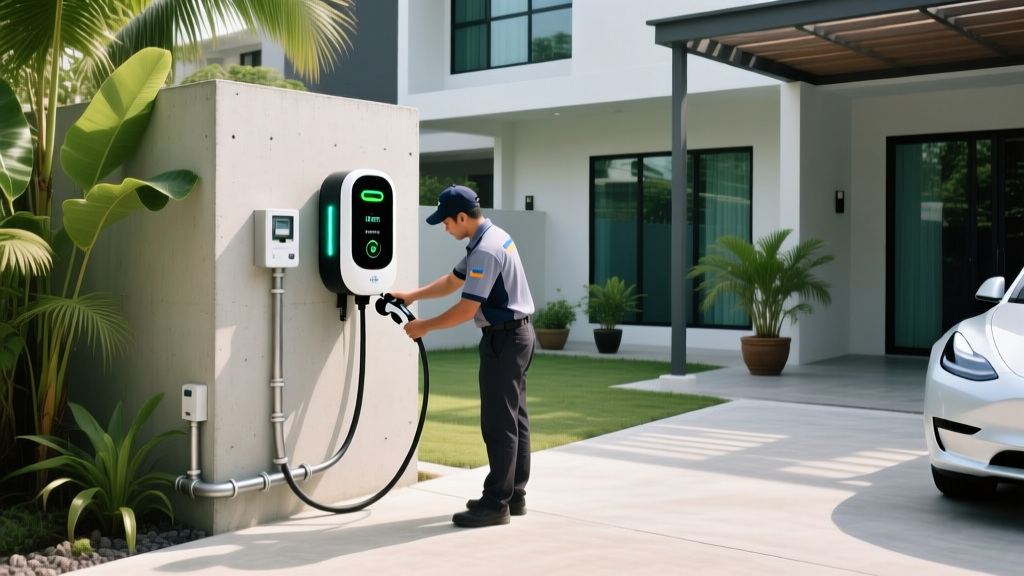
For daily ownership, a Level 2 home charger is essential. With the e-tron's 86.5 kWh usable battery, a full Level 1 charge would take over 60 hours — completely impractical. A properly installed Level 2 station lets you wake up to a full battery every morning.
Electrical Requirements for the Audi e-tron
To take advantage of the e-tron's 11.5 kW onboard charger, you need a 240V circuit rated at 50 amps (which delivers a continuous 48 amps to the vehicle, since electrical code requires circuits to operate at no more than 80% of their rated capacity). A 40-amp circuit (delivering 9.6 kW / 32 amps continuous) will also work but won't maximize the e-tron's charging capability.
Your home's electrical panel must have sufficient spare capacity. Most modern 200-amp panels can accommodate a 50-amp EV circuit. Older homes with 100-amp service may require a panel upgrade to 200 amps, which is the single biggest variable in installation cost.
| Component | Basic Install | Complex Install |
|---|---|---|
| Level 2 Charger (Equipment) | $400–$700 | $500–$800 |
| Electrician Labor (240V run) | $500–$1,200 | $1,500–$3,000 |
| Permit & Inspection | $50–$200 | $100–$350 |
| Panel Upgrade (if needed) | N/A | $2,000–$5,000 |
| Total Estimated Cost | $950–$2,100 | $4,100–$9,150 |
A "basic" install assumes your panel has spare capacity, the charger location is within 20–30 feet of the panel, and the wiring runs through an accessible attic or garage. A "complex" install involves longer wire runs, conduit on exterior walls, panel upgrades, or trenching for detached garages.
Pro Tip: Always get at least three quotes from licensed electricians. Some utility companies offer rebates of $250–$1,000 for home charger installation — check with your local provider before scheduling work. The federal Residential Clean Energy Credit (as of 2026) does not cover EV chargers; that expired for most taxpayers. However, some state and local programs still offer charger rebates.
Which Connector Does the 2022 Audi e-tron Use?
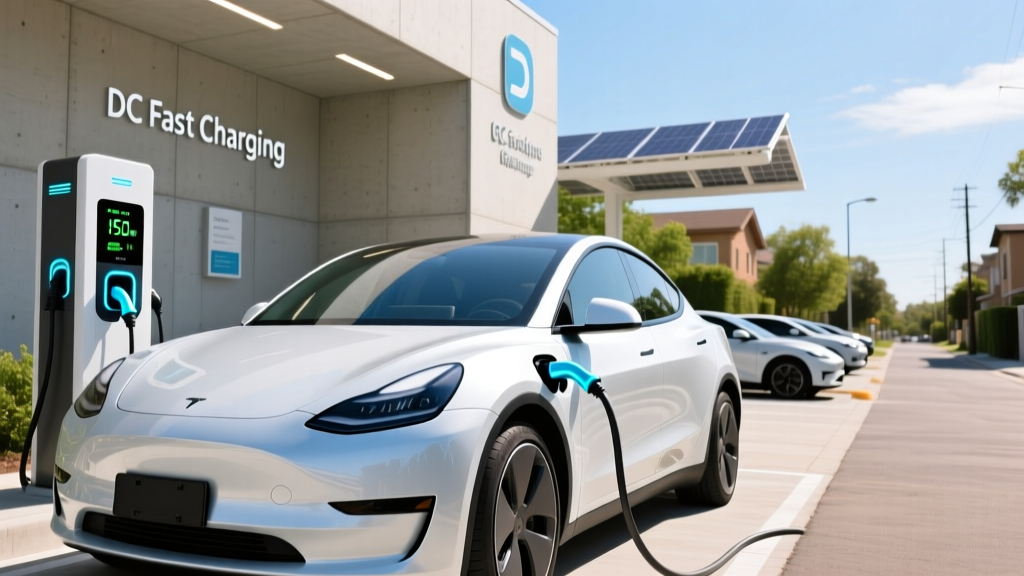
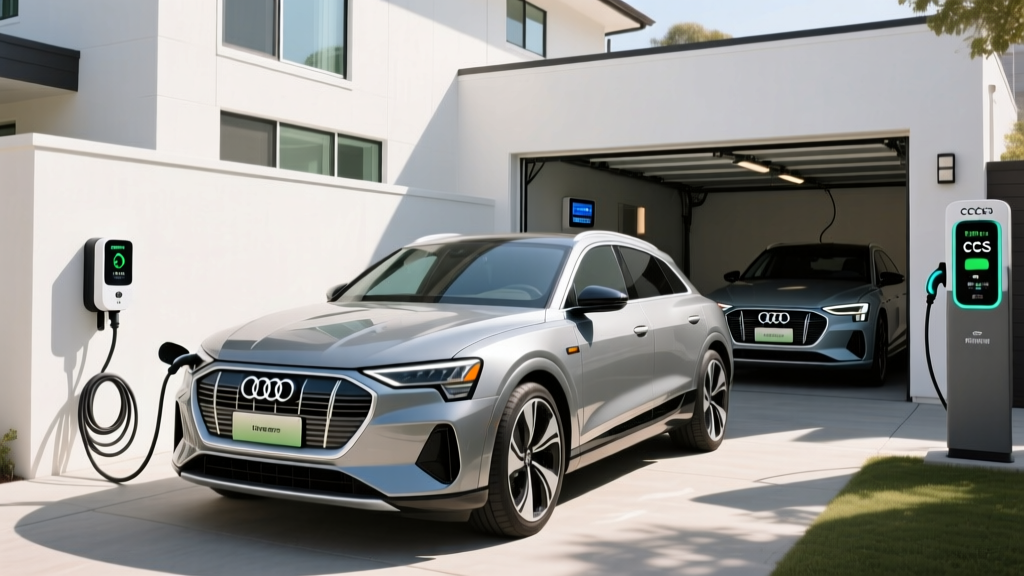
The 2022 Audi e-tron uses the CCS1 (Combined Charging System) connector for both Level 2 AC charging and DC fast charging. This is the standard connector adopted by most non-Tesla automakers in North America through 2024.
| Connector | Used By | e-tron Compatible? | Adapter Needed? |
|---|---|---|---|
| CCS1 | Audi, BMW, VW, Ford, GM, Hyundai/Kia, most others (pre-2025) | ✅ Native | No |
| NACS (Tesla) | Tesla; Ford, GM, Rivian, others (2025+) | ⚠️ With adapter | Yes — CCS-to-NACS adapter (~$200–$400) |
| CHAdeMO | Nissan Leaf, Mitsubishi (legacy) | ❌ Not compatible | N/A |
| J1772 | All EVs (Level 2 AC only, upper portion of CCS) | ✅ Native | No (it's the top half of CCS) |
The Tesla Supercharger situation: As of 2026, Tesla has opened its Supercharger network to non-Tesla EVs at many locations, but only those equipped with the "Magic Dock" CCS adapter built into the stall, or via a purchased CCS-to-NACS adapter. Audi e-tron owners can use a growing number of Supercharger stations, but coverage is not universal. Audi's own charging network partnership with Electrify America remains the primary DC fast-charging solution — 2022 e-tron buyers received 250 kWh of complimentary Electrify America charging (roughly 3–4 full charges).
Recommended Home Chargers for the Audi e-tron
Here are three Level 2 chargers well-suited to the e-tron's 11.5 kW capability, each at a different price point:
ChargePoint Home Flex
- Power Output: Up to 12 kW (50A circuit) / 9.6 kW (40A circuit) — adjustable
- Connector: J1772 (CCS-compatible for AC)
- Cable Length: 23 feet
- Smart Features: Wi-Fi, app scheduling, Alexa, energy tracking
- Price: ~$550–$650
- Why for e-tron: Adjustable amperage lets you match your circuit exactly; UL-listed; widely recommended by electricians
Emporia Level 2 EV Charger
- Power Output: Up to 11.5 kW (48A continuous on 60A circuit)
- Connector: J1772
- Cable Length: 24 feet
- Smart Features: Wi-Fi, app, solar integration, energy monitoring
- Price: ~$350–$400
- Why for e-tron: Best value; pairs well with home solar; can fully utilize the e-tron's 11.5 kW onboard charger
Tesla Wall Connector (with adapter)
- Power Output: Up to 11.5 kW (48A continuous)
- Connector: NACS (requires CCS-to-NACS adapter for e-tron, ~$200)
- Cable Length: 24 feet
- Smart Features: Wi-Fi, OTA updates, power sharing between units
- Price: ~$425 + adapter cost
- Why for e-tron: Excellent build quality; future-proofs if you add a Tesla; but adapter adds cost and hassle
Our top pick for a dedicated Audi e-tron home charger is the ChargePoint Home Flex on a 50-amp circuit. It delivers the full 11.5 kW the e-tron can accept, has a robust app for scheduling charges during off-peak utility hours, and is the most commonly recommended unit by licensed electricians we've surveyed.
Charging Cost Breakdown: Home vs. Public vs. Gas
One of the strongest arguments for the e-tron is the per-mile energy cost, particularly when charging at home. Let's compare real scenarios using the e-tron's efficiency rating of 78 MPGe combined (approximately 2.4 miles per kWh, or about 43 kWh per 100 miles).
| Scenario | Rate ($/kWh) | Cost per 100 Miles | Cost per Mile |
|---|---|---|---|
| Home (off-peak utility rate) | $0.12/kWh | $5.16 | $0.052 |
| Home (average US rate) | $0.17/kWh | $7.31 | $0.073 |
| Public Level 2 (workplace/mall) | $0.25–$0.40/kWh | $10.75–$17.20 | $0.11–$0.17 |
| DC Fast Charging (Electrify America) | $0.40–$0.56/kWh | $17.20–$24.08 | $0.17–$0.24 |
| Gas Vehicle (25 MPG, $3.50/gal) | — | $14.00 | $0.14 |
Key takeaway: At home on off-peak rates, the e-tron costs roughly $0.05 per mile — about one-third the cost of a comparable gas-powered luxury SUV. Even at public DC fast-charging rates, the e-tron is competitive with or cheaper than gasoline. However, if you rely exclusively on expensive public DC chargers, the cost advantage narrows significantly. This is why home charging access is the single most important factor in EV satisfaction.
Public Charging Networks: What e-tron Owners Need to Know
The 2022 e-tron's CCS1 connector gives you access to the broadest public charging network in North America. Here's what to expect from the major providers:
- Electrify America: Audi's official partner. Stations typically offer 50–350 kW chargers. The e-tron will peak at 150 kW even at a 350 kW stall. Pricing is typically $0.40–$0.56/kWh, or included in Audi's complimentary credit. Reliability has improved but still lags Tesla's network.
- EVgo: Growing network of 50–350 kW chargers, often in urban areas and shopping centers. CCS availability is standard. Pricing varies by location ($0.30–$0.50/kWh).
- ChargePoint: Primarily Level 2 destination chargers (workplaces, hotels, malls) with some DC fast locations. Useful for topping up during errands.
- Tesla Supercharger (with adapter): Expanding access for CCS vehicles. As of 2026, roughly 30–40% of Supercharger locations have the Magic Dock adapter or are accessible with a purchased CCS-to-NACS adapter. Check the Tesla app for real-time availability.
For road trips, plan charging stops around Electrify America's highway corridor stations, which are spaced roughly 50–70 miles apart on major interstates. The e-tron's 30-minute 10–80% charge time means a typical road trip stop adds about 150–170 miles of range — enough to reach the next station comfortably.
Safety, Electrical Code & Panel Considerations
A home EV charger is a significant electrical load — equivalent to running a clothes dryer and an oven simultaneously for hours. Proper installation isn't optional; it's a safety requirement.
Code Requirements for Home Charger Installation
- Dedicated circuit: Your EV charger must be on its own dedicated breaker — it cannot share a circuit with other appliances.
- GFCI protection: The National Electrical Code (NEC) requires ground-fault circuit interrupter protection for outdoor outlets. Many modern Level 2 chargers have built-in GFCI, but your electrician will verify code compliance.
- Outdoor rating: If your charger is installed outdoors (driveway, exterior wall), both the charger unit and the receptacle must carry a NEMA 4 or NEMA 4X weather-resistance rating.
- Wire gauge: A 50-amp circuit requires 6 AWG copper wire; a 60-amp circuit requires 4 AWG. Undersized wiring is a fire hazard.
- Permit and inspection: Virtually all jurisdictions require an electrical permit for a new 240V circuit. The inspection ensures the work meets code. Skipping the permit can void your homeowner's insurance in the event of a fire.
When You Need a Panel Upgrade
If your home has a 100-amp electrical panel, adding a 50-amp EV circuit may exceed the panel's safe capacity, especially if you also run electric heat, an electric oven, and a dryer. An electrician will perform a load calculation to determine if your panel can handle the additional draw. If not, upgrading to a 200-amp panel typically costs $2,000–$5,000 but adds significant home value and future-proofs for additional electrical loads (solar, heat pumps, etc.).
Frequently Asked Questions
How much does it cost to install a home EV charger for my Audi e-tron?
For a straightforward installation with adequate panel capacity and a short wire run, expect $950–$2,100 total (charger, electrician labor, and permit). If your home needs a panel upgrade or has a long wire run, costs can reach $4,100–$9,150. Always get multiple quotes from licensed electricians.
How fast will each charging level add range to the e-tron?
Level 1 (120V) adds about 3–5 miles per hour — impractical for daily use. Level 2 (240V at 48 amps) adds approximately 27–30 miles per hour, fully replenishing the e-tron overnight in about 9 hours. DC fast charging at 150 kW can add roughly 150 miles in 15 minutes during the peak charge window.
Which connector does the 2022 Audi e-tron use, and will it work at Tesla Superchargers?
The 2022 e-tron uses the CCS1 connector. It works natively at Electrify America, EVgo, ChargePoint, and most non-Tesla networks. For Tesla Supercharger access, you'll need either a station with Tesla's built-in "Magic Dock" CCS adapter or a purchased CCS-to-NACS adapter (approximately $200–$400).
How much does charging the e-tron cost per mile compared to a gas car?
At home on average US electricity rates ($0.17/kWh), the e-tron costs about $0.07 per mile — roughly half the cost of a 25 MPG gas SUV at $3.50/gallon ($0.14/mile). On off-peak rates ($0.12/kWh), it drops to about $0.05 per mile. Public DC fast charging narrows the gap to roughly $0.17–$0.24/mile.
What electrical upgrades might I need before installing a home charger?
Your electrician will check your panel's amperage capacity (100A vs. 200A), available breaker slots, and perform a load calculation. If your panel is maxed out, a 200-amp upgrade ($2,000–$5,000) may be needed. Homes built after 2000 typically have sufficient capacity; older homes are more likely to need upgrades.
Does the 2022 Audi e-tron qualify for any federal tax credits?
As a new vehicle in 2022, the e-tron was eligible for the federal EV tax credit (up to $7,500 under pre-IRA rules). For used e-trons purchased in 2026, the Used Clean Vehicle Credit (§25E) may provide up to $4,000 (30% of sale price, capped) if the vehicle sells for $25,000 or less and the buyer meets income limits ($75,000 single / $150,000 joint). Consult a tax professional for eligibility.
Final Assessment: Is the 2022 e-tron Charging Experience Practical?
The 2022 Audi e-tron's charging profile is one of its strongest attributes. Its 150 kW DC fast-charging capability with a flat charge curve means real-world road-trip stops are quick and predictable. The 11.5 kW Level 2 onboard charger is faster than many competitors from the same era, meaning overnight home charging is genuinely convenient.
The 222-mile EPA range is the e-tron's weakest link by 2026 standards — many newer EVs exceed 300 miles. But for owners who can charge at home and whose daily driving falls within 150–180 miles (which covers the vast majority of American commutes), the e-tron's range is perfectly adequate, and its charging speed compensates on longer trips.
If you're buying a used 2022 e-tron in 2026, budget $1,500–$3,000 for a quality home charger installation (assuming no panel upgrade), and you'll have one of the most refined and practical luxury EV ownership experiences available at its price point.