The 2021 Tesla Model Y Standard Range (officially the Rear-Wheel Drive trim) was a brief but popular offering, delivering an EPA-estimated 244 miles of range from a roughly 60 kWh usable LFP (lithium iron phosphate) battery pack. If you own one or are shopping the used market, understanding how to charge it efficiently at home and on the road is essential to maximizing both convenience and long-term battery health.
This guide breaks down every charging scenario for the 2021 Model Y Standard Range — from a standard 120V outlet to a hardwired Level 2 home charger to Tesla Superchargers — with exact numbers for speed, cost, and installation requirements.
2021 Tesla Model Y Standard Range: Key Charging Specs
Before diving into charging methods, here are the vehicle's electrical and charging specifications that dictate what's possible at each level.
| Specification | 2021 Model Y Standard Range (RWD) |
|---|---|
| Usable Battery Capacity | ~60 kWh (LFP chemistry) |
| EPA Range | 244 miles |
| Real-World Highway Range | ~200–215 miles (70+ mph, moderate temps) |
| Real-World Cold-Weather Range | ~170–190 miles (below 32°F / 0°C) |
| Onboard Charger (Level 2 AC) | 11.5 kW max (48A) |
| Max DC Fast Charge Rate | ~170 kW peak |
| DC Fast Charge 10–80% | ~25–30 minutes |
| Connector | NACS (Tesla proprietary) |
| EPA Efficiency | 129 MPGe combined (26 kWh/100 mi) |
Charging Levels Explained: Speeds and Range Added Per Hour
EV charging is measured in kW (kilowatts), which represents the power delivery rate. Your battery capacity is measured in kWh (kilowatt-hours), which represents total energy stored. Think of kW as the flow rate of a hose and kWh as the size of the bucket. Here's what each level delivers for the 2021 Model Y Standard Range:
| Charging Level | Voltage / Amperage | Power (kW) | Miles of Range Added Per Hour | Full Charge Time (0–100%) |
|---|---|---|---|---|
| Level 1 (120V household) | 120V / 12A | ~1.4 kW | ~3–4 miles | ~43 hours |
| Level 2 (240V home/public) | 240V / 48A | 11.5 kW (vehicle max) | ~35–40 miles | ~5.5–6 hours |
| DC Fast Charging | 400V+ DC | Up to 170 kW peak | ~450+ mi/hr (peak) | 10–80% in ~25–30 min |
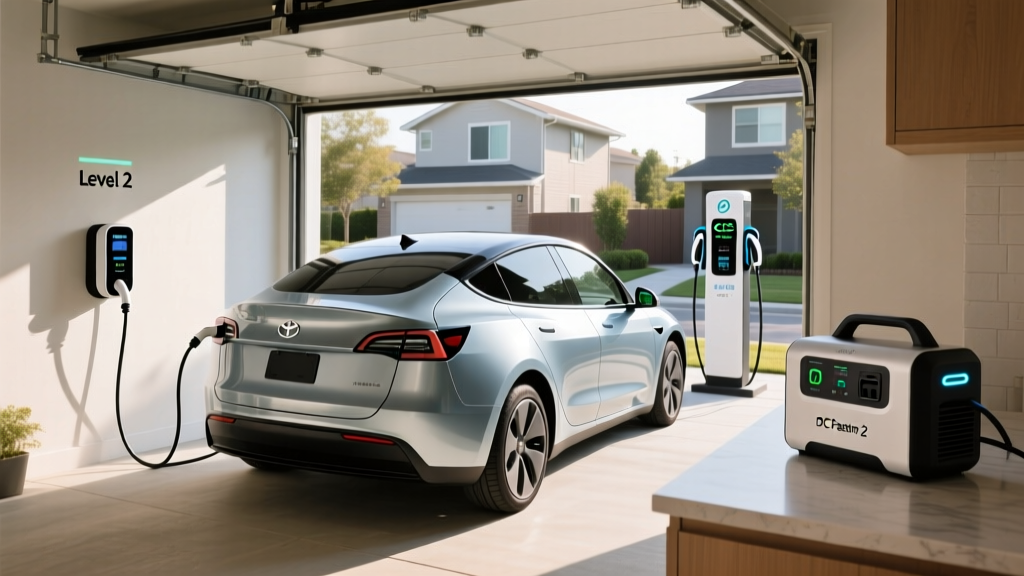
Level 1 is a trickle — useful only for topping off if you drive less than 30 miles daily and have overnight access. Level 2 is the practical standard for home charging and will fully replenish the 60 kWh pack overnight. DC fast charging is for road trips and rapid top-ups but is not meant for daily use due to long-term battery health considerations.
Home Level 2 Charger Installation: Requirements and Costs
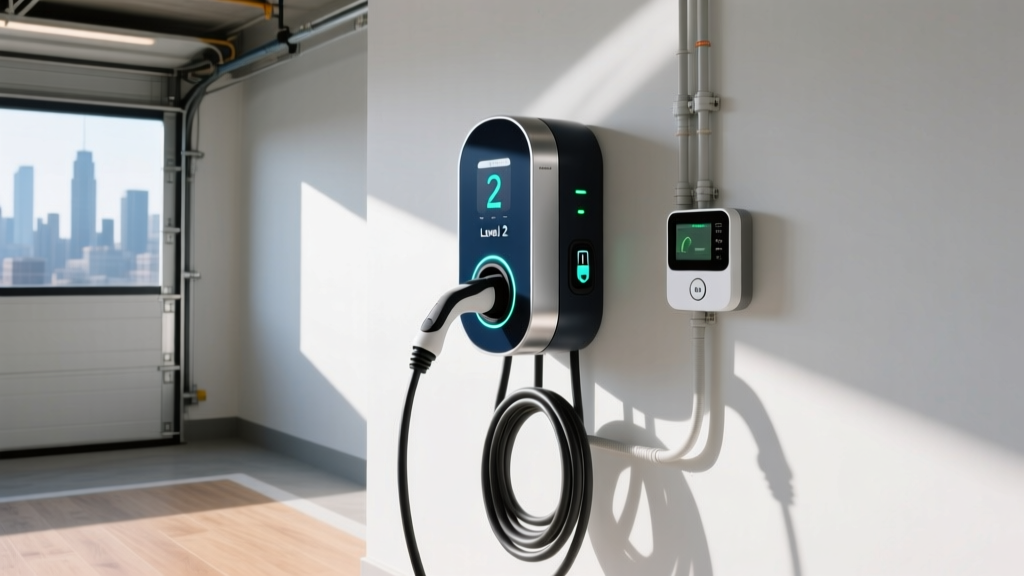
Installing a Level 2 home charger is the single highest-impact upgrade for EV ownership. For the 2021 Model Y Standard Range, you want a charger that can deliver up to 48 amps (11.5 kW) to match the vehicle's onboard charger capacity. Here's what's involved.
Electrical Requirements
- Circuit: Dedicated 60-amp breaker (to support continuous 48A draw — NEC requires 125% overhead for continuous loads)
- Wiring: 6 AWG copper (or 4 AWG aluminum) for a 60A circuit
- Voltage: 240V split-phase (standard US residential)
- Connection: Hardwired preferred for 48A+ (NEMA 14-50 outlet limited to 40A continuous on a 50A breaker)
Panel Upgrade Considerations
If your home has a 100-amp electrical panel, adding a 60-amp EV circuit may exceed your panel's capacity, especially if you run electric HVAC, a dryer, and an oven simultaneously. A panel upgrade to 200 amps typically costs $1,500–$3,500. Homes with existing 200-amp panels usually accommodate a 60A EV circuit without issue. A licensed electrician will perform a load calculation per NEC Article 220 to determine if an upgrade is necessary.
Installation Cost Breakdown
| Cost Component | Typical Range | Notes |
|---|---|---|
| Level 2 Charger Equipment | $400–$750 | Tesla Wall Connector, ChargePoint Home Flex, etc. |
| Electrician Labor | $500–$2,000 | Depends on run length from panel to garage |
| Electrical Permit | $50–$250 | Required in most jurisdictions |
| Panel Upgrade (if needed) | $1,500–$3,500 | Only if existing panel lacks capacity |
| Total (no panel upgrade) | $950–$3,000 | Most common scenario |
| Total (with panel upgrade) | $2,450–$6,500 | Older homes with 100A service |
The federal Residential Clean Energy Credit does not cover EV chargers for most taxpayers after 2022; however, the separate Alternative Fuel Vehicle Refueling Property Credit (§30C) was extended and may cover up to $1,000 for home charger equipment and installation if you live in an eligible census tract. Consult a tax professional for your specific eligibility.
Which Connectors and Chargers Are Compatible?
The 2021 Tesla Model Y Standard Range uses the NACS (North American Charging Standard) connector — Tesla's proprietary plug, now adopted as an industry standard. This means seamless access to the Tesla Supercharger network and, with the CCS adapter Tesla began shipping in 2023, access to third-party CCS-equipped public chargers (Electrify America, EVgo, etc.).
| Connector Type | Compatible with 2021 Model Y? | Adapter Needed? | Network Examples |
|---|---|---|---|
| NACS (Tesla) | Yes — native | None | Tesla Superchargers, Destination Chargers |
| CCS1 | Yes — with adapter | Tesla CCS Adapter (~$250, or included with newer vehicles) | Electrify America, EVgo, ChargePoint DC |
| CHAdeMO | No | No reliable adapter available | Legacy Nissan Leaf network (declining) |
| J1772 (Level 2 public) | Yes — with adapter | Tesla Mobile Connector J1772 adapter (included) | Public Level 2 stations, workplaces |
For home charging, you'll use either a Tesla Wall Connector (NACS native) or a J1772 charger with the included adapter. The Tesla Wall Connector is the most seamless option since no adapter is required.
Recommended Home Charging Equipment
Tesla Wall Connector
- Power Output: Up to 11.5 kW (48A) — matches Model Y onboard charger
- Connector: NACS (native Tesla)
- Cable Length: 24 ft
- Smart Features: Wi-Fi, OTA updates, load sharing with multiple units, access control
- Price: ~$475
- Best For: Tesla-only households wanting plug-and-go simplicity
ChargePoint Home Flex
- Power Output: Up to 12 kW (50A) — adjustable down via DIP switches
- Connector: J1772 (use Tesla adapter) or NACS version available
- Cable Length: 23 ft
- Smart Features: Wi-Fi, app scheduling, energy tracking, Alexa integration
- Price: ~$550–$650
- Best For: Multi-EV households or those wanting detailed app control
Tesla Mobile Connector (Gen 2)
- Power Output: Up to 7.7 kW (32A) on NEMA 14-50; 1.4 kW on 120V
- Connector: NACS with included J1772 adapter
- Cable Length: 20 ft
- Smart Features: None (dumb charger)
- Price: ~$300
- Best For: Budget option or renters who may move — plugs into existing outlets
Emporia Vue Level 2 Charger
- Power Output: Up to 11.5 kW (48A)
- Connector: J1772 (use Tesla adapter) or NACS
- Cable Length: 24 ft
- Smart Features: Wi-Fi, app scheduling, solar integration with Emporia energy monitor, load management
- Price: ~$400
- Best For: Solar-equipped homes wanting to charge on excess generation
Cost to Charge: Per-Mile Breakdown vs. Gas
The 2021 Model Y Standard Range consumes approximately 26 kWh per 100 miles (EPA combined). Here's what that translates to in real costs across different charging scenarios, compared to a comparable gas-powered compact SUV averaging 28 MPG combined.
| Charging Scenario | Rate ($/kWh) | Cost per Full Charge (~60 kWh) | Cost per Mile |
|---|---|---|---|
| Home (off-peak utility rate) | $0.09–$0.14 | $5.40–$8.40 | $0.023–$0.036 |
| Home (average US rate) | $0.16–$0.18 | $9.60–$10.80 | $0.042–$0.047 |
| Public Level 2 (network pricing) | $0.25–$0.49 | $15.00–$29.40 | $0.065–$0.128 |
| DC Fast (Tesla Supercharger) | $0.28–$0.42 | $16.80–$25.20 (10–80%) | $0.073–$0.109 |
| DC Fast (Electrify America) | $0.43–$0.56 | $25.80–$33.60 (10–80%) | $0.112–$0.146 |
| Gas SUV (28 MPG, $3.40/gal) | — | — | $0.121 |
Charging at home on off-peak rates delivers per-mile costs roughly 70–80% lower than a comparable gas vehicle. Even public DC fast charging at Tesla Superchargers is often cheaper per mile than gasoline, though third-party networks at $0.50+ per kWh can approach or exceed gas costs. The economics strongly favor home charging as your primary strategy.
For an owner driving 12,000 miles annually with 80% home charging at $0.13/kWh and 20% Supercharger use at $0.35/kWh, annual fuel cost is approximately $640 — compared to roughly $1,457 for the gas equivalent. That's over $800 in annual fuel savings.
DC Fast Charging Realities: Charge Curve and Preconditioning
The 2021 Model Y Standard Range peaks at approximately 170 kW on DC fast chargers, but like all EVs, it does not sustain peak speed throughout the session. Understanding the charge curve prevents unrealistic time expectations on road trips.
- 10–30% SoC: Peaks near 170 kW — fastest segment
- 30–55% SoC: Sustains approximately 120–140 kW
- 55–80% SoC: Tapers to 60–80 kW
- 80–100% SoC: Drops below 30 kW — avoid unless necessary
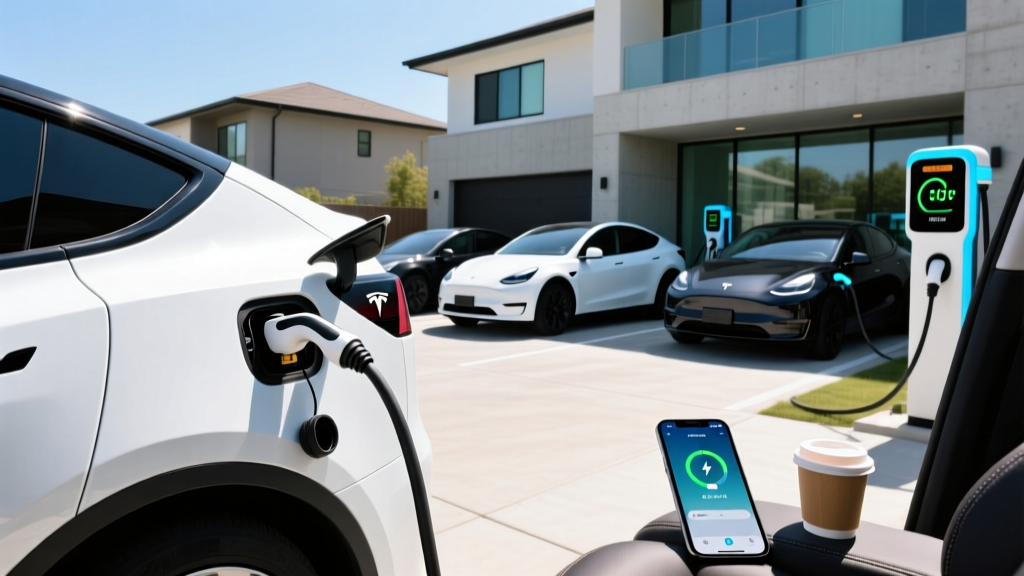
This is why the industry standard metric is 10–80% charge time rather than 0–100%. For the Model Y Standard Range's 60 kWh LFP pack, a 10–80% session adds roughly 42 kWh (about 155–165 miles of range) in 25–30 minutes at a V3 Supercharger (250 kW capable).
One LFP-specific note: Tesla recommends charging LFP batteries to 100% at least once per week to allow the battery management system to recalibrate its state-of-charge estimate. Unlike NMC batteries, which are best kept between 20–80% for longevity, LFP chemistry tolerates full charges well. Set your daily limit to 100% and don't worry about the 80% rule that applies to Long Range and Performance variants.
Safety and Electrical Code Requirements
EV charging installations must comply with the National Electrical Code (NEC) and local building codes. Key requirements include:
- Dedicated Circuit: Your Level 2 charger must be on its own dedicated breaker — no sharing with other appliances
- GFCI Protection: NEC 2020 and later require GFCI protection for all EV charging outlets (hardwired units typically have built-in ground-fault protection)
- Outdoor Rating: If installed outdoors, the charger must carry a NEMA 3R or NEMA 4 rating. The Tesla Wall Connector is rated for indoor and outdoor use
- Cable Management: NEC requires the charging cable not cross pedestrian walkways when installed in commercial settings; residential installations should route cables to avoid tripping hazards
- Permit and Inspection: Most jurisdictions require an electrical permit and post-installation inspection. Budget $50–$250 and 1–3 weeks for this process
Always hire a licensed electrician. Improper EV charger installations have been linked to electrical fires, and unpermitted work can void home insurance coverage. The National Fire Protection Association maintains the NEC standards governing these installations.
Frequently Asked Questions
How much does it cost to install a home EV charger for the 2021 Model Y Standard Range?
Expect $950–$3,000 for a typical installation with a 200-amp panel already in place. This includes the charger ($400–$750), electrician labor ($500–$2,000), and permit ($50–$250). If your home needs a panel upgrade from 100A to 200A, add $1,500–$3,500 to the total.
How fast will each charging level add range to my Model Y?
Level 1 (120V) adds roughly 3–4 miles per hour — overnight charging yields about 35–45 miles. Level 2 (240V, 48A) adds approximately 35–40 miles per hour, fully replenishing the 60 kWh battery in about 5.5–6 hours. DC fast charging at a V3 Supercharger can add up to 155 miles in 25–30 minutes (10–80% SoC).
Which connector and charger is compatible with my 2021 Model Y?
Your vehicle uses the NACS connector natively. For home charging, the Tesla Wall Connector ($475) is the most seamless option. For public DC fast charging, Tesla Superchargers require no adapter. For non-Tesla CCS chargers (Electrify America, EVgo), you'll need the Tesla CCS Adapter. For public Level 2 J1772 stations, the adapter included with your vehicle's mobile connector works.
How much does charging cost per mile compared to gas?
At home on average utility rates ($0.16/kWh), the Model Y Standard Range costs approximately $0.042 per mile. A comparable gas SUV at 28 MPG and $3.40/gallon costs about $0.121 per mile. Home charging saves roughly $0.08 per mile, or about $960 per year at 12,000 miles driven. Public DC fast charging costs vary from $0.07–$0.15 per mile depending on the network.
What electrical upgrades might I need for a Level 2 charger?
If your home has a 200-amp electrical panel with available capacity, you likely need only a new 60-amp breaker and wiring run — no upgrade required. Homes with 100-amp panels often need a full panel upgrade to 200 amps ($1,500–$3,500) to safely accommodate a 48-amp continuous EV load alongside existing appliances. An electrician will perform a NEC Article 220 load calculation to determine your specific situation.
Should I charge the LFP battery to 100% or limit to 80%?
Unlike NMC batteries in Long Range and Performance Model Y variants, the LFP battery in the Standard Range benefits from regular full charges. Tesla recommends charging to 100% at least once per week to keep the battery management system calibrated. Setting your daily charge limit to 100% is the correct approach for this specific trim.
Can I use a standard 120V outlet for daily charging?
Technically yes, but Level 1 delivers only 3–4 miles of range per hour. Over a 12-hour overnight session, you'll add about 40 miles — sufficient only if your daily driving is under 35 miles. For most owners, Level 1 is a backup or travel solution, not a primary charging strategy. A Level 2 installation is strongly recommended.