If you own or are considering a used 2021 Tesla Model Y Performance, understanding how to charge it efficiently is just as critical as knowing its EPA-rated 303-mile range. The 2021 Model Y Performance pairs a ~75 kWh usable battery (NMC chemistry) with dual motors producing 456 hp and a blistering 3.5-second 0-60 mph time. But real-world range depends heavily on how and where you charge, your driving habits, and ambient temperature.
This guide breaks down every charging scenario for the 2021 Tesla Model Y Performance—from overnight Level 2 home charging to DC fast charging on road trips—along with installation costs, connector compatibility, and what you'll actually spend per mile versus a gas car.
2021 Tesla Model Y Performance: Range & Efficiency Reality Check
Before we get into charging hardware, let's ground expectations around range. The EPA rates the 2021 Model Y Performance at 303 miles on a full charge, with a combined efficiency of 117 MPGe (29 kWh/100 mi), per fueleconomy.gov. But that sticker number assumes mixed driving at moderate temperatures.
- EPA Combined: 303 miles
- Highway (70-75 mph): ~250–270 miles
- Cold Weather (below 32°F): ~220–250 miles (15–25% loss)
- City / Moderate Climate: ~280–300 miles
Factors like tire condition, elevation changes, and cabin heating significantly affect range. The Model Y's heat pump (standard on 2021 models) helps reduce cold-weather losses compared to resistive heating, but you'll still see meaningful reduction in sub-freezing conditions.
Charging Levels Explained: Speeds, kW, and Miles Per Hour
Electric vehicle charging is categorized into three levels. Understanding the difference between kW (kilowatts)—the rate of power delivery—and kWh (kilowatt-hours)—the total energy stored in your battery—is essential. Think of kW as how fast water flows from a hose, and kWh as the size of the bucket you're filling.
| Charging Level | Voltage / Power | Typical kW Output | Miles Added Per Hour | 10–80% Time (75 kWh Battery) | Best Use Case |
|---|---|---|---|---|---|
| Level 1 (120V) | 120V / 12A | ~1.4 kW | ~3–5 mi/hr | ~38+ hours | Emergency / trickle top-up |
| Level 2 (240V) | 240V / 32–48A | 7.7–11.5 kW | ~25–44 mi/hr | ~5–7 hours | Daily home / workplace charging |
| DC Fast Charging | 400V+ DC | 50–250 kW | ~150–1,000+ mi/hr | ~15–25 minutes | Road trips / rapid top-ups |
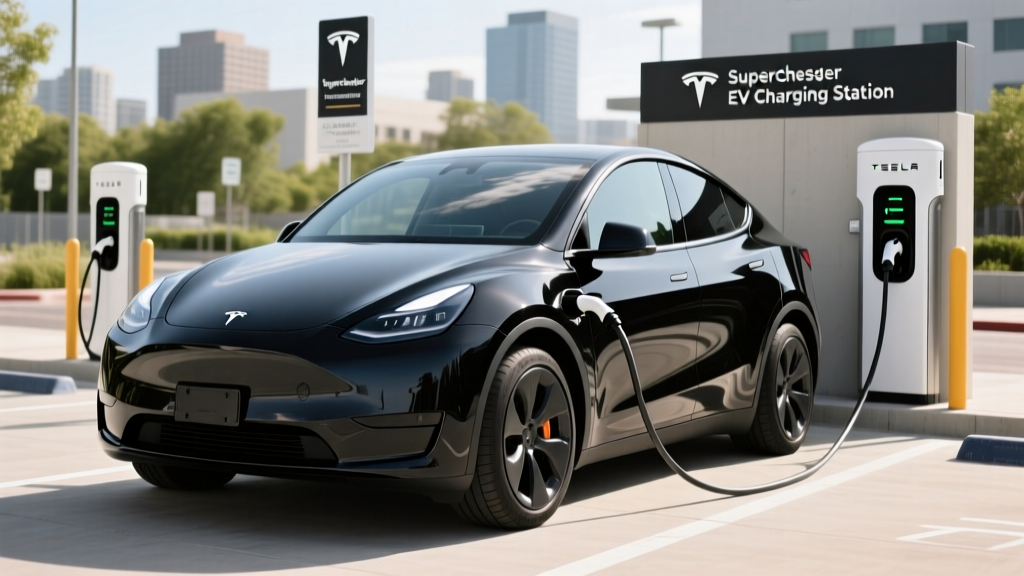
The 2021 Model Y Performance supports a peak DC fast-charge rate of 250 kW at V3 Superchargers, allowing a 10–80% charge in approximately 15–20 minutes under ideal conditions. However, charging speed follows a charge curve: the battery accepts peak power only at lower states of charge (roughly 10–40%), then tapers progressively. Above 80%, speeds drop dramatically to protect battery health—often below 50 kW. This is why most road-trip charging strategies target the 10–80% window.
Home Charger Installation: Electrical Requirements & Costs
For daily charging, a home Level 2 setup is the gold standard. The Tesla Model Y's onboard charger accepts up to 11.5 kW (48A) on a 240V circuit, which translates to roughly 44 miles of range per hour of charging—enough to fully replenish overnight.
Electrical Requirements
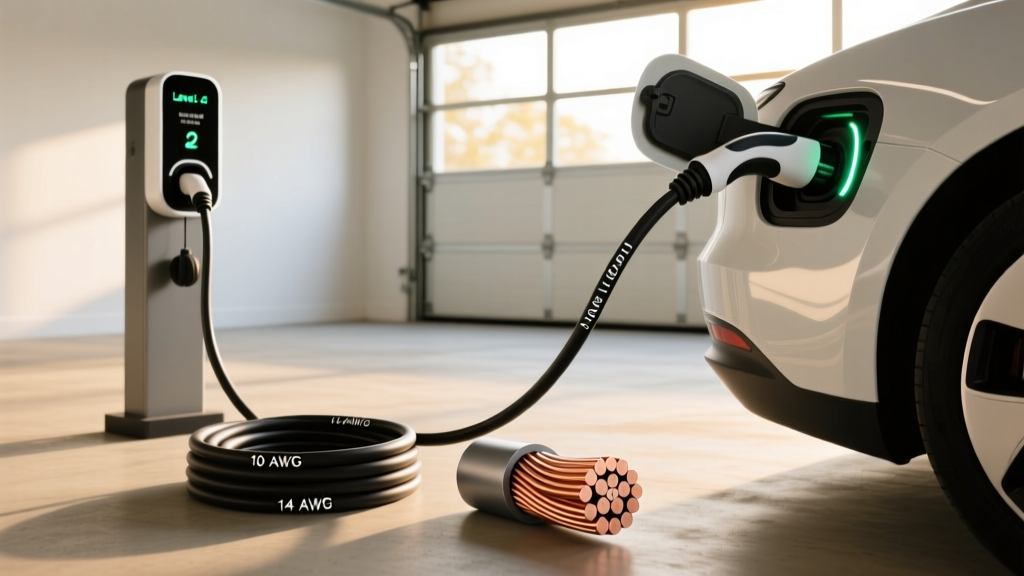
To deliver 48A continuously, the National Electrical Code (NEC) requires a circuit rated at 125% of the continuous load—meaning a 60-amp breaker on a dedicated 240V circuit. If you opt for a 40A charger (like the standard Tesla Mobile Connector with a 14-50 adapter), a 50-amp breaker on a 240V/50A circuit suffices.
Panel upgrade reality: Many homes built before 2000 have 100A or 150A main electrical panels. Adding a 60A EV circuit may push total load beyond safe capacity, requiring a panel upgrade to 200A—a significant added cost. Always have a licensed electrician perform a load calculation before installation.
| Cost Component | Typical Range | Notes |
|---|---|---|
| Level 2 Charger Equipment | $250–$700 | Tesla Wall Connector ~$420; third-party smart chargers $400–$700 |
| Electrician Labor (standard install) | $500–$1,500 | Varies by run length, conduit, wall type |
| Electrical Permit | $50–$250 | Required in most jurisdictions |
| Panel Upgrade (if needed) | $1,500–$3,500 | 100A → 200A upgrade; not always required |
| Total (no panel upgrade) | $800–$2,450 | Most common scenario |
| Total (with panel upgrade) | $2,300–$5,950 | Older homes with limited capacity |
The IRS §30D credit does not apply to home charging equipment for used vehicles, but some utilities offer rebates of $250–$500 for Level 2 charger installations—check with your local provider.
Connector Compatibility: NACS, CCS, and Adapters
The 2021 Tesla Model Y Performance was built with Tesla's proprietary connector (now officially designated NACS — North American Charging Standard). This means seamless access to the Tesla Supercharger network without adapters. However, the charging landscape has shifted significantly since 2021.
| Connector Type | Compatibility with 2021 Model Y | Adapter Needed? | Network Examples |
|---|---|---|---|
| NACS (Tesla) | Native — built-in | No | Tesla Supercharger, Tesla Destination |
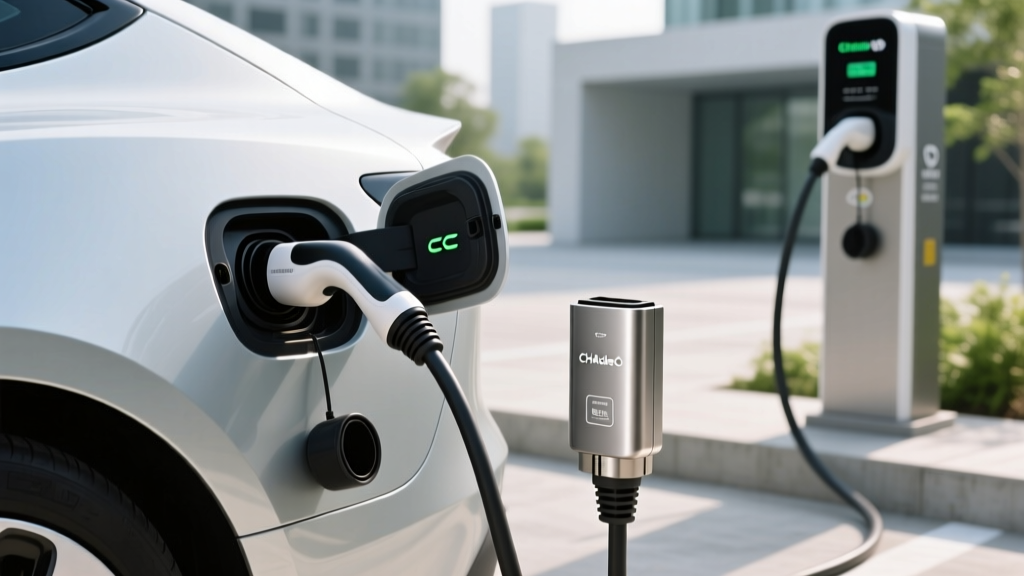
| CCS1 | Yes, with adapter | Tesla CCS Adapter (~$175–$250) | Electrify America, EVgo, ChargePoint |
| CHAdeMO | Not practical | No reliable adapter available | Largely deprecated in North America |
Key consideration: Tesla now sells a CCS1 adapter that allows 2021 Model Y owners to access non-Tesla DC fast-charging networks. This is valuable for road trips through areas with limited Supercharger coverage. However, charging speeds on CCS networks may vary, and some stations may not deliver the full 250 kW the Model Y can accept. Always precondition your battery via the car's navigation system before arriving at any DC fast charger—this warms the battery to optimal temperature and significantly improves charge speed.
Cost to Charge: Per-Mile Economics vs. Gas
One of the strongest arguments for the 2021 Model Y Performance is its low operating cost. Here's how charging expenses compare to gasoline, based on the Model Y's efficiency of 29 kWh per 100 miles.
| Charging Scenario | Average Cost ($/kWh) | Cost Per 100 Miles | Cost Per Mile |
|---|---|---|---|
| Home (off-peak utility rate) | $0.12 | $3.48 | $0.035 |
| Home (average US residential) | $0.17 | $4.93 | $0.049 |
| Public Level 2 (ChargePoint, etc.) | $0.25–$0.40 | $7.25–$11.60 | $0.073–$0.116 |
| Tesla Supercharger (V3) | $0.28–$0.40 | $8.12–$11.60 | $0.081–$0.116 |
| Electrify America (DC fast) | $0.35–$0.55 | $10.15–$15.95 | $0.102–$0.160 |
| Gas equivalent (25 MPG, $3.50/gal) | — | $14.00 | $0.140 |
Even at the most expensive public DC fast-charging rates, the Model Y Performance costs less per mile than a comparable gas-powered performance SUV getting 25 MPG combined. For owners who charge primarily at home on off-peak rates, fuel savings can exceed $1,000–$1,500 annually compared to a gas vehicle driven 12,000 miles per year.
Recommended Home Charging Equipment
Not all Level 2 chargers are equal. Here are three proven options for the 2021 Model Y Performance, selected for reliability, power output, and smart features.
Tesla Wall Connector (Gen 3)
- Power Output: Up to 11.5 kW (48A)
- Connector: NACS (native Tesla)
- Cable Length: 24 feet
- Smart Features: Wi-Fi updates, power sharing between units, load management
- Price: ~$420
- Verdict: Best for Tesla-only households. Cleanest integration, highest output for the price.
ChargePoint Home Flex
- Power Output: Up to 12 kW (50A), configurable
- Connector: J1772 (requires Tesla J1772 adapter, included with Model Y)
- Cable Length: 23 feet
- Smart Features: App scheduling, Alexa integration, energy tracking
- Price: ~$550–$650
- Verdict: Best for multi-EV households or future-proofing for non-Tesla vehicles.
Emporia Vue Smart Charger
- Power Output: Up to 11.5 kW (48A)
- Connector: J1772 (Tesla adapter needed)
- Cable Length: 24 feet
- Smart Features: Solar integration, real-time energy monitoring, scheduling
- Price: ~$400–$500
- Verdict: Best budget smart charger with strong energy management features.
Important: All hardwired Level 2 chargers should be installed on a dedicated circuit by a licensed electrician. If you choose a plug-in unit (NEMA 14-50 outlet), ensure the receptacle is rated for continuous use and installed with proper torque specifications—loose connections are a fire hazard.
Safety, Code, and Installation Best Practices
EV charging draws significant current for extended periods, making electrical safety non-negotiable. Here's what your installation must address:
- Dedicated circuit: Your Level 2 charger must have its own breaker—never share a circuit with other major appliances.
- GFCI protection: The NEC requires GFCI (Ground Fault Circuit Interrupter) protection for outdoor receptacles. Hardwired installations may have different requirements depending on local code.
- Outdoor rating: If your charger is mounted outside or in an unsealed garage, ensure the unit carries a NEMA 4 or IP65 weather-resistance rating. All three chargers listed above meet this standard.
- Cable management: Use a holster or cable organizer to prevent tripping hazards and protect the cable from UV damage and abrasion.
- Permit and inspection: Most municipalities require an electrical permit for new 240V circuits. Skipping this can void homeowner's insurance claims related to electrical fires.
Frequently Asked Questions
How much does it cost to install a home EV charger for my 2021 Model Y?
A typical Level 2 home charger installation costs between $800 and $2,450 when no panel upgrade is needed. This includes the charger unit ($250–$700), electrician labor ($500–$1,500), and a permit ($50–$250). If your home's electrical panel needs an upgrade from 100A to 200A, add $1,500–$3,500.
How fast will each charging level add range to my Model Y Performance?
Level 1 (120V) adds roughly 3–5 miles per hour—barely useful for a 75 kWh battery. Level 2 (240V, 48A) adds about 44 miles per hour, easily replenishing a full day's driving overnight. DC fast charging at a Tesla V3 Supercharger can add up to 200 miles in about 15 minutes under ideal conditions, though the charge curve tapers significantly above 80%.
Which connector and charger is compatible with my 2021 Tesla Model Y?
Your 2021 Model Y uses the NACS (Tesla) connector natively, compatible with all Tesla Superchargers and Destination Chargers. For CCS1 networks like Electrify America, you'll need Tesla's CCS adapter (approximately $175–$250). The J1772 adapter (included with the car) works for public Level 2 stations.
How much does charging cost per mile versus gasoline?
Charging at home on average US electricity rates ($0.17/kWh) costs about $0.049 per mile in the Model Y Performance. A comparable gas SUV at 25 MPG and $3.50/gallon costs $0.14 per mile—nearly three times more. Even public DC fast charging at $0.35/kWh ($0.10/mile) undercuts gasoline.
What electrical upgrades might I need for a home charger?
The most common upgrade is a panel capacity increase. If your home has a 100A or 150A main panel and you're already running central AC, an electric dryer, and an electric range, adding a 60A EV circuit may exceed safe capacity. A licensed electrician will perform a load calculation per NEC Article 220 to determine if a panel upgrade to 200A is necessary. Other potential upgrades include running new conduit from the panel to the garage and upgrading the meter base.
Does the 2021 Model Y Performance battery degrade over time?
Yes, all lithium-ion batteries degrade. Tesla's NMC battery packs typically retain about 90% of original capacity after 100,000 miles based on fleet data. The battery is covered under Tesla's warranty for 8 years or 120,000 miles (whichever comes first), with a minimum 70% capacity retention threshold. To maximize longevity, avoid routinely charging to 100% for daily use—setting a daily limit of 80–90% reduces stress on the cells.
Whether you're optimizing your current 2021 Tesla Model Y Performance ownership experience or evaluating one on the used market, a solid charging strategy is the foundation of EV satisfaction. Home Level 2 charging delivers the best economics and convenience, while the expanding Supercharger and CCS networks make road trips increasingly practical. Invest in a quality charger, hire a qualified electrician, and you'll spend less time and money fueling than you ever did with gas.