The 2021 Tesla Model S Long Range Plus remains one of the most capable used electric sedans on the road in 2026, with an EPA-estimated 402 miles of range and a 100 kWh (usable ~95 kWh) battery pack. Whether you just purchased one on the used market or are optimizing your existing ownership, understanding exactly how to charge this car — at home, on road trips, and at what cost — is essential to getting the most from it.
This guide covers every charging scenario for the 2021 Model S Long Range Plus, from Level 1 trickle charging to 250 kW V3 Supercharging, with exact numbers on speed, cost, and home installation requirements.
2021 Tesla Model S Long Range Plus: Charging Specs at a Glance
| Spec | Value |
|---|---|
| Battery Capacity (Usable) | ~95 kWh (100 kWh pack, NMC chemistry) |
| EPA Range | 402 miles |
| Real-World Highway Range | ~320–350 miles (70+ mph, moderate temps) |
| Cold-Weather Range (20°F) | ~280–310 miles |
| Max DC Fast Charge Rate | 250 kW (V3 Supercharger) |
| 10–80% DC Fast Charge Time | ~30–35 minutes |
| Max Level 2 AC Charge Rate | 11.5 kW (48A onboard charger) |
| Level 2 Miles Per Hour | ~34–37 mi/hr at 48A |
| Connector | NACS (Tesla proprietary) |
| Efficiency | 120 MPGe combined (28 kWh/100 mi) |
Charging Levels Explained: Speeds in kW and Miles Added Per Hour
Understanding the three charging levels is critical. kW (kilowatts) measures the rate of power delivery — think of it as how fast water flows through a hose. kWh (kilowatt-hours) measures total energy stored in the battery — the size of the tank. Never confuse the two.
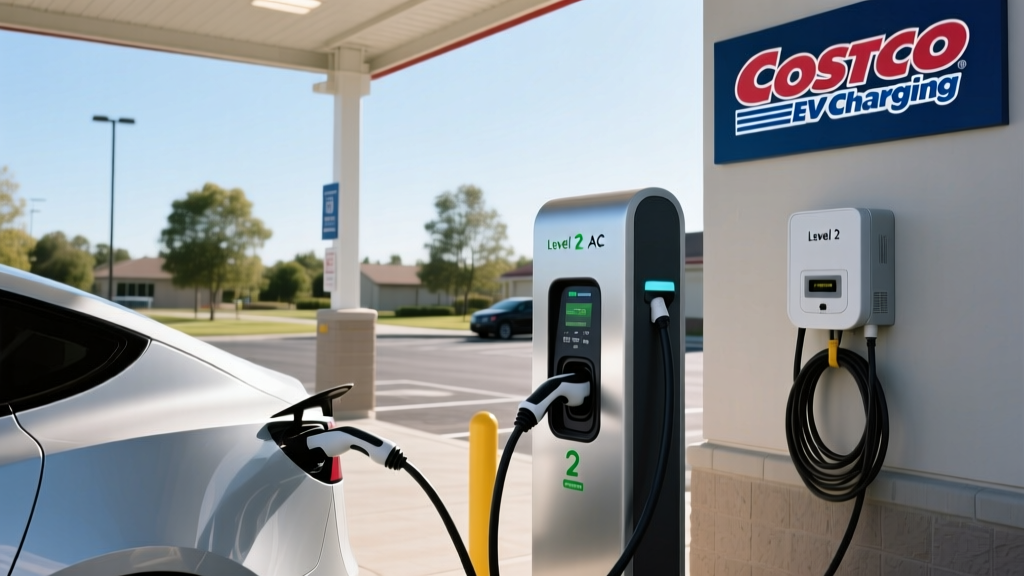
| Level | Voltage | Max Power (kW) | Miles of Range Added Per Hour | Best For |
|---|---|---|---|---|
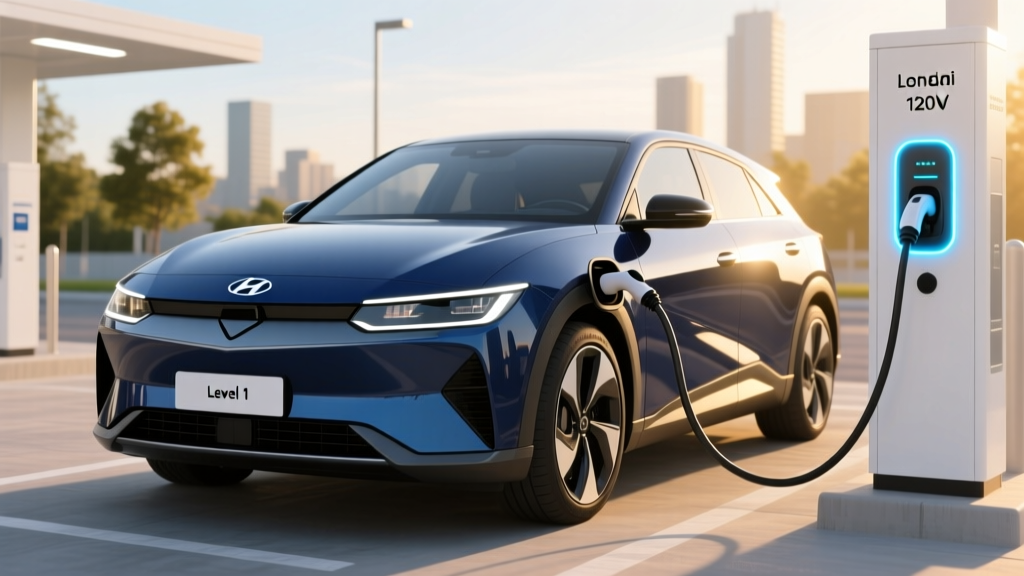
| Level 1 (120V outlet) | 120V | ~1.4 kW | ~3–4 mi/hr | Emergency/top-up only |
| Level 2 (240V home/public) | 240V | 11.5 kW (48A) | ~34–37 mi/hr | Daily home charging |
| DC Fast (Supercharger V3) | 400V+ | 250 kW peak | ~1,000 mi/hr (peak, first 10 min) | Road trips |
For the Model S Long Range Plus's 95 kWh usable battery, a full Level 1 charge from empty would take roughly 68 hours — essentially impractical. Level 2 is the daily workhorse, delivering a full charge in about 8–9 hours (overnight). DC fast charging gets you from 10% to 80% in roughly 30–35 minutes at a V3 Supercharger.
Home Charger Installation: Electrical Requirements, Costs & Panel Upgrades
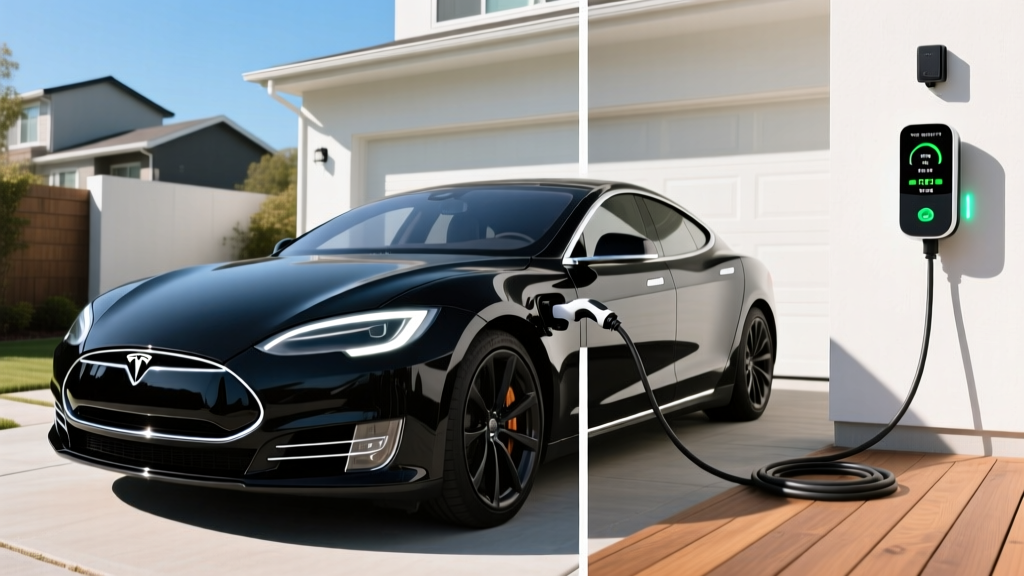
Installing a Level 2 home charger for the Model S Long Range Plus requires a dedicated 240V circuit. Because the car's onboard charger accepts up to 48A (11.5 kW), you'll want a 60A circuit breaker (EVSE must be derated to 80% of breaker capacity for continuous loads per NEC Article 625).
Electrical Requirements
- Circuit: Dedicated 60A, 240V breaker
- Wire gauge: 6 AWG copper (or 4 AWG aluminum) for runs up to 50 feet; thicker for longer runs
- Connector: NACS (Tesla) — native, no adapter needed for Tesla Wall Connector
- GFCI protection: Required by NEC 2020+ for EV outlets (built into most hardwired EVSE units)
- Outdoor rating: NEMA 4 or NEMA 4X if installed outdoors
Installation Cost Breakdown
| Component | Cost Range | Notes |
|---|---|---|
| EVSE Equipment (Tesla Wall Connector) | $400–$475 | 48A, 24-ft cable, Wi-Fi enabled |
| Electrician Labor | $500–$1,500 | Depends on run length, conduit, drywall work |
| Electrical Permit | $50–$200 | Varies by municipality |
| Panel Upgrade (if needed) | $1,500–$3,500 | Required if existing panel lacks capacity for a 60A circuit |
| Total (no panel upgrade) | $950–$2,175 | Most homes with 200A service |
| Total (with panel upgrade) | $2,450–$5,675 | Older homes with 100A service |
Connector Compatibility: NACS, CCS1, and Adapters
The 2021 Tesla Model S Long Range Plus uses the NACS (North American Charging Standard) connector — Tesla's proprietary plug, which was adopted as the industry standard starting in 2023. This means the car charges natively at all Tesla Superchargers and Destination Chargers without any adapter.
| Network / Connector | Compatible? | Adapter Needed? |
|---|---|---|
| Tesla Supercharger (NACS) | Yes — native | None |
| Tesla Destination Charger (NACS) | Yes — native | None |
| Electrify America (CCS1) | Yes, with adapter | Tesla CCS Adapter (~$250) |
| EVgo (CCS1 / NACS) | Yes (NACS stalls native; CCS1 with adapter) | CCS adapter for CCS1 stalls |
| ChargePoint (CCS1 / J1772) | Yes, with adapter | J1772-to-Tesla adapter (included with car) or CCS adapter |
| CHAdeMO (Nissan Leaf-style) | No | No practical adapter exists; avoid |
Tesla sells an official CCS Combo 1 Adapter for approximately $250, which unlocks Electrify America, EVgo CCS stalls, and other third-party DC fast networks. For Level 2 public stations with J1772 connectors, the car ships with a J1772-to-Tesla adapter in the trunk.
Cost to Charge: Per kWh, Per Mile, and vs. Gasoline
One of the strongest ownership arguments for the Model S Long Range Plus is fuel cost savings. Here's what charging actually costs in 2026 across different scenarios:
| Scenario | Rate ($/kWh) | Full Charge Cost (95 kWh) | Cost Per Mile (402 mi range) |
|---|---|---|---|
| Home — Off-Peak TOU (utility rate) | $0.08–$0.12 | $7.60–$11.40 | $0.019–$0.028 |
| Home — Standard Rate (national avg) | $0.16 | $15.20 | $0.038 |
| Tesla Supercharger V3 (avg 2026) | $0.30–$0.40 | $28.50–$38.00 | $0.071–$0.095 |
| Electrify America (CCS, avg) | $0.35–$0.48 | $33.25–$45.60 | $0.083–$0.113 |
Cost Per Mile: EV vs. Gasoline Comparison
| Vehicle | Energy Source | Efficiency | Cost Per Mile |
|---|---|---|---|
| Model S Long Range Plus (home charging) | Electricity @ $0.16/kWh | 28 kWh/100 mi | $0.045 |
| Model S Long Range Plus (Supercharger) | Electricity @ $0.35/kWh | 28 kWh/100 mi | $0.098 |
| BMW 540i (comparable gas sedan) | Gasoline @ $3.50/gal | 25 MPG combined | $0.140 |
| Mercedes E450 (comparable gas sedan) | Gasoline @ $3.50/gal | 23 MPG combined | $0.152 |
Even at Supercharger rates, the Model S costs roughly 30–35% less per mile than a comparable gasoline luxury sedan. At home off-peak rates, the savings reach 70–80%. According to fueleconomy.gov, the 2021 Model S Long Range Plus achieves 120 MPGe combined, making it one of the most efficient large luxury sedans ever produced.
Recommended Home Charging Equipment
Because the Model S Long Range Plus accepts up to 48A (11.5 kW) on Level 2, you'll want a charger that delivers the full rate to minimize overnight charge time. Here are three top picks for 2026:
Tesla Wall Connector (Gen 3)
- Power Output: 48A / 11.5 kW (max for Model S)
- Connector: NACS native
- Cable Length: 24 feet
- Smart Features: Wi-Fi, OTA updates, load sharing, power metering
- Price: ~$475
- Verdict: Best overall for any Tesla. Maximizes the car's 48A onboard charger. Seamless integration with the Tesla app.
ChargePoint Home Flex
- Power Output: Up to 50A / 12 kW (configurable 16A–50A)
- Connector: NACS (2025+ model) or J1772 with adapter
- Cable Length: 23 feet
- Smart Features: Wi-Fi, app scheduling, Alexa, energy tracking
- Price: ~$600–$650
- Verdict: Best if you own non-Tesla EVs alongside the Model S. Flexible amperage works with smaller panels.
Emporia Vue Level 2 Charger
- Power Output: 48A / 11.5 kW
- Connector: NACS (2025+ model) or J1772
- Cable Length: 24 feet
- Smart Features: Wi-Fi, detailed energy monitoring, solar integration
- Price: ~$400–$450
- Verdict: Best budget option with full 48A output. Excellent if you have solar panels and want to track EV energy separately.
Safety, Electrical Code & Installation Best Practices
Home EV charging involves high-amperage, continuous-load electrical work. Cutting corners creates fire risk and may void insurance coverage. Follow these non-negotiable guidelines:
- Dedicated circuit: The EV charger must have its own dedicated breaker — never share a circuit with other appliances.
- NEC 80% rule: A 60A breaker supports 48A continuous draw. A 50A breaker supports 40A. Never exceed 80% of breaker rating for EV charging.
- GFCI protection: Required by NEC 2020 (Article 625.54) for all EVSE. Most hardwired units include built-in GFCI; for plug-in units, use a GFCI breaker.
- Outdoor installations: Use a NEMA 4-rated (weatherproof) enclosure and outdoor-rated cable/conduit. The Tesla Wall Connector is NEMA 3R rated — adequate for covered outdoor locations but not direct rain exposure without a cover.
- Permit and inspection: Most jurisdictions require an electrical permit and post-installation inspection. Budget $50–$200 and factor in 1–2 weeks for inspection scheduling.
- Utility notification: Some utilities require you to notify them before installing an EV charger, especially if you're on a TOU rate plan or need a meter upgrade.
Road Trip Charging: Supercharger Network & Trip Planning
The 2021 Model S Long Range Plus was the last Model S variant sold under the "Long Range Plus" name before Tesla simplified its naming to "Long Range" in late 2021. Regardless, this model retains full access to the Tesla Supercharger network, which in 2026 includes over 6,500 stations and 65,000+ stalls across North America.
DC Fast Charging Times (Supercharger V3, 250 kW)
| State of Charge | Avg. Power (kW) | Time to Reach | Range Added |
|---|---|---|---|
| 10% → 40% | ~220 kW | ~10 minutes | ~120 miles |
| 10% → 60% | ~175 kW avg | ~18 minutes | ~190 miles |
| 10% → 80% | ~130 kW avg | ~30–35 minutes | ~270 miles |
| 80% → 100% | ~30 kW avg | ~40 additional minutes | ~80 miles |
For road trips, plan stops at 10–80% to minimize time at the charger. The Model S navigation system automatically routes through Superchargers and preconditions the battery before arrival — warming it to optimal temperature for faster charging. Always precondition; arriving at a Supercharger with a cold battery can slow peak rates by 30–50%.
Frequently Asked Questions
How much does it cost to install a home EV charger for the 2021 Model S Long Range Plus?
Expect $950–$2,175 total for a standard installation (Tesla Wall Connector + electrician labor + permit) in a home with a 200A electrical panel and a short conduit run. If your home needs a panel upgrade from 100A to 200A, add $1,500–$3,500, bringing the total to $2,450–$5,675.
How fast will each charging level add range?
Level 1 (120V) adds roughly 3–4 miles per hour — only practical for overnight top-ups. Level 2 (240V, 48A) adds 34–37 miles per hour, fully recharging the 95 kWh battery in 8–9 hours. DC fast charging at a V3 Supercharger adds up to 200 miles in 15 minutes at peak rate, with a 10–80% charge taking 30–35 minutes.
Which connector and charger is compatible with my 2021 Model S Long Range Plus?
The car uses NACS natively — compatible with all Tesla Superchargers and Destination Chargers without adapters. For CCS1 networks like Electrify America, purchase Tesla's CCS Combo 1 Adapter (~$250). For Level 2 public stations with J1772 plugs, use the J1772-to-Tesla adapter included with the vehicle. CHAdeMO is not compatible.
How much does charging cost per mile vs. gasoline?
At home on a national average rate of $0.16/kWh, the Model S costs about $0.045 per mile. At Supercharger rates (~$0.35/kWh), it's about $0.098 per mile. A comparable gasoline luxury sedan at 25 MPG and $3.50/gallon costs $0.14 per mile. Home charging saves 65–70% per mile vs. gas; even Supercharging saves ~30%.
What electrical upgrades might I need?
The most common upgrade is a panel capacity increase from 100A to 200A service, required in older homes that lack headroom for a 60A dedicated circuit. Your electrician will perform an NEC Article 220 load calculation. Other potential upgrades include: running new conduit from the panel to the garage ($200–$600), upgrading wiring if existing circuits are aluminum, or installing a sub-panel if the garage is far from the main panel.
Can I charge the 2021 Model S Long Range Plus at non-Tesla Supercharger stalls?
Yes — with the Tesla CCS adapter, you can use Electrify America, EVgo, and other CCS1-equipped DC fast stations. However, peak charge rates on non-Tesla networks may be limited to 150–175 kW depending on the station's hardware. Tesla's V3 Superchargers remain the fastest option for this vehicle at the full 250 kW peak.
Sources: EPA / fueleconomy.gov — 2021 Tesla Model S Long Range Plus, Tesla Home Charging Installation Guide, IRS §30D Clean Vehicle Credit (for used EV credit eligibility, see §25E).