The 2021 Tesla Model S Long Range remains one of the most capable electric sedans on the road, with an EPA-estimated 405 miles of range and a 100 kWh battery pack. But extracting maximum value from that battery requires a charging strategy matched to its capabilities. Whether you are retrofitting a garage for daily Level 2 charging or planning road-trip DC fast-charging stops, this guide covers the electrical requirements, real-world charge times, equipment picks, and per-mile costs specific to the Model S Long Range platform.
Understanding Charging Levels: What the 2021 Model S Long Range Accepts
Before purchasing equipment, you need to understand the three charging tiers and how the Model S Long Range interacts with each. A common mistake is confusing kW (kilowatts — the rate of power delivery, like water pressure) with kWh (kilowatt-hours — the total energy stored, like the size of the tank). Your 2021 Model S Long Range has roughly 100 kWh of battery capacity. The charger's kW rating determines how fast that 100 kWh tank refills.
| Level | Voltage / Amperage | Max Power (kW) | Miles of Range Added per Hour | Best For |
|---|---|---|---|---|
| Level 1 (120V) | 120V / 12A | ~1.4 kW | ~3–4 mi/hr | Emergency / trickle top-off |
| Level 2 (240V) | 240V / 48A | 11.5 kW | ~30–44 mi/hr | Daily home charging |
| DC Fast Charging | 400V architecture | 250 kW peak | ~1,000 mi/hr (peak) | Road trips, rapid top-ups |
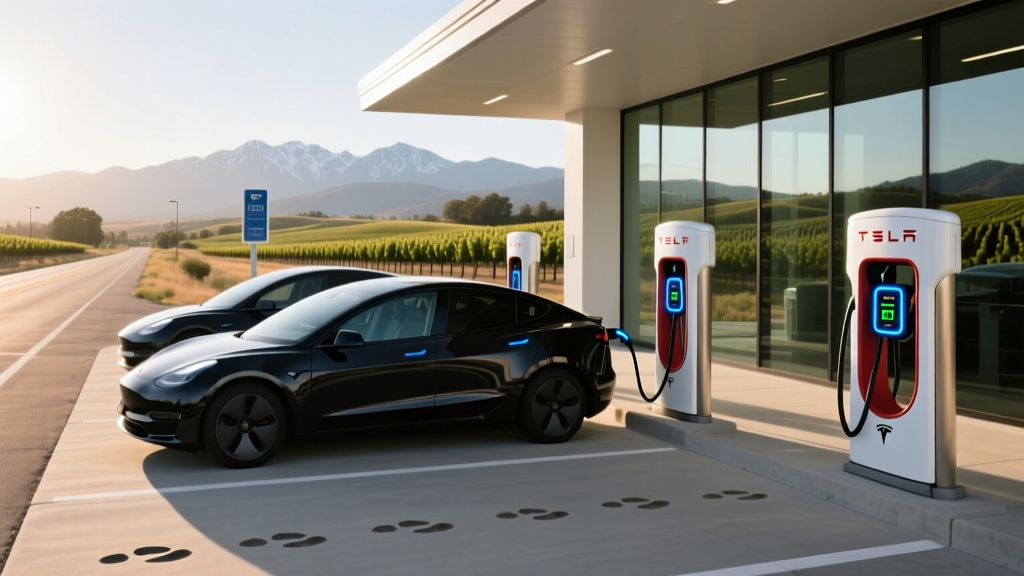
The 2021 Model S Long Range's onboard charger accepts up to 11.5 kW on Level 2 (48 amps on a 60-amp circuit). On DC fast charging, it peaks at 250 kW at V3 Superchargers, though that peak is sustained only briefly before the charge curve tapers. In real-world testing, a 10–80% session at a V3 Supercharger takes approximately 25–30 minutes, not the theoretical minimum. Above 80% state of charge, the battery management system dramatically reduces current to protect cell longevity — expect 80–100% to add another 15–20 minutes.
Home Level 2 Installation: Electrical Requirements and Costs
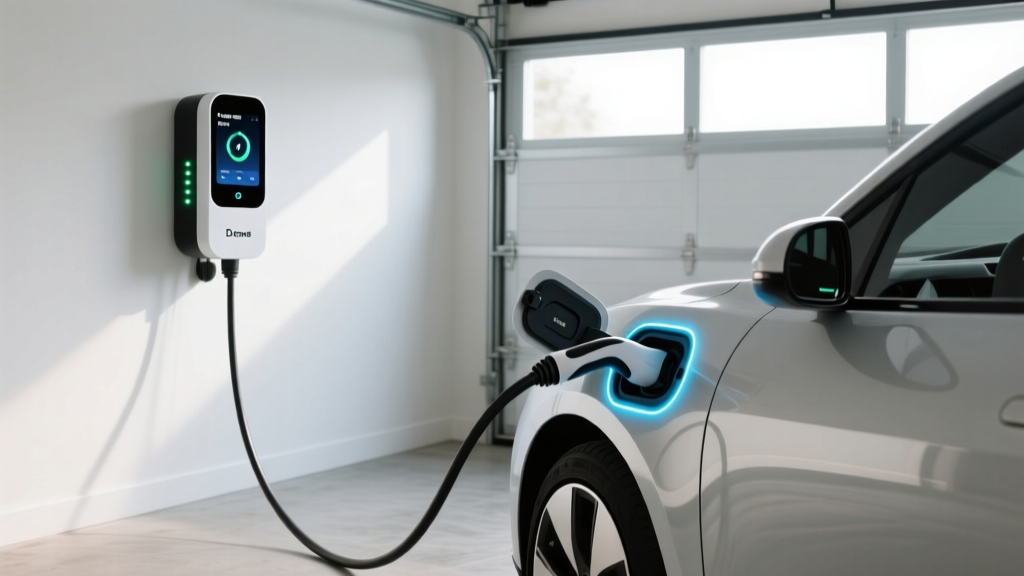
Level 2 home charging is where most Model S owners do 80–90% of their charging. To hit the car's 11.5 kW maximum, you need a 240-volt circuit rated for at least 60 amps. The National Electrical Code requires continuous loads to use only 80% of a circuit's rated capacity, so a 48-amp charger demands a 60-amp breaker.
Here is where many older homes hit a wall. A 60-amp dedicated EV circuit requires two open slots in your electrical panel and sufficient spare capacity on your main service. Homes with 100-amp main panels often cannot accommodate a 60-amp EV circuit without a panel upgrade to 200 amps — a significant additional expense.
| Component | Low Estimate | High Estimate | Notes |
|---|---|---|---|
| Level 2 Charger (hardwired, 48A) | $400 | $750 | Tesla Wall Connector, ChargePoint, Emporia |
| Electrician labor (run 60A circuit, mount charger) | $500 | $1,800 | Varies by run length from panel to garage |
| Permit and inspection | $50 | $300 | Required by most jurisdictions |
| Electrical panel upgrade (100A → 200A) | $1,500 | $4,000 | Only if existing panel lacks capacity |
| Total (no panel upgrade) | $950 | $2,850 | Typical scenario for newer homes |
| Total (with panel upgrade) | $2,450 | $6,850 | Older homes with 100A service |
A licensed electrician should perform a load calculation on your panel before any work begins. If you have a 200-amp main panel with spare slots and capacity, expect the simpler end of the range. If your home was built before 1990, budget for the possibility of a panel upgrade.
Connector Compatibility: NACS, CCS, and Adapter Realities
The 2021 Model S Long Range was built with Tesla's proprietary connector, which has since been standardized as the North American Charging Standard (NACS). As of 2026, NACS is the dominant connector in North America, adopted by Ford, GM, Rivian, Hyundai, and most major automakers. This gives the 2021 Model S a distinct long-term advantage: native access to the entire Tesla Supercharger network without adapters.
| Connector Type | Native Support? | Adapter Needed? | Network Access |
|---|---|---|---|
| NACS (Tesla) | Yes — native | No | Tesla Superchargers, Electrify America (NACS stalls), EVgo, ChargePoint |
| CCS1 | No | Yes — Tesla CCS Adapter (~$175) | Non-Tesla DC fast chargers using CCS |
| CHAdeMO | No | Third-party adapters (discontinued/rare) | Limited legacy network; not recommended |
| J1772 (Level 2 public) | No | Yes — included with Tesla Mobile Connector | Public Level 2 stations, destination chargers |
The Tesla CCS Adapter is worth purchasing if you plan to use Electrify America or regional CCS-only DC fast chargers on road trips. It unlocks roughly 15–20% additional public fast-charging locations that have not yet transitioned to NACS. The J1772 adapter ships with the Tesla Mobile Connector and handles public Level 2 stations at hotels, workplaces, and shopping centers.
Cost to Charge: Home Electricity vs. Gas per Mile
The 2021 Model S Long Range achieves an EPA-rated 120 MPGe combined, which translates to roughly 28 kWh per 100 miles driven. Using that efficiency figure, here is what charging actually costs across common scenarios:
| Charging Scenario | Rate ($/kWh) | Cost per 100 Miles | Cost per Mile |
|---|---|---|---|
| Home (off-peak utility rate) | $0.10 | $2.80 | $0.028 |
| Home (average US residential) | $0.17 | $4.76 | $0.048 |
| Public Level 2 (network pricing) | $0.30 | $8.40 | $0.084 |
| DC Fast Charging (Tesla Supercharger avg) | $0.35 | $9.80 | $0.098 |
| DC Fast Charging (peak pricing) | $0.50 | $14.00 | $0.140 |
| Gas equivalent (25 MPG, $3.50/gal) | — | $14.00 | $0.140 |
According to fueleconomy.gov, the 2021 Model S Long Range's combined efficiency is 28 kWh/100mi. At the national average residential electricity rate of roughly $0.17/kWh (per EIA data), home charging costs approximately $0.05 per mile — roughly one-third the cost of a comparable gas sedan. Even at DC fast-charger peak pricing, you are matching but not exceeding the cost of gasoline.
For maximum savings, program your Model S to charge during off-peak hours (typically 10 PM–6 AM) using the built-in scheduled charging feature. Many utilities offer time-of-use plans that drop rates to $0.08–$0.12/kWh overnight, cutting your per-mile cost to under $0.03.
Charging Time Examples: Real-World Scenarios
The 100 kWh battery in the 2021 Model S Long Range is one of the largest in any consumer EV. That capacity delivers exceptional range but also means longer absolute charge times. Here is what to expect in practice:
- Level 1 (120V, 1.4 kW): 0–100% takes approximately 72 hours. This is only viable for maintaining charge or adding ~30 miles overnight — not for meaningful recharging.
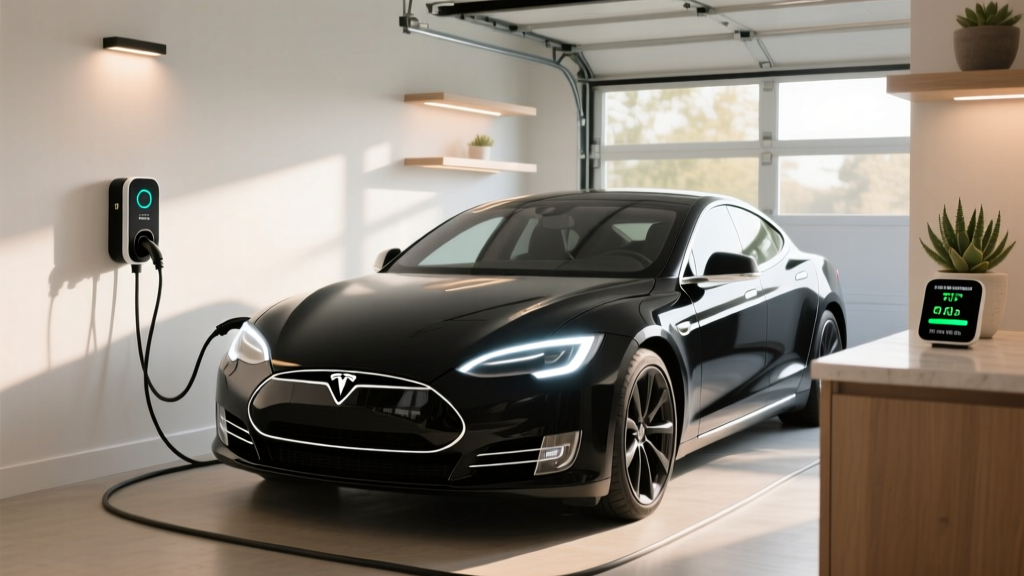
- Level 2 (240V, 11.5 kW / 48A): 0–100% takes approximately 9–10 hours. A 20–80% daily cycle takes about 5–6 hours. This is the sweet spot for overnight home charging.
- DC Fast Charge (250 kW peak, V3 Supercharger): 10–80% takes approximately 25–30 minutes. Expect 200+ miles of range added in 15 minutes at peak charge rate. The curve tapers significantly above 60% SoC.
- DC Fast Charge (150 kW, V2 Supercharger): 10–80% takes approximately 40–45 minutes. Older V2 stalls share power between two pedestals — plug into a stall paired with an empty neighbor for maximum speed.
Cold weather impacts both charging speed and range. Below 40°F, expect the battery management system to limit charge rate until the pack warms. Always use the car's built-in navigation to route to a Supercharger — this triggers automatic battery preconditioning, warming the cells for faster charging upon arrival. Without preconditioning, your first 5–10 minutes at a DC fast charger may be limited to under 50 kW even at a 250 kW stall.
Recommended Home Charging Equipment for the Model S Long Range
The following chargers all support the 48-amp / 11.5 kW output needed to maximize the Model S onboard charger. Each uses the native NACS connector (no adapter required for Tesla vehicles).
Tesla Wall Connector (Gen 3)
- Power Output: Up to 11.5 kW (48A)
- Connector: NACS (native Tesla)
- Cable Length: 24 feet
- Smart Features: Wi-Fi updates, load sharing between multiple units, access control
- Price: ~$475
- Why this one: Best integration with Tesla vehicles, firmware updates over-the-air, and the ability to pair two units on a single circuit for households with two Teslas.
Emporia Vue Level 2 Charger
- Power Output: Up to 11.5 kW (48A)
- Connector: NACS (2025+ models) or J1772 with adapter
- Cable Length: 24 feet
- Smart Features: Energy monitoring, solar integration, scheduled charging, utility demand-response compatible
- Price: ~$400
- Why this one: Ideal if you have or plan to add solar panels. The energy-tracking dashboard shows exactly how much solar vs. grid energy powers your charging sessions.
ChargePoint Home Flex
- Power Output: Up to 12 kW (50A) — adjustable via DIP switches
- Connector: NACS (2025+ models) or J1772 (use included Tesla adapter)
- Cable Length: 23 feet
- Smart Features: App-based scheduling, Alexa integration, flexible amperage settings (16A–50A)
- Price: ~$650
- Why this one: The adjustable amperage is valuable for homes with limited panel capacity — you can set it to 32A (40A circuit) or 40A (50A circuit) without replacing hardware.
Safety and Electrical Code Considerations
A Level 2 EV charger is a continuous high-amperage load — the equivalent of running a large electric oven for 8 hours straight. Proper installation is non-negotiable for safety and insurance compliance.
- Dedicated circuit: Your charger must be on its own dedicated breaker. Sharing a circuit with other appliances risks tripping and fire hazard.
- Wire gauge: A 60-amp circuit typically requires 4 AWG copper wire (or 3 AWG aluminum) for runs up to 50 feet. Longer runs may need thicker wire to limit voltage drop.
- GFCI protection: The 2020 NEC and most updated local codes require GFCI protection for outdoor receptacles. Hardwired chargers generally avoid this requirement, which is why most electricians recommend hardwiring over a NEMA 14-50 outlet for dedicated EV charging.
- Outdoor rating: If your charger is mounted outside or in an open carport, ensure it carries a NEMA 4 (weatherproof) rating. All three recommended chargers above meet this standard.
- Permit and inspection: Nearly all jurisdictions require an electrical permit for a new 60-amp circuit. The inspection ensures the work meets code — skip this step and you risk voiding your homeowner's insurance coverage for electrical fires.
If your garage is far from the electrical panel (over 50 feet), expect higher labor and material costs. Conduit runs through finished walls or underground also add to the total. Get at least three quotes from licensed electricians who have specific EV charger installation experience.
Frequently Asked Questions
How much does it cost to install a home EV charger for a 2021 Tesla Model S Long Range?
Expect $950–$2,850 for a standard installation with an existing 200-amp panel. If your home requires a panel upgrade from 100A to 200A, the total can reach $2,450–$6,850. The Tesla Wall Connector itself costs ~$475, with electrician labor and permits making up the remainder.
How fast will each charging level add range to the Model S Long Range?
Level 1 (120V) adds roughly 3–4 miles per hour. Level 2 (240V, 48A) adds 30–44 miles per hour depending on efficiency. DC fast charging at a V3 Supercharger can add 200 miles in approximately 15 minutes at peak rate, though the charge curve tapers above 60% SoC.
Which connector is compatible with the 2021 Model S Long Range?
The 2021 Model S uses the native Tesla connector, now standardized as NACS. It connects directly to all Tesla Superchargers and a growing number of third-party NACS stalls. For CCS1-equipped public chargers, you need the Tesla CCS Adapter (~$175). A J1772 adapter is included with the Mobile Connector for public Level 2 stations.
How much does charging the Model S Long Range cost per mile vs. gas?
At the US average residential rate of ~$0.17/kWh, home charging costs approximately $0.05 per mile — about one-third the $0.14/mile cost of a 25 MPG gas car at $3.50/gallon. Off-peak home rates can drop this to under $0.03/mile. DC fast charging at $0.35/kWh costs roughly $0.10/mile, still below gas.
What electrical upgrades might I need for a 60-amp Level 2 charger?
If your home has a 100-amp main panel, you will likely need a panel upgrade to 200 amps ($1,500–$4,000). Homes with 200-amp service typically have sufficient capacity. Your electrician will perform a load calculation to verify. If capacity is tight, you can install a 40-amp charger (32A continuous) on a 50-amp circuit, which still delivers ~7.7 kW — enough for most daily needs.