The 2021 Tesla Model 3 Standard Range Plus (SR+) was one of the most popular EVs ever sold in the United States, and it remains a common sight on the used market in 2026. Its EPA-estimated 263 miles of range and sub-$40,000 new price made it the gateway EV for hundreds of thousands of buyers. But the EPA sticker is only part of the story. Real-world range, charging speeds, and what you'll actually spend to keep it powered depend heavily on your driving conditions, charging setup, and battery care habits.
This guide covers everything a current or prospective 2021 Model 3 SR+ owner needs to know: real-world range expectations, all three charging levels with exact speeds, home installation costs and electrical requirements, compatible connectors, per-mile charging costs versus gasoline, and the best Level 2 equipment to buy in 2026.
2021 Tesla Model 3 Standard Range Plus Range: EPA vs. Reality
Real-World Highway (70 mph, mild weather): ~230–245 miles
Real-World Mixed Driving (city + highway): ~240–255 miles
Cold-Weather Highway (below 32°F): ~195–215 miles
The 2021 Model 3 SR+ uses a 55 kWh gross / approximately 50 kWh usable lithium iron phosphate (LFP) battery pack — a significant shift from the NMC chemistry used in earlier SR+ models. Tesla began equipping the SR+ with LFP cells sourced from CATL in late 2021, though some earlier 2021 builds still carried NMC packs. LFP chemistry offers superior cycle life and can be charged to 100% regularly without the degradation concerns that plague NMC batteries at high states of charge.
According to fueleconomy.gov, the 2021 Model 3 SR+ achieves 142 MPGe combined, consuming approximately 24 kWh per 100 miles. In warmer climates and city-heavy driving, owners frequently report beating the EPA figure. On sustained highway trips at 75–80 mph, expect the range to drop by 10–15%. In freezing temperatures, battery resistance and cabin heating can cut range by 20–30%.
Tesla's heat pump, standard on 2021 models, helps mitigate cold-weather losses compared to resistive heaters, but the laws of physics still apply — a 50 kWh usable battery simply holds less available energy when cells are cold.
Charging Levels Explained: Speeds in kW and Miles Per Hour
Before diving into specifics, it's essential to distinguish between kW (kilowatts), which measures charging power or speed, and kWh (kilowatt-hours), which measures battery energy capacity. Think of kW as the flow rate of a hose and kWh as the size of the bucket. The 2021 Model 3 SR+ has a ~50 kWh usable bucket; how fast you fill it depends on the kW flow rate.
| Level | Voltage | Max Power (kW) | Miles of Range Added Per Hour | Typical Use Case |
|---|---|---|---|---|
| Level 1 (120V) | 120V AC | 1.0–1.4 kW | 3–5 miles/hr | Emergency / overnight trickle |
| Level 2 (240V) | 240V AC | 7.2–11.5 kW | 25–44 miles/hr | Home daily charging |
| DC Fast Charging | 400V DC | Up to 170 kW (peak) | ~500+ miles/hr (peak) | Road trips / rapid top-ups |
Level 1: The Emergency Backup
Using a standard 120V household outlet with Tesla's Mobile Connector, the 2021 Model 3 SR+ adds roughly 3–5 miles of range per hour. A full charge from 10% to 100% takes approximately 40–50 hours. This is viable only if your daily driving is under 30 miles and you can leave the car plugged in for 10+ hours each night.
Level 2: The Daily Workhorse
A 240V Level 2 home charger is the standard setup for most EV owners. The 2021 Model 3 SR+ has an onboard charger rated for 7.6 kW (32 amps at 240V). This means even if you install a 48-amp charger capable of delivering 11.5 kW, the SR+ will only accept 7.6 kW. At that rate, a 10% to 80% charge takes approximately 4.5 hours, adding about 29 miles of range per hour.
DC Fast Charging: Road-Trip Essential
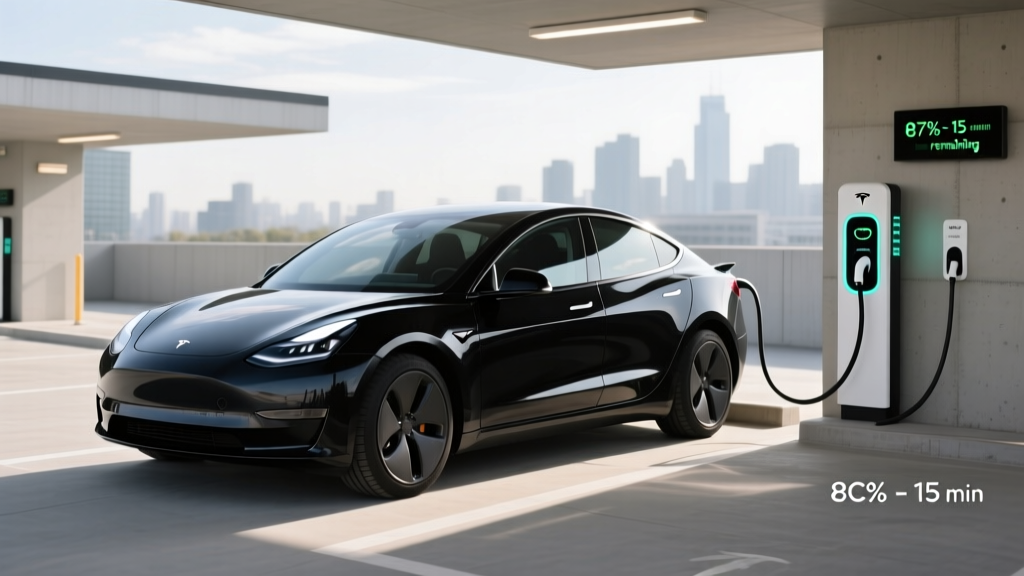
The 2021 Model 3 SR+ supports DC fast charging at up to 170 kW peak via Tesla's Supercharger network (NACS connector). On a V3 Supercharger (250 kW capable), the SR+ will peak around 150–170 kW in ideal conditions but sustains that peak only briefly. The charge curve tapers significantly above 60% state of charge. Expect a 10–80% charge in approximately 25–30 minutes under optimal conditions with a preconditioned battery.
At CCS public chargers (Electrify America, EVgo), you'll need a NACS-to-CCS adapter. The charge speed will still be limited by the car's onboard acceptance rate, not the charger's maximum output.
Home Charger Installation: Costs, Electrical Requirements, and Upgrades
Installing a Level 2 home charger for your 2021 Model 3 SR+ requires a dedicated 240V circuit. The electrical requirements and costs vary significantly depending on your home's existing panel capacity and the distance from the panel to the charger location.
Electrical Requirements
- Voltage/Amperage: 240V circuit, typically 40A or 50A breaker
- Wire gauge: 6 AWG copper for 50A circuits; 8 AWG for 40A
- Dedicated circuit: Required by NEC — the charger cannot share a breaker with other appliances
- GFCI protection: Required for outdoor installations and some jurisdictions for indoor (NEC 2020+)
Since the Model 3 SR+ onboard charger maxes out at 7.6 kW (32A), a 40-amp circuit is sufficient and slightly cheaper to install than a 50-amp setup. However, many owners install a 50A or 60A circuit for future-proofing if they plan to add a second EV or upgrade to a vehicle with a larger onboard charger.
Panel Upgrade Considerations
If your home has a 100-amp electrical panel (common in homes built before 1990), adding a 40A EV circuit may push your total load beyond the panel's capacity, especially if you already run electric dryers, ovens, or HVAC. An electrician will perform a load calculation to determine if a panel upgrade to 200A is necessary.
Panel upgrades typically cost $1,500–$3,500 and add 1–2 weeks to the project timeline due to utility coordination and permitting. This is the single largest variable in home charging installation cost.
| Component | Low-End Cost | High-End Cost | Notes |
|---|---|---|---|
| Level 2 Charger Equipment | $200 | $650 | Tesla Wall Connector to smart third-party units |
| Electrician Labor (standard install) | $400 | $1,200 | Depends on run length, wall type, conduit needs |
| Electrical Permit | $50 | $250 | Varies by municipality |
| Panel Upgrade (if needed) | $1,500 | $3,500 | 100A to 200A service upgrade |
| Total (no panel upgrade) | $650 | $2,100 | Most homes with 200A panels |
| Total (with panel upgrade) | $2,150 | $5,600 | Older homes needing service upgrade |
Connector Compatibility: NACS, CCS, and Adapters
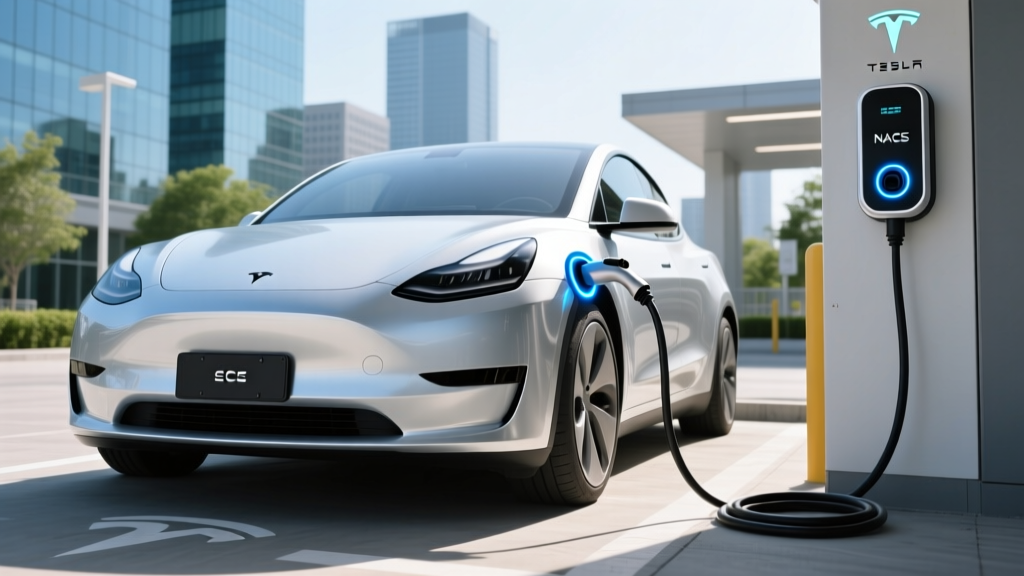
The 2021 Tesla Model 3 SR+ comes equipped with Tesla's proprietary NACS (North American Charging Standard) connector. This gives it native access to the Tesla Supercharger network — the most reliable and extensive DC fast-charging network in the U.S.
However, as of 2026, many public charging networks (Electrify America, EVgo, ChargePoint) still have CCS1 connectors on a significant portion of their stations. Tesla began shipping a NACS-to-CCS adapter to owners, and aftermarket adapters are widely available for $150–$250.
| Connector Type | Native on 2021 Model 3 SR+? | Adapter Needed? | Network Access |
|---|---|---|---|
| NACS (Tesla) | Yes | No | Tesla Superchargers, Tesla Destination Chargers |
| CCS1 | No | Yes (NACS-to-CCS) | Electrify America, EVgo, ChargePoint, others |
| CHAdeMO | No | Rare/expensive adapter | Limited; network is largely deprecated in U.S. |
| J1772 (Level 2) | No | Yes (included with Mobile Connector) | Public Level 2 stations, non-Tesla destination chargers |
For home charging, Tesla's Wall Connector uses the NACS plug natively. If you choose a third-party Level 2 charger with a J1772 connector, you'll use the J1772 adapter that came with your vehicle (or purchase one separately for ~$95).
Cost to Charge: Per-Mile Comparison vs. Gasoline
One of the strongest ownership arguments for the 2021 Model 3 SR+ is the fuel-cost advantage. At 24 kWh per 100 miles, the cost per mile depends entirely on your electricity rate.
| Charging Scenario | Avg. $/kWh | Cost Per 100 Miles | Cost Per Mile | Equiv. Gas MPG at $3.50/gal |
|---|---|---|---|---|
| Home Off-Peak (utility rate) | $0.09 | $2.16 | $0.022 | 162 MPG |
| Home Standard Rate | $0.14 | $3.36 | $0.034 | 104 MPG |
| Public Level 2 (ChargePoint, etc.) | $0.25 | $6.00 | $0.060 | 58 MPG |
| DC Fast (Tesla Supercharger avg.) | $0.30 | $7.20 | $0.072 | 49 MPG |
| DC Fast (peak pricing) | $0.48 | $11.52 | $0.115 | 30 MPG |
| Gasoline Car (28 MPG combined) | — | $12.50 | $0.125 | 28 MPG |
For a driver covering 12,000 miles per year, home charging at off-peak rates costs roughly $260 annually in electricity. The same distance in a 28 MPG gas car at $3.50/gallon costs $1,500. That's a $1,240/year savings, or over $6,000 across five years of ownership.
Even exclusive Supercharger use at $0.30/kWh yields an annual cost of ~$864 — still 42% cheaper than gasoline. The economics strongly favor home charging wherever possible.
Recommended Level 2 Home Chargers for the 2021 Model 3 SR+
Since the SR+ onboard charger caps at 7.6 kW (32A), you don't strictly need a 48-amp charger. However, buying a higher-output unit provides flexibility for future vehicles. Here are top picks for 2026:
Tesla Wall Connector
- Power Output: Up to 11.5 kW (48A) — SR+ will draw 7.6 kW
- Connector: NACS (native fit, no adapter needed)
- Cable Length: 24 feet
- Smart Features: Wi-Fi, OTA updates, load sharing with second unit, Tesla app integration
- Price: ~$475
- Best For: Tesla-only households wanting seamless integration
ChargePoint Home Flex
- Power Output: Up to 12 kW (50A), adjustable via DIP switches
- Connector: J1772 (use Tesla's J1772 adapter) or NACS pigtail version
- Cable Length: 23 feet
- Smart Features: Wi-Fi, Alexa/Google integration, scheduling, energy tracking via app
- Price: ~$550–$650
- Best For: Multi-EV households (Tesla + non-Tesla)
Emporia Level 2 EV Charger
- Power Output: Up to 11.5 kW (48A)
- Connector: J1772 (NACS version available)
- Cable Length: 24 feet
- Smart Features: Wi-Fi, energy monitoring, solar integration, load management
- Price: ~$350–$400
- Best For: Budget-conscious buyers with solar panels
For the 2021 Model 3 SR+ specifically, the Tesla Wall Connector on a 40A circuit is the simplest, most cost-effective choice. It eliminates the need for any adapter and integrates directly with your Tesla app for scheduling and monitoring.
Safety, Code, and Installation Best Practices
EV charger installation is electrical work that must comply with the National Electrical Code (NEC) and local building codes. Key requirements include:
- Dedicated circuit: The charger must have its own breaker — no shared circuits with outlets, lights, or appliances
- GFCI protection: Required for all outdoor installations; some jurisdictions require it indoors as well (NEC 625.54)
- NEMA enclosure rating: Outdoor chargers should be rated NEMA 4 or higher for weather resistance. The Tesla Wall Connector is NEMA 4 rated
- Permit and inspection: Most municipalities require an electrical permit ($50–$250) and a post-installation inspection. Skipping this can void home insurance coverage for electrical fires
- Hardwired vs. plug: Hardwired installations (no plug) are preferred for circuits above 40A and avoid the need for expensive NEMA 14-50 receptacles. The Tesla Wall Connector supports both methods
Always hire a licensed electrician for the installation. Per the National Fire Protection Association, improper EV charger wiring is a documented fire risk, and unpermitted work can create liability issues during home sales.
Charging Time Examples: What to Expect at Each Level
Using the 2021 Model 3 SR+'s ~50 kWh usable battery and 7.6 kW onboard charger as the baseline:
| Scenario | Charger Type | Time (10% → 80%) | Time (10% → 100%) |
|---|---|---|---|
| Level 1 (120V, 12A) | Mobile Connector | ~29 hours | ~38 hours |
| Level 2 (240V, 32A / 7.6 kW) | Wall Connector or equivalent | ~4.5 hours | ~6 hours |
| Level 2 (240V, 40A / 9.6 kW) | Higher-output charger | ~4.5 hours (car-limited) | ~6 hours (car-limited) |
| DC Fast (170 kW peak) | Tesla V3 Supercharger | ~25–30 minutes | ~50–55 minutes |
| DC Fast (50 kW) | CCS station w/ adapter | ~50–55 minutes | ~90 minutes |
Note that charging above 80% slows dramatically on DC fast chargers to protect battery health. Tesla recommends charging to 100% regularly on the LFP-equipped SR+, but DC fast charging to 100% still tapers significantly — the last 20% can take as long as the first 60%.
Frequently Asked Questions
How much does it cost to install a home EV charger for a 2021 Model 3 SR+?
A standard Level 2 installation with a 40A circuit, no panel upgrade, and a Tesla Wall Connector typically costs $650–$2,100 total (equipment + electrician + permit). If your home needs a 100A-to-200A panel upgrade, add $1,500–$3,500 to that total. Get at least two quotes from licensed electricians, as pricing varies by region and job complexity.
How fast will each charging level add range to my Model 3 SR+?
Level 1 (120V) adds 3–5 miles per hour. Level 2 (240V at 32A) adds approximately 29 miles per hour. DC fast charging at a Tesla Supercharger can add up to 170 miles in 15 minutes under optimal conditions, but sustained rates taper as the battery fills.
Which connector and charger is compatible with the 2021 Model 3 SR+?
The 2021 Model 3 SR+ uses the NACS (Tesla) connector natively. For CCS public chargers, you'll need a NACS-to-CCS adapter. For Level 2 J1772 stations, use the J1772 adapter that came with the car. At home, the Tesla Wall Connector with NACS plug is the most seamless option.
How much does charging cost per mile compared to gasoline?
At home on off-peak electricity ($0.09/kWh), the Model 3 SR+ costs roughly $0.022 per mile — equivalent to a 162 MPG gas car. Even on Superchargers at $0.30/kWh, it costs $0.072 per mile, roughly equivalent to a 49 MPG vehicle. A typical 28 MPG gas car costs $0.125/mile at $3.50/gallon.
What electrical upgrades might I need for a home charger?
If your home has a 200A panel with available capacity, you likely need only a dedicated 40A breaker and wiring run. Homes with 100A panels or heavy existing loads (electric heat, dryer, oven) may require a panel upgrade to 200A, costing $1,500–$3,500. A licensed electrician will perform a load calculation to determine your specific needs.
Should I charge my LFP battery to 100%?
Yes. Tesla recommends charging LFP-equipped Model 3 SR+ vehicles to 100% at least once per week. Unlike NMC batteries, LFP chemistry does not suffer accelerated degradation at high states of charge, and regular 100% charges help the battery management system maintain accurate state-of-charge readings.
Does the 2021 Model 3 SR+ qualify for any tax credits in 2026?
The 2021 Model 3 SR+ is no longer available new, so the §30D new clean vehicle credit does not apply. However, if you purchase one used from a dealer in 2026, you may qualify for the Used Clean Vehicle Credit (up to $4,000 or 30% of the sale price, whichever is lower), subject to income caps ($75,000 single / $150,000 joint) and a sale price cap of $25,000. Consult a tax professional to confirm eligibility.
The 2021 Tesla Model 3 Standard Range Plus remains one of the most practical and cost-efficient EVs on the road in 2026. With a home Level 2 charger, its 50 kWh LFP battery refills overnight for pennies per mile, and the Supercharger network provides reliable road-trip charging at speeds up to 170 kW. Understanding the gap between EPA range and real-world conditions, budgeting properly for home installation, and choosing the right equipment will maximize your ownership experience and minimize surprises.