The 2021 Nissan Leaf remains one of the most affordable used electric vehicles on the market, but understanding its real-world range and charging behavior is essential before you buy or optimize your ownership experience. With two battery options, a non-standard DC fast-charging connector, and charging speeds that differ significantly from newer EVs, the Leaf demands a tailored approach to home and public charging. This guide covers everything from EPA range figures to exact home charger installation costs and equipment picks.
2021 Nissan Leaf Range: EPA vs. Real World
The 2021 Leaf comes in two battery configurations, and the range gap between them is substantial. Here is what the EPA rates and what you can realistically expect based on highway driving, cold weather, and battery age.
| Trim / Battery | Usable Battery (kWh) | EPA Range (mi) | Real-World Highway (~70 mph) | Cold Weather Est. (20°F) | MPGe (Combined) |
|---|---|---|---|---|---|
| S / SV (40 kWh pack) | ~39 kWh usable | 149 mi (S) / 150 mi (SV) | ~115–130 mi | ~95–110 mi | 111 MPGe |
| SL / Plus trims (62 kWh pack) | ~60 kWh usable | 212–226 mi | ~170–190 mi | ~135–155 mi | 108–114 MPGe |
Nissan uses passive air cooling for the Leaf's battery rather than the active liquid thermal management found in most modern EVs. This means sustained fast charging or hot-weather driving accelerates battery temperature rise, which triggers charge-speed throttling — commonly called "Rapidgate." For daily driving and overnight Level 2 charging, this is not an issue, but it matters for road-trip planning.
Charging Levels Explained: kW, Speed, and Time
Understanding the difference between kW (kilowatts — the rate of power delivery) and kWh (kilowatt-hours — the total energy stored in the battery) is critical. Think of kW as how fast water flows from a hose, and kWh as the size of the bucket you are filling.
| Level | Voltage / Power | Peak kW | Miles of Range Added per Hour | 40 kWh: 10–80% Time | 62 kWh: 10–80% Time |
|---|---|---|---|---|---|
| Level 1 (120V household) | 120V / 1.4 kW | ~1.4 kW | ~4–5 mi/hr | ~22 hours | ~34 hours |
| Level 2 (240V home/public) | 240V / 6.6 kW | 6.6 kW (onboard limit) | ~20–25 mi/hr | ~4.5 hours | ~7 hours |
| DC Fast (CHAdeMO) | ~400V / up to 50 kW | ~50 kW peak (40 kWh) ~100 kW peak (62 kWh) |
~150–200 mi/hr (at peak) | ~40–60 min | ~45–70 min |
The 2021 Leaf's onboard AC charger is limited to 6.6 kW. Even if you install a 48-amp Level 2 station capable of delivering 11.5 kW, the Leaf will only accept 6.6 kW. This is a hard ceiling set by the car, not the charger.
For DC fast charging, the 40 kWh Leaf peaks around 40–50 kW, while the 62 kWh Leaf Plus can accept up to approximately 100 kW on compatible CHAdeMO stations. However, the Leaf's lack of active battery cooling means charging speeds taper aggressively once the battery warms up — especially on back-to-back fast charges or in hot weather. Expect 10–80% in roughly 45 minutes under ideal conditions for the Plus, but plan for 60+ minutes in summer heat or after highway driving.
Home Charger Installation: Costs, Electrical Requirements, and Gotchas
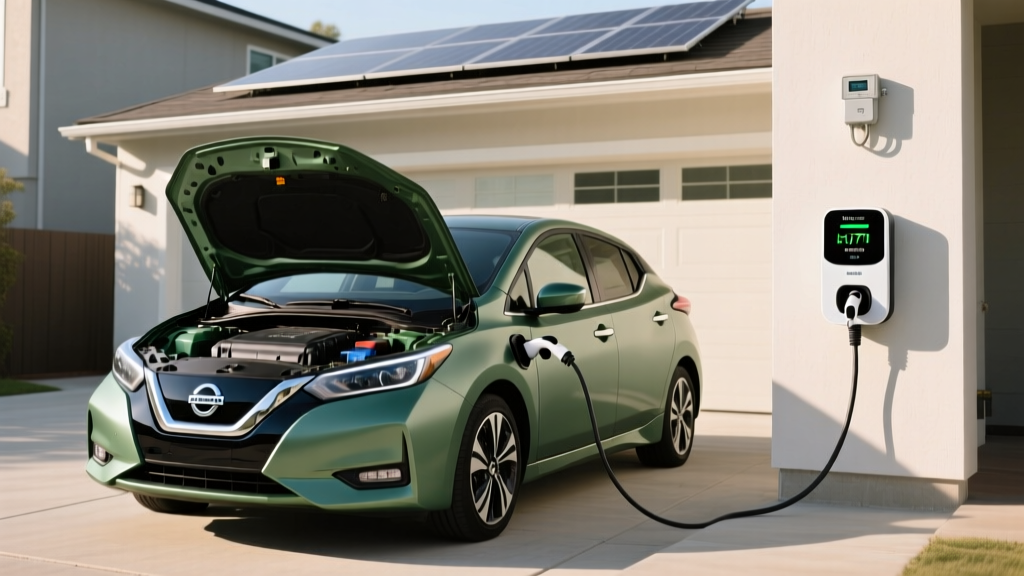
A Level 2 home charger is the single biggest quality-of-life upgrade for any Leaf owner. Here is what the installation actually involves and what it costs.
Electrical Requirements
The Leaf's 6.6 kW onboard charger draws approximately 27.5 amps at 240V. National Electrical Code requires continuous loads to be on a circuit rated at 125% of the draw, meaning you need a minimum 40-amp dedicated circuit (240V). A 50-amp circuit with a NEMA 14-50 outlet is the most common and future-proof installation, allowing you to swap chargers or upgrade vehicles later without new wiring.
Panel upgrade reality: If your home has a 100-amp electrical panel that is already near capacity (common in homes built before 1990), you may need a panel upgrade to 200 amps. This adds $1,500–$3,000 to the project and requires a utility coordination visit. A licensed electrician will perform a load calculation during the initial assessment — ask for this explicitly.
| Component | Low Estimate | Typical Range | High Estimate |
|---|---|---|---|
| Level 2 charger equipment (hardwired or plug-in) | $250 | $400–$650 | $800 |
| Electrician labor (run 240V circuit, mount charger) | $400 | $600–$1,200 | $2,000 |
| Permit and inspection (local jurisdiction) | $50 | $100–$250 | $400 |
| Electrical panel upgrade (if needed) | $1,500 | $2,000–$2,500 | $3,500 |
| Total (no panel upgrade) | $700 | $1,100–$2,100 | $3,200 |
| Total (with panel upgrade) | $2,200 | $3,100–$4,600 | $6,700 |
The federal residential clean energy credit (as of 2026) may cover up to 30% of charger equipment and installation costs, capped at $1,000. Check IRS guidelines and consult a tax professional for eligibility.
Safety and Code Considerations
- Dedicated circuit: Your Level 2 charger must be on its own dedicated breaker — never share a circuit with appliances or outlets.
- GFCI protection: NEC 2020 and later require GFCI protection for EV charging outlets in garages. Hardwired chargers may be exempt depending on jurisdiction — confirm with your electrician.
- Outdoor rating: If mounting outside, ensure the charger is NEMA 4 rated (weatherproof). All recommended chargers below meet this standard.
- Wire gauge: A 40-amp circuit requires 8 AWG copper wire; a 50-amp circuit requires 6 AWG. Do not undersize wire — this is a fire risk.
- Permit: Nearly all jurisdictions require a permit and inspection for new 240V circuits. Skipping this can void homeowner's insurance in the event of an electrical fire.
CHAdeMO Connector: Compatibility and the Adapter Problem
The 2021 Nissan Leaf uses the CHAdeMO connector for DC fast charging and a J1772 inlet for Level 1 and Level 2 AC charging. This is a critical ownership consideration because the North American market has shifted decisively to CCS1 and NACS (Tesla's North American Charging Standard).
| Connector Type | Used For | Leaf Compatibility | Network Availability (2026) |
|---|---|---|---|
| J1772 | Level 1 & Level 2 AC | ✅ Native | Widely available — ChargePoint, public L2, all home chargers |
| CHAdeMO | DC Fast Charging | ✅ Native | Declining — Electrify America has removed CHAdeMO from most new stations; some EVgo and independent stations remain |
| CCS1 | DC Fast Charging | ❌ Not compatible (no adapter exists) | Widely available — most non-Tesla DC networks |
| NACS (Tesla) | DC Fast Charging | ❌ Not compatible (no adapter exists) | Tesla Supercharger network — largest in North America |
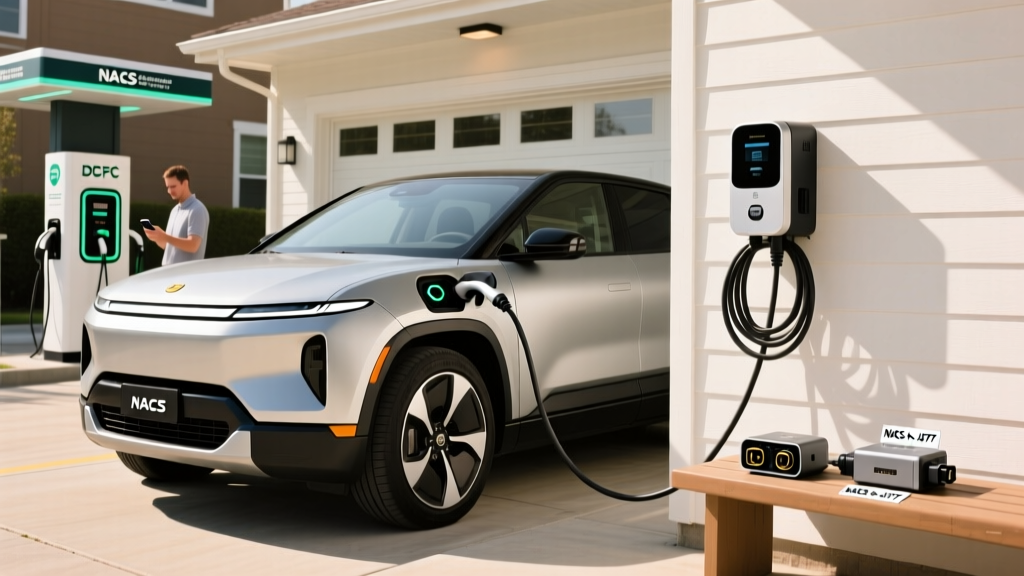
For Level 2 home and public AC charging, the Leaf's J1772 inlet works with every standard Level 2 charger on the market. If you buy a NACS-connector home charger (increasingly common in 2026), you will need a NACS-to-J1772 adapter (approximately $150–$250) to charge the Leaf.
Cost to Charge: Home vs. Public vs. Gas
One of the Leaf's strongest ownership arguments is low fuel cost — but the savings depend heavily on where and when you charge.
| Scenario | Cost per kWh | Leaf (62 kWh) Cost per Mile | Gas Car (30 MPG @ $3.40/gal) Cost per Mile |
|---|---|---|---|
| Home — off-peak utility rate | $0.09/kWh | $0.027 | $0.113 |
| Home — standard rate | $0.16/kWh | $0.048 | $0.113 |
| Public Level 2 (ChargePoint, etc.) | $0.25–$0.39/kWh | $0.075–$0.117 | $0.113 |
| DC Fast Charging (EVgo, etc.) | $0.35–$0.48/kWh | $0.105–$0.144 | $0.113 |
At home on off-peak rates, the Leaf costs roughly $0.03 per mile — a 76% savings over a 30 MPG gas car. However, exclusive reliance on DC fast charging at $0.40+/kWh can actually make the Leaf more expensive per mile than gasoline. Home charging is where the economics work best.
For a 62 kWh Leaf Plus driven 12,000 miles per year with 80% home charging at $0.14/kWh and 20% public DC fast charging at $0.42/kWh, annual fuel cost is approximately $700–$800. A comparable 30 MPG gas car at $3.40/gallon spends about $1,360.
Best Home Chargers for the 2021 Nissan Leaf
Since the Leaf maxes out at 6.6 kW (27.5A at 240V), you do not need a 48-amp charger — but installing one provides future-proofing if you add a second EV or upgrade vehicles. Below are chargers well-suited to the Leaf's needs.
Emporia Vue Level 2 Charger
- Power Output: Up to 48A / 11.5 kW (Leaf will use 27.5A / 6.6 kW)
- Connector: J1772 (direct fit for Leaf)
- Cable Length: 24 ft
- Smart Features: Wi-Fi scheduling, solar integration, energy monitoring via Emporia app
- Price: ~$350–$400
- Best For: Budget-conscious Leaf owners who want energy tracking
ChargePoint Home Flex
- Power Output: Up to 50A / 12 kW (configurable; set to 32A for Leaf's 6.6 kW)
- Connector: J1772 (NACS version available with adapter)
- Cable Length: 23 ft
- Smart Features: Wi-Fi, Alexa integration, scheduling, ChargePoint network account
- Price: ~$550–$700
- Best For: Owners who use ChargePoint public stations and want a unified account
Grizzl-E Smart
- Power Output: Up to 40A / 9.6 kW (Leaf will use 27.5A / 6.6 kW)
- Connector: J1772
- Cable Length: 24 ft
- Smart Features: OCPP-compatible, works with multiple apps, adjustable amperage via dip switches
- Price: ~$400–$500
- Best For: Cold-climate owners — built in Canada, rated to -40°F, NEMA 4 outdoor
Tesla Universal Wall Connector
- Power Output: Up to 48A / 11.5 kW
- Connector: NACS with built-in J1772 adapter (Magic Dock style)
- Cable Length: 24 ft
- Smart Features: Wi-Fi, scheduling, OTA updates, Power-Share for two Teslas
- Price: ~$550–$600
- Best For: Mixed-EV households (Tesla + Leaf) — charges both natively
Public Charging Strategy for Leaf Owners
The Leaf's CHAdeMO connector limits your DC fast-charging options compared to CCS or NACS vehicles. Here is how to plan public charging in 2026:
- EVgo: The largest remaining CHAdeMO network in the U.S. Many EVgo stations retain CHAdeMO connectors alongside CCS. Check the EVgo app for real-time availability.
- Electrify America: Most newer EA stations have dropped CHAdeMO. Older installations may still have one connector — verify on the EA app before driving there.
- PlugShare: The most reliable aggregator for CHAdeMO station mapping. Filter by connector type and read user check-in comments for operational status.
- Nissan dealer network: Some Nissan dealerships offer free or discounted CHAdeMO charging for Leaf owners — worth calling ahead on road trips.
For daily driving, most Leaf owners rely exclusively on home Level 2 charging and rarely need DC fast charging. The 62 kWh Plus model, with its 170+ real-world highway miles, handles most errands and commutes without any public charging at all.
Frequently Asked Questions
How much does it cost to install a home EV charger for the Leaf?
Expect $1,100–$2,100 for a standard installation (40-amp or 50-amp 240V circuit, no panel upgrade). If your electrical panel needs upgrading from 100A to 200A, total costs can reach $3,100–$4,600. Always get a load calculation from a licensed electrician before committing.
How fast will each charging level add range to my Leaf?
Level 1 (120V) adds roughly 4–5 miles of range per hour — suitable only for overnight topping off of the 40 kWh model. Level 2 (240V at 6.6 kW) adds 20–25 miles per hour, fully charging the 62 kWh battery overnight in about 9 hours. DC fast charging at peak rates can add 150+ miles per hour, but the Leaf's thermal management limits sustained speed.
Which connector and charger is compatible with my 2021 Leaf?
For AC charging (home and public Level 2), the Leaf uses the J1772 connector — compatible with virtually every Level 2 charger sold. For DC fast charging, the Leaf uses CHAdeMO, which is not compatible with CCS or NACS stations, and no functional adapter exists to bridge this gap.
How much does charging cost per mile compared to gas?
At home on average U.S. electricity rates ($0.16/kWh), the 62 kWh Leaf costs about $0.05 per mile — roughly 55% less than a 30 MPG gas car at $3.40/gallon. Public DC fast charging at $0.40+/kWh can push costs to $0.12–$0.14 per mile, comparable to or slightly above gasoline.
What electrical upgrades might I need for a home charger?
You need a dedicated 240V circuit rated for at least 40 amps. Homes with older 100-amp panels may require a panel upgrade to 200 amps ($1,500–$3,500). The electrician will perform a load calculation to determine if your existing panel has sufficient headroom. A NEMA 14-50 outlet is the most versatile installation choice.
Can I use a Tesla charger or Supercharger with my Leaf?
No. Tesla Superchargers use the NACS connector, and no CHAdeMO-to-NACS adapter exists. For home charging, the Tesla Universal Wall Connector includes a built-in J1772 adapter that works with the Leaf's AC inlet, but this is Level 2 only — not DC fast charging.
Is the 2021 Leaf's battery covered by warranty in 2026?
Nissan's lithium-ion battery warranty covers 8 years/100,000 miles against capacity loss below 9 bars (out of 12) on the dashboard capacity gauge. A 2021 Leaf's factory warranty expires in 2029 or at 100,000 miles, whichever comes first. Battery degradation on the Leaf tends to be higher than liquid-cooled EVs, particularly in hot climates — expect 10–20% capacity loss by year 5–6 depending on usage and climate. Source: Nissan USA.