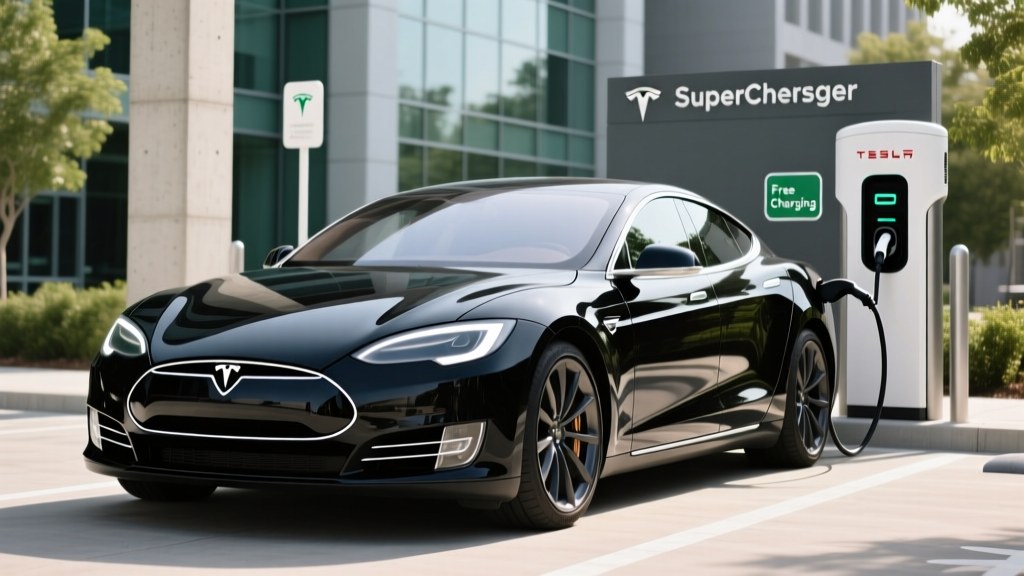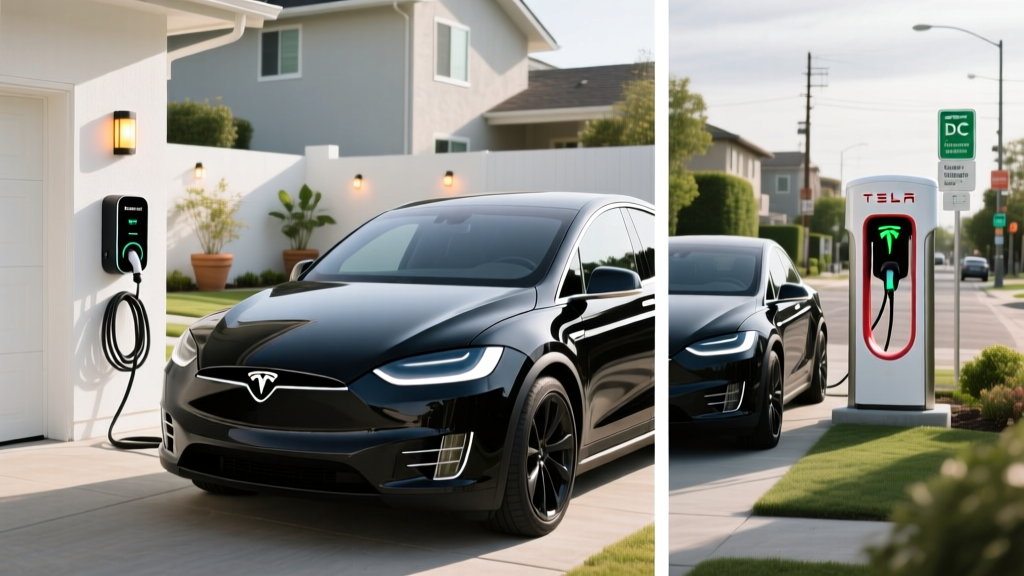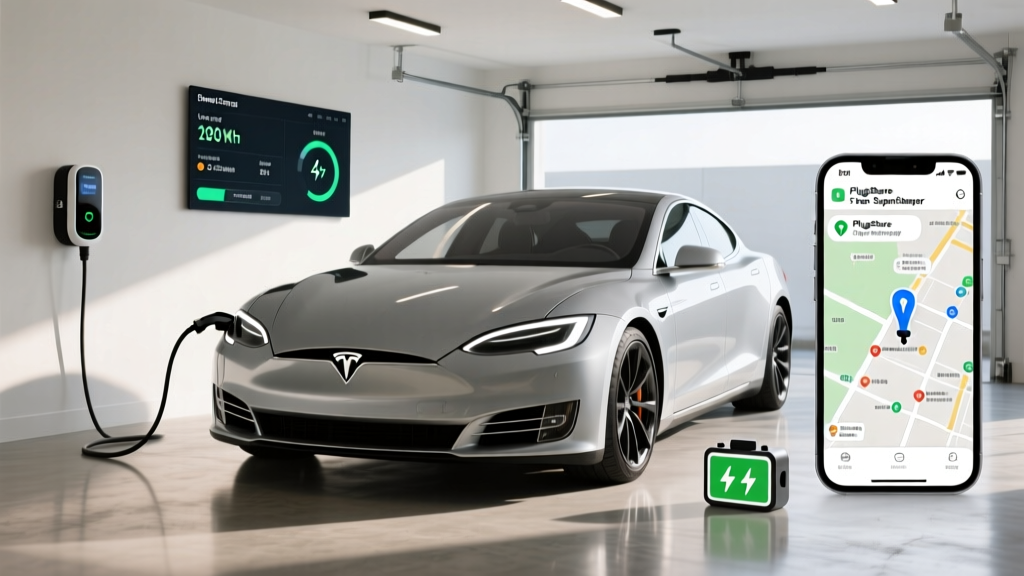
The 2021 Tesla Model S Long Range remains one of the most capable electric sedans on the road, pairing a 100 kWh battery pack with an EPA-rated 405 miles of range. But owning one means understanding how to charge it efficiently — at home, on road trips, and in daily driving. This guide breaks down exact charging speeds, home installation requirements, connector compatibility, and real-world costs so you can maximize every kWh.
2021 Model S Long Range: Charging Specs at a Glance
| Spec | Value |
|---|---|
| Battery Capacity | 100 kWh (usable ~95 kWh) |
| Battery Chemistry | NMC (Nickel Manganese Cobalt) |
| EPA Range | 405 miles |
| Real-World Highway Range | ~330–360 miles (70+ mph, moderate temps) |
| Peak DC Fast Charge Rate | 250 kW (V3 Supercharger) |
| 10–80% DC Fast Charge Time | ~30 minutes (V3 Supercharger) |
| Max Level 2 AC Charge Rate | 11.5 kW (48A onboard charger) |
| Connector | NACS (Tesla proprietary, now industry standard) |
| EPA Efficiency | 120 MPGe combined (28 kWh/100 mi) |
| Battery Warranty | 8 years / 150,000 miles (70% retention) |
Charging Levels Explained: How Fast Can You Add Range?
Understanding the three charging levels is essential for any Model S owner. Power is measured in kilowatts (kW) — the rate of energy delivery — while battery capacity is measured in kilowatt-hours (kWh), the total energy stored. These are not interchangeable.
| Level | Voltage / Amps | Power (kW) | Miles Added/Hour | Best Use Case |
|---|---|---|---|---|
| Level 1 | 120V / 12A | ~1.4 kW | ~3–4 mi/hr | Emergency / overnight trickle |
| Level 2 | 240V / 48A | 11.5 kW | ~34–40 mi/hr | Daily home charging |
| DC Fast (V3 Supercharger) | 400V DC | Up to 250 kW | ~1,000+ mi/hr (peak) | Road trips, rapid top-ups |
At Level 1, a full charge from 10% to 100% on the Model S Long Range would take roughly 65–70 hours — impractical for anything beyond maintaining charge. Level 2 is the home-charging standard: a full 10–100% session takes about 9 hours, easily covering overnight replenishment. DC fast charging at a V3 Supercharger delivers up to 250 kW, but only at low state of charge (SoC); the charge curve tapers significantly above 60% SoC, which is why 10–80% is the standard benchmark (~30 minutes) rather than 0–100%.
Home Level 2 Installation: Electrical Requirements and Costs
Installing a Level 2 charger at home is the single biggest quality-of-life upgrade for any EV owner. The 2021 Model S supports up to 11.5 kW AC charging (48 amps), which means you need a dedicated 60-amp circuit (NEC code requires circuits rated at 125% of continuous load, so 48A × 1.25 = 60A breaker).
Electrical Requirements
- Voltage: 240V split-phase (standard US residential)
- Circuit: Dedicated 60-amp breaker
- Wire gauge: 6 AWG copper (or 4 AWG aluminum for longer runs)
- Connector: NACS (Tesla Wall Connector) or J1772 with Tesla adapter
- Panel capacity: Minimum 100A service; 200A preferred for homes with other large loads (HVAC, electric range, dryer)
Panel Upgrade Considerations
Homes built before 1990 often have 100-amp electrical panels. Adding a 60-amp EV circuit to a panel already serving high-draw appliances may require a panel upgrade to 200 amps. This is one of the most overlooked costs in EV ownership planning.
| Component | Low Estimate | High Estimate |
|---|---|---|
| Level 2 Charger Equipment | $400 | $700 |
| Electrician Labor (standard install, <50 ft run) | $500 | $1,500 |
| Permit & Inspection | $50 | $300 |
| Electrical Panel Upgrade (if needed, 100A → 200A) | $1,500 | $4,000 |
| Total (no panel upgrade) | $950 | $2,500 |
| Total (with panel upgrade) | $2,450 | $6,500 |
Always hire a licensed electrician and pull a permit. Unpermitted EV charger installations can void home insurance claims and create fire hazards. The NEC 2023 code requires GFCI protection for outdoor receptacles, and most jurisdictions now require a dedicated circuit for EV supply equipment (EVSE).
Connector Compatibility: NACS, CCS, and Adapters
The 2021 Model S Long Range uses Tesla's proprietary connector, which was renamed the North American Charging Standard (NACS) in late 2022 and has since been adopted by Ford, GM, Rivian, Hyundai, and most major automakers. This means your Model S has native access to the Tesla Supercharger network — currently the most reliable DC fast-charging infrastructure in North America.
| Connector | Compatibility with 2021 Model S | Notes |
|---|---|---|
| NACS (Tesla) | Native — no adapter needed | Superchargers, Tesla Wall Connector, Destination Chargers |
| CCS1 | Requires Tesla CCS Adapter (~$175) | Needed for Electrify America, EVgo, non-Tesla DC fast chargers |
| CHAdeMO | Not supported (no adapter available) | Largely legacy; Nissan Leaf standard |
| J1772 (Level 2 AC) | Requires Tesla J1772 Adapter (included with vehicle) | Public Level 2 stations, non-Tesla home chargers |
The Tesla CCS adapter is essential for road trips outside the Supercharger network. Tesla sells it directly, and it enables charging at Electrify America, EVgo, and other CCS-equipped networks at up to 250 kW (limited by the vehicle's onboard charge controller). Always carry this adapter on long trips.
Charging Cost: Home vs. Public vs. Gas Comparison
One of the strongest ownership arguments for the Model S Long Range is fuel cost savings. At 28 kWh per 100 miles (EPA combined), your cost per mile depends entirely on electricity rates.
| Charging Scenario | Rate ($/kWh) | Cost per 100 mi | Cost per Mile |
|---|---|---|---|
| Home (off-peak utility rate) | $0.13 | $3.64 | $0.036 |
| Home (average US residential) | $0.17 | $4.76 | $0.048 |
| Tesla Supercharger (average) | $0.32 | $8.96 | $0.090 |
| Electrify America (DC fast) | $0.48 | $13.44 | $0.134 |
| Gasoline equivalent (30 MPG, $3.50/gal) | — | $11.67 | $0.117 |
At home off-peak rates, the Model S Long Range costs roughly $0.04 per mile — less than one-third the cost of a 30 MPG gasoline car. Even at Supercharger rates, it undercuts or matches gasoline on a per-mile basis. The economics shift unfavorably only when relying exclusively on premium-priced public DC fast chargers ($0.48+/kWh), which is why home charging access is the single most important factor in EV satisfaction.
According to fueleconomy.gov, the 2021 Model S Long Range achieves 120 MPGe combined, with an annual fuel cost estimate of $600 based on 15,000 miles and average electricity rates — compared to $2,000+ for a comparable gasoline sedan.
Recommended Home Chargers for the Model S Long Range
Tesla Wall Connector (Gen 3)
- Power Output: Up to 11.5 kW (48A)
- Connector: NACS (native Tesla)
- Cable Length: 24 feet
- Smart Features: Wi-Fi OTA updates, load sharing (pair two units on one circuit), access control
- Price: ~$475
- Verdict: Best overall value for Tesla owners. Native NACS means no adapter, and 48A matches the Model S onboard charger perfectly.
ChargePoint Home Flex
- Power Output: Up to 12 kW (50A, configurable down to 16A)
- Connector: J1772 (NACS adapter required for Tesla)
- Cable Length: 23 feet
- Smart Features: App scheduling, Alexa integration, flexible amperage for panel-constrained homes
- Price: ~$550
- Verdict: Best for multi-EV households with mixed connectors. The adjustable amperage is useful if your panel can't support a full 60A circuit.
Emporia Level 2 EV Charger
- Power Output: Up to 11.5 kW (48A)
- Connector: J1772 (NACS adapter required for Tesla)
- Cable Length: 24 feet
- Smart Features: Real-time energy monitoring, solar integration, load management with Emporia Vue panel monitor
- Price: ~$400
- Verdict: Budget pick with excellent energy monitoring. Ideal if you have solar panels and want to charge only on excess production.
For a 2021 Model S Long Range, the Tesla Wall Connector is the default recommendation: native NACS connector, full 11.5 kW support, and reliable firmware updates. Choose the ChargePoint Home Flex only if you need J1772 compatibility for a non-Tesla EV in the same household.
Safety, Code, and Installation Best Practices
EV charging draws sustained high current for hours — this is fundamentally different from short-burst appliances like a microwave. Safety and code compliance are non-negotiable.
- Dedicated circuit: Never share the EV charger circuit with other appliances. NEC Article 625 requires a dedicated branch circuit for EVSE.
- GFCI protection: Required for outdoor installations (NEC 2023). Use a GFCI breaker or a charger with built-in ground-fault protection.
- Outdoor rating: If mounting outside, ensure the charger is NEMA 4 rated (weather-resistant). The Tesla Wall Connector and ChargePoint Home Flex both carry NEMA 4 ratings.
- Cable management: Use a wall-mounted cable organizer to prevent tripping hazards and connector damage. Never let the cable rest on the ground where vehicles can drive over it.
- Surge protection: Consider a whole-home surge protector (Type 2 SPD) at the panel. EV onboard chargers are expensive to replace, and lightning-induced surges are a real risk in many regions.
- Permit and inspection: Every jurisdiction requires a permit for new 240V circuits. Skipping this step risks insurance denial in the event of an electrical fire.
Frequently Asked Questions
How much does it cost to install a home EV charger for the 2021 Model S?
A standard Level 2 installation with a Tesla Wall Connector, 60-amp dedicated circuit, and a short wire run (<50 feet from panel to garage) typically costs $950–$2,500 including equipment, electrician labor, and permit. If your home needs a panel upgrade from 100A to 200A service, add $1,500–$4,000. Get at least three quotes from licensed electricians — prices vary significantly by region and workload.
How fast will each charging level add range to my Model S Long Range?
Level 1 (120V) adds about 3–4 miles per hour — essentially useless for daily driving but sufficient to maintain charge if parked for days. Level 2 (240V, 48A) adds 34–40 miles per hour, fully replenishing a depleted battery overnight (~9 hours). DC fast charging at a V3 Supercharger can add up to 200 miles in 15 minutes at peak rate, though the charge curve tapers above 60% SoC.
Which connector and charger is compatible with my 2021 Model S?
Your Model S uses the NACS (Tesla) connector natively. This works directly with Tesla Superchargers, Tesla Wall Connectors, and Tesla Destination Chargers. For CCS1-based public chargers (Electrify America, EVgo), you need the Tesla CCS Adapter (~$175). For J1772 Level 2 public stations, use the J1772 adapter that came with the vehicle. CHAdeMO is not supported.
How much does charging cost per mile compared to gas?
At the US average residential electricity rate of $0.17/kWh, the Model S Long Range costs approximately $0.05 per mile to charge at home. A comparable gasoline sedan at 30 MPG with $3.50/gallon fuel costs $0.12 per mile. Home charging is roughly 60% cheaper per mile. Public DC fast charging at $0.32–$0.48/kWh narrows or eliminates this advantage, which is why home charging access is critical for long-term savings.
What electrical upgrades might I need for a home charger?
The most common upgrade is a panel capacity increase from 100A to 200A, required when your existing panel doesn't have enough headroom for a new 60A dedicated circuit alongside existing loads (HVAC, electric range, dryer, water heater). Older homes with knob-and-tube wiring or aluminum branch circuits may also need service entrance upgrades. A licensed electrician can perform a load calculation per NEC Article 220 to determine if your panel can support the EV circuit without upgrade.
Should I charge to 100% every night?
No. The Model S Long Range uses an NMC battery, which degrades faster when held at high state of charge for extended periods. Tesla recommends setting the daily charge limit to 80–90% and charging to 100% only before long road trips. This practice, combined with avoiding frequent deep discharges below 10%, maximizes long-term battery health. According to Tesla's battery warranty, the pack is warranted to retain at least 70% capacity over 8 years or 150,000 miles.
Can I use a Supercharger to charge from 0 to 100%?
Technically yes, but it's inefficient. The charge curve at a V3 Supercharger peaks at 250 kW only between roughly 5–30% SoC, then progressively tapers. Charging from 80–100% can take as long as 10–80% due to the taper. For battery longevity and time efficiency, use Superchargers for 10–80% top-ups and complete the final 20% at home on Level 2.