Understanding the 2020 Tesla Model S Long Range Battery and Charging Architecture
The 2020 Tesla Model S Long Range (officially the "Long Range Plus" for part of the model year) carries approximately 100 kWh of total battery capacity (~95 kWh usable) in an NMC (nickel-manganese-cobalt) chemistry pack. EPA-rated range sits at 402 miles for the Long Range Plus variant — the highest of any production EV at the time. In real-world highway driving at 70 mph, expect roughly 330–360 miles, with cold-weather drops of 15–25% depending on temperature and cabin preconditioning habits.
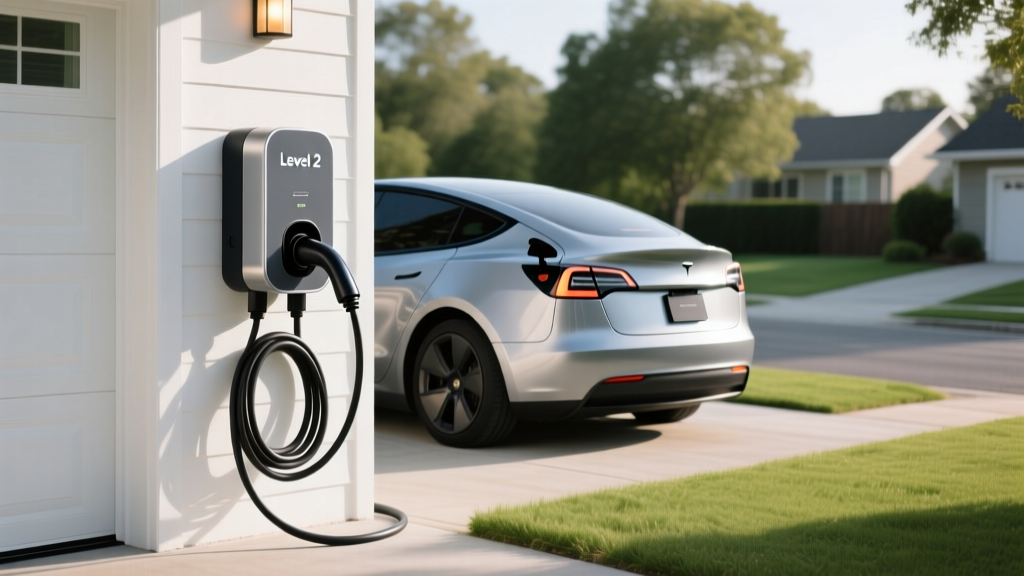
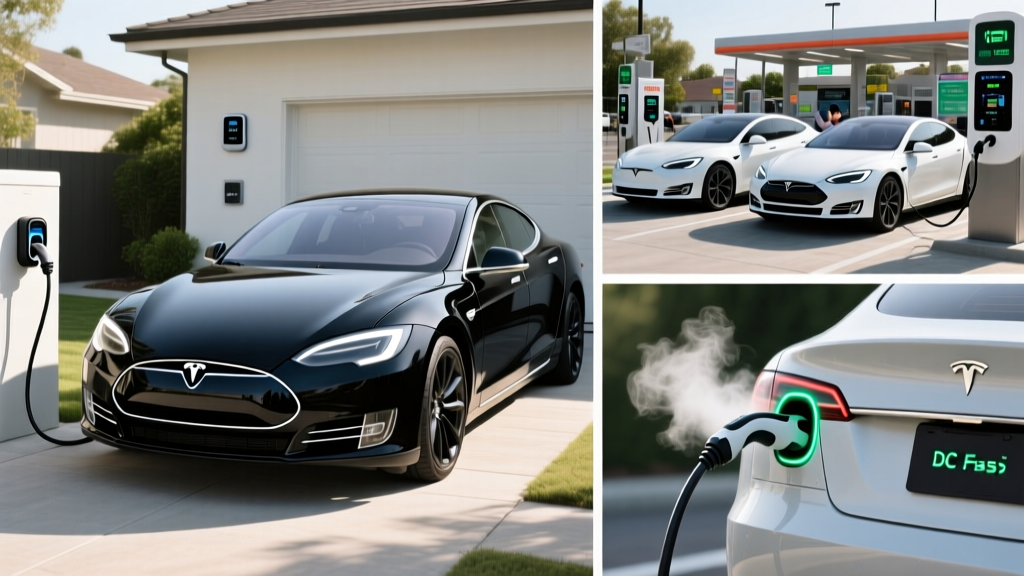
This sedan supports up to 250 kW peak DC fast charging via V3 Superchargers and up to 11.5 kW on Level 2 AC (48 amps on a 60-amp circuit). Understanding the difference between kW (power — the rate of energy flow, like water pressure) and kWh (energy — the battery's total capacity, like tank volume) is essential to interpreting every charging spec below.
- EPA Sticker: 402 miles
- Real-world highway (70 mph, moderate climate): ~330–360 miles
- Cold weather (below 30°F, highway): ~280–320 miles
- Efficiency: 111 MPGe combined / 30 kWh per 100 miles (per fueleconomy.gov)
Charging Levels Explained: Speeds in kW and Miles Added Per Hour
Every EV owner needs to understand the three charging tiers. The table below applies to the 2020 Model S Long Range's ~30 kWh/100mi efficiency.
| Level | Voltage / Amps | Power (kW) | Miles of Range Per Hour | Typical Use Case |
|---|---|---|---|---|
| Level 1 | 120V / 12A | ~1.4 kW | ~4–5 mi/hr | Overnight trickle, emergencies |
| Level 2 | 240V / 48A | 11.5 kW | ~38 mi/hr | Home daily charging, workplace |
| DC Fast (V3 Supercharger) | DC / up to 250 kW | 250 kW peak | ~1,000 mi/hr (peak) | Road trips, rapid top-ups |
A critical reality: the 250 kW peak on a V3 Supercharger is sustained only between roughly 10–30% State of Charge (SoC). The charge curve tapers progressively — by 60% SoC you may see ~100 kW, and above 80% it drops to ~40–50 kW. A 10–80% session on a V3 Supercharger takes approximately 35–40 minutes for the Model S Long Range's 100 kWh pack.
Home Level 2 Installation: Electrical Requirements and Cost Breakdown
The 2020 Model S Long Range accepts up to 48 amps AC, which requires a 60-amp dedicated circuit (the National Electrical Code mandates that continuous loads not exceed 80% of circuit breaker capacity). This means a NEMA 14-60 outlet or a hardwired connection on 240V.
Before installing, assess your electrical panel. Many older homes have 100-amp or 150-amp main panels that may not have spare capacity for a 60-amp EV circuit. A licensed electrician should perform a load calculation per NEC Article 220. If an upgrade to a 200-amp panel is needed, this adds significant cost.
| Item | Cost Range | Notes |
|---|---|---|
| Level 2 Charger (equipment) | $400 – $750 | Wall Connector, ChargePoint, Emporia, etc. |
| Electrician labor (standard install) | $600 – $1,500 | Varies by run length, conduit, wall material |
| Permit / inspection | $50 – $200 | Required in most jurisdictions |
| Panel upgrade (if needed) | $1,500 – $3,500 | 200-amp service upgrade for older homes |
| Total (no panel upgrade) | $1,050 – $2,450 | Typical suburban install |
| Total (with panel upgrade) | $2,550 – $5,950 | Older homes with 100A/150A panels |
The IRS §25C Residential Clean Energy Credit covers up to 30% of EV charger equipment and installation costs (maximum $1,000) for qualifying home installations through 2032. This can offset several hundred dollars of your install.
Connector Compatibility: NACS, CCS, and Adapter Realities for the 2020 Model S
The 2020 Tesla Model S Long Range uses the Tesla proprietary connector — now formally adopted as the North American Charging Standard (NACS). This is the same physical connector for Level 1, Level 2, and DC fast charging on the Tesla Supercharger network.
| Connector Type | Native to 2020 Model S? | Adapter Needed? | Network Access |
|---|---|---|---|
| NACS (Tesla) | Yes — native | None | Tesla Supercharger, Destination, NACS-enabled public |
| CCS1 | No | Tesla CCS Adapter (~$250) | Electrify America, EVgo, ChargePoint DC |
| CHAdeMO | No | Third-party adapter (rare, ~$400+) | Limited — mostly legacy stations |
| J1772 (Level 2 public) | No | Tesla J1772 Adapter (included with car) | Public Level 2 stations nationwide |
The Tesla CCS adapter is essential if you plan to use non-Tesla DC fast networks. Without it, you are limited to Superchargers and Tesla Destination chargers. The J1772 adapter ships with the vehicle and allows you to use any public Level 2 station — critical for hotel and workplace charging.
Charging Cost Per Mile: Home vs. Public vs. Gas Comparison
At 30 kWh per 100 miles, the 2020 Model S Long Range's energy consumption makes cost calculations straightforward across scenarios.
| Scenario | Rate ($/kWh) | Cost Per 100 Miles | Cost Per Mile |
|---|---|---|---|
| Home (off-peak utility rate) | $0.12 | $3.60 | $0.036 |
| Home (standard rate) | $0.16 | $4.80 | $0.048 |
| Public Level 2 (ChargePoint, etc.) | $0.25 – $0.35 | $7.50 – $10.50 | $0.075 – $0.105 |
| Tesla Supercharger (average) | $0.30 – $0.40 | $9.00 – $12.00 | $0.09 – $0.12 |
| Electrify America DC Fast | $0.40 – $0.56 | $12.00 – $16.80 | $0.12 – $0.168 |
| Gas car (25 MPG, $3.50/gal) | — | $14.00 | $0.14 |
Home charging at off-peak rates delivers roughly a 75% cost reduction per mile versus a 25 MPG gas car at $3.50/gallon. Even Tesla Supercharging at $0.35/kWh undercuts gasoline by 15–20%. The economics shift only when relying exclusively on premium-priced public DC fast chargers — which can approach or exceed gas costs per mile.
Recommended Level 2 Home Chargers for the 2020 Model S Long Range
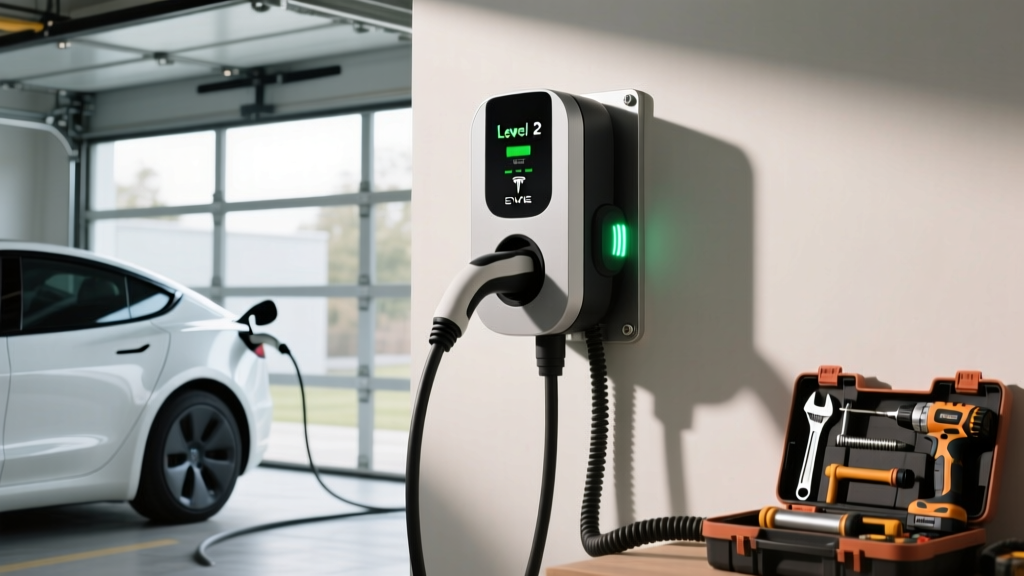
Since the 2020 Model S can accept up to 48 amps (11.5 kW), you'll want a charger that can deliver at least 48A to maximize charging speed. Here are top picks as of 2026:
Tesla Wall Connector (Gen 3)
- Power Output: 48A / 11.5 kW (on 60A circuit)
- Connector: NACS (native Tesla)
- Cable Length: 24 ft
- Smart Features: Wi-Fi OTA updates, load sharing (pair two units on one circuit), power sharing
- Price: ~$475
- Verdict: Best seamless integration for Tesla owners. No adapter needed. Load sharing is ideal for two-EV garages.
Emporia Vue Level 2 Charger
- Power Output: 48A / 11.5 kW (on 60A circuit)
- Connector: J1772 (NACS adapter required for Tesla)
- Cable Length: 24 ft
- Smart Features: App scheduling, energy monitoring, solar integration, time-of-use optimization
- Price: ~$400
- Verdict: Best value smart charger. Excellent for solar-owners wanting to charge from excess generation.
ChargePoint Home Flex
- Power Output: Up to 50A / 12 kW (configurable, on 60A circuit)
- Connector: J1772 (NACS adapter required for Tesla)
- Cable Length: 23 ft
- Smart Features: App scheduling, Alexa integration, detailed session history, flexible amperage dip-switch
- Price: ~$550
- Verdict: Most flexible amperage config — can be dialed down to 32A for homes with limited panel capacity.
Safety, Code, and Installation Best Practices
Every Level 2 installation should meet National Electrical Code (NEC) requirements and local amendments:
- Dedicated circuit: A 60-amp breaker serving only the EV charger — no shared outlets on the circuit.
- GFCI protection: NEC 2020 and later require GFCI for outdoor receptacles. Hardwired chargers avoid the nuisance-trip issues that GFCI breakers can cause with some EVSEs.
- Outdoor rating: If mounted outside, the charger must carry a NEMA 3R or NEMA 4 rating. The Tesla Wall Connector and ChargePoint Home Flex both qualify.
- Wire gauge: 6 AWG copper for a 60-amp circuit in most runs; longer runs may require 4 AWG to minimize voltage drop.
- Permit and inspection: Required in nearly all jurisdictions. An unpermitted install can void homeowner's insurance coverage in the event of an electrical fire.
For homes with solar panels, consider a smart charger with solar-divert capability (like the Emporia) to charge exclusively from excess generation during peak sun hours.
Charging Time Examples: 10–80% Across Common Scenarios
For the 2020 Model S Long Range's ~95 kWh usable battery, a 10–80% session adds roughly 66 kWh of energy:
- Level 1 (120V, 1.4 kW): ~47 hours — impractical for anything beyond overnight trickle
- Level 2 (240V, 48A, 11.5 kW): ~5.7 hours — ideal overnight charge, fully replenishes by morning
- Level 2 (240V, 32A, 7.7 kW): ~8.6 hours — adequate for overnight if you drive under 250 miles daily
- Tesla V3 Supercharger (250 kW peak): ~35–40 minutes — accounting for charge curve taper above 50% SoC
- Tesla V2 Supercharger (150 kW peak): ~50–55 minutes — slower peak and earlier taper
- CCS DC Fast (150 kW peak, via adapter): ~50–60 minutes — varies by network and station capability
For daily driving of 40–60 miles, a Level 2 charger replenishes your used range in roughly 1.5–2 hours — meaning you can charge during evening hours and never touch the battery's upper limits. Tesla recommends setting daily charge to 80–90% for NMC chemistry to prolong long-term battery health, charging to 100% only for road trips.
Frequently Asked Questions
How much does it cost to install a home EV charger for a 2020 Tesla Model S?
A typical Level 2 installation with a 60-amp circuit costs $1,050–$2,450 (equipment + electrician + permit) for homes with adequate panel capacity. If a panel upgrade from 100A to 200A service is needed, add $1,500–$3,500. The IRS §25C credit can offset up to $1,000 (30%) of qualifying costs.
How fast will each charging level add range to the Model S Long Range?
Level 1 (120V) adds ~4–5 miles per hour. Level 2 (240V, 48A) adds ~38 miles per hour. A V3 Supercharger at peak 250 kW adds over 1,000 miles per hour in the first few minutes, but tapers significantly — figure 35–40 minutes for a 10–80% session.
Which connector and charger is compatible with my 2020 Tesla Model S?
The 2020 Model S uses the Tesla/NACS connector natively. It charges directly at any Tesla Supercharger or Destination charger. For public Level 2 (J1772), use the included J1772 adapter. For non-Tesla DC fast chargers (CCS1), purchase the Tesla CCS adapter (~$250).
How much does charging cost per mile vs. a gas car?
At home off-peak rates ($0.12/kWh), the Model S Long Range costs ~$0.036/mile — roughly 75% less than a 25 MPG gas car at $3.50/gallon ($0.14/mile). Even Supercharging at $0.35/kWh ($0.105/mile) saves ~25% over gasoline.
What electrical upgrades might I need for a 48-amp Level 2 charger?
You need a 240V, 60-amp dedicated circuit. Homes with 100-amp or 150-amp main panels may require a panel upgrade to 200-amp service ($1,500–$3,500). A licensed electrician should perform a NEC Article 220 load calculation before installation. Older wiring (aluminum, knob-and-tube) may also need replacement in the circuit run.
Should I charge to 100% every night?
No. The 2020 Model S Long Range uses NMC chemistry, which degrades faster when held at 100% SoC. Tesla recommends 80–90% for daily use and 100% only before long trips. Setting the charge limit in the Tesla app or in-car settings automates this.