If you own or are shopping for a 2020 Tesla Model 3 Standard Range Plus, you already know it's one of the most efficient EVs ever sold. But extracting the most value from this car depends almost entirely on how you charge it. With a usable battery capacity of roughly 50 kWh (LFP chemistry), a NACS connector, and a peak DC fast-charge rate of 170 kW, the Model 3 SR+ has specific charging behaviors that reward the informed owner and punish the careless one.
This guide covers every charging scenario you'll encounter — from a standard 120V wall outlet to a 250 kW Supercharger — with exact numbers for speed, cost, and installation. We'll also address the 2020 model year's unique battery characteristics so you can maximize longevity and minimize charging spend.
Understanding the 2020 Model 3 Standard Range Plus Battery
Before plugging in, you need to know what you're filling. The 2020 Model 3 Standard Range Plus (SR+) shipped with a CATL lithium iron phosphate (LFP) battery pack in most markets, though some earlier 2020 units received Panasonic NMC cells. Here's why that matters for charging:
| Spec | 2020 Model 3 SR+ (LFP) |
|---|---|
| Usable Battery Capacity | ~50 kWh |
| Chemistry | LFP (Lithium Iron Phosphate) |
| EPA Range (Original) | 250 miles |
| Real-World Range (Highway, 70 mph) | ~210–225 miles |
| Real-World Range (Cold, 30°F) | ~180–200 miles |
| Peak DC Fast Charge Rate | 170 kW |
| Max AC Level 2 Rate (Onboard Charger) | 7.7 kW (32A at 240V) |
| Connector | NACS (Tesla proprietary, now industry standard) |
| 0–60 mph | 5.3 seconds |
| MPGe (Combined, EPA) | 141 MPGe |
A critical LFP trait: Tesla recommends charging LFP packs to 100% at least once per week for accurate state-of-charge calibration. Unlike NMC batteries (which prefer an 80% daily limit), LFP chemistry tolerates full charges without accelerated degradation. This changes your daily charging calculus.
Charging Levels Explained: Speeds in kW and Miles Per Hour
EV charging falls into three tiers. The key distinction: kW (kilowatts) measures power — the rate of energy delivery — while kWh (kilowatt-hours) measures energy, the total capacity of your battery. Think of kW as the flow rate of a hose and kWh as the size of the bucket.
| Level | Voltage / Amps | Power (kW) | Miles Added/Hour | Best For |
|---|---|---|---|---|
| Level 1 (Standard Outlet) | 120V / 12A | 1.4 kW | ~4–5 miles | Overnight top-up, emergencies |
| Level 2 (Home / Workplace) | 240V / 32–48A | 7.7–11.5 kW | ~28–44 miles | Daily charging, full overnight refill |
| DC Fast Charging | 400V+ / up to 425A | 50–250 kW | ~200–750 miles (peak) | Road trips, rapid top-ups |
Level 1 uses a standard household 120V outlet via Tesla's included Mobile Connector. At 1.4 kW, a full 0–100% charge on the Model 3 SR+ takes roughly 36 hours. This is viable only if you drive fewer than 30 miles per day and can leave the car plugged in overnight.
Level 2 is the practical daily standard. The 2020 Model 3's onboard charger maxes out at 7.7 kW (32 amps at 240V). Even if you install a 48-amp charger delivering 11.5 kW, the car will only accept 7.7 kW. A full 0–100% charge at 7.7 kW takes approximately 6.5 hours. That's your realistic ceiling for home charging speed on this model year.
DC Fast Charging bypasses the onboard charger entirely, sending direct current straight to the battery. The 2020 SR+ peaks at 170 kW on a V3 Supercharger, but that peak only holds from roughly 5–30% state of charge. The charge curve tapers significantly above 60%, and drops below 50 kW past 85%. A typical 10–80% session takes about 28–32 minutes at a V3 Supercharger (250 kW capable), though the car will only draw its 170 kW maximum briefly.
Home Level 2 Installation: Electrical Requirements and Costs
Installing a Level 2 home charger for your Model 3 SR+ requires a dedicated 240V circuit. Here's what that involves and what it costs.
Electrical Requirements
For a 40-amp charger (the sweet spot for a 32A-accepting Model 3 SR+), you need a 50-amp dedicated circuit (NEC code requires circuits rated 125% above continuous load). For a 48-amp charger, you need a 60-amp circuit. Both require 240V service.
- Wire gauge: 6 AWG copper for 50A; 4 AWG for 60A
- Breaker: Double-pole, 50A or 60A
- Outlet (if hardwired not used): NEMA 14-50 (50A) — the most common EV outlet
- GFCI protection: Required by NEC 2020+ for receptacle-based installations in garages
Panel Upgrade Considerations
Many homes built before 2000 have 100-amp electrical panels. Adding a 50A or 60A EV circuit to an already-loaded 100A panel may require a panel upgrade to 200 amps, which is the single largest variable in installation cost. Signs you'll need an upgrade: your panel is near capacity (breakers adding up to close to the main rating), you have a Federal Pacific or Zinsco panel (known hazards), or your utility service drop is undersized.
A panel upgrade typically costs $1,500–$3,500 on top of the charger circuit installation. Some utilities offer rebates that offset this.
Installation Cost Breakdown
| Component | Cost Range | Notes |
|---|---|---|
| Level 2 Charger (Equipment) | $250–$700 | Smart Wi-Fi chargers at higher end |
| Electrical Permit | $50–$250 | Varies by municipality |
| Electrician Labor (circuit run) | $400–$1,800 | Depends on panel-to-outlet distance, wall type |
| Panel Upgrade (if needed) | $1,500–$3,500 | Not always required |
| Total (no panel upgrade) | $700–$2,750 | Most common scenario |
| Total (with panel upgrade) | $2,200–$6,250 | Older homes |
Always hire a licensed electrician and pull a permit. Unpermitted EV charger work can void home insurance claims and create fire risk. According to NFPA NEC guidelines, EV charging circuits must meet specific continuous-load requirements.
Charging Connectors: NACS, Adapters, and Compatibility
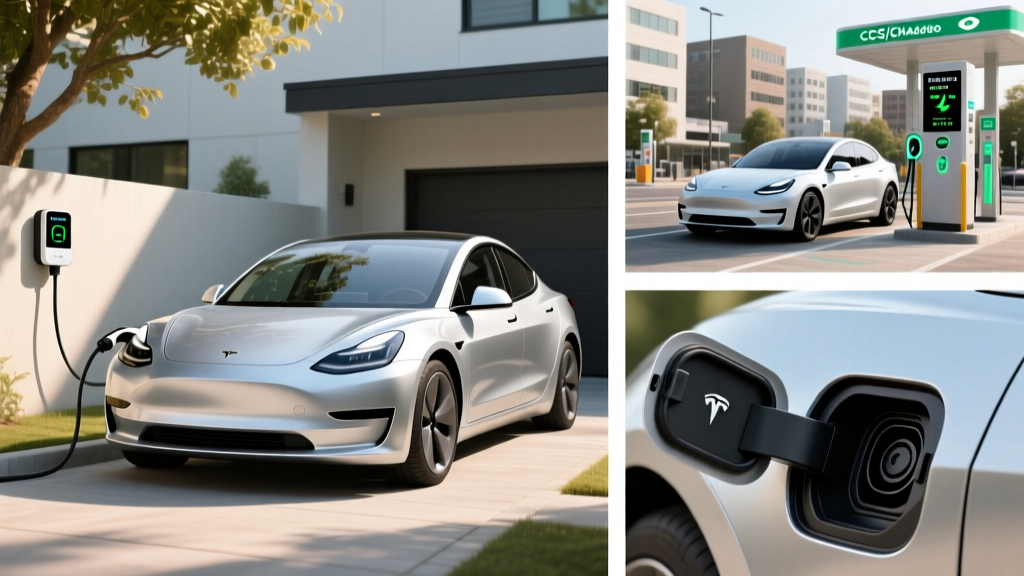
The 2020 Model 3 SR+ uses the NACS (North American Charging Standard) connector — Tesla's proprietary plug that has since been adopted by Ford, GM, Rivian, and most major automakers as the industry standard. This puts you in the best possible position for charging access in 2026.
| Network / Connector | 2020 Model 3 SR+ Compatibility | Adapter Needed? |
|---|---|---|
| Tesla Supercharger (NACS) | Native — plug and charge | No |
| Tesla Destination Charger (NACS) | Native — plug and charge | No |
| CCS1 (Electrify America, EVgo, ChargePoint) | Requires adapter | Yes — CCS-to-NACS adapter ($150–$250) |
| CHAdeMO (Nissan Leaf network) | Requires adapter | Yes — CHAdeMO-to-NACS adapter ($200–$400, rare) |
| J1772 (Level 2 public) | Requires adapter | Yes — Tesla includes a J1772-to-NACS adapter |
Tesla's Supercharger network remains the gold standard for reliability and coverage. In 2026, there are over 6,500 Supercharger stations in North America. For the 2020 SR+, you'll get the best experience on V3 Superchargers (250 kW capable), where the car peaks at 170 kW. Older V2 Superchargers (150 kW) will still charge quickly but cap at their station limit.
If you travel in areas where CCS networks dominate (some rural corridors), invest in a quality CCS-to-NACS adapter. Tesla sells an official one, and third-party options from Lectron and A2Z are widely reviewed. Per Tesla's adapter support page, always verify adapter firmware compatibility with your model year.
Cost to Charge: Home vs. Public vs. Gas Comparison
The 2020 Model 3 SR+ achieves roughly 26 kWh per 100 miles (the flip side of its 141 MPGe rating, per fueleconomy.gov). That efficiency figure is the key to calculating your real charging cost.
| Scenario | Price per kWh | Cost per 100 Miles | Cost per Mile |
|---|---|---|---|
| Home (off-peak utility rate) | $0.09 | $2.34 | $0.023 |
| Home (national avg. residential) | $0.16 | $4.16 | $0.042 |
| Tesla Supercharger (avg. 2026) | $0.32 | $8.32 | $0.083 |
| Electrify America / CCS DC Fast | $0.42 | $10.92 | $0.109 |
| Gasoline car (30 MPG, $3.40/gal) | — | $11.33 | $0.113 |
| Gasoline car (25 MPG, $3.40/gal) | — | $13.60 | $0.136 |
The bottom line: Charging at home on off-peak rates, the 2020 Model 3 SR+ costs roughly 2.3 cents per mile — about one-fifth the cost of a 30 MPG gas car. Even at Supercharger prices, you're saving 25–30% versus gasoline. The savings compound: a driver covering 12,000 miles per year saves roughly $850–$1,100 annually charging at home versus buying gas.
However, if you rely exclusively on DC fast charging at $0.35–$0.48/kWh, your fuel cost can approach or exceed that of an efficient hybrid. Home charging access is the single biggest economic variable in EV ownership.
Recommended Level 2 Chargers for the 2020 Model 3 SR+
Since the Model 3 SR+ onboard charger maxes at 7.7 kW (32A), you don't need a 48-amp charger — but installing one future-proofs for your next EV. Here are proven options:
Tesla Wall Connector
- Power Output: Up to 11.5 kW (48A)
- Connector: NACS (native for your Model 3)
- Cable Length: 24 feet
- Smart Features: Wi-Fi, OTA updates, power sharing between two units, load management
- Price: ~$475
- Verdict: Best integration with Tesla vehicles. No app needed — plug and charge. Hardwired only (no plug).
ChargePoint Home Flex
- Power Output: Up to 12 kW (50A, adjustable down to 16A)
- Connector: J1772 (use included Tesla adapter) or NACS version available
- Cable Length: 23 feet
- Smart Features: Wi-Fi, scheduling, Alexa integration, detailed energy tracking app
- Price: ~$550–$650
- Verdict: Most flexible amperage settings — ideal if your panel can't support a full 50A circuit.
Emporia Level 2 EV Charger
- Power Output: Up to 11.5 kW (48A)
- Connector: J1772 (NACS adapter available) or NACS version
- Cable Length: 24 feet
- Smart Features: Wi-Fi, energy monitoring, solar integration, time-of-use scheduling
- Price: ~$350–$400
- Verdict: Best value smart charger. Excellent app. Pairs well with Emporia home energy monitors.
Grizzl-E Smart
- Power Output: Up to 10 kW (40A)
- Connector: J1772 or NACS
- Cable Length: 24 feet
- Smart Features: OCPP protocol, basic app scheduling
- Price: ~$395–$495
- Verdict: Built like a tank in Canada. Best cold-weather durability rating. No-frills reliability.
For a 2020 Model 3 SR+ owner who plans to stay in the Tesla ecosystem, the Tesla Wall Connector is the obvious pick — native NACS, seamless integration, and competitive pricing. If you anticipate switching to a non-Tesla EV with CCS in the future, the ChargePoint Home Flex offers more cross-brand flexibility.
Safety, Code, and Best Practices
EV charging involves sustained high-current draw — typically 4+ hours at maximum amperage. This is classified as a continuous load under the National Electrical Code, which drives several requirements:
- Dedicated circuit: Your EV charger must have its own breaker — no sharing with other appliances.
- Circuit sizing: Breaker must be rated 125% above the charger's max draw (40A charger → 50A breaker).
- GFCI protection: NEC 2020 and later requires GFCI for receptacle-based (NEMA 14-50) installations in garages. Hardwired chargers are exempt from this specific requirement, which is one reason many electricians prefer hardwiring.
- Outdoor rating: If installing outside, ensure the charger carries a NEMA 4 or IP65 weather rating. All four chargers above are outdoor-rated.
- Cable management: Use a wall-mounted cable organizer to prevent tripping hazards and connector damage.
A practical tip for 2020 Model 3 SR+ owners: enable Scheduled Charging in the Tesla app to charge during off-peak utility hours (typically 11 PM – 6 AM). This can cut your charging cost by 40–60% versus uncontrolled charging and reduces grid strain. Also enable preconditioning before DC fast charging — the car will heat the battery to optimal temperature, significantly improving charge speed in cold weather. Navigate to a Supercharger in the Tesla nav and the car handles this automatically.
Frequently Asked Questions
How much does it cost to install a home EV charger for a 2020 Tesla Model 3?
Expect $700–$2,750 for a standard Level 2 installation (equipment, permit, and electrician labor) if your electrical panel has sufficient capacity. If a panel upgrade from 100A to 200A is needed, add $1,500–$3,500. The Tesla Wall Connector (~$475) on a 50A circuit is the most common setup.
How fast will each charging level add range to my Model 3 SR+?
Level 1 (120V): ~4–5 miles per hour. Level 2 (240V, 32A): ~28–30 miles per hour (capped by the car's 7.7 kW onboard charger). DC Fast Charging at a V3 Supercharger: up to ~170 miles in 15 minutes at peak rate, though the charge curve tapers significantly above 60% state of charge.
Which chargers and networks are compatible with my 2020 Model 3 Standard Range Plus?
Your car has a NACS connector. It natively works with all Tesla Superchargers and Destination Chargers. For CCS networks (Electrify America, EVgo), you'll need a CCS-to-NACS adapter ($150–$250). For J1772 Level 2 public chargers, Tesla includes a J1772-to-NACS adapter in the trunk.
How much does charging cost per mile compared to gas?
At home on off-peak electricity ($0.09/kWh), the Model 3 SR+ costs about 2.3 cents per mile. At a Tesla Supercharger (~$0.32/kWh), it's about 8.3 cents per mile. A comparable 30 MPG gas car at $3.40/gallon costs 11.3 cents per mile. Home charging saves roughly $850–$1,100 per year at 12,000 miles driven.
What electrical upgrades might I need for a Level 2 charger?
You need a dedicated 240V circuit — typically 50 amps for a 40A charger. If your home has a 100-amp panel that's near capacity, you may need a panel upgrade to 200 amps ($1,500–$3,500). Older panels (Federal Pacific, Zinsco) should be replaced regardless. A licensed electrician can perform a load calculation to determine if your current panel supports the new circuit.
Should I charge my LFP battery to 100% every day?
Tesla recommends charging LFP batteries to 100% at least once per week for accurate state-of-charge calibration. Unlike NMC chemistry, LFP does not suffer accelerated degradation from regular full charges. Set your charge limit to 100% and use scheduled charging to fill during off-peak hours.
Why does DC fast charging slow down above 80%?
This is the charge curve — a physics limitation, not a defect. As battery cells approach full capacity, internal resistance rises and the battery management system reduces current to prevent overheating and lithium plating. On the 2020 SR+, you'll see peak speeds (up to 170 kW) between 5–30% SoC, tapering to ~50 kW by 85%, and ~20 kW above 95%. For road trips, charge to 80% and drive — it's faster overall than waiting for 100%.