2020 Nissan Leaf Range: EPA Sticker vs Real-World Miles
The 2020 Nissan Leaf comes in two battery configurations, and the range difference is substantial. The base Leaf S and SV trims pack a 40 kWh lithium-ion battery (NMC chemistry) rated at 149 miles EPA. The Leaf SL Plus and S Plus step up to a 62 kWh pack, earning an EPA-estimated 226 miles. But as any Leaf owner will tell you, those stickers don't always match what you see on the dash.
- 40 kWh (149 EPA): Expect ~120–135 miles on highway trips at 70 mph; ~100–115 miles in freezing temps with cabin heat.
- 62 kWh (226 EPA): Expect ~180–200 miles highway; ~150–170 miles in sustained sub-30°F weather.
- City/regenerative driving: Both packs can meet or slightly exceed EPA estimates in stop-and-go traffic with e-Pedal engaged.
The Leaf's passive air-cooled battery thermal management system is the main culprit behind range variance. Unlike liquid-cooled packs (Tesla, Hyundai, Ford), the Leaf's battery heats up during fast driving or DC fast charging and chills in winter without active warming. This means range loss in extreme temperatures is more pronounced than EPA testing suggests, and repeated DC fast charges in hot weather will taper speeds aggressively to protect the cells.
Charging Levels Explained: kW, Miles Per Hour, and 10–80% Times
Before we break down costs, let's clarify the single most important distinction in EV charging: kW (kilowatts) measures power — how fast energy flows into the car. kWh (kilowatt-hours) measures energy — how much the battery stores. Confusing them is like mixing up a hose's flow rate with the size of the bucket.
| Level | Voltage / Amps | Max Power (kW) | Miles Added/Hour | 40 kWh 0–100% | 62 kWh 0–100% |
|---|---|---|---|---|---|
| Level 1 (120V) | 120V / 12A | 1.4 kW | ~4–5 mi/hr | ~28 hours | ~44 hours |
| Level 2 (240V) | 240V / 30–40A | 6.6 kW (Leaf onboard limit) | ~22–25 mi/hr | ~6 hours | ~9.5 hours |
| DC Fast (CHAdeMO) | CHAdeMO connector | ~50 kW peak (40 kWh) / ~100 kW peak (62 kWh) | ~150–200+ mi/hr (peak) | 10–80% in ~40 min | 10–80% in ~45–60 min |
Important charging-curve reality: The Leaf's DC fast charging speed is not sustained. The 62 kWh Leaf may peak near 100 kW at low state of charge (SoC), but because it lacks active liquid cooling, the battery warms quickly and the car throttles charging power. On a hot day or after highway driving, you might see peak rates drop to 40–50 kW within minutes. Plan road trips around this taper — the 10–80% time can stretch well past 60 minutes in warm conditions.
CHAdeMO vs CCS vs NACS: Connector Compatibility for the Leaf
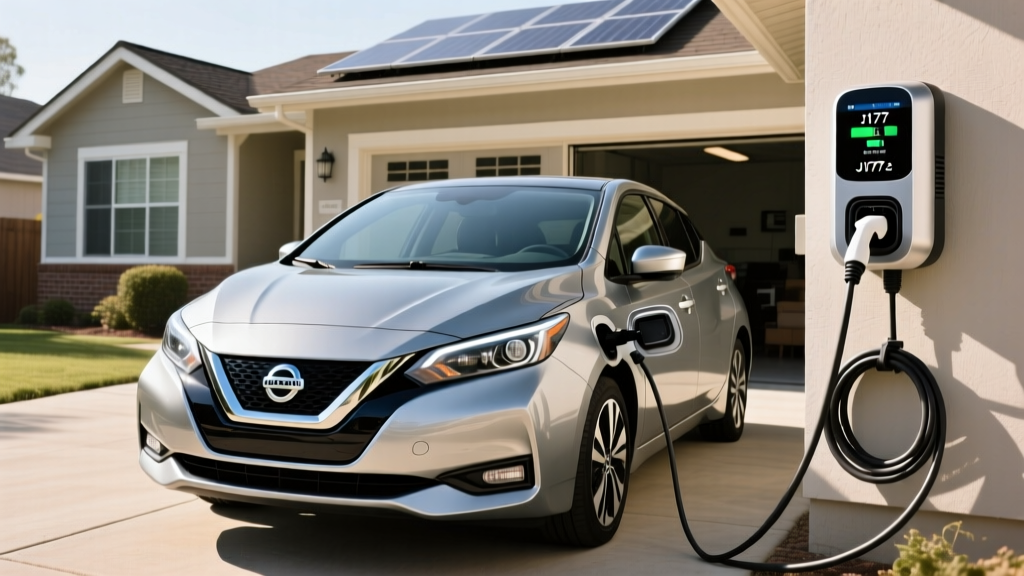
The 2020 Nissan Leaf uses the CHAdeMO DC fast charging standard and a J1772 inlet for Level 1 and Level 2 AC charging. This matters enormously for your charging options, because the industry has largely consolidated around CCS1 and, increasingly, NACS (the Tesla connector).
| Connector | Type | Used By | 2020 Leaf Compatible? |
|---|---|---|---|
| J1772 | AC (L1/L2) | All non-Tesla EVs (2020 era) | ✅ Yes — native |
| CHAdeMO | DC Fast | Nissan Leaf, Mitsubishi Outlander PHEV | ✅ Yes — native |
| CCS1 | DC Fast | Ford, GM, Hyundai, VW, BMW, most 2025+ EVs | ❌ No — no reliable adapter exists |
| NACS (Tesla) | DC Fast + AC | Tesla, most 2025+ EVs (Ford, GM, Rivian, etc.) | ⚠️ Limited — some Tesla Superchargers offer Magic Dock (CCS adapter), but no CHAdeMO pathway |
This is the Leaf's biggest ownership challenge in 2026. CHAdeMO infrastructure is shrinking relative to CCS and NACS networks. Electrify America stations, for instance, typically have only one or two CHAdeMO stalls (if any) alongside multiple CCS stalls. Before buying a used 2020 Leaf, map your local DC fast chargers and confirm CHAdeMO availability along your common routes.
Home Charger Installation: Costs, Electrical Requirements & Panel Upgrades
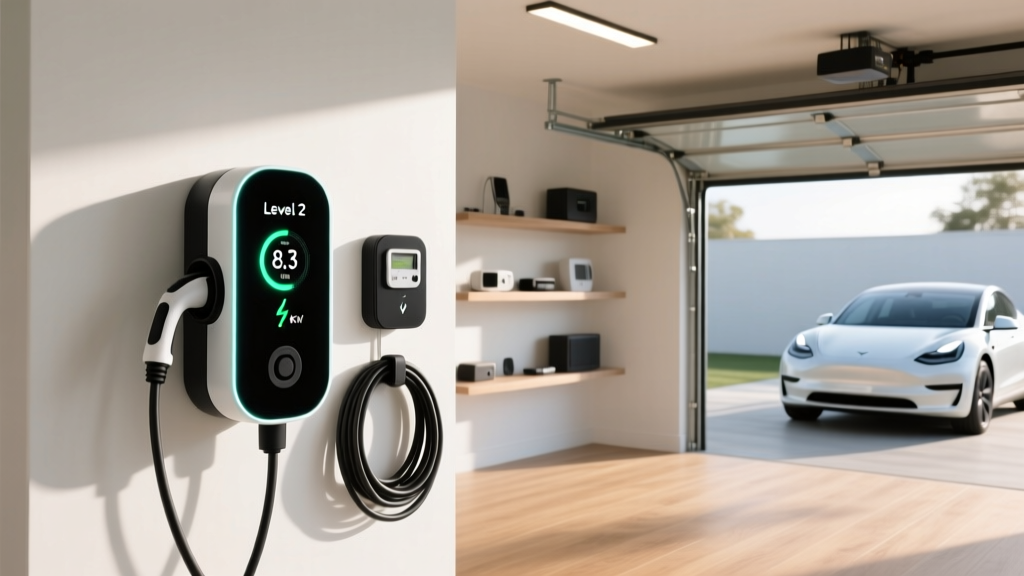
For daily driving, a home Level 2 charger is essential. The Leaf's onboard charger maxes out at 6.6 kW, so you don't need a 48-amp charger — a 30-amp or 40-amp unit delivers the full benefit. Here's what a typical installation requires:
Electrical requirements: A dedicated 240V circuit, typically 40 amps (for a 32A continuous charger) or 50 amps (for a 40A continuous charger). The Leaf's 6.6 kW limit means even a 30-amp circuit (24A continuous, 5.76 kW) gets you close to max speed. The circuit must be protected by a GFCI breaker per NEC 2023/2026 code if installed outdoors.
| Item | Budget Scenario | Typical Scenario | Complex Scenario |
|---|---|---|---|
| Level 2 Charger (32–40A) | $300–$400 | $400–$600 | $500–$700 |
| Electrician labor (2–6 hrs) | $300–$500 | $500–$1,000 | $1,000–$2,500 |
| Permit & inspection | $50–$100 | $100–$200 | $150–$300 |
| Panel upgrade (if needed) | $0 (200A panel, space available) | $0–$500 (sub-panel) | $2,000–$4,000 (100A→200A upgrade) |
| Total | $650–$1,000 | $1,000–$1,800 | $3,650–$7,500 |
Panel upgrade warning: Homes built before the 1990s often have 100-amp electrical panels. Adding a 40-amp EV circuit to an already-loaded 100A panel may require a full service upgrade to 200 amps — the single biggest cost variable in EV home charging. Have a licensed electrician perform a load calculation before committing to equipment. Many utilities offer rebates of $200–$500 for panel upgrades tied to EV adoption; check with your local provider.
Level 2 Charger Recommendations for the Nissan Leaf
Since the Leaf's onboard charger caps at 6.6 kW, you don't need to overspend on a 48-amp charger. A quality 32-amp unit is the sweet spot — it delivers up to 7.7 kW, more than the Leaf can accept, ensuring you always hit the car's maximum charge rate.
Emporia Level 2 EV Charger
- Power: 48A max (11.5 kW) — Leaf will use 6.6 kW
- Connector: J1772 (native Leaf fit)
- Cable length: 24 ft
- Smart features: Wi-Fi, app scheduling, energy monitoring, solar integration
- Price: ~$399
- Best for: Budget-conscious owners who want smart scheduling for off-peak rates
ChargePoint Home Flex
- Power: Up to 50A (12 kW) — adjustable via DIP switch
- Connector: J1772
- Cable length: 23 ft
- Smart features: Wi-Fi, app, Alexa, flexible amperage to match circuit
- Price: ~$599
- Best for: Owners who may upgrade to a higher-capacity EV later (future-proof)
Grizzl-E Smart
- Power: 40A (9.6 kW)
- Connector: J1772
- Cable length: 24 ft
- Smart features: Bluetooth, OCPP support, adjustable amperage
- Price: ~$449
- Best for: Outdoor installs (IP67 rated, -40°F to +122°F operating range)
Tesla Universal Wall Connector
- Power: 48A (11.5 kW)
- Connector: NACS + J1772 adapter built in
- Cable length: 24 ft
- Smart features: Wi-Fi, OTA updates, power sharing between two units
- Price: ~$599
- Best for: Multi-EV households with both Tesla and J1772 vehicles
Safety note: All chargers listed above are UL-listed or ETL-certified. Never use an uncertified charger — EV charging draws sustained high current for hours, and cheap, non-certified units pose fire risk. Ensure your installation includes a GFCI breaker (required by NEC for outdoor receptacles) and that the charger's NEMA rating matches your install location (NEMA 4 for outdoor exposure).
Cost to Charge: Leaf vs Gas — Dollars Per Mile
The economic argument for the Leaf depends heavily on where and when you charge. Here's a realistic breakdown using the 62 kWh Leaf Plus (114 MPGe combined, per fueleconomy.gov) consuming roughly 30 kWh per 100 miles:
| Scenario | Rate ($/kWh) | Cost per 100 mi | Cost per Mile |
|---|---|---|---|
| Home off-peak (utility TOU rate) | $0.08–$0.12 | $2.40–$3.60 | $0.024–$0.036 |
| Home standard rate (national avg) | $0.16 | $4.80 | $0.048 |
| Public Level 2 (ChargePoint, etc.) | $0.25–$0.39 | $7.50–$11.70 | $0.075–$0.117 |
| DC Fast (Electrify America, EVgo) | $0.35–$0.55 | $10.50–$16.50 | $0.105–$0.165 |
| Gas car comparison (30 MPG, $3.40/gal) | — | $11.33 | $0.113 |
At home off-peak rates, the Leaf costs roughly 3 cents per mile — about one-quarter the cost of a 30-MPG gas car. Even at public DC fast charging rates, the Leaf is competitive with gas on a per-mile basis. But if you rely exclusively on public DC fast charging at $0.45+/kWh, your fuel cost actually exceeds the gas car. This is why home charging access is the single biggest factor in EV ownership economics.
Tax Credits and Incentives for Home Charger Installation
The federal Alternative Fuel Vehicle Refueling Property Credit (IRS Form 8911) covers 30% of home EV charger equipment and installation costs, up to $1,000. To qualify, the charger must be installed at your primary residence in an eligible census tract (many suburban and rural areas qualify; most dense urban tracts do not as of 2026 rules). This credit applies to both the charger hardware and the electrician's labor.
Many utilities also offer rebates ranging from $200 to $750 for Level 2 charger installations, particularly if you enroll in a time-of-use (TOU) rate plan. Check with your local utility before installation — some require pre-approval to qualify for the rebate. State-level incentives vary widely; the Alternative Fuels Data Center maintains a current state-by-state database.
Frequently Asked Questions
How much does it cost to install a home EV charger for a Nissan Leaf?
Expect $1,000–$1,800 for a typical installation (32–40A charger, 240V/40A circuit, permit, electrician labor) if your electrical panel has capacity. If your home needs a panel upgrade from 100A to 200A service, total costs can reach $3,500–$7,500. The federal refueling property credit can offset up to $1,000 of this cost if you're in an eligible census tract.
How fast will each charging level add range to my Leaf?
Level 1 (120V) adds roughly 4–5 miles of range per hour — enough only for overnight top-ups on low-mileage days. Level 2 (240V at 6.6 kW) adds about 22–25 miles per hour, fully charging the 62 kWh battery in roughly 9.5 hours. DC fast charging (CHAdeMO) can add 100+ miles in 30 minutes under ideal conditions, but real-world speeds taper significantly as the battery warms.
Which connector and charger is compatible with my 2020 Leaf?
Your Leaf uses a J1772 connector for AC charging (Level 1 and Level 2) and CHAdeMO for DC fast charging. Any J1772 Level 2 home charger will work. For public DC fast charging, you need stations with CHAdeMO connectors — verify availability on PlugShare or your charging network's app before relying on a specific station.
How much does charging the Leaf cost per mile compared to gas?
Charging at home on off-peak rates costs roughly $0.024–$0.036 per mile. A comparable 30-MPG gas car at $3.40/gallon costs about $0.113 per mile — roughly 3–4x more. However, exclusive reliance on public DC fast charging ($0.35–$0.55/kWh) can push EV costs to $0.10–$0.17 per mile, erasing most savings. Home charging is the key to EV economics.
What electrical upgrades might I need for a home charger?
You need a dedicated 240V circuit (typically 40A for a 32A charger). If your panel is 200A with open breaker slots, you likely need nothing beyond the circuit itself. If your panel is 100A or fully loaded, you may need a panel upgrade ($2,000–$4,000) or a sub-panel addition ($500–$1,500). A licensed electrician must perform a load calculation to determine your home's capacity. Never share a circuit with other high-draw appliances like a dryer or oven.
Does the 2020 Leaf's lack of liquid battery cooling affect charging?
Yes, significantly. The passive air-cooled thermal management system means the battery heats up during DC fast charging and high-speed driving. The car's battery management system (BMS) will throttle charging speeds to protect the cells — a phenomenon Leaf owners call "Rapidgate." On a hot day or after sustained highway driving, expect DC fast charge times to be 30–50% longer than the published peak rate suggests. This is a key limitation for road-trip-heavy owners.