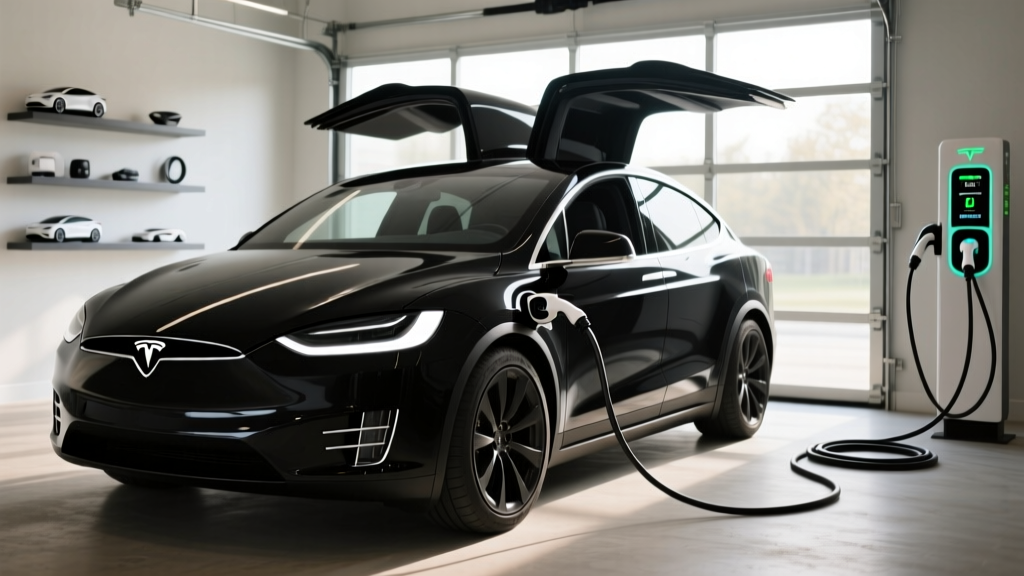
The 2020 Tesla Model X Long Range remains one of the most capable electric SUVs on the used market, offering an EPA-estimated 328 miles of range and access to Tesla's Supercharger network. But whether you're a current owner optimizing your charging routine or a prospective buyer evaluating daily usability, understanding exactly how fast this vehicle charges, what equipment you need, and what it costs per mile is essential. This guide covers every charging scenario for the 2020 Model X Long Range with precise numbers — from a standard 120V outlet to a 250 kW Supercharger.
2020 Model X Long Range: Key Charging Specs at a Glance
| Specification | Value |
|---|---|
| Battery Capacity (Usable) | ~100 kWh (NMC chemistry) |
| EPA Range | 328 miles |
| Real-World Range (Highway/Cold) | ~260–290 miles (expect 15–20% loss in freezing temps or sustained 75+ mph highway driving) |
| Max DC Fast Charge Rate | ~200 kW peak (V3 Supercharger) |
| 10–80% DC Fast Charge Time | ~35–40 minutes |
| Level 2 Onboard Charger | 16.5 kW max (48A at 240V, dual charger equipped) |
| Level 1 (120V) Charging | ~1.4 kW (~4 miles of range per hour) |
| Connector Type | NACS (Tesla proprietary) — native Supercharger & Destination charging; CCS adapter required for non-Tesla DC networks |
| Efficiency | 101 MPGe combined (33 kWh/100mi) |
Charging Levels Explained: Speeds and Range Added Per Hour
Understanding the three charging levels is critical for planning both daily driving and road trips. Note: kW (kilowatts) measures charging power — how fast energy flows into the battery. kWh (kilowatt-hours) measures battery energy capacity — the total amount of energy stored. They are not interchangeable.
| Charging Level | Voltage / Amperage | Power Output | Miles of Range Added Per Hour | Best Use Case |
|---|---|---|---|---|
| Level 1 (Standard Outlet) | 120V / 12A | ~1.4 kW | ~4 miles/hr | Overnight top-up for low-mileage drivers; emergency backup |
| Level 2 (Home/Public AC) | 240V / 40–48A | 9.6–11.5 kW (up to 16.5 kW with Model X dual charger on 60A+ circuits) | ~30–52 miles/hr (up to ~52 mi/hr at 16.5 kW) | |
| DC Fast Charging (Supercharger) | 400V DC | Up to ~200 kW peak (V3); ~150 kW (V2) | Up to ~1,000+ miles/hr at peak rate (sustained average much lower) |
For the 2020 Model X Long Range's 100 kWh battery, a full Level 1 charge from empty would take roughly 70+ hours — impractical for regular use. Level 2 is the practical daily standard: at 48A (11.5 kW), a full charge takes about 9 hours, easily completed overnight. The Model X's available dual onboard charger configuration allows it to accept up to 16.5 kW on Level 2 if connected to a 60A or higher circuit — a meaningful advantage over single-charger EVs that cap at 11.5 kW.
DC fast charging on a V3 Supercharger (250 kW capable) will peak around 200 kW for the 2020 Model X Long Range, though the charge curve tapers significantly above 50–60% State of Charge (SoC). Expect a 10–80% session to take approximately 35–40 minutes. Charging from 80–100% at a DC fast charger is painfully slow due to cell-balancing and taper — Tesla's navigation system will typically recommend you move on at 80% during road trips.
Home Charger Installation: Electrical Requirements and Costs
Installing a Level 2 home charger is the single highest-impact upgrade for EV ownership. For the 2020 Model X Long Range, you'll want a 240V circuit capable of delivering at least 48A to take advantage of the vehicle's robust onboard charging capability.
Electrical Requirements
- Circuit: Dedicated 60A breaker (for continuous 48A charging) or 50A breaker (for continuous 40A charging)
- Wiring: 6 AWG copper (60A) or 8 AWG copper (50A), run in conduit per local code
- Outlet vs. Hardwired: A NEMA 14-50 outlet offers portability; hardwired installations allow higher amperage and avoid GFCI nuisance trips common with 240V receptacles
- Panel Capacity: Your electrical panel must have sufficient spare capacity. A 200A panel with 40–60A of unused headroom can typically support a 60A EV circuit. Older homes with 100A panels may require a panel upgrade.
Installation Cost Breakdown
| Cost Component | Typical Range | Notes |
|---|---|---|
| Level 2 Charger Equipment | $400–$750 | Tesla Wall Connector, ChargePoint Home Flex, or similar |
| Electrician Labor (standard install) | $500–$1,500 | Short run from panel to garage; longer runs or conduit work increase cost |
| Permit & Inspection | $50–$250 | Varies by municipality; some jurisdictions bundle with electrical permit |
| Electrical Panel Upgrade (if needed) | $1,500–$4,000 | 100A to 200A upgrade; not required for most modern homes |
| Total (no panel upgrade) | $950–$2,500 | Most common scenario for homes built after 2000 |
| Total (with panel upgrade) | $2,500–$6,500 | Older homes or those with maxed-out panels |
The IRS §30D tax credit does not cover home charging equipment directly for most taxpayers — the Alternative Fuel Vehicle Refueling Property Credit (IRC §30C) was historically available but has been significantly curtailed. Check current-year IRS guidance or consult a tax professional for eligibility. Some utility companies offer rebates of $200–$500 for Level 2 charger installation; check with your local provider.
Connector Compatibility and Adapter Requirements
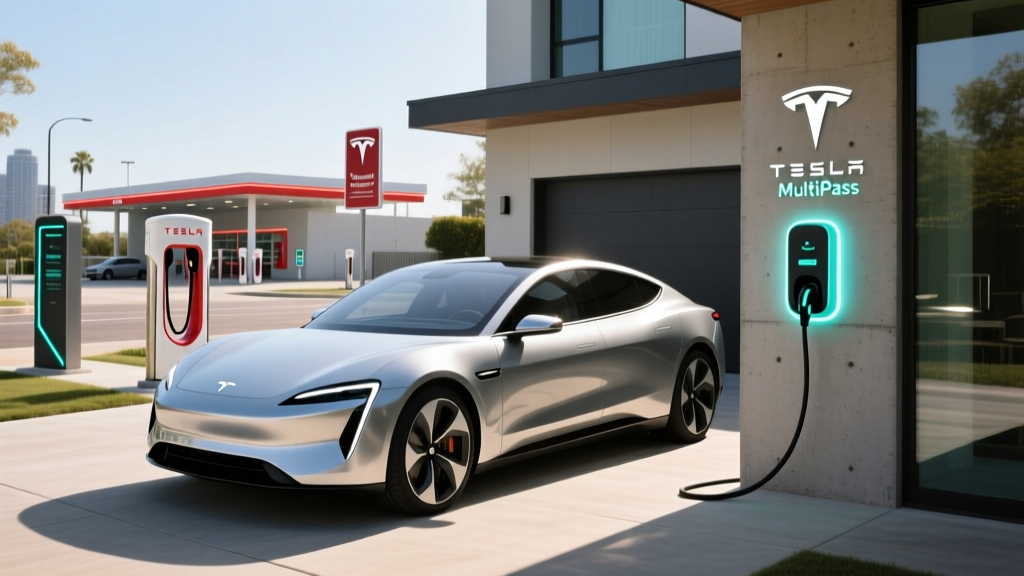
The 2020 Model X Long Range uses Tesla's proprietary NACS (North American Charging Standard) connector. This is a significant advantage: you get native access to Tesla's Supercharger network — the largest and most reliable DC fast-charging network in the U.S. — without any adapter.
| Network / Connector | Compatibility with 2020 Model X | Adapter Needed? |
|---|---|---|
| Tesla Supercharger (NACS) | Native — full compatibility | No |
| Tesla Destination Charging (NACS/J1772) | Native at Tesla destinations | No (NACS); J1772 adapter included with vehicle for non-Tesla Level 2 |
| Electrify America / EVgo (CCS1) | Requires CCS adapter | Yes — Tesla CCS1 adapter (~$175–$250) or third-party equivalent |
| CHAdeMO (Nissan Leaf standard) | Not compatible | No practical adapter available; avoid CHAdeMO-only stations |
| Public Level 2 (J1772) | Compatible with included J1772 adapter | Yes — Tesla J1772 adapter (included with vehicle) |
Tesla began selling its official CCS1 adapter for non-Tesla-connector vehicles in 2022, and it works with 2020 Model X vehicles running current software. If you plan to use Electrify America or other CCS networks during travel in areas with sparse Supercharger coverage, this adapter is worth carrying. Note that peak charge rates on non-Tesla CCS stations may be limited by the adapter's throughput — typically around 150–180 kW rather than the full 200 kW available on V3 Superchargers.
Charging Cost Per Mile: Home vs. Public vs. Gas Comparison
One of the strongest ownership arguments for the 2020 Model X Long Range is fuel cost savings. Here's how charging costs break down across scenarios, compared to a similarly sized gas SUV averaging 22 MPG combined.
| Charging Scenario | Rate | Cost to Add 100 Miles | Cost Per Mile |
|---|---|---|---|
| Home (national avg. electricity) | $0.16/kWh | $5.28 | $0.053 |
| Home (off-peak TOU rate) | $0.09/kWh | $2.97 | $0.030 |
| Tesla Supercharger (avg.) | $0.32/kWh | $10.56 | $0.106 |
| Public DC Fast (Electrify America) | $0.43/kWh | $14.19 | $0.142 |
| Gas SUV (22 MPG, $3.50/gal) | $3.50/gallon | $15.91 | $0.159 |
At the Model X's efficiency of 33 kWh per 100 miles (EPA fueleconomy.gov), home charging on an off-peak time-of-use plan delivers roughly one-fifth the per-mile cost of a comparable gas SUV. Even at Supercharger rates, you're still saving meaningfully on a per-mile basis. The key economic advantage: if you charge at home 80%+ of the time, your annual "fuel" cost for 12,000 miles of driving is approximately $350–$630, versus $1,900+ for a gas equivalent.
Recommended Home Chargers for the 2020 Model X Long Range
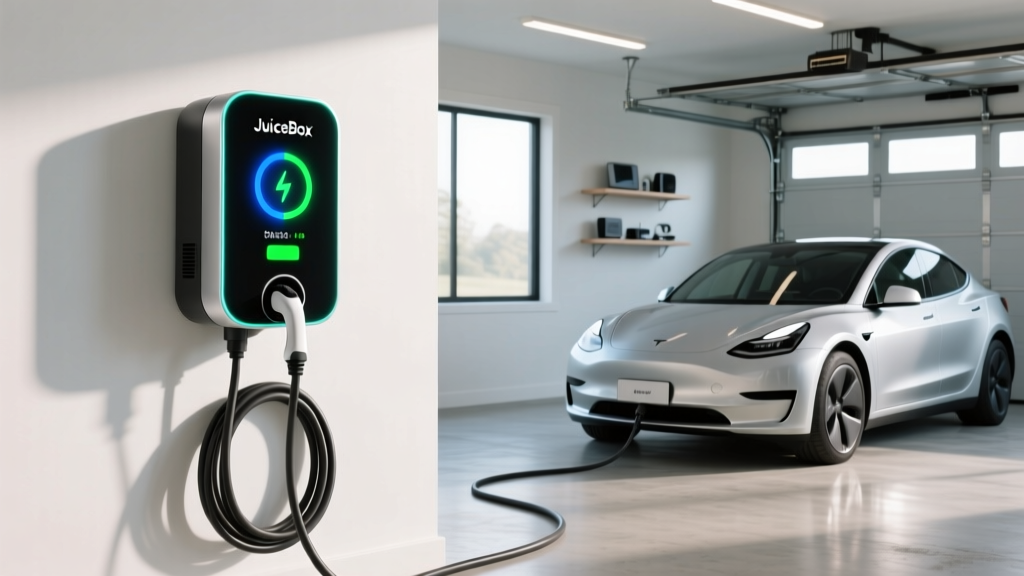
Given the Model X's ability to accept up to 16.5 kW on Level 2 (with dual onboard chargers), investing in a higher-amperage wall connector pays dividends in overnight charging speed.
Tesla Wall Connector (Gen 3)
- Max Output: 48A (11.5 kW) on 60A circuit
- Connector: NACS (native Tesla)
- Cable Length: 24 feet
- Smart Features: Wi-Fi enabled, OTA firmware updates, power sharing between multiple units, Tesla app integration
- Price: ~$475
- Best For: Tesla-only households; seamless integration, reliable performance
ChargePoint Home Flex
- Max Output: Up to 50A (12 kW) on 60A circuit; configurable via DIP switches down to 16A
- Connector: J1772 (use Tesla's included J1772 adapter) or available NACS pigtail version
- Cable Length: 23 feet
- Smart Features: Wi-Fi, ChargePoint app scheduling, Alexa integration, detailed energy reporting
- Price: ~$699
- Best For: Multi-EV households (Tesla + non-Tesla); flexible amperage configuration for older panels
Grizzl-E Smart
- Max Output: 40A (9.6 kW) on 50A circuit
- Connector: J1772 (use Tesla adapter)
- Cable Length: 24 feet
- Smart Features: OCPP-compatible, app scheduling, works with utility demand-response programs
- Price: ~$499
- Best For: Budget-conscious buyers; rugged outdoor-rated enclosure; Canadian-built
For 2020 Model X Long Range owners, the Tesla Wall Connector is the default recommendation — native NACS means no adapter fumbling, and the 48A output covers the vast majority of overnight needs. If your Model X has the dual onboard charger option, note that the Gen 3 Wall Connector maxes at 48A; to reach the full 16.5 kW (72A), you'd need a higher-output unit on an 80A+ circuit, which is uncommon in residential settings and requires substantial wiring. For most owners, 48A delivers a full overnight charge in ~9 hours and is the practical sweet spot.
Safety, Code, and Installation Best Practices
EV charging installations must comply with the National Electrical Code (NEC) Article 625 and local amendments. Key safety requirements and best practices include:
- Dedicated Circuit: Your Level 2 charger must be on its own dedicated circuit — no sharing with other appliances or outlets.
- GFCI Protection: NEC 2020 and later requires GFCI protection for 240V receptacles used for EV charging (Article 625.54). Hardwired installations are generally exempt from this requirement and avoid the nuisance tripping that plagues some 240V GFCI breakers.
- Outdoor Rating: If your charger is installed outdoors (driveway, exterior wall), ensure the unit carries a NEMA 4 or IP65 rating. All three chargers recommended above are outdoor-rated.
- Conduit and Wire Sizing: Your licensed electrician will size wire and conduit per NEC Table 310.16. Do not undersize — continuous loads (defined as 3+ hours, which EV charging always is) require wire rated at 125% of the charging amperage.
- Permit: Nearly all jurisdictions require an electrical permit for a new 240V circuit. Skipping the permit risks insurance denial in the event of an electrical fire and may cause issues during a home sale inspection.
- Load Calculation: A professional electrician should perform a NEC Article 220 load calculation before installation. If your panel is near capacity, a smart charger with load-management features (like the Tesla Wall Connector's power-sharing mode) can avoid a costly panel upgrade.
Charging Times for the 2020 Model X Long Range: Common Scenarios
Here's how long typical charging sessions take with the Model X Long Range's ~100 kWh battery:
- Level 1 (120V, 1.4 kW) — 10% to 80% (70 kWh needed): ~50 hours. Only practical for emergency trickle charging or vehicles driven under 30 miles/day.
- Level 2 (240V, 48A, 11.5 kW) — 10% to 80%: ~6 hours. Ideal for overnight home charging.
- Level 2 (240V, 16.5 kW dual charger) — 10% to 80%: ~4.2 hours. Useful for quick daytime top-ups at high-power destination chargers.
- DC Fast (V3 Supercharger, ~200 kW peak) — 10% to 80%: ~35–40 minutes. The charge curve peaks early (around 30% SoC) and tapers progressively; the last 10% (70–80%) is noticeably slower than the first 30%.
- DC Fast (V2 Supercharger, ~150 kW peak) — 10% to 80%: ~45–55 minutes. Still viable for road trips; V2 stations remain common.
Frequently Asked Questions
How much does it cost to install a home EV charger for the 2020 Model X Long Range?
Most homeowners spend between $950 and $2,500 for a complete Level 2 installation (charger + electrician + permit) if no panel upgrade is needed. Homes requiring a 100A-to-200A panel upgrade should budget $2,500–$6,500 total. Always get at least two quotes from licensed electricians experienced with EV charger installs.
How fast will each charging level add range to my Model X?
Level 1 (120V) adds approximately 4 miles per hour. Level 2 (240V, 48A) adds approximately 35–40 miles per hour. DC fast charging on a V3 Supercharger can add up to ~175 miles in 15 minutes at peak rate, though sustained rates average lower across a full session.
Which connector and charger are compatible with my 2020 Model X?
Your Model X uses the NACS (Tesla) connector natively. It charges seamlessly at all Tesla Superchargers and Destination Chargers. For public J1772 Level 2 stations, use the included J1772-to-Tesla adapter. For CCS DC fast chargers (Electrify America, EVgo), purchase Tesla's CCS1 adapter. CHAdeMO stations are not compatible.
How much does charging cost per mile compared to gas?
Home charging at the national average electricity rate ($0.16/kWh) costs about $0.053 per mile — roughly one-third the cost of fueling a 22 MPG gas SUV at $3.50/gallon ($0.159/mile). Off-peak home charging drops this to $0.03/mile. Supercharging averages $0.11/mile, still cheaper than gas.
What electrical upgrades might I need for a home Level 2 charger?
If your home has a 200A electrical panel with available capacity, you likely need only a new 60A breaker and wiring run. Homes with 100A panels, older wiring, or panels already near capacity may need a panel upgrade ($1,500–$4,000). A licensed electrician's load calculation will determine this. Smart chargers with load-management features can sometimes avoid an upgrade by throttling charge rate when other household loads are high.
Should I precondition my Model X battery before Supercharging?
Yes. When you navigate to a Supercharger using the Tesla's built-in navigation, the vehicle automatically preconditions the battery — warming it to optimal temperature for faster charge acceptance. This can shave 5–10 minutes off a 10–80% session, especially in cold weather. Always navigate to Superchargers rather than driving to them without a nav waypoint.
Does the 2020 Model X Long Range qualify for any EV tax credits?
The federal §30D tax credit applies only to new vehicle purchases and is subject to MSRP caps, buyer income limits, and battery sourcing requirements as defined by the IRS. A used 2020 Model X may qualify for the Used Clean Vehicle Credit (up to $4,000, or 30% of sale price, whichever is less) if purchased from a dealer for $25,000 or less and you meet income thresholds. Consult a tax professional for your specific situation.