If you're buying or already own a used 2020 Model S Long Range Plus, you're driving one of the most efficient large EVs Tesla ever built — rated at 402 miles of EPA range with roughly 100 kWh of usable battery capacity. But extracting real-world value from that battery depends entirely on how you charge it. This guide covers exactly what the 2020 Model S Long Range Plus needs for home charging, what to expect at public DC fast chargers, and what the ongoing costs look like compared to a gas car.
2020 Model S Long Range Plus: Battery and Charging Specs at a Glance
| Specification | Value |
|---|---|
| Battery (usable) | ~100 kWh (NMC chemistry) |
| EPA Range | 402 miles |
| Real-World Highway Range | ~310–340 miles (70+ mph, moderate weather) |
| Cold-Weather Range (20°F) | ~270–310 miles |
| Max DC Fast Charge Rate | ~200 kW peak (V2 Supercharger); ~250 kW on V3 (throttled) |
| 10–80% DC Fast Charge | ~38–42 minutes (V2); ~32–36 minutes (V3) |
| Onboard AC Charger | 16.5 kW max (48A) |
| Level 2 Charge Time (10–100%) | ~6.5 hours at 48A / 11.5 kW |
| Connector | NACS (Tesla proprietary) |
| Efficiency (EPA) | 111 MPGe combined |
Charging Levels Explained: Speeds in kW and Miles Per Hour
Before wiring up your garage, it's critical to understand the difference between kW (kilowatts) and kWh (kilowatt-hours). kW measures power — the rate at which energy flows into your car. kWh measures energy — the total capacity of your battery. Think of kW as the width of a hose and kWh as the size of the bucket.
| Level | Voltage | Power (kW) | Miles of Range Added Per Hour | Typical Use |
|---|---|---|---|---|
| Level 1 | 120V AC | 1.0–1.4 kW | 3–5 miles | Emergency / overnight trickle |
| Level 2 | 240V AC | 7.2–19.2 kW | 22–58 miles | Home daily charging, workplace |
| DC Fast Charge | 400V+ DC | 50–350 kW | 150–500+ miles (at peak) | Road trips, rapid top-ups |
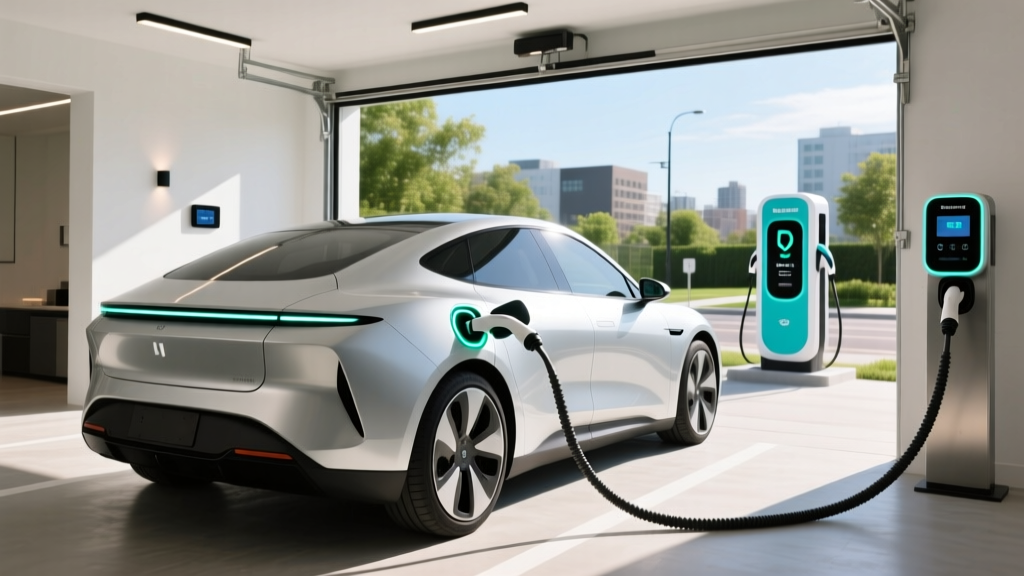
For the 2020 Model S Long Range Plus with its ~100 kWh battery, Level 1 charging is impractical as a daily solution — a full charge would take over 70 hours. Level 2 at 48 amps (the car's onboard maximum of 16.5 kW) is the sweet spot for home use, adding roughly 50 miles of range per hour and fully replenishing the battery in about 6.5 hours.
Home Charger Installation: Electrical Requirements and Costs
The 2020 Model S Long Range Plus has a 48-amp onboard charger, meaning it can accept up to 16.5 kW from a hardwired Level 2 station on a 60-amp circuit. This is the highest AC charging capability among most consumer EVs, and you'll want a charger that can deliver it.
Electrical Requirements
- Circuit: Dedicated 60-amp breaker (for 48A continuous draw, NEC requires 125% overhead = 60A circuit)
- Voltage: 240V single-phase
- Wire gauge: 6 AWG copper (or 4 AWG aluminum) for runs up to ~50 feet; thicker for longer runs
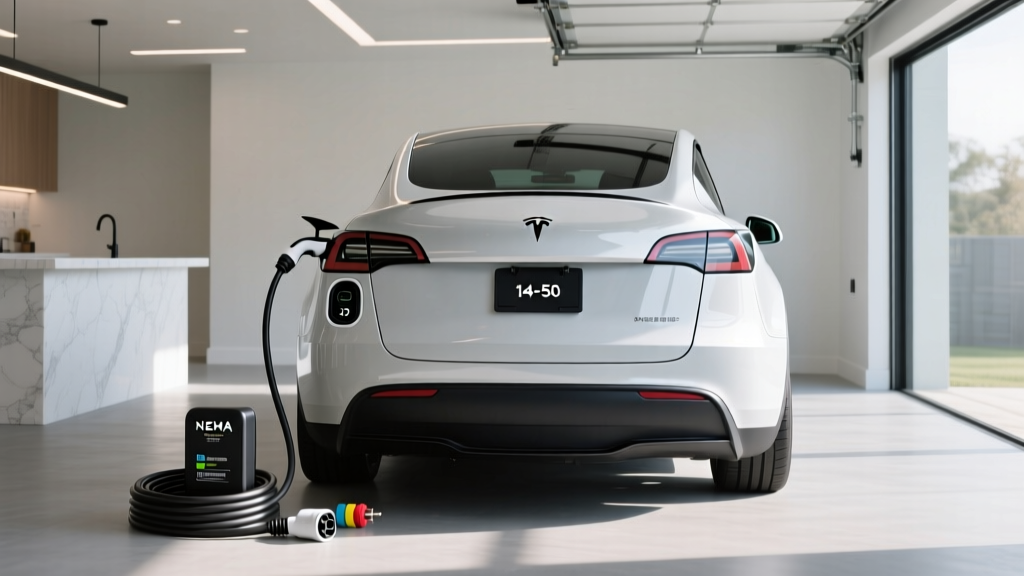
- Connection: Hardwired recommended for 48A+ (NEMA 14-50 outlet maxes at 40A continuous / 50A breaker)
Panel Upgrade Considerations
Many older homes have 100-amp or 150-amp electrical panels. Adding a 60-amp EV circuit may push total load beyond panel capacity, especially if you already run electric range, dryer, and HVAC. A licensed electrician will perform a load calculation to determine if a panel upgrade to 200 amps is necessary.
| Item | Cost Range | Notes |
|---|---|---|
| Level 2 Charger (48A, hardwired) | $400–$750 | Tesla Wall Connector, ChargePoint Home Flex, Emporia |
| Electrical Permit | $50–$250 | Varies by municipality |
| Electrician Labor (standard install) | $500–$1,500 | Short wire run, panel adjacent to garage |
| Electrician Labor (complex install) | $1,500–$3,500 | Long wire run, conduit, subpanel needed |
| Panel Upgrade (100A → 200A) | $1,500–$4,000 | Only if load calculation requires it |
| Total (no panel upgrade) | $950–$2,500 | Most typical scenario |
| Total (with panel upgrade) | $2,500–$6,500 | Older homes with limited capacity |
Always hire a licensed electrician and pull a permit. Unpermitted work can void home insurance coverage and create fire risk. The National Electrical Code (NEC Article 625) governs EV charging installations — your electrician should be familiar with it.
Connector Compatibility: NACS and Adapter Options
The 2020 Model S Long Range Plus uses the NACS (North American Charging Standard) connector — Tesla's proprietary plug that has since been adopted as an industry standard. This is a significant advantage in 2026: Tesla Superchargers remain the most reliable and widespread DC fast-charging network in North America.
| Network / Standard | Connector | Compatible with 2020 Model S? | Adapter Needed? |
|---|---|---|---|
| Tesla Supercharger | NACS | Yes — native | No |
| CCS1 Stations (Electrify America, EVgo) | CCS1 | Yes | Tesla CCS Adapter (~$175) |
| CHAdeMO Stations | CHAdeMO | Yes (limited) | Tesla CHAdeMO Adapter (~$400, discontinued) |
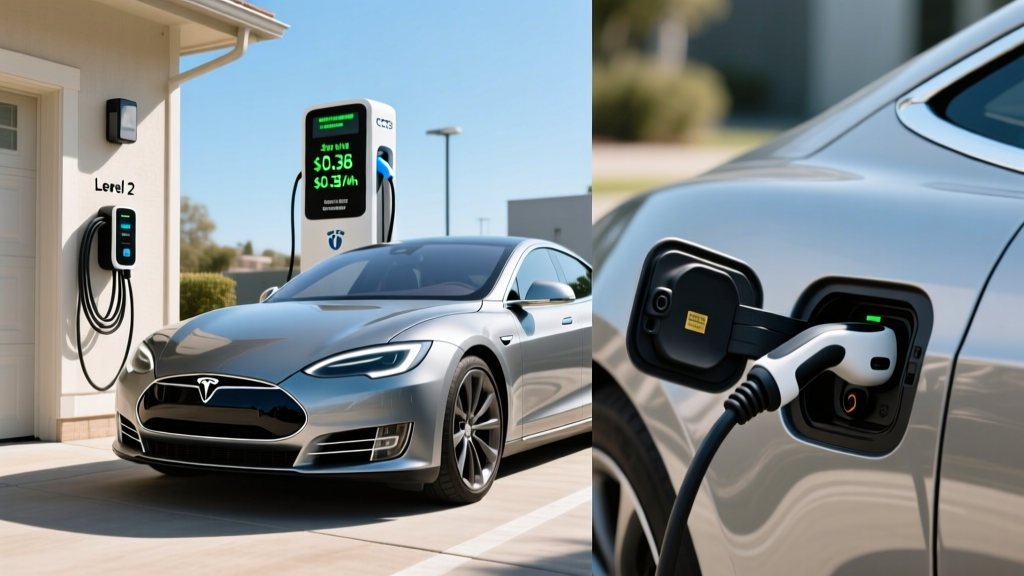
| Level 2 Public (J1772) | J1772 | Yes | Tesla J1772 Adapter (included with car) |
The Tesla CCS Adapter is worth purchasing if you travel in areas where Electrify America or other CCS-only networks are more prevalent than Superchargers. The CHAdeMO standard is effectively dead in the US market — skip that adapter unless you have a specific need.
DC Fast Charging: Real-World Speeds and Charge Curve
The 2020 Model S Long Range Plus can accept up to ~200 kW on a V2 Supercharger and up to ~250 kW on a V3 Supercharger, though the 100 kWh battery's charge curve means peak speeds are only sustained at low states of charge.
Typical V3 Supercharger session (10–80%):
- 10–30% SoC: ~220–250 kW peak
- 30–50% SoC: ~180–200 kW
- 50–70% SoC: ~120–150 kW
- 70–80% SoC: ~80–100 kW
- 80–100% SoC: ~40–60 kW (charging slows dramatically to protect battery health)
This taper is why we measure fast-charge times to 80%, not 100%. Plan road-trip stops around the 10–80% window — roughly 32–36 minutes at a V3 Supercharger, adding approximately 250 miles of range. Charging from 80–100% can take an additional 45+ minutes and is rarely worth the wait on a road trip.
Cost to Charge: Home vs. Public vs. Gas
One of the strongest ownership arguments for the 2020 Model S Long Range Plus is fuel cost savings — but the exact number depends heavily on where and when you charge.
| Scenario | Cost per kWh | Cost for 100 kWh (full charge) | Cost per Mile (402 mi EPA) | Equiv. MPG at $3.50/gal |
|---|---|---|---|---|
| Home (off-peak utility rate) | $0.08–$0.12 | $8.00–$12.00 | $0.02–$0.03 | 117–175 MPG |
| Home (standard residential rate) | $0.14–$0.18 | $14.00–$18.00 | $0.035–$0.045 | 78–100 MPG |
| Tesla Supercharger (average 2026) | $0.28–$0.36 | $28.00–$36.00 | $0.07–$0.09 | 39–50 MPG |
| Electrify America / CCS DCFC | $0.35–$0.48 | $35.00–$48.00 | $0.087–$0.12 | 29–40 MPG |
| Gas Car Baseline (25 MPG avg) | — | — | $0.14 | 25 MPG |
At home with off-peak rates, the 2020 Model S Long Range Plus costs roughly $0.02–$0.03 per mile — about one-fifth the per-mile fuel cost of a comparable gas sedan getting 25 MPG. Even on Tesla Superchargers at road-trip rates, you're still paying less per mile than most gas cars. The savings narrow considerably on expensive third-party DC networks like Electrify America, especially during peak pricing windows.
Annual fuel cost estimate (12,000 miles/year, 80% home / 20% Supercharger): Approximately $450–$650 per year, compared to $1,680 for a 25 MPG gas car at $3.50/gallon. That's a yearly savings of roughly $1,000–$1,200.
Recommended Home Chargers for the 2020 Model S Long Range Plus
Tesla Wall Connector (Gen 3)
- Max Power: 48A / 11.5 kW (hardwired, 60A circuit)
- Connector: NACS native — no adapter needed
- Cable Length: 24 feet
- Smart Features: Wi-Fi, OTA updates, load sharing (pair two units on one circuit), power sharing
- Price: ~$475
- Best For: Tesla-only households; simplest setup with native NACS
ChargePoint Home Flex
- Max Power: Up to 50A / 12 kW (hardwired, 60A circuit); configurable 16–50A via DIP switches
- Connector: J1772 (use Tesla's included J1772 adapter) or NACS pigtail version
- Cable Length: 23 feet
- Smart Features: Wi-Fi, ChargePoint app scheduling, Alexa integration, detailed energy reporting
- Price: ~$550–$650
- Best For: Multi-EV households (one Tesla, one non-Tesla); robust app and scheduling
Emporia Vue Smart EV Charger
- Max Power: 48A / 11.5 kW (hardwired, 60A circuit)
- Connector: J1772 (Tesla adapter needed) or NACS version available
- Cable Length: 24 feet
- Smart Features: Integration with Emporia Vue energy monitor, solar-aware charging, time-of-use scheduling
- Price: ~$400–$500
- Best For: Solar-panel owners; budget-conscious buyers who want smart features
Because the 2020 Model S Long Range Plus has a 48-amp onboard charger, you'll get the fastest Level 2 speeds from a hardwired 48A station on a 60-amp circuit. A NEMA 14-50 outlet (40A continuous) will only deliver about 9.6 kW — roughly 30% slower. If your electrical panel can support it, hardwire is the better choice.
Safety and Code Considerations
EV charging draws sustained high current for hours — unlike a dryer that cycles on and off. This makes proper installation non-negotiable.
- Dedicated circuit: Your EV charger must be on its own dedicated breaker — never share a circuit with other appliances.
- GFCI protection: NEC 2020 and later requires GFCI protection for EV charging outlets (not required for hardwired installations in most jurisdictions). Hardwired chargers sidestep this requirement and are generally more reliable.
- Outdoor rating: If installing outside, ensure the charger carries a NEMA 4 (or IP65+) rating for rain and dust resistance. The Tesla Wall Connector and ChargePoint Home Flex are both outdoor-rated.
- Cable management: Use a wall-mounted cable organizer to prevent tripping hazards and cable damage. Never run charging cables across driveways or walkways.
- Thermal monitoring: Quality chargers include thermal sensors that reduce power if the unit or plug overheats. Avoid no-name chargers lacking this protection.
According to NHTSA and fire-safety data, properly installed EV chargers carry minimal fire risk. The primary danger comes from undersized wiring, unpermitted work, or use of damaged extension cords — none of which should ever be part of an EV charging setup.
Frequently Asked Questions
How much does it cost to install a home EV charger for a 2020 Model S Long Range Plus?
A typical installation with a 48A hardwired charger, 60-amp dedicated circuit, and short wire run costs between $950 and $2,500 including equipment, permit, and electrician labor. If your home needs a panel upgrade from 100A to 200A, add $1,500–$4,000. Get at least two quotes from licensed electricians and verify they include a load calculation.
How fast will each charging level add range to the Model S?
Level 1 (120V): roughly 3–5 miles per hour. Level 2 at 48A (240V): roughly 50 miles per hour — enough to fully recharge overnight. DC Fast Charging at a V3 Supercharger: up to 170+ miles in 15 minutes at peak rate, though the charge curve tapers significantly above 50% SoC.
Which connector does the 2020 Model S Long Range Plus use?
It uses the NACS (Tesla) connector natively. This plugs directly into all Tesla Superchargers and Tesla Destination Chargers. For CCS1 public fast chargers, you'll need Tesla's CCS Adapter (~$175). For J1772 Level 2 public stations, use the J1772 adapter that came with the car.
How much does charging cost per mile compared to gas?
Charging at home on off-peak rates costs approximately $0.02–$0.03 per mile. Supercharging averages $0.07–$0.09 per mile. A comparable gas sedan at 25 MPG and $3.50/gallon costs $0.14 per mile. Even exclusive Supercharger use saves roughly 35–50% vs. gasoline. Source: fueleconomy.gov for the 2020 Model S Long Range Plus efficiency data.
What electrical upgrades might my home need?
The most common upgrade is a panel replacement from 100A or 150A to 200A service, needed when existing panel load is near capacity. Other potential upgrades include adding a subpanel in the garage (for detached garages or long wire runs), upgrading the meter socket, or replacing aging wiring. A licensed electrician's load calculation will determine exactly what's required. Check with your utility — some offer rebates or reduced rates for EV-ready panel upgrades.
Should I charge to 100% daily?
No. The 2020 Model S Long Range Plus uses an NMC battery, which degrades faster when held at high states of charge. Tesla recommends setting the daily charge limit to 80–90% and only charging to 100% before long road trips. This practice can extend battery lifespan significantly — many Model S owners report minimal degradation over 100,000+ miles when following this guideline. The battery warranty covers 8 years or 150,000 miles with a minimum 70% capacity retention threshold.