If you're shopping the used market for a 2020 Tesla Model S Long Range, you already know the headline stat: a blistering 3.7-second 0-60 mph time (with rollout subtracted) and a 328-mile EPA range estimate. What's less obvious — and what will define your daily ownership experience — is how you charge it. This guide covers the Model S Long Range's charging architecture, real-world range expectations, home Level 2 installation costs, and the best equipment for a 100 kWh battery pack in 2026.
2020 Model S Long Range: Quick Specs & Performance
Before we get into charging logistics, here's the performance and efficiency baseline you're working with. The 2020 Model S Long Range (pre-Plaid refresh) uses a dual-motor AWD setup and a ~100 kWh battery pack (NMC chemistry).
| Spec | Value |
|---|---|
| EPA Range | 328 miles (pre-2021 test cycle); expect ~280–300 mi real-world highway |
| Battery Capacity | ~100 kWh usable (NMC lithium-ion) |
| 0-60 mph | 3.7 seconds (with rollout) |
| Horsepower | ~518 hp combined (dual motor) |
| DC Fast Charge Peak | 200 kW (V3 Supercharger compatible) |
| Level 2 Charge Rate | 11.5 kW (48A onboard charger) |
| EPA Efficiency | 121 MPGe combined (~30 kWh/100 mi) |
| Connector | NACS (Tesla proprietary) |
| Used Price (2026 est.) | $38,000–$52,000 depending on mileage/condition |
Charging Levels Explained: kW, Speeds, and What They Mean
The single most important distinction in EV charging is kW (kilowatts) vs. kWh (kilowatt-hours). kW is the rate of energy delivery — like water pressure from a hose. kWh is the total energy stored — like the size of the bucket. Your Model S has a ~100 kWh bucket. How fast you fill it depends on the kW rate of your charger.
| Charging Level | Power (kW) | Voltage | Miles Added per Hour | Best For |
|---|---|---|---|---|
| Level 1 (Standard 120V Outlet) | 1.0–1.4 kW | 120V | 3–5 mi/hr | Emergency top-ups, overnight trickle |
| Level 2 (Home/Public AC) | 3.3–19.2 kW | 240V | 11–44 mi/hr (varies by vehicle acceptance) | Daily home charging, workplace |
| DC Fast Charging (V3 Supercharger) | Up to 250 kW | 400–800V DC | Up to ~1,000 mi/hr (peak) | Road trips, rapid top-ups |
For your 2020 Model S Long Range specifically:
- Level 1 (120V): Adds ~3–4 miles per hour. A full charge from 10% to 100% takes roughly 80+ hours. Not practical for daily use with a 100 kWh pack.
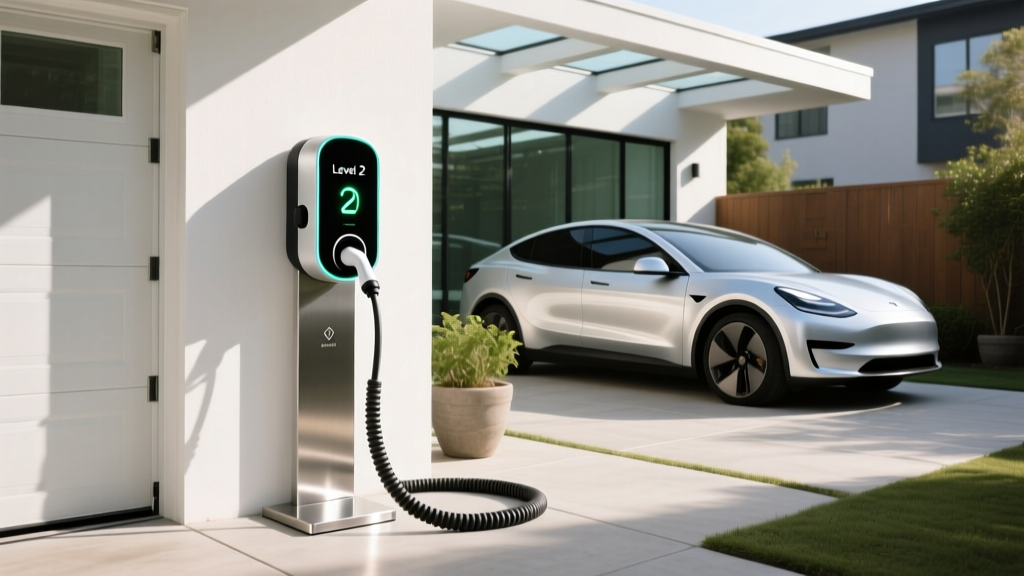
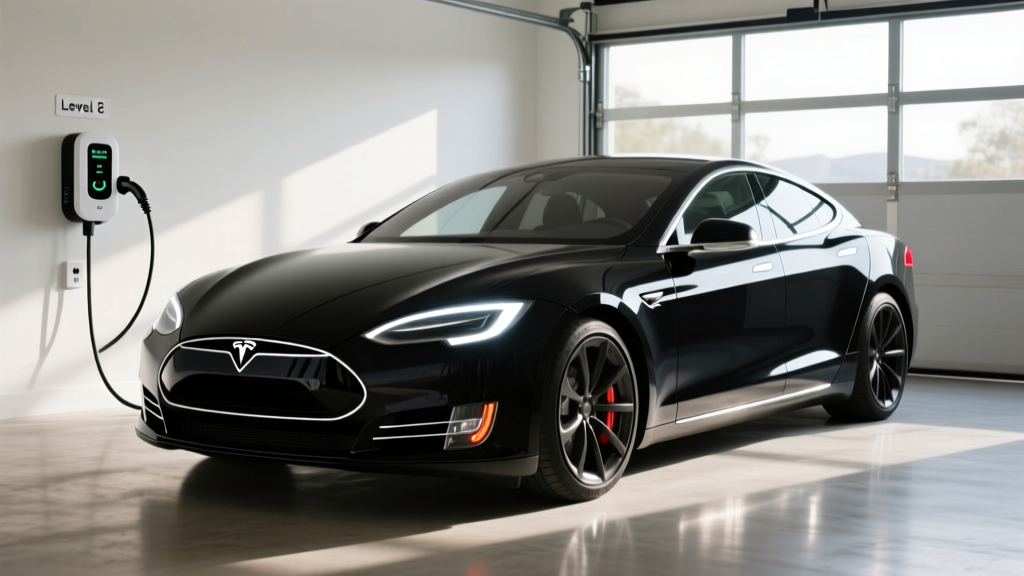
- Level 2 at 11.5 kW (48A): The Model S's onboard charger maxes at 48 amps / 11.5 kW. This adds roughly 30–34 miles per hour. A 10–80% charge (~70 kWh) takes about 6–7 hours. This is your daily workhorse.
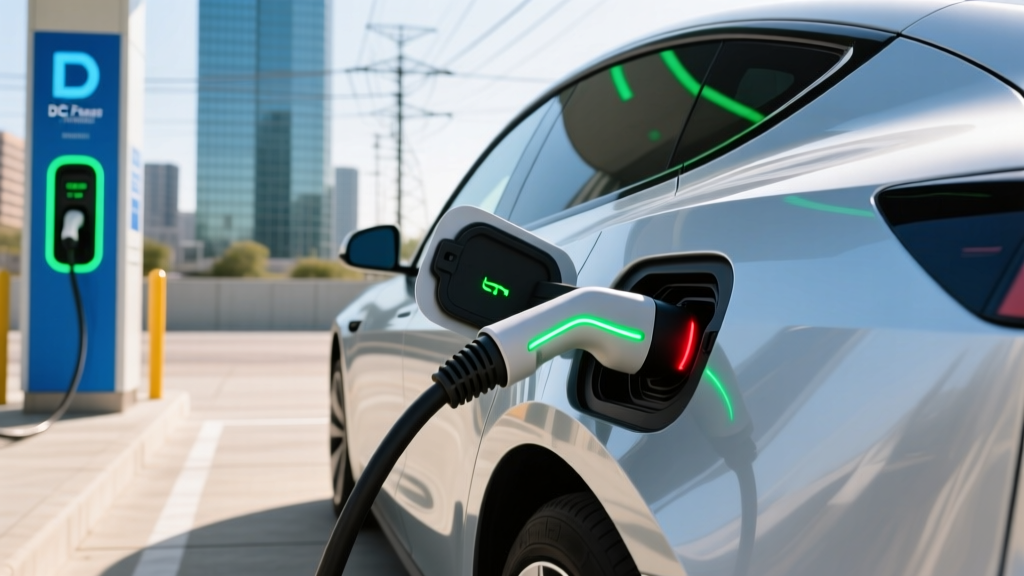
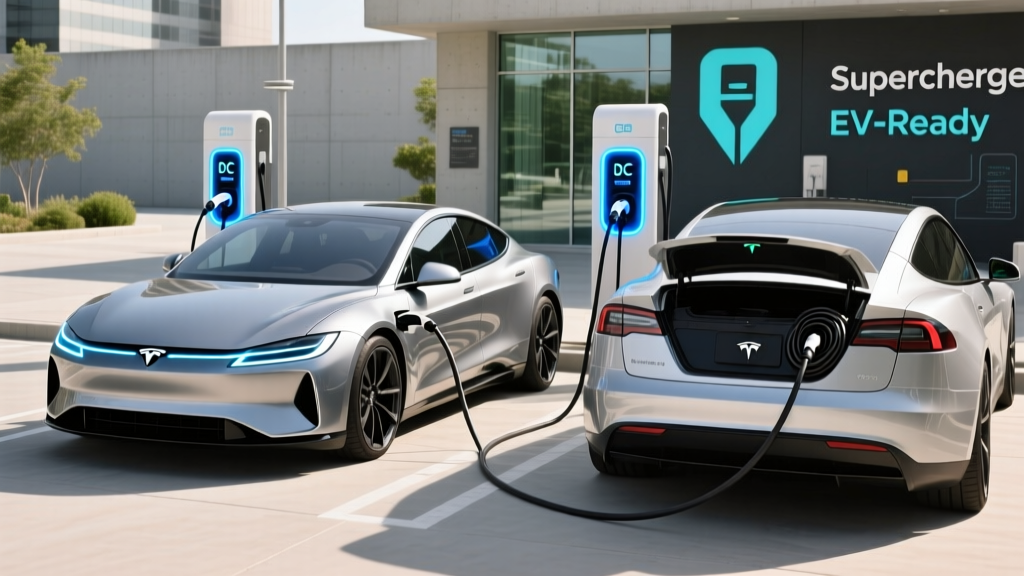
- V3 Supercharger (250 kW peak): The 2020 Model S can accept up to 200 kW peak on V3 Superchargers. A 10–80% session takes approximately 30–35 minutes. Note: charge speed tapers significantly above 60% SoC to protect the battery — you won't sustain 200 kW for the full session.
Home Level 2 Charging Installation: Costs, Electrical Requirements & Panel Upgrades
With a 100 kWh battery, Level 2 home charging is essentially mandatory. Level 1 on a standard outlet would take days to fill this pack. Here's what a proper home installation involves.
Electrical Requirements for a 2020 Model S
To take full advantage of the Model S's 48A onboard charger, you need a 240V / 60A dedicated circuit (EVSE rated for 48A continuous draw requires a circuit rated at 125% of that, hence 60A). If you're willing to charge at a lower rate, a 240V / 50A circuit (supporting 40A continuous / 9.6 kW) still delivers ~28 miles per hour — adequate for most overnight charging.
Panel Upgrade: The Hidden Cost
Many homes built before 2000 have 100A or 150A electrical panels. Adding a 60A EV circuit to a 100A panel often requires a panel upgrade to 200A, which is the single largest variable in installation cost. A licensed electrician will perform a load calculation per NEC Article 220 to determine if your existing panel can handle the additional draw.
| Cost Component | Low Estimate | High Estimate | Notes |
|---|---|---|---|
| Level 2 EVSE Equipment (Wall Connector / third-party) | $400 | $750 | Tesla Wall Connector ~$420; ChargePoint Home Flex ~$550–$700 |
| Electrician Labor (standard install, no panel upgrade) | $600 | $1,500 | Depends on run length from panel to garage, conduit, drywall work |
| Permit & Inspection | $100 | $350 | Varies by municipality; some jurisdictions waive for EV installs |
| Electrical Panel Upgrade (if needed) | $1,500 | $3,500 | 100A → 200A service upgrade; not needed if panel has capacity |
| Total (no panel upgrade) | $1,100 | $2,600 | Typical scenario for modern homes with 200A service |
| Total (with panel upgrade) | $2,600 | $6,100 | Older homes or high-load households |
Connector Compatibility: NACS, CCS1, and What Adapters You Need
The 2020 Model S uses Tesla's proprietary connector, which has since been standardized as NACS (North American Charging Standard). In 2026, NACS is the dominant connector in North America — Ford, GM, Rivian, Hyundai, and most other manufacturers have adopted it.
| Connector Type | Compatible with 2020 Model S? | Notes |
|---|---|---|
| NACS (Tesla) | ✅ Native — no adapter needed | Works at all Tesla Superchargers and Destination Chargers |
| CCS1 | ⚠️ Requires adapter | Tesla does not officially sell a CCS-to-NACS adapter for pre-2021 Model S; third-party options exist but verify compatibility |
| CHAdeMO | ❌ Not practical | CHAdeMO is effectively deprecated in North America as of 2025; no reliable adapter path |
Practical advice: With a NACS-equipped Model S, you have access to the Tesla Supercharger network — over 6,000 V3 (250 kW) and V4 stalls across North America as of 2026. This is the most reliable DC fast-charging network available. For non-Tesla public chargers with CCS1 connectors (Electrify America, EVgo CCS stalls), you'd need a third-party adapter, but in practice most Model S owners rely almost exclusively on Superchargers and home charging.
Charging Cost: $/kWh Scenarios and Cost Per Mile vs. Gas
One of the strongest ownership arguments for a used Model S Long Range is fuel cost savings. Here's what charging actually costs in 2026.
| Charging Scenario | Typical $/kWh | Cost for 70 kWh (10–80%) | Cost Per Mile (est. 30 kWh/100 mi) |
|---|---|---|---|
| Home Off-Peak (Time-of-Use plan) | $0.08–$0.12 | $5.60–$8.40 | $0.024–$0.036/mi |
| Home Standard Rate (national avg.) | $0.16–$0.18 | $11.20–$12.60 | $0.048–$0.054/mi |
| Tesla Supercharger V3 (2026 avg.) | $0.28–$0.36 | $19.60–$25.20 | $0.084–$0.108/mi |
| Non-Tesla DC Fast (Electrify America, etc.) | $0.35–$0.48 | $24.50–$33.60 | $0.105–$0.144/mi |
| Gasoline equivalent (25 MPG avg. sedan, $3.40/gal) | — | — | $0.136/mi |
The takeaway: Charging at home on an off-peak plan, your Model S Long Range costs roughly 3–4 cents per mile — about one-quarter the cost of a comparable gas sedan. Even at Supercharger rates, you're paying less per mile than most gasoline vehicles. Over 12,000 miles annually, that's a savings of $1,200–$1,600/year versus gas at home charging rates.
Best Home Level 2 Chargers for the Model S Long Range (2026 Picks)
Since the Model S accepts up to 48A / 11.5 kW, you want a charger that can deliver that full rate. Here are three strong options, all NACS-native in their 2026 versions.
Tesla Wall Connector
- Power: Up to 11.5 kW (48A)
- Connector: NACS native
- Cable Length: 24 ft
- Smart Features: Wi-Fi updates, load sharing with second unit, Tesla app integration
- Price: ~$420
- Best For: Tesla-only households; simplest setup, no third-party app needed
ChargePoint Home Flex (NACS)
- Power: Up to 12 kW (50A, adjustable via DIP switch)
- Connector: NACS (2025+ model) or J1772 with adapter
- Cable Length: 24 ft
- Smart Features: ChargePoint app scheduling, Alexa integration, energy reports
- Price: ~$550–$650
- Best For: Multi-EV households (non-Tesla + Tesla via adapter)
Emporia Vue Level 2 (NACS)
- Power: Up to 11.5 kW (48A)
- Connector: NACS native
- Cable Length: 24 ft
- Smart Features: Whole-home energy monitoring integration, solar-aware scheduling, app control
- Price: ~$400–$500
- Best For: Solar-equipped homes, budget-conscious buyers who want smart features
All three chargers require a hardwired 240V connection (no plug-in NEMA 14-50 option for the 48A+ models in most jurisdictions per 2026 NEC updates). Hardwiring is more reliable and avoids the GFCI breaker nuisance-trip issues common with plug-in Level 2 setups.
Safety, Code, and Installation Best Practices
EV charging is a high-draw, continuous-load application — it runs at near-maximum circuit capacity for hours. Proper installation is non-negotiable.
- Dedicated circuit: Your Level 2 charger must be on its own dedicated breaker — no shared circuits with dryers, ovens, or HVAC.
- GFCI protection: The 2023 NEC (and 2026 adopted editions in most states) requires GFCI protection for EVSE outlets. Hardwired units often have GFCI built into the EVSE itself, which is preferable to a GFCI breaker (fewer nuisance trips).
- Outdoor rating: If your charger is installed outside or in an unenclosed carport, ensure the EVSE is rated NEMA 4 (weatherproof). The Tesla Wall Connector and ChargePoint Home Flex both carry NEMA 4 ratings.
- Permit and inspection: Most jurisdictions require an electrical permit for a new 240V circuit. The inspection ensures proper wire gauge, breaker sizing, grounding, and conduit. Skipping the permit risks insurance denial in the event of an electrical fire.
- Wire gauge: A 60A circuit requires 4 AWG copper wire (or 2 AWG aluminum). Your electrician will spec this based on run length — longer runs may need upsized wire to limit voltage drop.
Frequently Asked Questions
How much does it cost to install a home EV charger for a 2020 Model S?
Expect $1,100–$2,600 for a standard installation (equipment + electrician + permit) if your electrical panel has sufficient capacity. If you need a panel upgrade from 100A to 200A, add $1,500–$3,500, bringing the total to $2,600–$6,100. Always get a load calculation from a licensed electrician before committing.
How fast will each charging level add range to my Model S Long Range?
Level 1 (120V): ~3–4 miles per hour. Level 2 at 11.5 kW (48A): ~30–34 miles per hour — a full overnight session adds 200+ miles. V3 Supercharger at 200 kW peak: up to ~175 miles in 15 minutes, though the charge curve tapers above 60% SoC.
Which connector and charger are compatible with my 2020 Model S?
Your Model S uses the NACS connector natively. This gives you direct access to the entire Tesla Supercharger network and all NACS-equipped public chargers. For CCS1 public chargers, you'd need a third-party adapter. For home charging, the Tesla Wall Connector (NACS, 11.5 kW, ~$420) is the most seamless option.
How much does charging cost per mile compared to gas?
Home charging on a standard rate costs approximately $0.04–$0.05 per mile. Off-peak home charging drops to $0.02–$0.04 per mile. A comparable gasoline sedan at 25 MPG and $3.40/gallon costs $0.136 per mile. Even Tesla Supercharging at $0.28–$0.36/kWh is cheaper than gas at $0.08–$0.11 per mile.
What electrical upgrades might I need for home Level 2 charging?
The key variable is your electrical panel's amperage and available capacity. A 200A panel with spare breaker slots typically handles a 60A EV circuit without upgrades. A 100A or 150A panel may require a service upgrade ($1,500–$3,500). Older wiring, aluminum service conductors, or panels with known issues (e.g., Federal Pacific, Zinsco) will also need replacement. Your electrician's load calculation will determine this upfront.
Does the 2020 Model S Long Range's battery degrade significantly?
Tesla's NMC packs in this generation typically retain ~88–92% capacity after 100,000 miles based on fleet data. The battery warranty covers 8 years / 150,000 miles with a minimum 70% capacity retention threshold. To maximize longevity, Tesla recommends daily charging to 80–90% and only charging to 100% before long trips. Avoid regularly sitting at 100% SoC or below 10% SoC for extended periods.