If you own or are considering a used 2020 Chevrolet Bolt EV, understanding how to charge it efficiently is just as important as knowing its EPA-estimated range. The 2020 Bolt EV carries a 66 kWh (usable) lithium-ion NMC battery pack and an EPA-estimated 259 miles of range. In real-world highway driving at 70 mph, expect closer to 220–235 miles; in freezing temperatures, that can drop to 180–200 miles. But range is only half the equation — how you replenish those electrons determines your daily convenience and long-term ownership cost.
This guide walks through every charging scenario for the 2020 Bolt EV: what each level delivers, what home installation actually costs, which connectors you need, and how per-mile charging expenses compare to gasoline. Whether you're plugging into a standard 120V outlet overnight or installing a hardwired Level 2 station, the numbers below will set realistic expectations.
2020 Chevy Bolt EV: Battery, Range, and Charging Specs at a Glance
| Specification | 2020 Chevrolet Bolt EV |
|---|---|
| Battery Capacity (Usable) | 66 kWh (NMC chemistry) |
| EPA Range | 259 miles |
| Real-World Highway Range | ~220–235 miles (70 mph, moderate temps) |
| Cold-Weather Range (20°F) | ~180–200 miles |
| EPA Efficiency | 118 MPGe (28 kWh/100 mi) |
| Max DC Fast Charge Rate | 55 kW (CCS1) |
| Level 2 AC Charge Rate | 7.2 kW (onboard charger) |
| 10–80% DC Fast Charge Time | ~60 minutes |
| 0–60 mph | 6.5 seconds |
| Horsepower | 200 hp / 266 lb-ft torque |
| Battery Warranty | 8 years / 100,000 miles (60% capacity retention) |
Charging Levels Explained: How Fast Will Each Add Range?
EV charging is measured in kilowatts (kW), which represents power — the rate at which energy flows into your battery. The battery's capacity is measured in kilowatt-hours (kWh), which is energy. Think of kW as the speed of water flowing from a hose, and kWh as the total volume of the bucket you're filling. This distinction is critical when comparing chargers and calculating charge times.
| Charging Level | Voltage / Amperage | Power Output | Miles of Range Added Per Hour | Full Charge Time (0–100%) |
|---|---|---|---|---|
| Level 1 (Standard Outlet) | 120V / 12A | ~1.4 kW | ~4 miles/hr | ~47 hours |
| Level 2 (Home/Public AC) | 240V / 32A | 7.2 kW (Bolt max) | ~25 miles/hr | ~9.5 hours |
| DC Fast Charging (CCS1) | 400V+ DC | 55 kW peak | ~90 miles/hr (at peak) | 10–80% in ~60 min |
Level 1 charging comes standard with every Bolt EV — the included mobile cord plugs into any standard household 120V outlet. At roughly 4 miles of range per hour, it's adequate only for drivers who travel under 40 miles daily and can leave the car plugged in for 12+ hours overnight. A full recharge from empty takes nearly two days.
Level 2 charging is the practical standard for daily EV ownership. The Bolt's onboard charger accepts up to 7.2 kW (240V at 32 amps), meaning a properly sized home Level 2 station will add about 25 miles of range per hour. A full overnight charge easily replenishes the entire battery. Most Bolt owners find Level 2 essential for real-world usability.
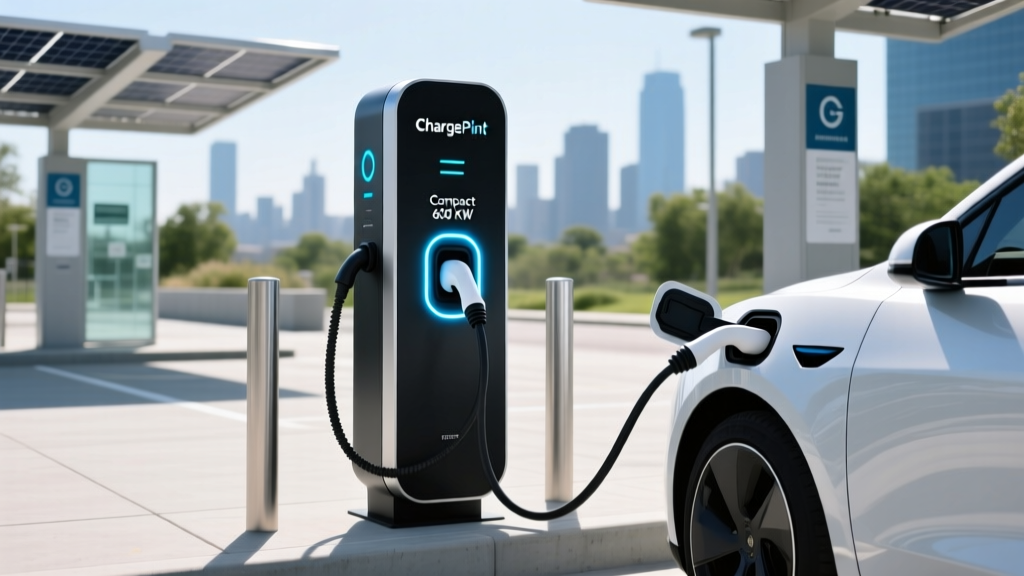
DC Fast Charging uses the CCS1 connector (standard on the 2020 Bolt EV) and bypasses the onboard charger entirely, sending direct current straight to the battery. The Bolt EV peaks at approximately 55 kW — modest by 2026 standards but sufficient for road-trip replenishment. Expect a 10–80% session to take roughly 60 minutes. Note that charging speed tapers significantly above 80% state of charge (SoC) to protect battery health; charging from 80–100% on DC fast can add another 30–40 minutes. For road trips, plan stops around the 10–80% sweet spot.
Home Charger Installation: Electrical Requirements and Costs
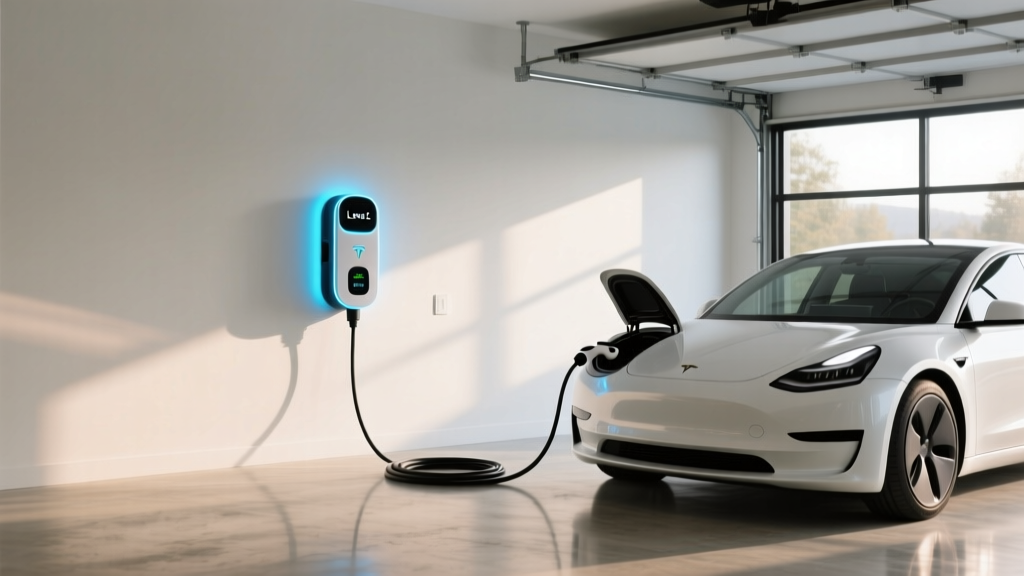
Installing a Level 2 home charger is the single most impactful upgrade for Bolt EV ownership. Here's what's involved electrically and financially.
Electrical Requirements
For a full 7.2 kW charge rate, you need a dedicated 240V circuit rated at 40 amps (EVSE rated at 32A continuous, per NEC 80% rule). If your charger is hardwired, a 40A breaker is sufficient. If you're using a NEMA 14-50 receptacle, you'll need a 50A breaker because the outlet must be rated at 125% of the continuous load.
Most modern homes with 200-amp electrical panels can accommodate a 40A or 50A dedicated circuit without a panel upgrade — provided there's physical space for the breaker and the panel's calculated load allows it. Older homes with 100-amp service or panels already near capacity may require a panel upgrade, which is a significant additional cost.
| Cost Component | Simple Install (panel nearby, no upgrade) | Complex Install (long run, panel upgrade) |
|---|---|---|
| Level 2 EVSE Equipment | $350–$650 | $350–$650 |
| Electrician Labor | $400–$800 | $1,000–$2,500 |
| Permit & Inspection | $50–$200 | $100–$300 |
| Electrical Panel Upgrade (if needed) | $0 | $1,500–$3,500 |
| Conduit, Wiring, Misc. Materials | $100–$300 | $300–$800 |
| Total Estimated Cost | $900–$1,950 | $3,250–$7,750 |
How much does it cost to install a home EV charger? For most Bolt EV owners with a modern 200A panel and a garage or carport within 20–30 feet of the panel, expect to pay between $900 and $1,950 total. If your home has a 100A panel, requires a long conduit run, or needs trenching for a detached garage, costs climb significantly. Always get at least two quotes from licensed electricians and confirm they pull a local permit — unpermitted work can void homeowner's insurance coverage and create fire risk.
Safety and Code Considerations
- Dedicated circuit: Your EVSE must be on its own dedicated breaker — never share a circuit with other high-draw appliances.
- GFCI protection: NEC 2020 and later require GFCI protection for EV receptacles in garages. Hardwired EVSE units typically have built-in ground-fault protection.
- Outdoor rating: If your charger is installed outside, ensure the EVSE carries a NEMA 4 or NEMA 4X rating for weather resistance.
- Cable management: Choose a charger with at least 18–25 feet of cable to reach your Bolt's charge port (located on the driver-side front fender) from various parking positions.
- Permit: Most jurisdictions require an electrical permit and inspection for new 240V circuits. Budget $50–$300 and factor in 1–3 weeks for scheduling.
Connector Compatibility: What Plugs Into the 2020 Bolt EV?
The 2020 Chevy Bolt EV uses the CCS1 (Combined Charging System) connector for both Level 2 AC charging and DC fast charging. This was the standard connector for nearly all non-Tesla EVs sold in North America through 2024.
| Connector Type | Used By | Compatible with 2020 Bolt EV? |
|---|---|---|
| J1772 (AC Level 1 & 2) | All non-Tesla EVs | Yes — native (top portion of CCS1 inlet) |
| CCS1 (DC Fast) | GM, Ford, VW, Hyundai, most non-Tesla | Yes — native |
| NACS (Tesla / SAE J3400) | Tesla; most brands transitioning 2025–2026 | Adapter required (e.g., Tesla CCS adapter or third-party NACS-to-CCS1) |
| CHAdeMO | Nissan LEAF, Mitsubishi (legacy) | No — different standard entirely |
As of 2026, the North American charging landscape is shifting toward NACS (the Tesla connector, now standardized as SAE J3400). Most automakers have adopted NACS for new vehicles starting in 2025–2026, and Tesla has opened its Supercharger network to CCS-equipped vehicles via adapters. If you want to access Tesla Superchargers with your Bolt EV, you'll need a CCS1-to-NACS adapter — Tesla sells one, and third-party options exist. Confirm compatibility before purchasing, as not all adapters support DC fast charging at full rate.
For Level 2 public charging (shopping centers, workplaces, parking garages), you'll encounter J1772 connectors, which plug directly into the top portion of your Bolt's CCS1 inlet — no adapter needed.
Level 2 Charger Equipment Recommendations for the Bolt EV
Since the Bolt EV's onboard charger maxes out at 7.2 kW (32A), you don't need a 48A or 80A charger to get full speed. However, buying a higher-amperage EVSE can future-proof your installation for your next EV. Below are proven options at various price points, all compatible with the Bolt's CCS1/J1772 inlet.
Emporia Level 2 EV Charger
- Power Output: 48A max (11.5 kW on 60A circuit) — Bolt will draw 32A / 7.2 kW
- Connector: J1772 (NACS adapter available)
- Cable Length: 24 feet
- Smart Features: Wi-Fi, energy monitoring, scheduling via app, works with Emporia home energy monitor
- Price: ~$399
- Best For: Budget-conscious buyers who want smart scheduling and energy tracking
ChargePoint Home Flex
- Power Output: Configurable up to 50A (12 kW) — set to 40A circuit for Bolt
- Connector: J1772 (NACS version now available)
- Cable Length: 23 feet
- Smart Features: Wi-Fi, Alexa integration, ChargePoint app scheduling, public network account integration
- Price: ~$549
- Best For: Drivers who use ChargePoint public stations and want a unified account experience
Grizzl-E Smart
- Power Output: 40A max (9.6 kW on 50A circuit)
- Connector: J1772
- Cable Length: 24 feet
- Smart Features: Wi-Fi, OCPP support, adjustable amperage via dip switches, extreme cold-rated (-40°F)
- Price: ~$449
- Best For: Cold-climate owners and those wanting rugged, no-nonsense durability
Any of these chargers will deliver the Bolt EV's maximum 7.2 kW Level 2 rate. The key decision factors are cable length (measure from your planned mount point to the Bolt's driver-side front fender port), smart scheduling features (useful if your utility offers time-of-use rates), and whether you want to future-proof for a higher-capacity EV in the future.
Charging Cost Per Mile: Bolt EV vs. Gasoline
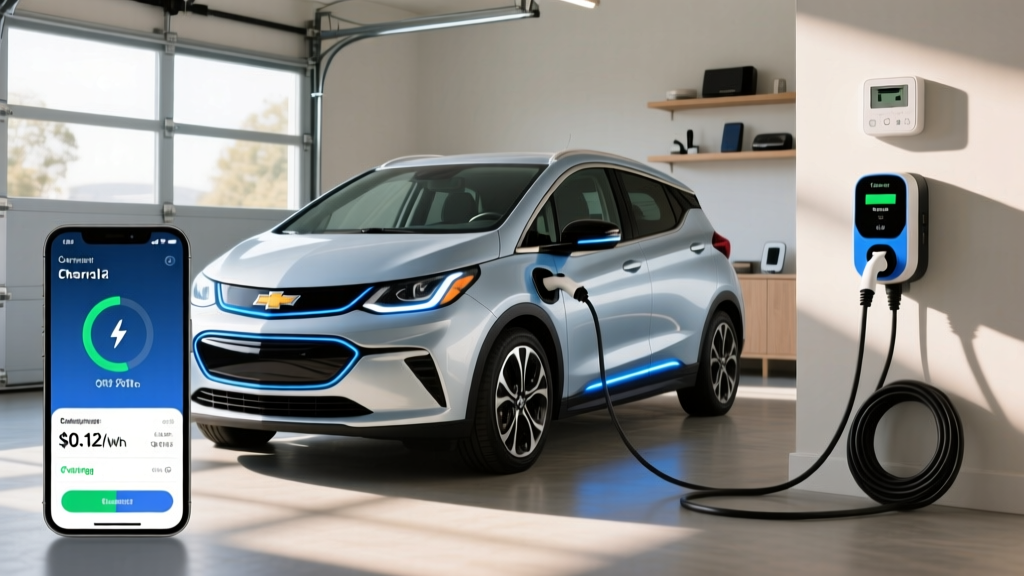
How much does charging cost per mile vs gas? The answer depends heavily on where and when you charge. Below is a cost comparison using the Bolt EV's efficiency of approximately 28 kWh per 100 miles (118 MPGe combined) and a gas car averaging 30 MPG.
| Charging / Fueling Scenario | Rate | Bolt EV Cost/Mile | Gas Car Cost/Mile ($3.50/gal) |
|---|---|---|---|
| Home (off-peak utility rate) | $0.09/kWh | $0.025 | $0.117 |
| Home (average residential rate) | $0.16/kWh | $0.045 | $0.117 |
| Home (peak / high-cost utility) | $0.28/kWh | $0.078 | $0.117 |
| Public Level 2 (network pricing) | $0.30/kWh | $0.084 | $0.117 |
| DC Fast Charging (public) | $0.48/kWh | $0.134 | $0.117 |
At home on off-peak rates, the Bolt EV costs roughly 2.5 cents per mile to fuel — less than a quarter of what a 30 MPG gas car costs at $3.50/gallon. Even on a national average residential rate of ~$0.16/kWh, you're paying about 4.5 cents per mile. The savings are substantial: a driver covering 12,000 miles per year would spend approximately $540 on home electricity vs. $1,400 on gasoline — a savings of roughly $860 annually.
However, frequent reliance on DC fast charging at public rates can push per-mile costs above gasoline. DC fast charging should be treated as a road-trip convenience, not a daily fueling strategy. If you can charge at home or at a workplace Level 2 station, your per-mile costs will stay well below gas.
Many utilities offer time-of-use (TOU) rate plans that reward overnight charging with lower per-kWh prices. Check with your utility provider — scheduling your Bolt to charge between 11 PM and 6 AM can cut your charging bill by 30–50% compared to uncontrolled daytime charging.
Charging Time Examples: Realistic Expectations for the Bolt's 66 kWh Battery
Here's how long common charging scenarios take with the 2020 Bolt EV's 66 kWh usable battery:
- Overnight top-up (30% to 100%) on Level 2: ~6.5 hours — easily completed while you sleep.
- Daily commute replenish (70% to 100%) on Level 2: ~2.75 hours — done by the time you finish dinner.
- Road-trip stop (10% to 80%) on DC fast: ~60 minutes at a 50+ kW CCS1 station. Plan a meal or break.
- Emergency top-up on Level 1 (120V): 12 hours yields approximately 48 miles of range — enough for a day's errands but not a viable daily strategy for most drivers.
The Bolt EV's DC fast charging curve is relatively flat compared to newer EVs. It holds close to its 55 kW peak from roughly 10% to 50% SoC, then gradually tapers. Above 80%, charge rate drops below 20 kW. This is why road-trip planning should target 10–80% sessions — the last 20% takes disproportionately long.
Federal Tax Credit and Used EV Incentives
If you're purchasing a 2020 Bolt EV as a used vehicle, you may qualify for the IRC §25E Used Clean Vehicle Credit — up to $4,000 or 30% of the sale price (whichever is less). Key eligibility requirements per IRS guidelines:
- Sale price must be $25,000 or less
- Buyer income limits: $75,000 (single), $112,500 (head of household), $150,000 (joint)
- Vehicle must be at least two model years old (2020 qualifies in 2026)
- Must purchase from a licensed dealer (private-party sales do not qualify)
- Credit is non-refundable — you must have tax liability to claim it
- Can only be claimed once per VIN (check history before purchasing)
This credit can be transferred to the dealer at point of sale as an immediate price reduction. Always confirm eligibility with a tax professional before finalizing your purchase, as IRS rules may be updated.
Frequently Asked Questions
How much does it cost to install a home EV charger for my 2020 Bolt EV?
For a straightforward installation with a modern 200A electrical panel and the charger located near the panel, expect $900–$1,950 total (equipment + electrician + permit). If your home needs a panel upgrade, long conduit runs, or trenching, costs can reach $3,250–$7,750. Always get multiple quotes from licensed electricians.
How fast will each charging level add range to the Bolt EV?
Level 1 (120V) adds about 4 miles per hour. Level 2 (240V, 32A) adds about 25 miles per hour. DC fast charging at 55 kW adds roughly 90 miles per hour at peak, but sessions are best planned for 10–80% (about 60 minutes) due to charge-curve tapering above 80%.
Which connector and charger is compatible with my 2020 Bolt EV?
The 2020 Bolt EV uses CCS1 for DC fast charging and J1772 for Level 1 and Level 2 AC charging. All non-Tesla public Level 2 stations use J1772, which is natively compatible. For Tesla Supercharger access, a CCS1-to-NACS adapter is required.
How much does charging cost per mile compared to gasoline?
At home on average residential electricity rates (~$0.16/kWh), the Bolt EV costs approximately $0.045 per mile — about 60% less than a 30 MPG gas car at $3.50/gallon ($0.117/mile). Off-peak home rates can push costs as low as $0.025/mile. However, DC fast charging at public rates ($0.48/kWh) costs roughly $0.134/mile, exceeding gasoline.
What electrical upgrades might I need for a Level 2 charger?
You need a dedicated 240V circuit rated at 40A (for a 32A continuous charger) or 50A (for a NEMA 14-50 outlet). Homes with 100A panels or panels already near capacity may require a panel upgrade to 200A, costing $1,500–$3,500. Your electrician will perform a load calculation to determine whether your existing panel can accommodate the new circuit.
Can I use a Tesla Supercharger with my 2020 Bolt EV?
Yes, with a CCS1-to-NACS adapter. Tesla has opened portions of its Supercharger network to non-Tesla EVs equipped with the appropriate adapter. Verify adapter compatibility and station availability in the Tesla app before relying on this for road trips. Not all Supercharger stalls support non-Tesla vehicles as of early 2026.
Does the 2020 Bolt EV support 800V ultra-fast charging?
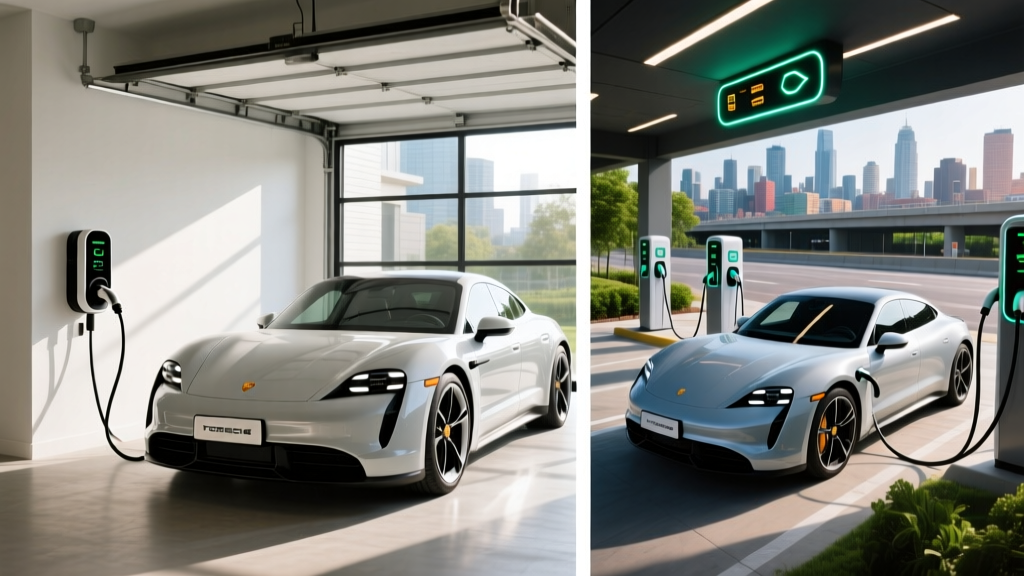
No. The Bolt EV uses a 400V battery architecture and peaks at 55 kW on DC fast charging. Vehicles with 800V architectures (Hyundai Ioniq 5, Porsche Taycan, etc.) can accept 250–350 kW, but the Bolt's charging speed is limited by its hardware. This is the trade-off for the Bolt's accessible pricing.
For official efficiency and range data, refer to the EPA's fueleconomy.gov listing for the 2020 Chevrolet Bolt EV. For safety ratings, consult NHTSA's 2020 Bolt EV page.