The 2019 Tesla Model X Long Range remains one of the most capable used electric SUVs on the road in 2026. With its 100 kWh battery pack (approximately 95 kWh usable), EPA-rated 325 miles of range, and native NACS (North American Charging Standard) connector, it's a vehicle that rewards owners who understand their charging options. Whether you're a current owner optimizing your setup or shopping for a used Model X and weighing charging logistics, this guide covers every connector, cost, and kilowatt you need to know.
A critical distinction before we start: kW (kilowatts) measures charging power — how fast energy flows into the battery. kWh (kilowatt-hours) measures energy capacity — how much the battery holds. The 2019 Model X Long Range has a ~95 kWh usable battery and can accept up to 150 kW of DC fast-charging power. These numbers are related but never interchangeable.
2019 Tesla Model X Long Range: Key Charging Specs at a Glance
| Specification | Value |
|---|---|
| Battery Capacity (Usable) | ~95 kWh (NMC chemistry) |
| EPA Range | 325 miles |
| Real-World Range (highway, 70 mph) | ~265–285 miles |
| Real-World Range (cold weather, 30°F) | ~230–260 miles |
| Max DC Fast Charge Rate | 150 kW peak (V2 Supercharger) |
| DC Fast Charge 10–80% | ~40–45 minutes |
| Level 2 AC Charge Rate (onboard charger) | 11.5 kW (48A) |
| Level 2 Charge Time (0–100%) | ~9–10 hours |
| Connector | NACS (Tesla proprietary, now industry standard) |
| Efficiency | 100 MPGe combined (EPA) |
Charging Levels Explained: Speeds, Times, and What Each Adds
Every 2019 Model X Long Range owner will use some combination of three charging levels. Here's exactly what each delivers for this specific vehicle:
| Level | Power Source | Max kW | Miles Added/Hour | Best Use Case |
|---|---|---|---|---|
| Level 1 | 120V household outlet | 1.4 kW (12A) | ~3–4 mi/hr | Emergency/trickle only |
| Level 2 (Home) | 240V, 48A circuit | 11.5 kW | ~32–35 mi/hr | Daily home charging |
| Level 2 (Public) | 240V, 32–40A typical | 7.7–9.6 kW | ~22–28 mi/hr | Destination charging |
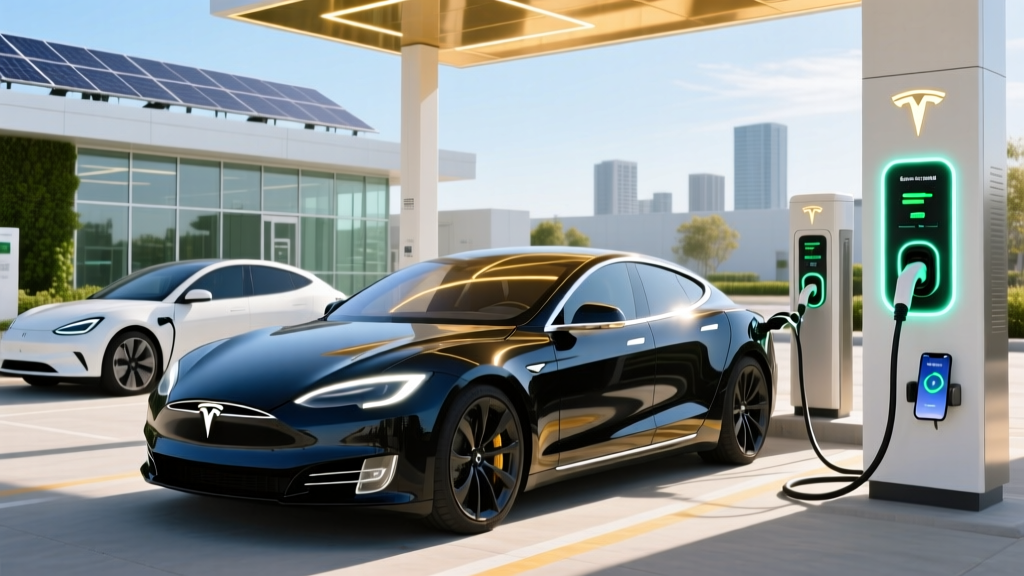
| DC Fast (V2 Supercharger) | 480V DC | 150 kW peak | ~170 mi/30 min (avg) | Road trips |
| DC Fast (V3 Supercharger) | 480V DC | ~150 kW (car-limited) | ~170 mi/30 min (avg) | Road trips (no benefit over V2) |
Important nuance for the 2019 Model X: This model year uses Tesla's older battery architecture, which caps DC fast charging at approximately 150 kW even when connected to a 250 kW V3 Supercharger. The 2021+ refresh (Plaid and new Long Range) upgraded to ~250 kW peak charging. So plugging into a V3 stall won't charge your 2019 any faster than a V2 stall — both will peak around 150 kW and taper as the battery fills.
The charging curve matters. DC fast charging doesn't sustain peak speed. Your 2019 Model X will pull close to 150 kW from roughly 10–40% State of Charge (SoC), then taper to ~100 kW through 60%, and drop further to ~50 kW by 80%. That's why we quote 10–80% times (~40–45 min) rather than peak rates alone. Above 80%, charging slows dramatically to protect battery longevity — plan to unplug at 80% on road trips unless you absolutely need the last 20%.
Home Level 2 Installation: Requirements, Costs, and Panel Considerations
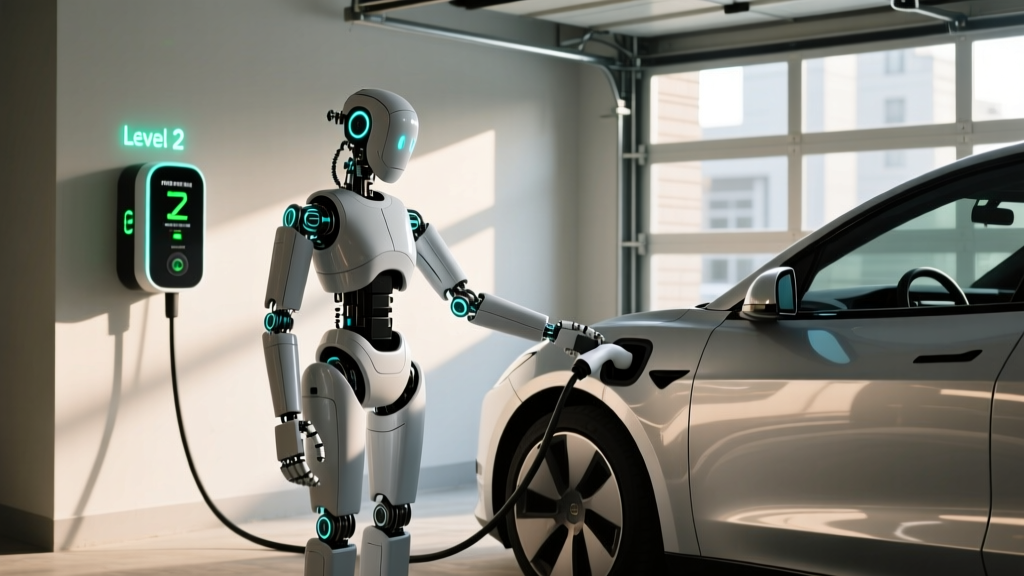
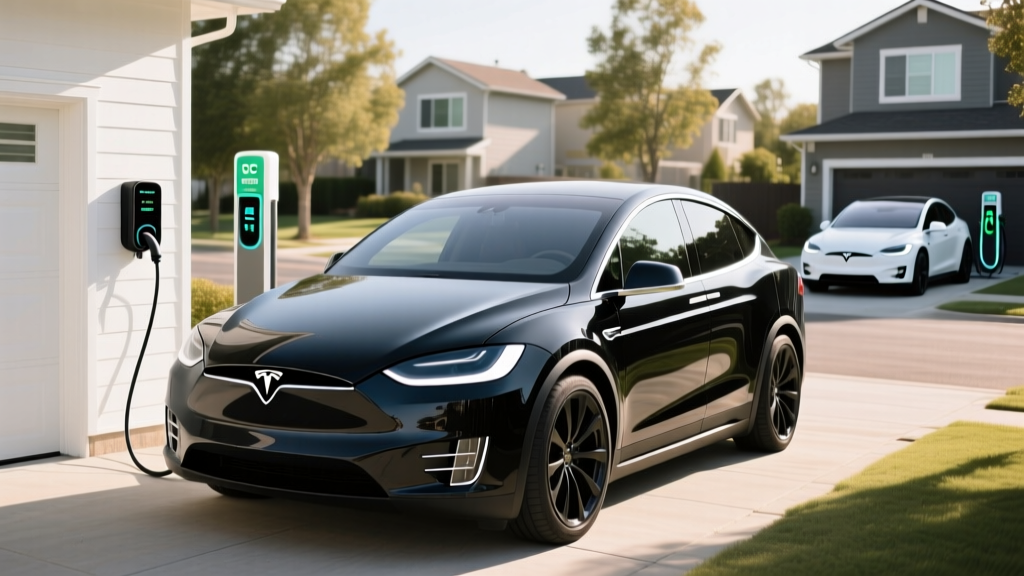
Home Level 2 charging is where the 2019 Model X Long Range truly shines. With an 11.5 kW onboard charger, you can add roughly 32–35 miles of range per hour of charging — enough to fully replenish the battery overnight.
Electrical Requirements
To deliver the full 11.5 kW (48 amps) to your Model X, you need a 240V circuit rated for 60 amps. This is because the National Electrical Code (NEC) requires circuits to be rated at 125% of the continuous load — a 48A charger requires a 60A breaker. If your charger is hardwired (recommended for 48A+ setups), no outlet is needed. If you use a NEMA 14-50 outlet, it's limited to 40A continuous (requiring a 50A breaker), capping your charge rate at ~9.6 kW or about 27 miles per hour.
Panel Upgrade: The Hidden Cost
Many homes built before 2000 have 100-amp or 150-amp electrical panels. Adding a 60A dedicated circuit may exceed your panel's capacity, especially if you already run electric HVAC, an electric dryer, and an electric oven. A licensed electrician will perform a load calculation to determine if your panel can handle the addition. If not, a panel upgrade to 200A typically costs $1,500–$3,000 on top of charger installation.
| Component | Cost Range | Notes |
|---|---|---|
| Level 2 Charger (hardware) | $300–$650 | Tesla Wall Connector or equivalent |
| Electrician labor (standard install) | $500–$1,500 | Run from panel to garage, ~30–50 ft |
| Permit & inspection | $50–$250 | Varies by municipality |
| Electrical panel upgrade (if needed) | $1,500–$3,000 | 100A → 200A service upgrade |
| Total (no panel upgrade) | $850–$2,400 | Most common scenario |
| Total (with panel upgrade) | $2,350–$5,400 | Older homes with limited capacity |
Get at least two quotes from licensed electricians familiar with EV charger installations. Ask specifically about conduit type (EMT vs. flexible), wire gauge (6 AWG copper for 60A), and whether the run requires a sub-panel. (NEC Article 625 governs EV charging installations.)
Which Connector and Charger Is Compatible?
The 2019 Tesla Model X Long Range uses the NACS (North American Charging Standard) connector — Tesla's proprietary plug that has since been adopted by Ford, GM, Rivian, Hyundai, and most major automakers starting in 2024–2025. This means your Model X can charge natively at:
- All Tesla Supercharger stations (V2 and V3)
- Tesla Destination Chargers (Level 2 at hotels, restaurants)
- Any public Level 2 station with a NACS connector (increasingly common in 2026)
For non-Tesla DC fast chargers (Electrify America, EVgo, ChargePoint) that use CCS1 connectors, you'll need a NACS-to-CCS adapter. Tesla sells an official adapter (~$175) that enables access to the broader CCS network. This is essential for road trips through areas with limited Supercharger coverage.
| Connector Type | Compatible with 2019 Model X? | Adapter Needed? |
|---|---|---|
| NACS (Tesla) | Yes — native | No |
| CCS1 | Yes — with adapter | Tesla NACS-to-CCS adapter (~$175) |
| CHAdeMO | Technically, with third-party adapter | Not recommended — network is sunsetting |
| J1772 (Level 2 public) | Yes — with Tesla J1772 adapter | Included with vehicle (check glovebox) |
CHAdeMO note: The CHAdeMO DC fast-charging standard is effectively being phased out in North America as of 2026. Nissan (the last major CHAdeMO holdout) switched to NACS for the 2025 Leaf. Don't invest in CHAdeMO adapters or plan trips around CHAdeMO-only stations.
Cost to Charge: Home vs. Public vs. Gas Comparison
One of the strongest ownership arguments for a used 2019 Model X Long Range is the per-mile energy cost compared to a comparable gas SUV like the BMW X5 or Mercedes GLE. Here's how it breaks down using the Model X's real-world efficiency of approximately 33 kWh per 100 miles (derived from its 100 MPGe EPA rating):
| Charging Scenario | $/kWh | Cost for 100 Miles | Cost Per Mile |
|---|---|---|---|
| Home (off-peak utility rate) | $0.12 | $3.96 | $0.04 |
| Home (average US rate, 2026) | $0.17 | $5.61 | $0.06 |
| Public Level 2 (ChargePoint, etc.) | $0.30 | $9.90 | $0.10 |
| Tesla Supercharger (average 2026) | $0.35 | $11.55 | $0.12 |
| Electrify America DC fast | $0.43 | $14.19 | $0.14 |
| Gas SUV (22 MPG combined, $3.40/gal) | — | $15.45 | $0.15 |
Key takeaway: Charging at home on off-peak rates saves roughly 75% per mile versus a comparable gas SUV. Even exclusive Supercharger use saves about 20% per mile. However, if you rely entirely on expensive public DC fast chargers (Electrify America at $0.43/kWh), the savings narrow to near-zero. Home charging access is the single biggest economic variable in EV ownership.
For the 2019 Model X Long Range specifically, a full 0–100% charge at home costs approximately $11.40–$16.15 (at $0.12–$0.17/kWh for ~95 kWh usable). That same 325 miles in a gas SUV averaging 22 MPG would cost $50.23 at $3.40/gallon.
Best Level 2 Chargers for the 2019 Model X Long Range
Because the Model X has a robust 11.5 kW (48A) onboard charger, pairing it with a capable Level 2 unit is essential. A cheap 32A charger will bottleneck your charging speed. Here are the top options in 2026:
Tesla Wall Connector (Gen 3)
- Power Output: Up to 11.5 kW (48A)
- Connector: NACS (native fit)
- Cable Length: 24 ft
- Smart Features: Wi-Fi updates, load sharing (pair two units on one circuit), power sharing
- Price: ~$425
- Verdict: The obvious first choice. Maximum charge rate, native connector, cleanest integration with Tesla app.
ChargePoint Home Flex
- Power Output: Up to 12 kW (50A), adjustable down
- Connector: NACS (2025+ model) or J1772 with adapter
- Cable Length: 23 ft
- Smart Features: Wi-Fi, scheduling, Alexa integration, detailed energy tracking
- Price: ~$550
- Verdict: Best app experience and scheduling features. Good choice if you also own a non-Tesla EV.
Emporia Level 2 EV Charger
- Power Output: Up to 11.5 kW (48A)
- Connector: J1772 (use included Tesla adapter) or NACS (2025+ model)
- Cable Length: 24 ft
- Smart Features: Wi-Fi, energy monitoring, solar integration with Emporia Vue panel
- Price: ~$350
- Verdict: Best budget smart charger. Excellent if you have solar panels and want to charge only on excess generation.
Grizzl-E Smart
- Power Output: Up to 10 kW (40A)
- Connector: J1772 (Tesla adapter included) or NACS
- Cable Length: 24 ft
- Smart Features: OCPP-compatible, adjustable amperage, extreme cold rated (-40°F)
- Price: ~$449
- Verdict: Most durable for harsh climates. Built in Canada, rated for extreme cold. Slightly lower 40A output means ~28 mi/hr charge rate.
Our recommendation for the 2019 Model X Long Range: The Tesla Wall Connector at 48A is the clear winner. It maxes out the car's onboard charger, requires no adapter, and integrates directly with your Tesla account for scheduling and energy tracking. Budget for a hardwired 60A circuit installation for the best performance and code compliance.
Safety, Electrical Code, and Installation Best Practices
EV charging draws sustained high current for hours — this is fundamentally different from the short bursts your dryer or oven uses. Proper installation is non-negotiable:
- Dedicated circuit: Your Level 2 charger must have its own dedicated breaker. Never share a circuit with other appliances.
- GFCI protection: NEC 2020+ requires GFCI (Ground Fault Circuit Interrupter) protection for EV charging outlets. Hardwired installations typically satisfy this through the charger's internal protection. Confirm with your electrician and local inspector.
- Outdoor rating: If your charger is installed outdoors (driveway, exterior wall), ensure the unit carries a NEMA 4 or IP65 weather rating. The Tesla Wall Connector and Grizzl-E are both outdoor-rated.
- Wire gauge: A 60A circuit requires 6 AWG copper wire (or 4 AWG aluminum). Undersized wire creates a fire hazard and will fail inspection.
- Permit and inspection: Most jurisdictions require an electrical permit for EV charger installation. Skipping this can void homeowner's insurance coverage for electrical fires and create issues during home resale.
- Cable management: Use a wall-mounted cable organizer to keep the charging cable off the ground and prevent trip hazards and connector damage.
Federal Tax Credit and Incentives for Home Charger Installation
The Alternative Fuel Vehicle Refueling Property Credit (IRS §30C) was extended through 2032 under the Inflation Reduction Act and offers a credit of up to 30% of the cost of home EV charging equipment and installation, capped at $1,000. However, eligibility is restricted to residents in census tracts classified as "low-income" or "non-urban" — many suburban and urban homeowners will not qualify.
Additionally, many utility companies offer rebates of $200–$500 for Level 2 charger installation or time-of-use (TOU) rate plans that reduce off-peak electricity costs to $0.06–$0.08/kWh. Check with your local utility before purchasing equipment — some programs require pre-approval. (Source: IRS §30C)
Note: The 2019 Model X Long Range does not qualify for the §30D new-vehicle purchase credit (production ended years ago), but buyers may qualify for the used EV credit (§25E) — up to $4,000 or 30% of the sale price, whichever is lower — subject to income caps ($75K single / $150K joint), a $25,000 maximum vehicle sale price, and battery sourcing requirements. (Source: IRS §25E)
Frequently Asked Questions
How much does it cost to install a home EV charger for a 2019 Tesla Model X?
A standard Level 2 installation with a Tesla Wall Connector on an existing 200A panel typically costs $850–$2,400 total (hardware + electrician + permit). If your home needs a panel upgrade from 100A to 200A service, add $1,500–$3,000, bringing the total to $2,350–$5,400. Always get a load calculation from a licensed electrician first.
How fast will each charging level add range to my Model X Long Range?
Level 1 (120V) adds about 3–4 miles per hour — only useful for emergency trickle charging. Level 2 at 48A (240V, hardwired) adds approximately 32–35 miles per hour, fully charging the 95 kWh battery in about 9–10 hours. DC fast charging at a V2 or V3 Supercharger adds roughly 170 miles in 30 minutes (10–80% takes about 40–45 minutes).
Which connector does the 2019 Tesla Model X Long Range use?
It uses the NACS (Tesla) connector natively. This gives you direct access to all Tesla Superchargers and Destination Chargers. For CCS1 public DC fast chargers (Electrify America, EVgo), you'll need Tesla's NACS-to-CCS adapter (~$175). The J1772 adapter for public Level 2 stations was included with the vehicle new — check the glovebox or trunk.
How much does charging cost per mile compared to gas?
Charging at home on average US electricity rates ($0.17/kWh) costs about $0.06 per mile in the Model X Long Range. A comparable gas SUV getting 22 MPG at $3.40/gallon costs about $0.15 per mile. Home charging saves roughly 60% per mile; exclusive Supercharger use ($0.35/kWh, ~$0.12/mile) still saves about 20%.
What electrical upgrades might I need for a Level 2 charger?
The most common upgrade is adding a 60A, 240V dedicated circuit from your main panel. If your panel is at capacity (common in homes with 100A or 150A service and existing electric appliances), you may need a full panel upgrade to 200A — costing $1,500–$3,000. Homes with older knob-and-tube or aluminum wiring may need partial rewiring. A licensed electrician's load calculation will determine exactly what's needed.
Can I use a V3 Supercharger with my 2019 Model X, and will it charge faster?
Yes, you can plug into any V3 Supercharger (250 kW capable), but the 2019 Model X Long Range's battery architecture limits it to approximately 150 kW peak — the same as a V2 Supercharger. You won't see faster charging on V3 stalls. The real benefit of V3 stations is that they don't share power between adjacent stalls the way older V2 paired stalls do.
Should I charge to 100% regularly?
No. The Model X Long Range uses NMC (nickel manganese cobalt) battery chemistry, which degrades faster when held at high or low states of charge for extended periods. Tesla recommends setting your daily charge limit to 80–90% and only charging to 100% when you need maximum range for a road trip. Enable the "Daily" charge limit in the Tesla app or in-car settings.