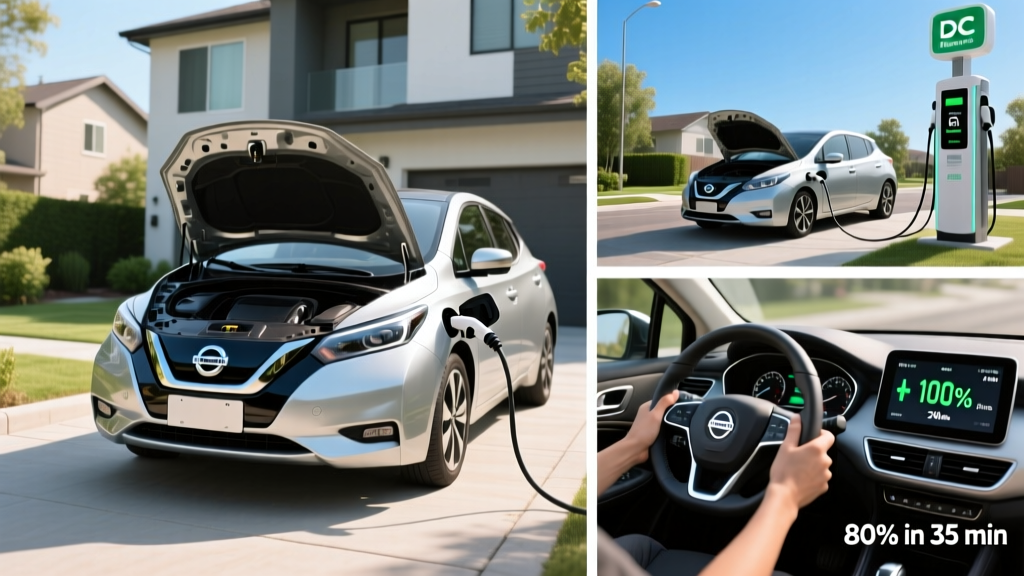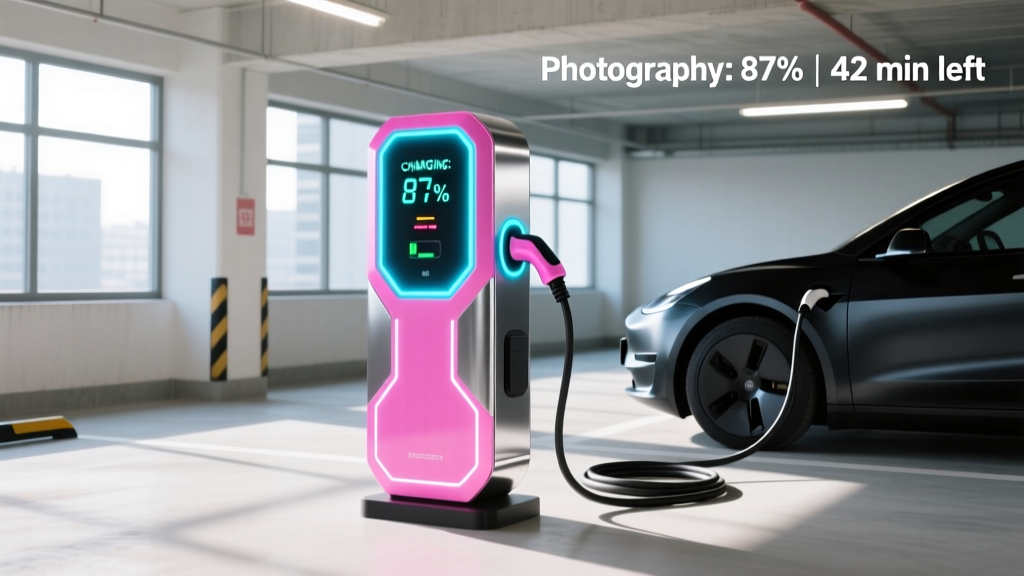
If you own or are considering a used 2019 Tesla Model 3 Standard Range, understanding its charging behavior is essential to maximizing range, battery longevity, and daily convenience. This 50 kWh (usable) LFP-free NMC pack delivers an EPA-rated 240 miles when new, though real-world range in 2026 will vary based on battery degradation, driving style, and climate. Below, we break down exactly how fast each charging level replenishes this specific pack, what a home installation actually costs, and how the Model 3's native NACS connector interacts with the broader charging ecosystem.
Charging Levels Explained: Speeds That Matter for the Model 3 Standard Range
EV charging operates across three tiers. The critical distinction: kW (kilowatts) measures power — the rate of energy flow — while kWh (kilowatt-hours) measures energy, the total capacity stored in your 50 kWh battery. Confusing these is the most common EV literacy mistake.
| Level | Voltage / Amperage | Power (kW) | Miles of Range Added per Hour | 10–80% Time (approx.) |
|---|---|---|---|---|
| Level 1 (120V outlet) | 120V / 12A | ~1.4 kW | ~4–5 mi/hr | Not practical (~35+ hours) |
| Level 2 (240V home/public) | 240V / 32A–48A | 7.7–11.5 kW | ~25–37 mi/hr | ~4–6 hours |
| DC Fast Charging | 400V architecture | Peak 170 kW (V2 Supercharger) | ~200+ mi in 15 min | ~25–30 min (with taper) |
Home Level 2 Installation: Electrical Requirements and True Costs
The 2019 Model 3 Standard Range has an onboard charger rated at 7.7 kW (32A) for AC charging. This means even if you install a 48A wall connector, the car will only accept 32A. A 40A circuit (which supports 32A continuous draw per NEC 80% rule) is the sweet spot — but installing a 60A circuit with a 48A charger provides future-proofing if you upgrade vehicles later.
What Your Electrical Panel Needs
- Dedicated 240V circuit: 40A minimum, 60A recommended for future-proofing
- Panel capacity: Most modern 200A panels can accommodate a 40–60A EV circuit. Older 100A panels often require an upgrade ($1,500–$3,000).
- Permit: Required in nearly all US jurisdictions; typically $50–$250
- GFCI protection: NEC 2020+ requires GFCI breakers for EV outlets in garages; hardwired chargers may be exempt in some areas
- Outdoor rating: If mounting outside, the charger must carry a NEMA 4 or NEMA 4X rating
| Item | Cost Range | Notes |
|---|---|---|
| Level 2 Charger (hardware) | $350–$700 | Tesla Wall Connector ~$475; third-party smart chargers $400–$650 |
| Electrician labor (standard install) | $600–$1,500 | Short run from panel, no drywall repair needed |
| Electrical permit | $50–$250 | Varies by municipality |
| Panel upgrade (if needed) | $1,500–$3,500 | 100A → 200A service upgrade; older homes only |
| Total (standard install) | $1,000–$2,450 | Without panel upgrade |
| Total (with panel upgrade) | $2,500–$5,950 | Older homes with 100A service |
The federal Residential Clean Energy Credit does not cover EV chargers as of 2026 (the §30C Alternative Fuel Vehicle Refueling Property Credit expired for most residential installations after 2025, though some census-tract-based exceptions remain). Check your state and utility — many offer $200–$500 rebates for Level 2 installations.
DC Fast Charging: Supercharger Speeds and the Charge Curve Reality
The 2019 Model 3 Standard Range supports DC fast charging at a peak of 170 kW on Tesla V2 Superchargers and up to 150 kW on V3 stalls (the Standard Range's battery management limits the V3 advantage compared to Long Range variants). Here's the critical nuance most buyers miss: peak kW is not sustained kW.
A typical 10–80% session on a V2 Supercharger takes approximately 25–30 minutes. The battery accepts peak power only between roughly 10–30% State of Charge (SoC). From 30–60%, the rate tapers to ~100–120 kW. Above 60%, it drops further to ~60–80 kW. Above 80%, charging slows dramatically to protect battery chemistry — often below 30 kW. This is why 10–80% times are the industry standard metric; charging to 100% on DC fast charging is both slow and unnecessary for battery health.
Connector Compatibility: NACS, CCS, and Adapter Requirements
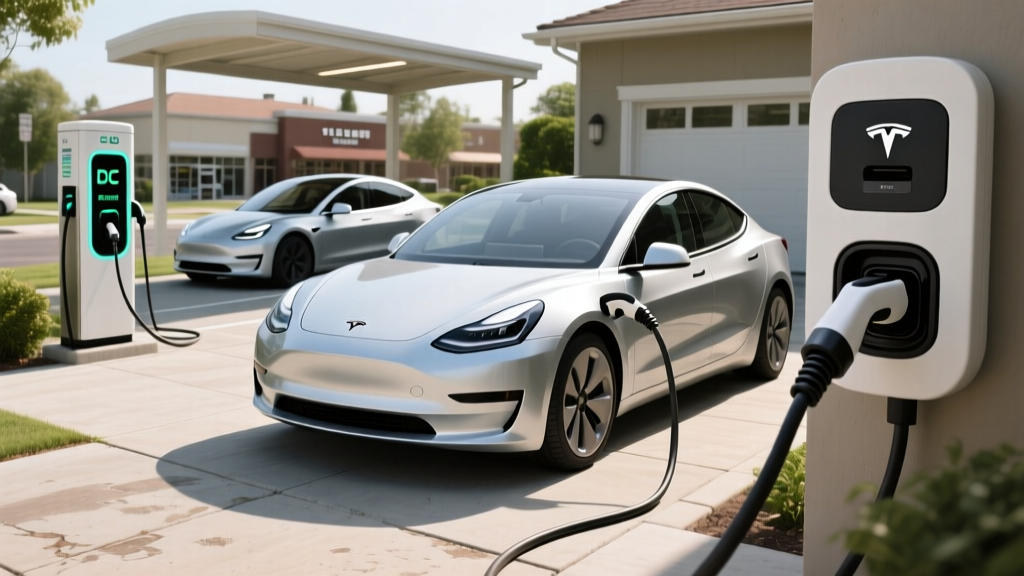
The 2019 Model 3 Standard Range ships with a native NACS (North American Charging Standard) connector — Tesla's proprietary plug, which became the SAE J3400 standard in 2024. This gives you direct access to the Tesla Supercharger network (over 25,000 stalls in North America as of 2026) without any adapter.
| Connector Type | Native Support? | Adapter Needed? | Network Access |
|---|---|---|---|
| NACS (Tesla) | Yes — native | None | Tesla Superchargers, Destination Chargers |
| CCS1 | No | Tesla CCS Adapter (~$250) | Electrify America, EVgo, ChargePoint DC fast |
| CHAdeMO | No | Third-party adapter (~$300–$400) | Limited legacy stations (being phased out) |
| J1772 (Level 2 public) | No | Tesla J1772 Adapter (included with car) | Public Level 2 stations, hotels, workplaces |
The Tesla CCS Adapter is worth purchasing if you frequently travel routes where Supercharger coverage is sparse. Electrify America and EVgo stations with CCS plugs can serve as backup. Note that some third-party CCS networks now offer NACS connectors as of 2025–2026, but coverage remains inconsistent.
Cost to Charge: Home vs. Public vs. Gas Comparison
The 2019 Model 3 Standard Range achieves an EPA-rated 141 MPGe combined, consuming approximately 24 kWh per 100 miles. Here's what that translates to in real dollars:
| Charging Scenario | Rate ($/kWh) | Cost per 100 Miles | Cost per Mile |
|---|---|---|---|
| Home (off-peak utility rate) | $0.10–$0.14 | $2.40–$3.36 | $0.024–$0.034 |
| Home (average US rate, 2026) | $0.17 | $4.08 | $0.041 |
| Public Level 2 (ChargePoint, etc.) | $0.25–$0.49 | $6.00–$11.76 | $0.06–$0.12 |
| Tesla Supercharger (avg. 2026) | $0.30–$0.40 | $7.20–$9.60 | $0.072–$0.096 |
| Electrify America DC fast | $0.40–$0.56 | $9.60–$13.44 | $0.096–$0.134 |
| Gas car (30 MPG, $3.40/gal) | — | $11.33 | $0.113 |
Home charging on an off-peak rate delivers fuel costs roughly one-quarter to one-third of a comparable gas vehicle. Even public DC fast charging typically matches or beats gas on a per-mile basis, though convenience fees at premium locations can push costs higher. Over 15,000 miles per year, home charging at $0.14/kWh saves approximately $1,100–$1,300 annually versus a 30 MPG gas car.
Recommended Level 2 Chargers for the Model 3 Standard Range
Since the Standard Range's onboard charger caps at 7.7 kW (32A), you can save money with a 32A or 40A unit — but a 48A charger provides headroom for future vehicles.
Tesla Wall Connector
- Power: Up to 11.5 kW (48A)
- Connector: NACS native
- Cable: 24 ft
- Smart features: Wi-Fi updates, power sharing between units, access control
- Price: ~$475
- Best for: Tesla-only households; cleanest integration
ChargePoint Home Flex
- Power: Up to 12 kW (50A), configurable
- Connector: J1772 (use included Tesla adapter) or NACS pigtail
- Cable: 23 ft
- Smart features: Alexa, scheduling, energy tracking, amperage dial
- Price: ~$550–$650
- Best for: Multi-EV households; adjustable amperage for older panels
Emporia Vue Level 2
- Power: Up to 11.5 kW (48A)
- Connector: J1772 or NACS
- Cable: 24 ft
- Smart features: Solar integration, energy monitoring, load management
- Price: ~$400–$500
- Best for: Solar-panel owners; budget-conscious smart charging
Safety, Code, and Installation Best Practices
EV charging draws sustained high current for hours — more like an electric furnace than a typical appliance. Cutting corners creates fire risk.
- Dedicated circuit only: Never share the EV circuit with other loads. A 40A EV charger on a shared 50A circuit with a dryer will trip breakers.
- Hardwired vs. plug: Hardwired installations (no receptacle) avoid the NEMA 14-50 outlet's known reliability issues under sustained EV loads. If using a receptacle, specify an industrial-grade Hubbell or Bryant 14-50R — not a residential-grade unit.
- GFCI requirements: NEC 2020 and later require GFCI protection on 240V receptacles used for EV charging in garages. Hardwired units may be exempt depending on local code. GFCI breakers add $50–$100 to the installation.
- Outdoor installations: Use a NEMA 4-rated enclosure. Ensure the charger's operating temperature range covers your climate (most rated -22°F to 122°F).
- Wire gauge: 6 AWG copper for 40A circuits; 4 AWG for 60A circuits. Aluminum wire requires upsizing.
Always hire a licensed electrician familiar with EV installations. Ask for a load calculation on your panel before committing to a 60A circuit — some electricians will recommend this by default when your panel may not support it without an upgrade.
Frequently Asked Questions
How much does it cost to install a home EV charger for a 2019 Tesla Model 3?
A standard Level 2 installation (Tesla Wall Connector + 40A circuit + permit) runs $1,000–$2,450 in most markets if your panel has capacity. If your home has a 100A panel that needs upgrading to 200A, add $1,500–$3,500. The total range is $1,000–$5,950 depending on your home's electrical infrastructure.
How fast will each charging level add range to my Model 3 Standard Range?
Level 1 (120V wall outlet) adds about 4–5 miles per hour — adequate only for overnight top-ups of 30–40 miles. Level 2 at 32A/7.7 kW adds roughly 25 miles per hour, fully replenishing the 50 kWh pack overnight. DC fast charging at a Supercharger adds up to 170 miles in 15 minutes under ideal conditions, though the charge curve taper means 10–80% takes 25–30 minutes.
Which chargers and connectors are compatible with my 2019 Model 3?
Your car has a native NACS connector, giving you direct access to all Tesla Superchargers and Destination Chargers. For non-Tesla DC fast chargers (Electrify America, EVgo), you'll need the Tesla CCS Adapter (~$250). For public Level 2 J1772 stations, use the J1772 adapter that came with the car (or purchase a replacement for ~$100).
How much does charging cost per mile compared to gasoline?
At the US average residential electricity rate of ~$0.17/kWh, your Model 3 Standard Range costs about $0.04 per mile to fuel. A comparable 30 MPG gas car at $3.40/gallon costs $0.113 per mile. That's a savings of roughly $0.07 per mile, or about $1,050 per year at 15,000 miles. Public DC fast charging ($0.30–$0.50/kWh) narrows the gap but still generally undercuts gasoline.
What electrical upgrades might I need before installing a home charger?
Homes built after 2000 typically have 200A panels with capacity for a 40–60A EV circuit. Homes built before 1990 often have 100A service, which may require a panel upgrade ($1,500–$3,500) to safely support EV charging alongside existing loads like electric dryers, ovens, and HVAC. An electrician will perform a NEC Article 220 load calculation to determine whether your panel can handle the added circuit. If you're close to capacity, a smart load-management system (like the Emporia Vue or Span panel) can dynamically reduce charger amperage when other loads are active, potentially avoiding a panel upgrade.