Understanding the 2019 Tesla Model 3 Range in 2026
The 2019 Tesla Model 3 was offered in three primary variants, each with a different battery pack and EPA-estimated range. As these vehicles age and accumulate miles, understanding both the original sticker range and what to expect today is critical for current owners and used-EV shoppers alike.
| Variant | Battery (kWh, usable) | EPA Range (new) | Estimated 2026 Range* |
|---|---|---|---|
| Standard Range Plus (RWD) | ~50 kWh (NMC/NCA) | 240 mi | ~215–230 mi |
| Long Range (RWD) | ~75 kWh (NCA) | 310 mi | ~280–295 mi |
| Long Range AWD / Performance | ~75 kWh (NCA) | 310 mi / 310 mi | ~275–295 mi |
*Estimated based on ~5–8% degradation over 6–7 years for NCA chemistry with typical charging habits. Actual State of Health (SoH) varies based on Supercharging frequency, storage SoC, and climate.
Charging Levels Explained: kW, Speeds, and Range Added
A common point of confusion for new EV owners is the difference between kW (kilowatts), which measures charging power or speed, and kWh (kilowatt-hours), which measures battery energy capacity. Think of kW as the flow rate of a hose and kWh as the size of the bucket. Here's how each charging level translates to real-world range recovery for a 2019 Model 3:
| Charging Level | Power (kW) | Voltage / Amperage | Miles of Range Added per Hour | Typical Use Case |
|---|---|---|---|---|
| Level 1 (120V outlet) | ~1.0–1.4 kW | 120V / 12A | ~3–5 mi/hr | Overnight trickle, low-mileage days |
| Level 2 (240V home charger) | ~7.7–11.5 kW | 240V / 32–48A | ~25–44 mi/hr | Daily home charging |
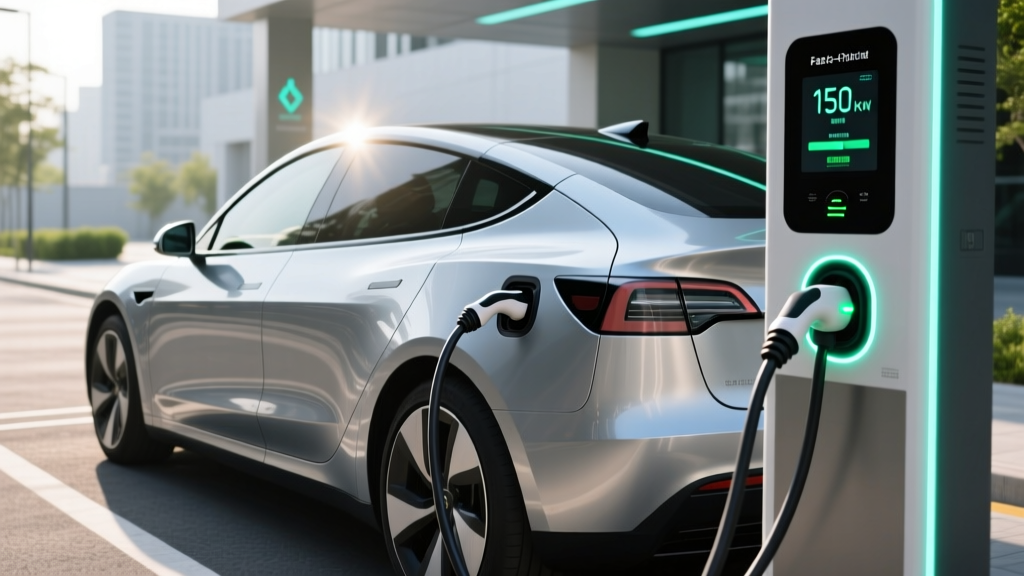
| DC Fast (Tesla Supercharger V2) | Up to 150 kW peak | 400V DC | ~200+ mi in 15 min | Road trips |
| DC Fast (Tesla Supercharger V3) | Up to 250 kW peak | 400V DC | ~180 mi in 10 min | Road trips (newer stalls) |
Important note on the 2019 Model 3: The Standard Range Plus variant has a smaller battery and charges at a lower peak DC rate (~100–120 kW on V2 Superchargers). The Long Range variants can accept up to ~150 kW on V2 and up to ~170–190 kW on V3 Superchargers, though sustained rates taper significantly above 60% State of Charge (SoC). Expect a 10–80% DC fast charge to take approximately 25–35 minutes at a V2 stall and 20–28 minutes at a V3 stall for the Long Range battery.
Home Charging Installation: Electrical Requirements and Costs
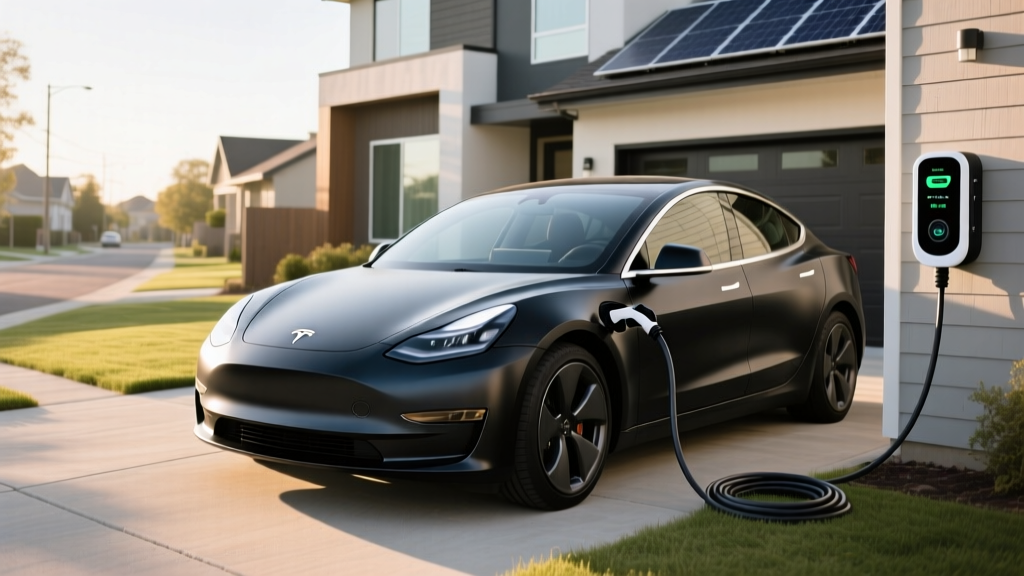
Installing a dedicated Level 2 home charger is the single best upgrade a 2019 Model 3 owner can make. It enables full-charge overnight convenience and eliminates reliance on public infrastructure for daily driving. However, costs vary dramatically based on your home's electrical panel capacity and the distance from panel to charger location.
Electrical Requirements
A 2019 Model 3's onboard charger accepts up to 11.5 kW (48A at 240V) on Long Range variants and up to 7.7 kW (32A at 240V) on the Standard Range Plus. To maximize charging speed:
- 48A charger requires a dedicated 60A circuit (NEC code requires circuits rated at 125% of continuous load)
- 32A charger requires a dedicated 40A circuit
- Both require 240V supply (similar to an electric dryer or oven outlet)
Panel Upgrade Considerations
Many homes built before 2000 have 100A electrical service panels. If your panel is already near capacity (running electric HVAC, dryer, range, and water heater), adding a 60A EV circuit may require a panel upgrade to 200A service. This is the single largest variable in installation cost and can add $1,500–$4,000+ to your project. A licensed electrician will perform a load calculation to determine if an upgrade is necessary.
Installation Cost Breakdown
| Cost Component | Simple Install (panel nearby, no upgrade) | Complex Install (long run, panel upgrade) |
|---|---|---|
| Level 2 Charger Equipment | $400–$700 | $400–$700 |
| Electrician Labor (wiring, conduit, breaker) | $500–$1,200 | $1,500–$3,000 |
| Electrical Permit | $50–$200 | $100–$300 |
| Panel Upgrade (if needed) | $0 | $1,500–$4,000 |
| Total Estimated Cost | $950–$2,100 | $3,500–$8,000 |
Connector Compatibility: NACS, CCS, and Adapters
The 2019 Tesla Model 3 uses the proprietary Tesla connector (now standardized as NACS — North American Charging Standard) for both Level 2 AC and DC fast charging. This is a significant advantage in 2026, as NACS has become the dominant connector across the industry, with nearly all major automakers adopting it for new vehicles.
| Connector Type | 2019 Model 3 Compatibility | Notes |
|---|---|---|
| NACS (Tesla) | Native — direct plug | Works at all Tesla Superchargers and Destination Chargers |
| CCS1 | Requires adapter | Tesla sells a CCS adapter (~$250); needed for Electrify America, EVgo CCS stalls |
| CHAdeMO | Not compatible | Largely obsolete standard; no adapter available |
| J1772 (Level 2 public) | Adapter included with car | Tesla ships a J1772-to-Tesla adapter; works at public Level 2 stations |
Key takeaway: Your 2019 Model 3 has native access to the Tesla Supercharger network — widely regarded as the most reliable and extensive DC fast-charging network in North America. For non-Tesla public chargers (Electrify America, ChargePoint, EVgo), you'll need the J1772 adapter (included) for Level 2 or the optional CCS adapter for DC fast charging.
Cost to Charge: Per-Mile Economics vs. Gas
One of the strongest ownership arguments for the 2019 Model 3 is the fuel cost savings. The Long Range AWD variant achieves an EPA-rated 121 MPGe combined (per fueleconomy.gov), consuming roughly 26 kWh per 100 miles. Here's how that translates to real cost:
| Charging Scenario | Cost per kWh | Cost per 100 Miles | Cost per Mile |
|---|---|---|---|
| Home (off-peak utility rate) | $0.08–$0.12 | $2.08–$3.12 | $0.02–$0.03 |
| Home (standard residential rate) | $0.13–$0.18 | $3.38–$4.68 | $0.03–$0.05 |
| Public Level 2 (ChargePoint, etc.) | $0.20–$0.35 | $5.20–$9.10 | $0.05–$0.09 |
| Tesla Supercharger (V2/V3) | $0.25–$0.40 | $6.50–$10.40 | $0.07–$0.10 |
| Gasoline car (28 MPG avg, $3.50/gal) | — | $12.50 | $0.125 |
The bottom line: Charging at home on off-peak rates costs roughly 75–85% less per mile than fueling a comparable gas sedan. Even at peak Supercharger rates, the Model 3 is typically 20–40% cheaper to "fuel" per mile. Over 15,000 miles/year, home-charging a Long Range Model 3 can save $1,000–$1,800 annually compared to a 28 MPG gas car.
Recommended Home Charging Equipment for the 2019 Model 3
Below are three proven Level 2 chargers well-suited to the 2019 Model 3, selected for reliability, power output, and smart features:
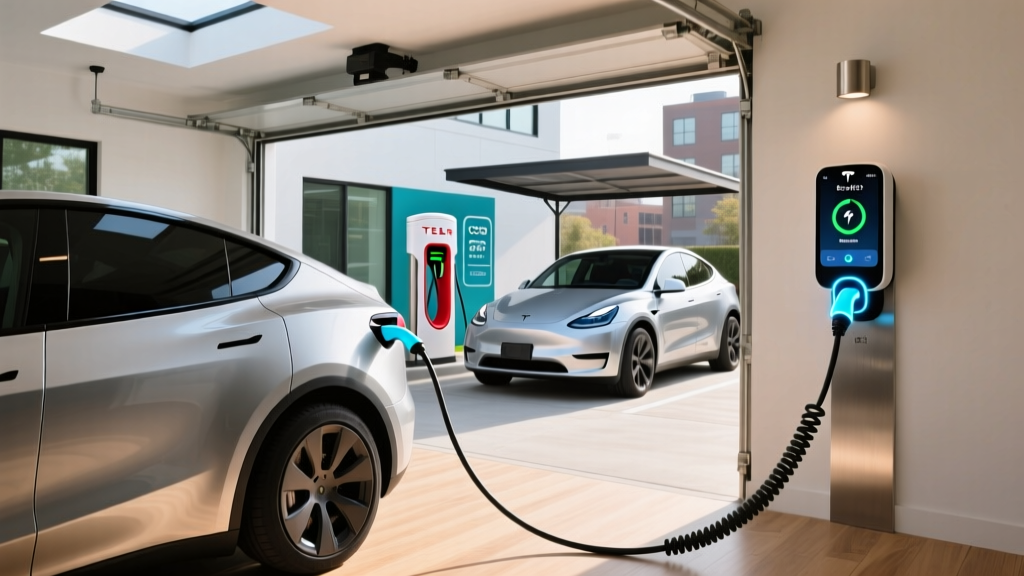
Tesla Wall Connector (Gen 3)
- Power Output: Up to 11.5 kW (48A)
- Connector: Native NACS — no adapter needed
- Cable Length: 24 ft
- Smart Features: Wi-Fi enabled, OTA firmware updates, power-sharing with second unit, load management
- Price: ~$475
- Best For: Tesla-only households seeking maximum simplicity and speed
ChargePoint Home Flex
- Power Output: Up to 12 kW (50A), adjustable down to 16A
- Connector: J1772 (use included Tesla adapter) or NACS pigtail version available
- Cable Length: 23 ft
- Smart Features: App-based scheduling, energy tracking, Alexa integration, flexible amperage dial
- Price: ~$550–$700
- Best For: Multi-EV households or those wanting adjustable amperage for older panels
Emporia Vue Level 2 Charger
- Power Output: Up to 11.5 kW (48A)
- Connector: J1772 (Tesla adapter required) or NACS version
- Cable Length: 24 ft
- Smart Features: Integrates with Emporia energy monitoring, solar-aware scheduling, time-of-use optimization
- Price: ~$400–$500
- Best For: Budget-conscious owners or homes with solar panels
Safety, Code, and Installation Best Practices
EV charging involves sustained high-current draw — far more than typical household appliances. Proper installation isn't optional; it's critical for fire safety and insurance compliance.
- Dedicated circuit: Your Level 2 charger must have its own dedicated breaker — never shared with other appliances
- GFCI protection: NEC 2020 and later requires GFCI (Ground Fault Circuit Interrupter) protection for outdoor EV outlets; many jurisdictions now require it for indoor garage installations as well
- Outdoor rating: If installing outside, ensure the charger is NEMA 4-rated (weatherproof) and the receptacle has an in-use cover
- Wire gauge: 6 AWG copper wire is standard for 48A/60A circuits; longer runs (>50 ft from panel) may require 4 AWG to prevent voltage drop
- Permit and inspection: Nearly all jurisdictions require an electrical permit and final inspection for EV charger installations. Skipping this can void homeowner's insurance coverage in the event of a fire
Always hire a licensed electrician familiar with EV charger installations. Ask for a load calculation before committing to a charger amperage — oversizing your charger beyond your panel's spare capacity is both dangerous and a code violation.
Frequently Asked Questions
How much does it cost to install a home EV charger for my 2019 Model 3?
A straightforward installation with adequate panel capacity typically costs $950–$2,100 (equipment + electrician + permit). If your home needs a panel upgrade from 100A to 200A service, total costs can range from $3,500–$8,000. Get at least two quotes from licensed electricians and ask specifically about your panel's spare amperage capacity.
How fast will each charging level add range to my Model 3?
Level 1 (120V) adds roughly 3–5 miles per hour — adequate only for low-mileage drivers. Level 2 at 48A (11.5 kW) adds approximately 44 miles per hour, meaning a full overnight charge easily replenishes any daily driving. DC fast charging at a Tesla Supercharger V3 can add up to 180 miles in 10–15 minutes for the Long Range variant.
Which connector and charger is compatible with my 2019 Tesla Model 3?
Your 2019 Model 3 uses the native Tesla/NACS connector. Any Tesla Wall Connector or NACS-equipped Level 2 charger will plug in directly. For non-Tesla public Level 2 stations (J1772), use the adapter that came with your car. For non-Tesla DC fast chargers (CCS1), you'll need Tesla's optional CCS adapter (~$250).
How much does charging cost per mile vs. gasoline?
Charging at home on standard residential rates costs approximately $0.03–$0.05 per mile. A comparable 28 MPG gas car at $3.50/gallon costs roughly $0.125 per mile. That's a 60–75% savings per mile when charging at home, translating to $1,000–$1,800 in annual fuel savings for a driver covering 15,000 miles per year.
What electrical upgrades might I need for a Level 2 charger?
The most common upgrade is a panel capacity increase from 100A to 200A service, needed when your existing panel is already near its load limit. Other potential upgrades include adding a sub-panel closer to the garage (to reduce wire-run distance), replacing outdated breaker panels (e.g., Federal Pacific or Zinsco panels that are now considered fire hazards), or upgrading the service drop from the utility. A licensed electrician's load calculation will determine exactly what's required.
Does frequent Supercharging degrade the 2019 Model 3 battery faster?
Yes, but the effect is moderate. Tesla's NCA battery chemistry degrades slightly faster under repeated high-power DC charging and sustained high SoC. Data from fleet studies suggest that exclusive Supercharging may add ~1–2% additional degradation over 100,000 miles compared to primarily Level 2 home charging. For optimal longevity, charge to 80% daily, use Superchargers primarily for road trips, and avoid regularly charging to 100% unless needed for a long trip.