If you own or are considering a used 2019 Tesla Model 3 Standard Range Plus, understanding exactly how, where, and how fast you can charge is the single most important factor in daily satisfaction. This generation of the Model 3 SR+ ships with a ~50 kWh usable lithium-ion (NMC) battery pack and an EPA-estimated 240 miles of range. In real-world highway driving at 70 mph, expect roughly 190–210 miles; in cold weather (below 30°F), that can dip to 170–185 miles due to cabin heating and increased battery resistance.
This guide covers every charging scenario you'll encounter — from a standard 120V wall outlet to a 250 kW Tesla Supercharger — with exact numbers for cost, speed, equipment, and home installation. Whether you're setting up a garage charger or planning a cross-country trip, these specs will keep you informed and prepared.
Charging Levels Explained: How Fast Will Each Add Range?
Before we get to the numbers, a critical distinction: kW (kilowatts) measures power — the rate at which energy flows into your battery. kWh (kilowatt-hours) measures energy — the total capacity of your battery. Think of kW as the width of a hose and kWh as the size of the bucket. A wider hose (higher kW) fills the bucket faster, but the bucket size (kWh) doesn't change.
The 2019 Model 3 Standard Range Plus has approximately 50 kWh of usable battery capacity. Here's how each charging level performs with that pack:
| Charging Level | Voltage / Amperage | Max Power (kW) | Miles of Range Added Per Hour | 0–100% Time (Approx.) |
|---|---|---|---|---|
| Level 1 (120V household outlet) | 120V / 12A | ~1.4 kW | ~3–4 mi/hr | ~35–40 hours |
| Level 2 (240V home/public) | 240V / 32A–48A | 7.7–11.5 kW | ~25–44 mi/hr | ~5–7 hours |
| DC Fast Charging (Supercharger) | 400V DC | Peak 170 kW | ~750+ mi/hr (at peak) | 10–80% in ~28 min |
Home Charging Setup: Electrical Requirements and Installation Costs
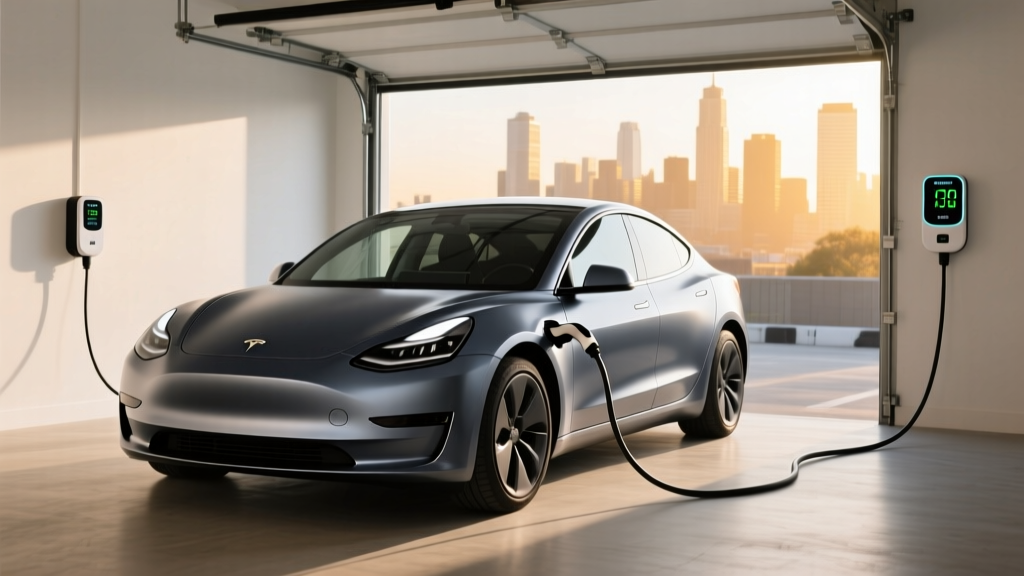
For daily ownership, a Level 2 home charger is the practical standard. The 2019 Model 3 SR+ has an onboard charger rated at 7.7 kW (32 amps at 240V) for models built early in the 2019 production run, and 11.5 kW (48 amps) for later builds. Check your vehicle's charging screen under Settings to confirm your specific onboard charger capacity — installing a 48A circuit for a 32A car wastes money, and vice versa.
Electrical Requirements
- Circuit: Dedicated 40A breaker (for 32A continuous draw) or 60A breaker (for 48A continuous draw). NEC code requires continuous loads to use only 80% of a breaker's rated capacity.
- Wiring: 6 AWG copper (40A circuit) or 4 AWG copper (60A circuit), run in conduit where exposed.
- Outlet vs. hardwired: A NEMA 14-50 outlet offers portability; hardwired units eliminate the outlet failure point and may not require GFCI breakers (which can nuisance-trip with EV chargers).
- Panel capacity: Your electrical panel must have sufficient spare amperage. A 200A panel with moderate existing loads typically handles a 40–60A EV circuit. A 100A panel may require an upgrade.
Installation Cost Breakdown
Home charger installation costs vary enormously based on your panel location, wiring distance, and whether an upgrade is needed. Here's a realistic range for 2026:
| Component | Simple Install (panel nearby, no upgrade) | Complex Install (long run, panel upgrade) |
|---|---|---|
| EVSE equipment (Level 2 charger) | $350–$700 | $350–$700 |
| Electrical permit | $50–$150 | $50–$200 |
| Electrician labor (2–4 hrs simple / 6–12 hrs complex) | $300–$800 | $1,200–$3,000 |
| Wiring, conduit, breaker | $100–$300 | $300–$800 |
| Panel upgrade (100A → 200A, if needed) | N/A | $1,500–$3,500 |
| Total estimated cost | $800–$1,950 | $3,400–$8,200 |
For authoritative guidance on electrical safety and permitting requirements, refer to the National Fire Protection Association's NEC guidelines and your local building department.
Connector Compatibility: NACS, CCS, and Adapters
The 2019 Tesla Model 3 Standard Range Plus was built with a proprietary Tesla connector (now formally designated NACS — North American Charging Standard). Here's how that maps to today's charging landscape in 2026:
| Connector Type | Native Compatibility? | Adapter Needed? | Where You'll Find It |
|---|---|---|---|
| NACS (Tesla) | Yes — native | None | Tesla Superchargers, Tesla Destination Chargers, newer public stations |
| CCS1 | No | Tesla CCS Adapter (~$175–$250) | Electrify America, EVgo, most non-Tesla DC fast networks |
| CHAdeMO | No | Third-party CHAdeMO-to-Tesla adapter (~$300–$400) | Limited and declining network; mostly legacy Nissan Leaf infrastructure |
| J1772 (Level 2 public) | No | Tesla Mobile Connector J1772 adapter (included with vehicle) | Public Level 2 stations, workplaces, hotels |
Practical advice for 2026: Tesla's Supercharger network has expanded to over 25,000 stalls in North America and remains the most reliable DC fast-charging option. However, the included Tesla CCS adapter (or a purchased one) unlocks Electrify America and other networks as backup. The CHAdeMO standard is effectively dead for new infrastructure — skip that adapter unless you have a specific route that demands it.
As of 2026, many non-Tesla charging networks have begun installing NACS connectors natively, following the industry-wide adoption that began in 2023–2024. This means your 2019 Model 3's native connector is increasingly compatible without adapters at newer public stations.
Cost to Charge: Home vs. Public vs. Gas Comparison
One of the strongest ownership arguments for the 2019 Model 3 SR+ is fuel cost savings — but the math depends heavily on where you charge. The EPA rates this model at approximately 141 MPGe combined, which translates to roughly 26 kWh per 100 miles (or 0.26 kWh/mile).
| Scenario | Cost per kWh / Gallon | Cost per Mile (Model 3 SR+) | Cost per Mile (30 MPG gas car at $3.40/gal) |
|---|---|---|---|
| Home charging (off-peak utility rate) | $0.10–$0.14/kWh | $0.026–$0.036 | $0.113 |
| Home charging (standard rate, no TOU) | $0.16–$0.22/kWh | $0.042–$0.057 | $0.113 |
| Public Level 2 (workplace/commercial) | $0.20–$0.35/kWh | $0.052–$0.091 | $0.113 |
| DC Fast Charging (Supercharger / EA) | $0.30–$0.48/kWh | $0.078–$0.125 | $0.113 |
For a typical driver covering 12,000 miles per year with 80% home charging at $0.13/kWh and 20% Supercharging at $0.38/kWh, annual fuel cost is approximately $514. The equivalent gas sedan at 30 MPG and $3.40/gallon spends $1,360 — a savings of roughly $846 per year with the Model 3.
For current electricity rate data by state, the U.S. Energy Information Administration publishes monthly average residential pricing.
Recommended Home Chargers for the 2019 Model 3 SR+
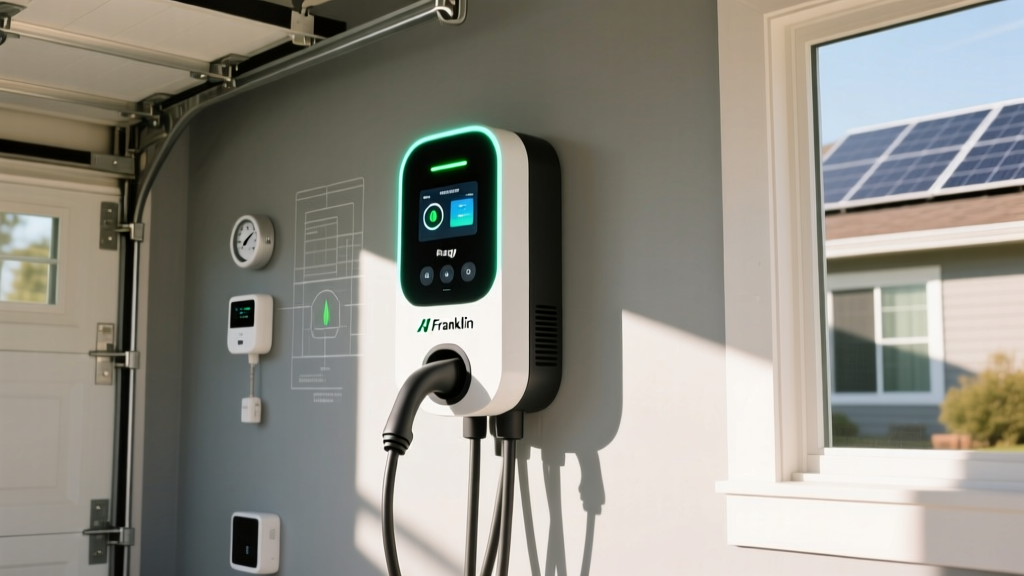
Since the Model 3 SR+ uses the NACS connector natively, you have two paths: a Tesla-branded wall connector (NACS native) or a third-party J1772 charger with the included J1772-to-Tesla adapter. For daily convenience and maximum charge speed, the native NACS route is superior — no adapter fumbling in the rain.
Tesla Wall Connector (Gen 4)
- Power output: Up to 11.5 kW (48A) on a 60A circuit
- Connector: NACS (native Tesla)
- Cable length: 24 ft
- Smart features: Wi-Fi, OTA firmware updates, load sharing with second unit, Tesla app integration
- Price: ~$475 (unit only)
- Best for: Tesla-only households wanting maximum speed and seamless integration
ChargePoint Home Flex
- Power output: Up to 12 kW (50A) on a 60A circuit; configurable down to 16A
- Connector: J1772 (requires Tesla adapter) or NACS (newer SKU)
- Cable length: 23 ft
- Smart features: Wi-Fi, ChargePoint app scheduling, Alexa integration, flexible amperage dip-switch
- Price: ~$550–$700
- Best for: Multi-EV households (non-Tesla + Tesla) needing J1772 flexibility
Emporia Level 2 EV Charger
- Power output: Up to 11.5 kW (48A) on a 60A circuit
- Connector: J1772 (use Tesla adapter) or NACS version available
- Cable length: 24 ft
- Smart features: Wi-Fi, energy monitoring via Emporia app, solar integration, scheduling
- Price: ~$350–$400
- Best for: Budget-conscious buyers who want smart features and energy tracking
Important note on the 2019 Model 3 SR+ onboard charger: If your specific vehicle has the 32A (7.7 kW) onboard charger, a 48A wall connector will still work — the car simply draws only 32A. But a 40A circuit is sufficient and saves on wiring cost. Verify your car's onboard charger rating before paying for a 60A circuit you can't fully utilize.
Safety and Electrical Code Considerations
EV charging places a sustained, high-amperage load on your home's electrical system — far more demanding than intermittent appliances like dryers or ovens. Cutting corners here creates fire risk. Non-negotiable requirements include:
- Dedicated circuit: Your EV charger must be on its own dedicated breaker — never shared with other outlets or appliances.
- Proper wire gauge: Undersized wiring causes heat buildup inside walls. Your electrician must match wire gauge to breaker size per NEC Table 310.16.
- GFCI considerations: The 2020 NEC requires GFCI protection on receptacles in garages. However, GFCI breakers are known to nuisance-trip with some EV chargers due to minor ground-leakage currents. Hardwiring your charger (no plug) often eliminates this requirement and is the preferred approach for reliability.
- Outdoor-rated equipment: If your charger is installed outdoors (carport, driveway), it must carry a NEMA 4 or equivalent weather rating. The Tesla Wall Connector and ChargePoint Home Flex both meet this standard.
- Permit and inspection: Nearly all jurisdictions require an electrical permit for EV charger installation. The inspection ensures code compliance and protects your home insurance coverage. Unpermitted work can void claims in the event of an electrical fire.
- Surge protection: A whole-panel surge protector ($150–$300 installed) is inexpensive insurance for your EV charger and home electronics, especially in lightning-prone regions.
For the latest NEC requirements and safety standards, the National Fire Protection Association maintains the current code cycle documentation.
Charging Time Examples for the 50 kWh Battery
Here's how long common charging scenarios take with the 2019 Model 3 SR+'s ~50 kWh usable battery:
- 10–80% on a V3 Supercharger (peak 170 kW): ~28 minutes. The charge curve is aggressive in the 10–40% window (150–170 kW), then tapers to ~80 kW by 55% and ~40 kW by 70%. Don't wait for 100% on a road trip — the last 20% can take as long as the first 70%.
- 0–100% on a 48A Level 2 home charger (11.5 kW): ~5 hours. Overnight charging from any state of charge will fully replenish the battery.
- 0–100% on a 32A Level 2 home charger (7.7 kW): ~7 hours. Still sufficient for overnight replenishment for most daily driving patterns.
- Emergency Level 1 top-up (120V / 12A): ~3–4 miles of range per hour. A 12-hour overnight plug adds roughly 40 miles — enough for a short commute in a pinch, but not a daily strategy.
Frequently Asked Questions
How much does it cost to install a home EV charger for a 2019 Model 3 Standard Range Plus?
For a straightforward installation with a 200A panel nearby, expect $800–$1,950 total (charger + electrician + permit + materials). If your home needs a panel upgrade from 100A to 200A, total costs can reach $3,400–$8,200. Always get a load calculation from a licensed electrician before committing.
Can I charge the 2019 Model 3 SR+ on a regular household outlet?
Yes, using the Tesla Mobile Connector with the 120V adapter (NEMA 5-15). You'll get approximately 3–4 miles of range per hour (~1.4 kW). This is adequate for emergency top-ups or very low-mileage drivers (under 30 miles/day), but a Level 2 home installation is strongly recommended for daily use.
Is the Tesla Supercharger network the only fast-charging option?
No. With a Tesla CCS adapter ($175–$250), you can access Electrify America, EVgo, and other CCS-equipped networks. However, Tesla's Supercharger network remains the most reliable and extensive DC fast-charging infrastructure in North America, with over 25,000 stalls as of 2026. For daily and road-trip use, Superchargers should be your primary option.
How much does charging cost per mile compared to gasoline?
Charging at home on off-peak rates ($0.10–$0.14/kWh), the Model 3 SR+ costs roughly $0.03–$0.04 per mile — about 75% cheaper than a 30 MPG gas car at $3.40/gallon ($0.11/mile). Exclusive DC fast charging at $0.40+/kWh pushes cost to $0.10–$0.12 per mile, approaching gas parity. Home charging access is the key economic variable.
What electrical upgrades might my home need?
Homes with 100A electrical service may require a panel upgrade to 200A ($1,500–$3,500) before adding a 40–60A EV circuit. Homes with older wiring (knob-and-tube, aluminum branch circuits) may need partial rewiring. A licensed electrician will perform an NEC Article 220 load calculation to determine if your panel has sufficient spare capacity. Some utility companies offer free or discounted load assessments for EV adopters.
Does the 2019 Model 3 SR+ battery degrade significantly?
Tesla's NMC battery packs in this generation typically retain 85–90% of original capacity after 100,000 miles based on fleet data. The battery warranty covers 8 years / 100,000 miles (whichever comes first) with a minimum 70% capacity retention threshold. To maximize longevity, avoid routinely charging to 100% for daily use — set your daily limit to 80–90% and charge to 100% only before long trips.