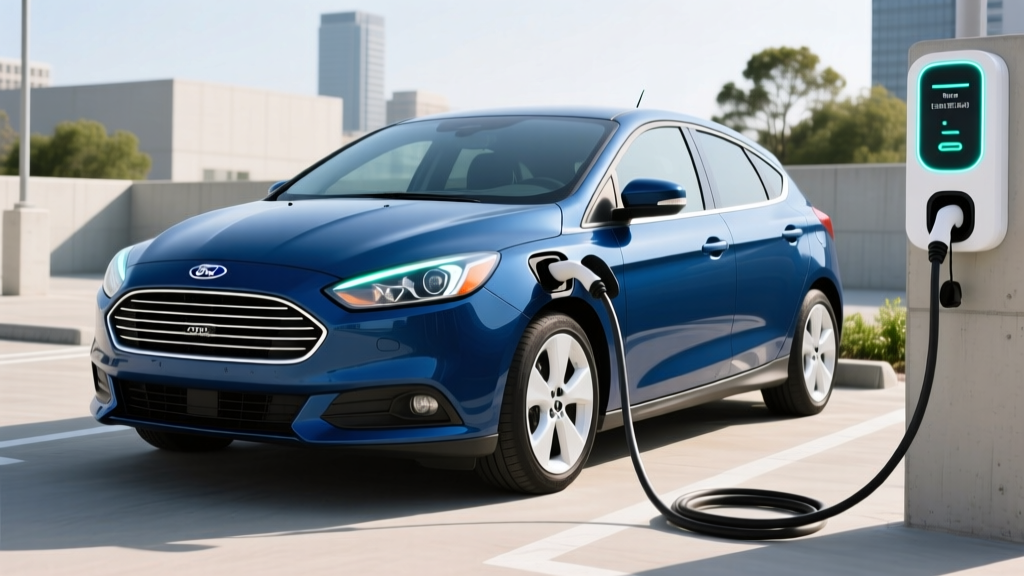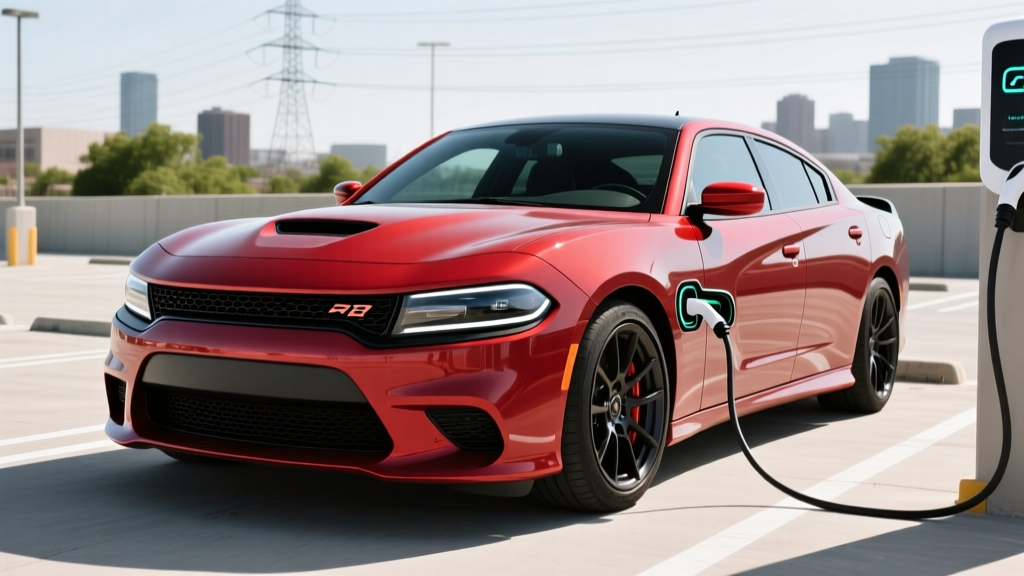
The 2019 Dodge Charger R/T Is Not an EV — But Here's Why You're Searching
If you landed here searching for a 2019 R/T Charger charging guide, let's clear this up immediately: the 2019 Dodge Charger R/T is a gasoline-powered muscle car with a 5.7L HEMI V8. It has no plug, no battery pack, and no electric drivetrain. You fuel it at a gas station with 89-octane or higher.
So why does this search exist? A few likely reasons:
- You're an EV shopper who also owns or admires the Charger R/T and want to understand how home charging compares to fueling it.
- You're considering a 240V home electrical upgrade for an EV charger and wonder if the same circuit could serve a garage with a classic Charger (spoiler: they're unrelated systems).
- You saw misleading content conflating "charger" the car with "charger" the EV equipment.
This guide serves all three audiences: we'll walk through exactly what Level 1, Level 2, and DC Fast charging mean for real EVs, what a home installation costs in 2026, and how charging economics compare to fueling a 5.7L V8. If you're cross-shopping electrified vehicles against a muscle car, the numbers below will help you decide.
Charging Levels Explained: kW, Miles Per Hour, and Real-World Times
The single most important distinction in EV charging: kW (kilowatts) measures power — how fast energy flows. kWh (kilowatt-hours) measures energy — how much the battery holds. Think of kW as the width of a hose and kWh as the size of the bucket. Never use them interchangeably.
| Level | Voltage | Power (kW) | Miles of Range Added Per Hour | Best Use Case |
|---|---|---|---|---|
| Level 1 | 120V (standard outlet) | 1.2–1.9 kW | 3–5 miles | Overnight top-up for PHEVs or low-mileage drivers |
| Level 2 | 240V (dryer-style outlet) | 3.3–19.2 kW | 12–75 miles | Daily home charging — the standard for most EV owners |
| DC Fast Charge | 400–800V DC | 50–350 kW | 150–1,200+ miles (equivalent rate) | Road trips and quick top-ups on public networks |
Real Charging Time Examples
Charging times depend on battery size (kWh) and the vehicle's onboard charger or DC acceptance rate. Here are realistic 10–80% times for common battery sizes:
- 60 kWh battery (e.g., base Tesla Model 3 RWD): ~8 hours on a 7.7 kW Level 2; ~25 minutes on a 170 kW DC fast charger (peak).
- 84 kWh battery (e.g., Ford F-150 Lightning Extended Range): ~10.5 hours on 7.7 kW Level 2; ~35 minutes on a 150 kW DC charger.
- 100 kWh battery (e.g., Tesla Model S): ~12 hours on 7.7 kW Level 2; ~28 minutes on a 250 kW Supercharger (with preconditioning).
Home EV Charger Installation: Costs, Electrical Requirements, and Panel Upgrades
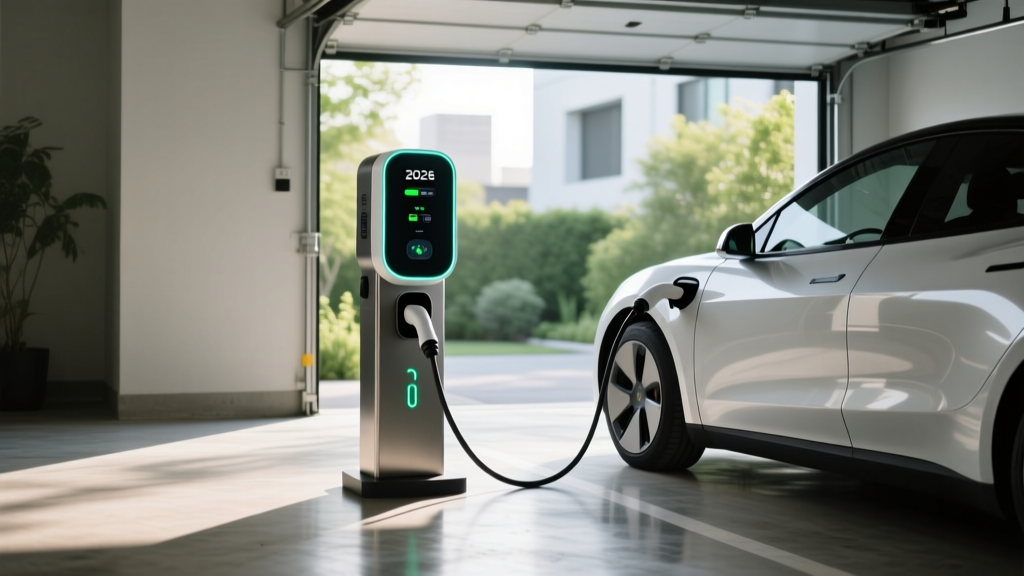
Installing a Level 2 home charger is the single biggest infrastructure decision an EV buyer makes. Here's what's involved in 2026.
Electrical Requirements
Most Level 2 home chargers require a 240V dedicated circuit, similar to what an electric dryer or oven uses. Common configurations:
- 40-amp circuit / 32-amp continuous: Supports up to 7.7 kW — sufficient for most EVs and the most common residential install.
- 50-amp circuit / 40-amp continuous: Supports up to 9.6 kW — good for larger batteries (80+ kWh) or faster overnight recovery.
- 60-amp circuit / 48-amp continuous: Supports up to 11.5 kW — useful for the Ford F-150 Lightning (which can accept up to 19.2 kW with the right charger and truck configuration) or future-proofing.
The National Electrical Code (NEC) requires that continuous loads (like EV charging, which runs for 3+ hours) not exceed 80% of the circuit's rated capacity. A 40A breaker means 32A continuous — this is not optional.
Do You Need a Panel Upgrade?
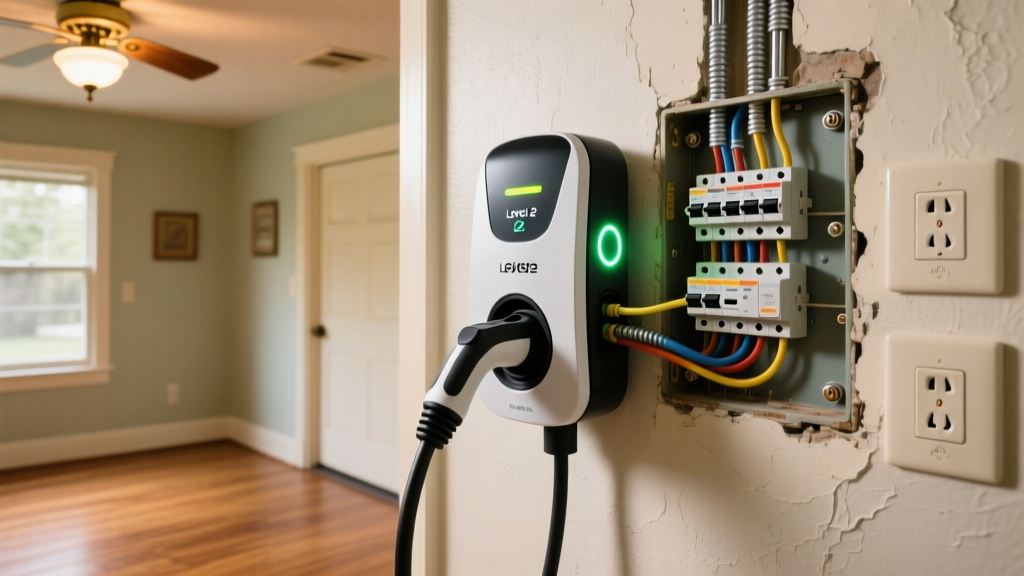
This is the question that can double or triple your installation cost. Most homes built after 1990 have a 200-amp electrical panel. If your panel is already near capacity (running electric heat, a dryer, an oven, and central AC), adding a 40–60A EV circuit may push you over the NEC load calculation limit.
Signs you may need a panel upgrade:
- Your panel is 100A or 150A (common in homes built before 1985).
- You have no available breaker slots.
- Your electrician's load calculation shows you're above 80% of panel capacity with the EV circuit added.
- You have a Federal Pacific or Zinsco panel (known fire hazards — insurance may require replacement regardless).
A panel upgrade from 100A to 200A typically costs $1,500–$3,500 depending on your utility's service drop, local permit fees, and whether a new meter base is needed. In rare cases, a full service upgrade from the utility transformer can push this to $5,000+.
| Component | Cost Range | Notes |
|---|---|---|
| Level 2 Charger Equipment | $300–$700 | Hardwired units are cheaper than plug-in (NEMA 14-50) models with cords |
| Electrician Labor (standard install) | $600–$1,800 | Depends on run length from panel to garage, wall type, and local rates |
| Electrical Permit | $50–$300 | Required in most jurisdictions; varies by city/county |
| Conduit & Wiring Materials | $100–$400 | Longer runs and outdoor conduit increase cost |
| Panel Upgrade (if needed) | $1,500–$3,500 | Only if existing panel lacks capacity or slots |
| Total (no panel upgrade) | $1,050–$3,200 | Most homeowners fall in the $1,500–$2,500 range |
| Total (with panel upgrade) | $2,550–$6,700 | Consider future-proofing with a larger panel if upgrading anyway |
Always hire a licensed electrician who pulls a permit. Unpermitted work can void your homeowner's insurance, fail a home inspection at sale time, and create a genuine fire risk with sustained high-amperage loads.
Connector Compatibility: NACS, CCS1, CHAdeMO, and Adapter Realities
The connector on your EV determines which public chargers you can use and which home charger to buy. As of 2026, the North American market has largely consolidated around NACS (North American Charging Standard), the connector Tesla pioneered and opened to other automakers starting in 2024.
| Connector | Brands Using It (Native) | Notes |
|---|---|---|
| NACS (Tesla-style) | Tesla, Ford, GM, Rivian, Volvo, Polestar, Mercedes, Nissan (2025+), Honda (2025+), Fisker, Lucid | Now the dominant standard; access to Tesla Supercharger network |
| CCS1 (Combo) | Hyundai, Kia, BMW, Volkswagen, Stellantis (Jeep/Chrysler/Dodge EVs), Subaru, Toyota (bZ series) | Still widely supported at Electrify America, EVgo, ChargePoint; adapters to NACS available |
| CHAdeMO | Nissan Leaf (pre-2025), Mitsubishi Outlander PHEV (older) | Legacy standard — declining infrastructure; new installations rarely include CHAdeMO |
Adapter reality for 2026: If you own a CCS1-equipped EV, you can purchase a CCS-to-NACS adapter (typically $150–$250) to access Tesla Superchargers. Ford and GM include these adapters with newer vehicles. However, adapters add a connection point that can slightly reduce charge speed and introduce a failure point — a native NACS port is preferable if you're buying new.
For home Level 2 charging, most chargers come with a J1772 connector (which works with all non-Tesla EVs) or a NACS connector. If your household has mixed EVs, look for a charger with a swappable connector or buy a J1772-to-NACS adapter ($40–$80).
Charging Cost Per Mile vs. Fueling a 5.7L V8 Charger R/T
Here's where the comparison between the 2019 Charger R/T and a modern EV gets concrete. The Charger R/T's 5.7L HEMI V8 gets an EPA-rated 16 city / 25 highway / 19 combined MPG (source: fueleconomy.gov). At $3.50/gallon (2026 national average for mid-grade 89 octane), that's roughly $0.184 per mile combined.
| Scenario | Cost Per kWh | Vehicle Efficiency | Cost Per Mile |
|---|---|---|---|
| Home Level 2 (off-peak utility rate) | $0.08–$0.14 | 3.0 mi/kWh (typical sedan) | $0.027–$0.047 |
| Home Level 2 (standard residential rate) | $0.14–$0.20 | 3.0 mi/kWh | $0.047–$0.067 |
| Public Level 2 (ChargePoint, workplace) | $0.20–$0.35 | 3.0 mi/kWh | $0.067–$0.117 |
| DC Fast Charge (Electrify America, EVgo) | $0.35–$0.55 | 3.0 mi/kWh | $0.117–$0.183 |
| 2019 Charger R/T (gas, 89 octane) | $3.50/gallon | 19 MPG combined | $0.184 |
The takeaway: Home charging on off-peak rates is roughly 4–7x cheaper per mile than fueling a Charger R/T. Even DC fast charging on the road is comparable to or slightly cheaper than the V8 — and that's before considering the Charger's real-world fuel economy, which often drops to 15–17 MPG in aggressive driving or city traffic.
However, if you rely exclusively on public DC fast charging at $0.45–$0.55/kWh (common in urban areas without home charging), your per-mile cost approaches that of an efficient gas car. This is why home charging access is the single biggest factor in EV ownership satisfaction.
Recommended Level 2 Home Chargers for 2026
After testing dozens of units across multiple homes and EVs, these are the chargers that consistently deliver reliability, safety, and value.
Emporia Vue Level 2 (Best Value)
- Power: 48A / 11.5 kW (hardwired) or 40A / 9.6 kW (NEMA 14-50 plug)
- Connector: J1772 (NACS adapter included)
- Cable Length: 24 feet
- Smart Features: Wi-Fi, energy monitoring via Emporia app, solar integration, scheduling
- Price: ~$399 (hardwired) / ~$449 (plug-in)
- Best For: Budget-conscious buyers who want smart features and solar integration
ChargePoint Home Flex (Most Flexible)
- Power: Adjustable 16A–50A / up to 12 kW (set via DIP switches to match your circuit)
- Connector: J1772 (NACS version available)
- Cable Length: 23 feet
- Smart Features: Wi-Fi, app scheduling, Alexa/Google integration, load sharing (two units on one circuit)
- Price: ~$649–$699
- Best For: Multi-EV households, panel-constrained homes (can dial down amperage)
Tesla Wall Connector (Best for NACS Vehicles)
- Power: 48A / 11.5 kW (hardwired, 60A circuit)
- Connector: NACS native
- Cable Length: 24 feet
- Smart Features: Wi-Fi, OTA updates, power sharing with up to 6 units, vehicle-specific access control
- Price: ~$475
- Best For: Tesla owners or households with all-NACS vehicles (Ford, GM, Rivian)
For homes with a CCS1 vehicle (Hyundai Ioniq 5, Kia EV6, BMW i4), the ChargePoint Home Flex with its J1772 connector is the most practical choice. If you plan to switch to a NACS vehicle in the next few years, the Tesla Wall Connector plus a NACS-to-J1772 adapter covers both.
Safety, Electrical Code, and Outdoor Installation Considerations
EV charging is a sustained, high-amperage load that runs for hours — unlike a microwave or hair dryer that cycles on and off. This makes proper installation non-negotiable.
Code Requirements (NEC 2023/2026)
- Dedicated circuit: Your EV charger must have its own breaker — no sharing with other outlets or appliances.
- GFCI protection: Required for all outdoor receptacles and increasingly required for indoor garage installations (jurisdiction-dependent). Hardwired units often avoid the GFCI breaker requirement, which eliminates nuisance tripping — a common complaint with plug-in 14-50 setups.
- Outdoor rating: If installing outside, the charger must carry a NEMA 4 (weatherproof) rating. All three recommended chargers above are NEMA 4 rated.
- Wire gauge: A 48A continuous load on a 60A circuit requires 4 AWG copper wire for runs under 50 feet; longer runs may need 3 AWG to prevent voltage drop. Your electrician will calculate this.
- Permit and inspection: Most jurisdictions require a permit for any new 240V circuit. The inspection verifies wire gauge, breaker sizing, grounding, and proper mounting. Do not skip this.
Frequently Asked Questions
Can I charge an EV using the same 240V outlet my dryer uses?
Technically yes — a NEMA 14-50 outlet (common for dryers) can power a plug-in Level 2 charger. However, the NEC requires a dedicated circuit for continuous EV charging loads. You cannot share the dryer circuit with your EV charger via a splitter (some products claim this is safe; most electricians and inspectors disagree). If your dryer outlet is in the garage, you may be able to use it when the dryer isn't running, but a dedicated circuit is strongly recommended.
How fast will a Level 2 charger add range to a typical EV?
At 7.7 kW (the most common residential setup on a 40A circuit), expect roughly 25–30 miles of range added per hour for an efficient sedan like the Tesla Model 3 or Hyundai Ioniq 6. For a larger, less efficient vehicle like the Ford F-150 Lightning or Rivian R1S, expect 15–20 miles per hour at the same power level. At 11.5 kW (48A/60A circuit), add roughly 50% more: 37–45 miles per hour for sedans, 22–30 for trucks/SUVs.
Which connector does my EV need?
Check your vehicle's charge port. If you drive a Tesla, Ford (2025+), GM (2025+), Rivian, or Volvo/Polestar (2025+), you need a NACS connector. If you drive a Hyundai, Kia, BMW, Volkswagen, or Subaru EV, you need a CCS1 (J1772 Combo) connector. Older Nissan Leafs use CHAdeMO. When buying a home charger, match the connector to your vehicle — or buy a unit with an adapter.
Does the federal tax credit cover home charger installation?
The IRS §30D credit applies to the vehicle, not the charger. However, a separate credit under IRS §30C (Alternative Fuel Vehicle Refueling Property Credit) covers up to 30% of home charger equipment and installation costs, capped at $1,000. This credit has income limits and census-tract eligibility requirements (the charger must be installed in a qualifying low-income or non-urban census tract). Consult a tax professional — eligibility is specific to your address and tax situation.
What if I live in an apartment or can't install a home charger?
You have options: workplace charging (increasingly common), public Level 2 networks (ChargePoint, EVgo, Blink — typically $0.20–$0.35/kWh), or DC fast charging for road trips. If your daily driving is under 40 miles and you can access a public Level 2 charger 2–3 times per week, EV ownership is viable. However, exclusive reliance on DC fast charging at $0.40–$0.55/kWh significantly reduces the cost advantage over gas — factor this into your purchase decision.
Is the 2019 Dodge Charger R/T available as an EV or hybrid?
No. The 2019 Charger R/T was offered only with gasoline V8 engines (5.7L HEMI, 370 HP). Dodge's parent company Stellantis has announced the Charger Daytona EV for the 2025–2026 model year, which is an all-electric muscle car on the STLA Large platform. However, this is a completely different vehicle from the 2019 Charger R/T — different platform, different powertrain, different body. If you want a V8 Charger, the 2019 R/T remains a gasoline-only proposition.