The 2018 Tesla Model 3 Mid Range occupies a unique spot in the used EV market. With its 75 kWh battery pack (approximately 72.5 kWh usable) and an EPA-rated 310 miles of range, it remains one of the most capable secondhand electric sedans available. But owning one — or considering a purchase — means understanding exactly how this car charges, what equipment you need, and what it will cost to keep it fueled. This guide covers every charging scenario for the 2018 Model 3 Mid Range, from a standard wall outlet to a 250 kW Supercharger, with real numbers and real-world expectations.
Understanding Charging Levels: How Fast Can a 2018 Model 3 Mid Range Charge?
EV charging operates across three tiers, each defined by its power output in kilowatts (kW). Power (kW) is the rate of energy delivery; energy (kWh) is what your battery stores. Think of kW as how fast water flows from a hose, and kWh as the size of the bucket. The 2018 Model 3 Mid Range's ~72.5 kWh usable battery can accept energy at vastly different rates depending on the source.
| Level | Voltage | Power (kW) | Miles of Range Added per Hour | Typical Use Case |
|---|---|---|---|---|
| Level 1 (120V) | 120V AC | ~1.4 kW | ~4–5 miles/hr | Emergency / overnight trickle |
| Level 2 (240V) | 240V AC | 7.7–11.5 kW | ~28–44 miles/hr | Home daily charging |
| DC Fast Charge | 400V DC | Up to 170 kW peak | ~170 miles in 15 min (peak) | Road trips / public fast charging |
The 2018 Model 3 Mid Range is equipped with an 11.5 kW onboard charger, which means it can accept the full output of a 48-amp Level 2 circuit — one of the fastest AC charging rates in its class. Most competing EVs from that era max out at 6.6 kW or 7.2 kW on Level 2.
Home Charging Setup: Electrical Requirements and Installation Costs
Installing a dedicated Level 2 home charger is the single most impactful upgrade for any 2018 Model 3 Mid Range owner. The car's 11.5 kW onboard charger means you can benefit from a high-amperage circuit — but that requires the right electrical infrastructure.
Electrical Requirements
To unlock the Model 3's full 11.5 kW AC charging capability, you need a 240V circuit rated at 60 amps. This feeds a 48-amp continuous charger (electrical code requires circuits to be rated at 125% of continuous load). If your home's electrical panel has limited capacity, a 40-amp circuit (supporting a 32-amp charger at 7.7 kW) is a practical alternative that still adds roughly 30 miles of range per hour.
- Ideal setup: 240V / 60-amp dedicated circuit → 48-amp charger → 11.5 kW → ~44 miles/hr
- Common setup: 240V / 40-amp dedicated circuit → 32-amp charger → 7.7 kW → ~30 miles/hr
- Minimum viable: 240V / 20-amp circuit → 16-amp charger → 3.8 kW → ~15 miles/hr
Installation Cost Breakdown
Home charger installation costs vary widely based on your panel's remaining capacity, the distance from panel to charger location, and local permit fees. Here's what to budget:
| Component | Simple Install (panel nearby, no upgrade) | Complex Install (long run or panel upgrade) |
|---|---|---|
| Level 2 Charger Equipment | $300–$600 | $300–$600 |
| Electrician Labor (2–4 hrs simple / 6–10 hrs complex) | $300–$600 | $900–$1,800 |
| Electrical Materials (conduit, wire, breaker) | $100–$250 | $300–$700 |
| Permit Fee | $50–$150 | $50–$200 |
| Panel Upgrade (if needed: 100A → 200A) | N/A | $1,500–$3,500 |
| Total Estimated Cost | $750–$1,600 | $3,050–$6,800 |
Homes built before 2000 often have 100-amp or 150-amp service panels that may already be near capacity. Adding a 60-amp EV circuit to a fully loaded 100-amp panel is a code violation and a fire risk. A licensed electrician will perform a load calculation before recommending a circuit size. If a panel upgrade is required, budget an additional $1,500–$3,500 for a 200-amp service upgrade. Some utilities offer rebates that offset panel-upgrade costs — check with your local provider.
Connector Compatibility: NACS, Tesla Supercharger, and Adapters
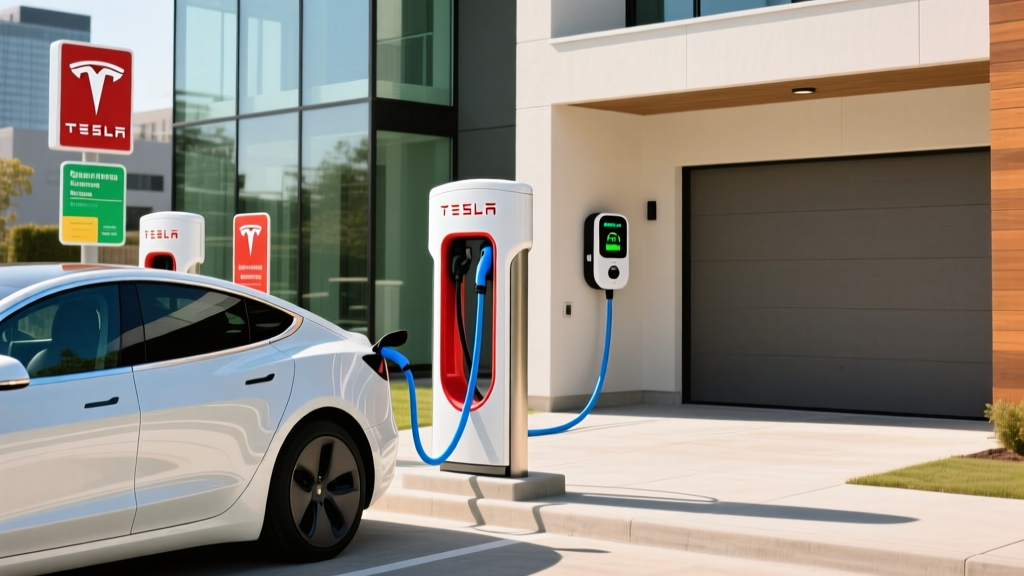
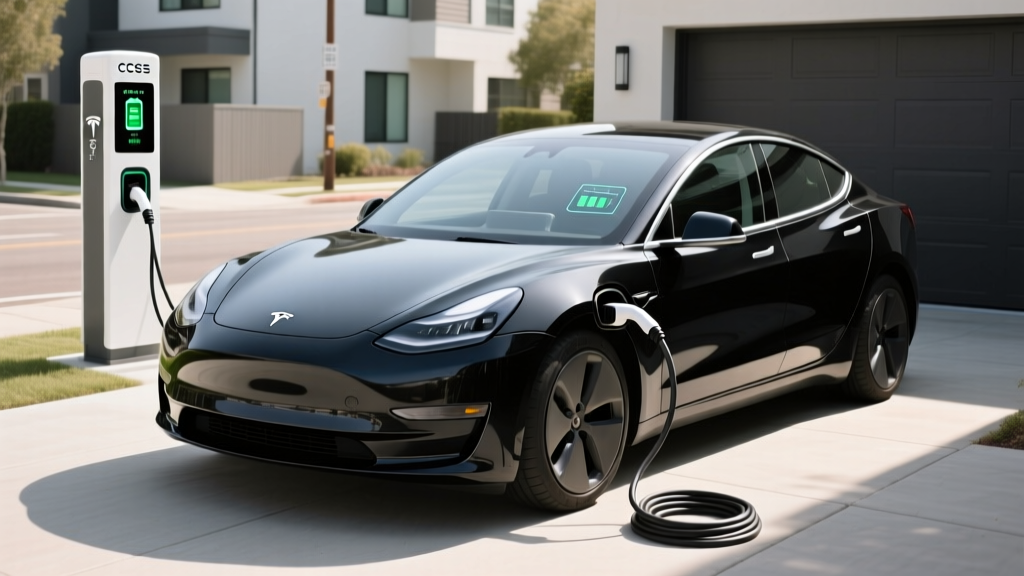
The 2018 Tesla Model 3 Mid Range uses Tesla's proprietary connector (now officially designated NACS — North American Charging Standard) for both AC Level 2 and DC fast charging. This was a significant advantage in 2018, and it remains one today: the Tesla Supercharger network is the most reliable and extensive DC fast-charging network in North America.
| Connector Type | Native Support? | Adapter Needed? | Where You'll Find It |
|---|---|---|---|
| NACS (Tesla) | Yes — built in | No | Tesla Superchargers, Tesla Wall Connector, Tesla Destination Chargers |
| CCS1 | No | Yes — CCS-to-NACS adapter (~$150–$250) | Electrify America, EVgo, ChargePoint DC stations |
| CHAdeMO | No | Yes — CHAdeMO-to-NACS adapter (~$300–$400) | Nissan-adjacent stations, older public chargers (declining) |
| J1772 (Level 2 public) | No | Yes — J1772-to-NACS adapter (included with car, or ~$50–$95 aftermarket) | Public Level 2 stations, workplaces, hotels |
Tesla includes a J1772 adapter with every Model 3. If your used 2018 Model 3 didn't come with one, Tesla sells replacements, and high-quality third-party options exist. For DC fast charging outside the Supercharger network, a CCS-to-NACS adapter is strongly recommended — Tesla has opened select Superchargers to non-Tesla EVs, but your Model 3 accesses the full Supercharger network natively without any adapter.
The 2018 Model 3 Mid Range can peak at approximately 170 kW on a V2 Supercharger (or any compatible DC fast charger). On V3 Superchargers (250 kW capable), the 2018 Mid Range will still peak near 170 kW due to its battery architecture. A typical 10–80% DC fast charge takes approximately 25–30 minutes. Charging speed tapers significantly above 80% SoC to protect battery health — going from 80% to 100% can add another 20–25 minutes.
Cost to Charge: Home Electricity vs. Public Stations vs. Gas
One of the strongest ownership arguments for a 2018 Model 3 Mid Range is fuel cost savings, but the actual numbers depend on where and when you charge. The Model 3 Mid Range achieves approximately 26 kWh per 100 miles (EPA combined), which translates to roughly 130 MPGe. Let's break down cost per mile across scenarios.
| Scenario | Rate | Cost per 100 Miles | Cost per Mile |
|---|---|---|---|
| Home charging (off-peak utility rate) | $0.10/kWh | $2.60 | $0.026 |
| Home charging (average US residential) | $0.17/kWh | $4.42 | $0.044 |
| Public Level 2 (workplace / shopping) | $0.25/kWh | $6.50 | $0.065 |
| Tesla Supercharger (average 2026) | $0.35/kWh | $9.10 | $0.091 |
| Third-party DC fast (Electrify America, etc.) | $0.48/kWh | $12.48 | $0.125 |
| Gasoline car (28 MPG combined, $3.40/gal) | $3.40/gal | $12.14 | $0.121 |
Home charging at off-peak rates delivers the lowest cost per mile — roughly one-fifth the cost of gasoline. Even at Supercharger rates, the Model 3 Mid Range undercuts a 28 MPG gas car. The cost advantage erodes at expensive third-party DC fast chargers, which is why establishing reliable home or workplace Level 2 charging is essential for maximizing savings.
For a driver covering 12,000 miles annually with 80% home charging at $0.13/kWh and 20% Supercharger use at $0.35/kWh, the annual electricity cost is approximately $480 — compared to roughly $1,450 for gasoline in an equivalent 28 MPG sedan.
Best Level 2 Chargers for the 2018 Tesla Model 3 Mid Range
Because the 2018 Model 3 can accept up to 11.5 kW on Level 2, pairing it with a high-output charger maximizes your home charging speed. Here are three top recommendations across budget tiers, all featuring the NACS connector natively (no adapter required for your Tesla).
Tesla Wall Connector (Best Overall for Tesla Owners)
- Power Output: Up to 11.5 kW (48 amps) on a 60-amp circuit
- Connector: NACS (native Tesla)
- Cable Length: 24 feet
- Smart Features: Wi-Fi for OTA updates, load sharing with multiple Wall Connectors, Power Sharing for multi-stall setups
- Price: ~$475
- Why it fits: Unlocks the Model 3 Mid Range's full 11.5 kW onboard charger. Cleanest integration with Tesla's ecosystem. No adapter needed.
ChargePoint Home Flex (Best for Mixed EV Households)
- Power Output: Up to 12 kW (50 amps) on a 60-amp circuit; configurable down to 16 amps
- Connector: NACS (available as of 2024+ models) or J1772 with adapter
- Cable Length: 23 feet
- Smart Features: Wi-Fi, app-based scheduling, Alexa integration, amperage selector dial for panel-limited homes
- Price: ~$550–$650
- Why it fits: Flexible amperage lets you dial down to match a smaller circuit without buying a different unit. Good if a second non-Tesla EV joins the household.
Emporia Level 2 EV Charger (Best Budget Smart Charger)
- Power Output: Up to 11.5 kW (48 amps) on a 60-amp circuit
- Connector: NACS or J1772 (specify at purchase)
- Cable Length: 24 feet
- Smart Features: Wi-Fi, app with energy monitoring, solar integration, time-of-use scheduling
- Price: ~$300–$400
- Why it fits: Delivers 48-amp output at a budget price. Excellent energy-tracking app. Ideal if you want to monitor exactly how much your Model 3 costs to charge.
Charging Time Examples: How Long Does a Full Charge Take?
Charging times depend on starting State of Charge (SoC), battery temperature, and charger output. The 2018 Model 3 Mid Range's ~72.5 kWh usable battery provides a useful baseline for planning. Here are estimated times from common starting points:
| Charging Scenario | SoC Range | Estimated Time | Notes |
|---|---|---|---|
| Level 1 (120V, 12A) | 10–80% | ~50–55 hours | Emergency only; impractical for daily use |
| Level 2 (240V, 32A / 7.7 kW) | 10–80% | ~6.5–7 hours | Overnight charge; sufficient for most daily needs |
| Level 2 (240V, 48A / 11.5 kW) | 10–80% | ~4.5–5 hours | Fastest home AC option; fully replenishes overnight |
| DC Fast Charge (170 kW peak) | 10–80% | ~25–30 minutes | Peak rate sustained to ~50%; tapers significantly after 70% |
| DC Fast Charge (170 kW peak) | 10–50% | ~12–15 minutes | Best use of fast charging — add ~150 miles quickly |
A critical insight for road-trip planning: DC fast charging follows a curve, not a flat rate. The 2018 Model 3 Mid Range peaks near 170 kW at low SoC, then progressively reduces draw as the battery fills. Charging from 10% to 50% takes roughly half the time of charging from 50% to 80%. The most time-efficient road-trip strategy is to charge in short bursts (10–60%) rather than waiting for a full charge at each stop.
Preconditioning matters. The Model 3 will automatically warm its battery when you navigate to a Supercharger, enabling faster charge rates upon arrival. If you arrive at a DC fast charger with a cold battery (below 50°F), initial charge rates may be limited to 50–80 kW until the pack warms up — adding 10–15 minutes to your session.
Safety and Electrical Code Considerations
EV charging draws sustained high current for hours — a more demanding load than almost anything else in a residential electrical system. Proper installation isn't optional; it's a safety requirement.
- Dedicated circuit: Your Level 2 charger must be on its own dedicated breaker — never shared with other appliances. A 60-amp circuit for a 48-amp charger is the ideal setup for the Model 3 Mid Range.
- GFCI protection: The 2023 NEC update requires GFCI protection for EV charging outlets in garages. Hardwired chargers (like the Tesla Wall Connector) are exempt from this requirement, which is one reason hardwired installations are preferred — they avoid nuisance tripping on high-amperage GFCI breakers, which can cost $150–$250 and are known to trip under sustained EV loads.
- Outdoor rating: If your charger is installed outdoors, ensure the unit carries a NEMA 4 or NEMA 4X rating for weather resistance. The Tesla Wall Connector and ChargePoint Home Flex are both rated for outdoor use.
- Permit and inspection: Most jurisdictions require an electrical permit for new 240V circuit installations. The permit fee is typically $50–$200, and an inspector will verify the work meets code. Skipping the permit risks insurance claim denial if an electrical fire occurs.
- Wire gauge: A 60-amp circuit requires 6 AWG copper wire (or 4 AWG aluminum). Longer runs (over 50 feet from panel) may require upsized wire to limit voltage drop. Your electrician will calculate this.
Frequently Asked Questions
How much does it cost to install a home EV charger for a 2018 Tesla Model 3 Mid Range?
A straightforward installation with adequate panel capacity typically costs $750–$1,600 including equipment, electrician labor, materials, and permit. If your home requires an electrical panel upgrade (100A to 200A), total costs can range from $3,050 to $6,800. Get at least two quotes from licensed electricians, and ask specifically about load calculations and whether your existing panel can support a 60-amp dedicated circuit.
How fast will each charging level add range to my 2018 Model 3 Mid Range?
Level 1 (120V) adds roughly 4–5 miles per hour. Level 2 at 32 amps (7.7 kW) adds about 30 miles per hour. Level 2 at 48 amps (11.5 kW) adds approximately 44 miles per hour. DC fast charging at peak rate can add up to 170 miles in about 15 minutes, though sustained rates taper as the battery fills.
Which connector and charger is compatible with my 2018 Tesla Model 3 Mid Range?
Your car uses the NACS (Tesla) connector natively. This works directly with all Tesla Superchargers, Tesla Wall Connectors, and Tesla Destination Chargers. For non-Tesla public Level 2 stations (J1772), you'll need the J1772-to-NACS adapter (originally included with the car). For CCS1 DC fast chargers, a CCS-to-NACS adapter ($150–$250) is needed.
How much does charging cost per mile compared to gasoline?
At the US average residential electricity rate of ~$0.17/kWh, the 2018 Model 3 Mid Range costs approximately $0.044 per mile to charge at home — roughly one-third the cost of a 28 MPG gasoline car at $3.40/gallon ($0.121/mile). Off-peak utility rates as low as $0.10/kWh bring the cost down to $0.026/mile. Supercharging at $0.35/kWh costs about $0.091/mile, still below gasoline.
What electrical upgrades might I need for a Level 2 charger?
If your home has a 200-amp electrical panel with sufficient spare capacity, you likely need only a new 60-amp double-pole breaker and wiring run. Homes with 100-amp or 150-amp panels that are already near capacity may require a panel upgrade to 200 amps ($1,500–$3,500). Older homes with knob-and-tube or aluminum branch wiring may need additional remediation. A licensed electrician's load calculation is the definitive answer — see the NFPA National Electrical Code for the standards that apply.
Does the 2018 Model 3 Mid Range battery degrade, and how does that affect charging?
After 7+ years, expect 8–12% battery capacity loss depending on charging habits and climate exposure. A degraded battery charges slightly faster in absolute time (less total energy to fill) but delivers fewer miles per charge. Tesla's battery warranty covers the 2018 Model 3 for 8 years or 120,000 miles (whichever comes first) against capacity loss below 70%. If your 2018 Mid Range is approaching that threshold with significant degradation, check warranty status through your Tesla account. For battery longevity, Tesla recommends daily charging to 80–90% for this NMC battery, reserving 100% charges for road trips.
For official efficiency and range data, refer to the EPA's fueleconomy.gov listing for the 2018 Tesla Model 3 Long Range (which shares the 75 kWh pack with the Mid Range variant). For current federal tax credit rules on EV charger installation (up to $1,000 under §30C), consult the IRS Alternative Fuel Vehicle Refueling Property Credit page.