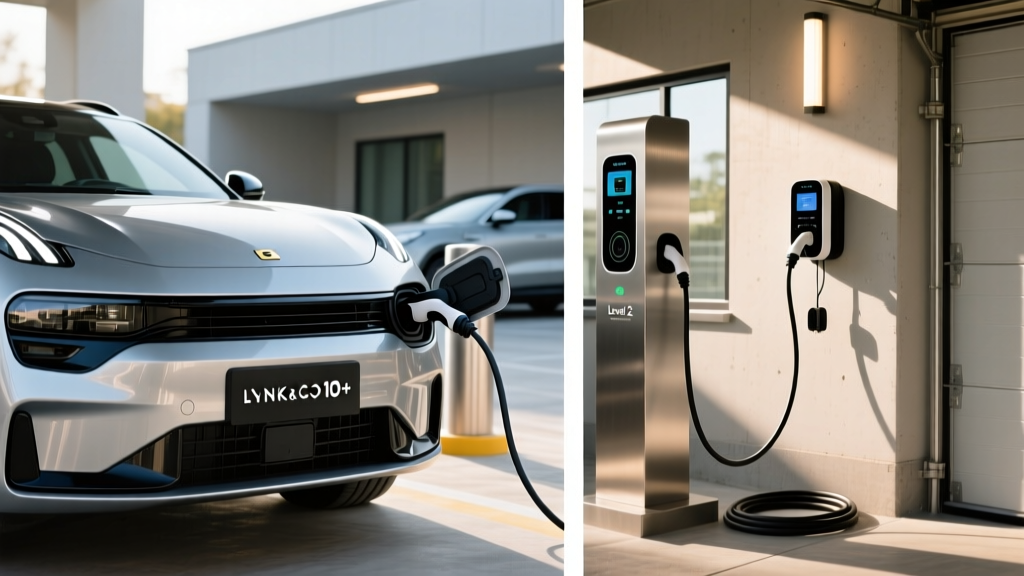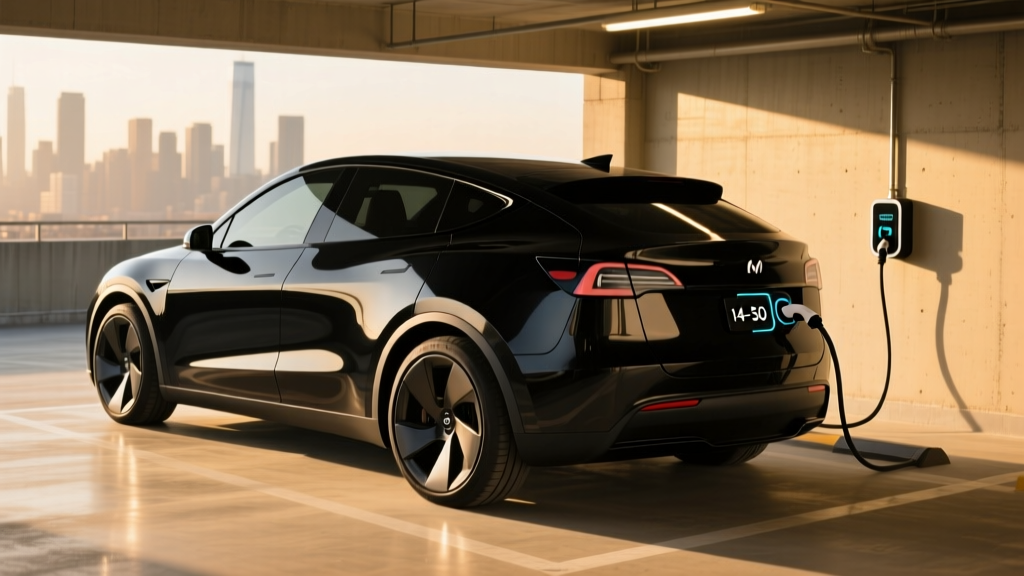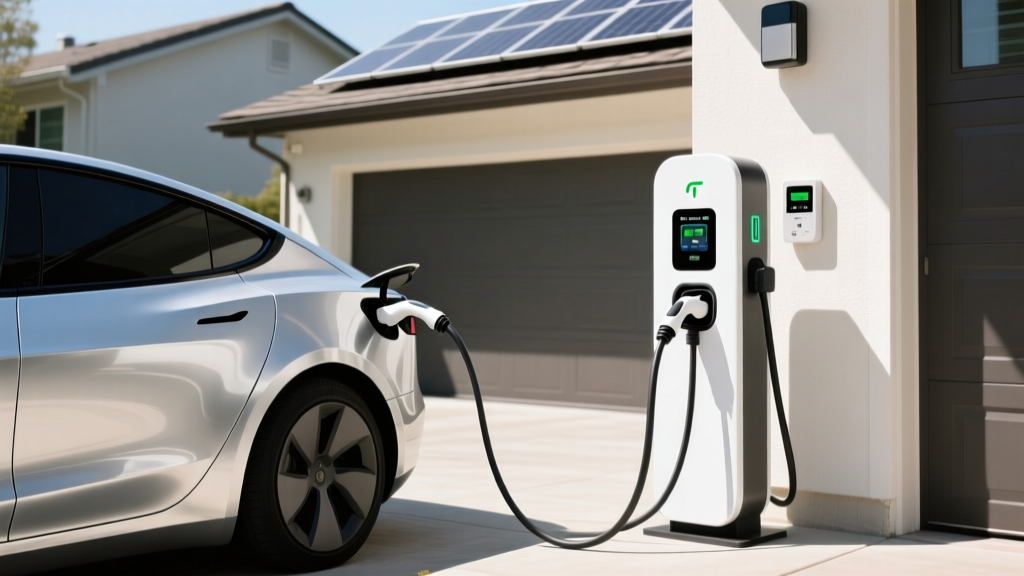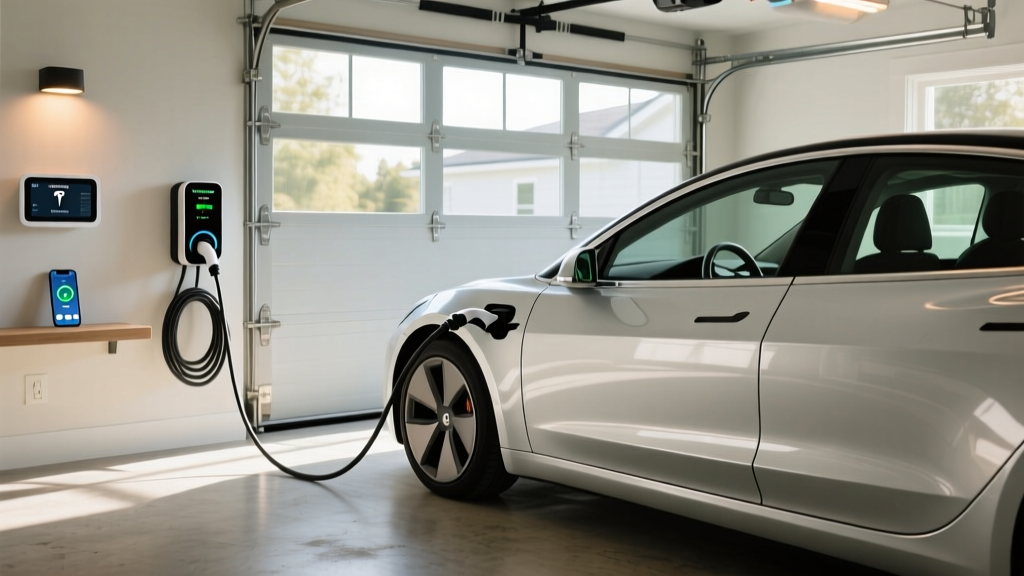
If you've picked up a used 2018 Tesla Model 3 Long Range — or are shopping for one — you already know the headline numbers: 310 miles of EPA range, dual-motor AWD, and a 0-60 mph time of 4.2 seconds. What matters more day-to-day is how you'll keep its ~75 kWh (usable) battery charged. This guide covers exactly what it takes to charge a 2018 Model 3 Long Range at home, on the road, and what the real per-mile cost looks like compared to a gas sedan.
The 2018 Model 3 Long Range at a Glance: 0-60, Battery, and Efficiency
Before sizing a charger, you need the car's powertrain specs. The 2018 Long Range was Tesla's volume play — a dual-motor AWD setup with an NMC (nickel-manganese-cobalt) chemistry pack.
| Spec | Value |
|---|---|
| EPA Range | 310 miles (real-world highway: ~260–280 mi; cold weather: ~220–240 mi) |
| Battery (usable) | ~75 kWh, NMC |
| 0-60 mph | 4.2 seconds |
| Power | ~450 hp (dual motor) |
| EPA Efficiency | 126 MPGe combined (27 kWh/100 mi) |
| Max DC Fast Charge | ~150 kW peak (CCS via adapter or Supercharger) |
| Max Level 2 AC Charge | 11.5 kW (48A onboard charger) |
| Battery Warranty (original) | 8 years / 120,000 miles, ≥70% retention |
Charging Levels Explained: kW Speeds and Miles Per Hour
The single most important distinction in EV charging: kW (kilowatts) measures power — how fast energy flows. kWh (kilowatt-hours) measures energy — how much the battery holds. Your 2018 Model 3 Long Range holds ~75 kWh; the charger's kW rating determines how quickly you refill it.
| Level | Voltage / Amps | Power (kW) | Miles of Range Per Hour | 0–100% Time (75 kWh) |
|---|---|---|---|---|
| Level 1 (120V outlet) | 120V / 12A | ~1.4 kW | ~3–5 mi/hr | ~54 hours |
| Level 2 (240V home) | 240V / 48A | 11.5 kW | ~44 mi/hr | ~6.5 hours |
| DC Fast (Supercharger V2) | 400V DC | 150 kW peak | ~170 mi in 30 min | 10–80% in ~30 min |
| DC Fast (Supercharger V3) | 400V DC | ~150 kW (car-limited) | ~180 mi in 30 min | 10–80% in ~28 min |
The 2018 Model 3's onboard charger maxes at 11.5 kW on AC power. Even if you install a 19.2 kW (80A) wall connector, the car will only pull 11.5 kW. That's still plenty — 44 miles of range per hour means a full overnight top-up for all but the longest single-day drives.
Home Charger Installation: Electrical Requirements, Costs, and Panel Upgrades
To unlock Level 2 speeds, you need a 240V dedicated circuit. For the full 48A charge rate, Tesla's Wall Connector requires a 60A breaker (EV circuits must be sized at 125% of continuous draw, per NEC). Here's what that actually costs.
| Component | Typical Cost Range |
|---|---|
| Level 2 charger hardware | $400–$700 |
| Electrician labor (run 60A circuit, mount unit) | $600–$2,000 |
| Permit and inspection | $50–$250 |
| Conduit/wiring materials (if long run) | $100–$500 |
| Total (no panel upgrade) | $1,150–$3,450 |
| Panel upgrade (100A → 200A, if needed) | $1,500–$4,000 additional |
When You'll Need a Panel Upgrade
Homes with a 100A main panel or those already running high-draw appliances (electric range, dryer, HVAC, water heater) may not have headroom for a 60A EV circuit. A licensed electrician will run a load calculation per NEC Article 220. If you're near capacity, you have three options:
- Upgrade the panel to 200A — costly but future-proofs for a second EV or solar.
- Downsize the circuit to 40A (charging at ~7.7 kW / 30 mi/hr) — sufficient for overnight charging.
- Install a smart load-management device (e.g., Emporia Smart EVSE with load sharing) that dynamically reduces charge rate when other appliances kick on.
Safety and Code Requirements
Any Level 2 install must include: a dedicated breaker (not shared), a GFCI-protected circuit if the outlet is outdoors (NEC 2020+), a NEMA 14-50 receptacle rated for EV use (industrial-grade, not dryer-grade) if you're using a plug-in charger, and proper grounding. Outdoor units need a NEMA 4 weather rating. Always pull a permit — unpermitted work can void home insurance and cause issues at resale.
Connector Compatibility: NACS, CCS, and What the 2018 Model 3 Uses
The 2018 Model 3 Long Range shipped with Tesla's proprietary connector (now standardized as NACS — North American Charging Standard). In North America, it charges natively at all Tesla Superchargers and Destination Chargers. For non-Tesla DC fast networks (Electrify America, EVgo, ChargePoint), you'll need a CCS1-to-NACS adapter.
| Connector | Compatibility with 2018 Model 3 LR | Notes |
|---|---|---|
| NACS (Tesla) | Native — no adapter | All Superchargers and Tesla Destination chargers |
| CCS1 | Requires Tesla CCS adapter (~$175–$250) | Electrify America, EVgo, ChargePoint DC stations |
| CHAdeMO | Not compatible | No adapter exists for Tesla; network is being phased out |
| J1772 (Level 2 public) | Requires J1772-to-NACS adapter (included with car) | Public Level 2 stations, hotels, workplaces |
Tesla began shipping CCS adapter support via software update for 2018+ Model 3 vehicles. If your used Model 3 doesn't have it, contact Tesla Service — it's typically a quick OTA enablement plus adapter purchase. According to Tesla's official support page, the adapter enables up to 150 kW DC charging on CCS networks.
Charging Cost Per Mile: Home vs. Public vs. Gas
Here's where the 2018 Model 3 Long Range earns its keep. At 27 kWh/100 miles (per fueleconomy.gov), the per-mile cost varies dramatically by where you plug in.
| Scenario | Rate | Cost per 100 Miles | Cost per Mile |
|---|---|---|---|
| Home (off-peak utility rate) | $0.10/kWh | $2.70 | $0.027 |
| Home (national avg electricity) | $0.17/kWh | $4.59 | $0.046 |
| Public Level 2 (ChargePoint, etc.) | $0.25/kWh | $6.75 | $0.068 |
| DC Fast (Supercharger avg) | $0.35/kWh | $9.45 | $0.095 |
| DC Fast (Electrify America peak) | $0.48/kWh | $12.96 | $0.130 |
| Gas sedan (30 MPG, $3.50/gal) | — | $11.67 | $0.117 |
At home on off-peak rates, the Model 3 Long Range costs roughly one-quarter what a 30-MPG gas sedan spends per mile. Even on Superchargers at $0.35/kWh, you're still slightly ahead of gasoline. The break-even point is roughly $0.41/kWh — above that, gas becomes cheaper per mile, which is why exclusive DC fast charging erodes the EV cost advantage.
Equipment Recommendations: Best Level 2 Chargers for the 2018 Model 3
Since the 2018 Model 3 caps at 11.5 kW (48A), you don't need the most powerful charger on the market — but you do want reliability, cable length, and smart features.
Tesla Wall Connector (Gen 3)
- Power Output: Up to 11.5 kW (48A)
- Connector: NACS native (no adapter needed)
- Cable Length: 24 ft
- Smart Features: Wi-Fi, OTA updates, load sharing between multiple units
- Price: ~$475
- Best For: Tesla-only households wanting seamless integration
ChargePoint Home Flex
- Power Output: Up to 12 kW (50A, adjustable down to 16A)
- Connector: J1772 (NACS adapter included with Tesla)
- Cable Length: 23 ft
- Smart Features: Wi-Fi, app scheduling, Alexa/Google integration, amperage configurable
- Price: ~$550–$650
- Best For: Multi-EV households (Tesla + non-Tesla)
Emporia Vue Smart EVSE
- Power Output: Up to 11.5 kW (48A)
- Connector: J1772 (NACS adapter needed for Tesla)
- Cable Length: 24 ft
- Smart Features: Real-time energy monitoring, solar integration, load management
- Price: ~$400
- Best For: Solar-panel owners and homes needing load management to avoid panel upgrades
For a 2018 Model 3 Long Range as your only EV, the Tesla Wall Connector is the obvious pick — native plug, proven reliability, and it maxes out the car's onboard charger. If you anticipate a non-Tesla EV in the future, the ChargePoint Home Flex offers flexibility with its J1772 connector and adjustable amperage.
DC Fast Charging Reality: Charge Curves and 10–80% Times
The 2018 Model 3 Long Range peaks at ~150 kW on a V2 Supercharger or CCS station — but it doesn't sustain that rate. Like all lithium-ion packs, the charge curve tapers as the battery fills:
- 10–30%: ~140–150 kW (fastest segment)
- 30–60%: ~100–130 kW
- 60–80%: ~60–80 kW
- 80–100%: ~30–40 kW (slow trickle to protect cell health)
This means a 10–80% session takes roughly 28–32 minutes at a V2 Supercharger. On a V3 Supercharger (250 kW capable), the 2018 Model 3 is hardware-limited to ~150 kW, so you won't see meaningful speed gains over V2. For road-trip planning, budget 30 minutes per stop and aim to arrive at chargers around 10–15% SoC for the fastest curve.
Preconditioning matters: Navigate to a Supercharger using the car's built-in navigation, and the battery will preheat to optimal temperature before you arrive. In cold weather, this can shave 5–10 minutes off your charge time. Without preconditioning, a cold battery may peak at only 50–80 kW until it warms up.
Frequently Asked Questions
How much does it cost to install a home EV charger for a 2018 Model 3?
Expect $1,150–$3,450 for a standard 60A/240V install with no panel upgrade. If your home's electrical panel needs upgrading from 100A to 200A, add $1,500–$4,000. Always get a load calculation from a licensed electrician before committing to a circuit size.
How fast will each charging level add range to the Model 3 Long Range?
Level 1 (120V) adds ~3–5 miles per hour — fine for plug-in hybrids, impractical for a 75 kWh battery. Level 2 (240V, 48A) adds ~44 miles per hour, refilling the battery overnight. DC fast charging at 150 kW adds ~170 miles in 30 minutes, ideal for road trips.
Which connector is compatible with the 2018 Model 3 Long Range?
It uses NACS (Tesla's connector) natively for Superchargers and home charging. For CCS1 stations (Electrify America, EVgo), you need Tesla's CCS adapter (~$175–$250). A J1772-to-NACS adapter (typically included with the car) handles public Level 2 stations.
How much does charging cost per mile vs. gas?
At home on off-peak electricity ($0.10/kWh), the Model 3 Long Range costs ~$0.027/mile. The national average electricity rate yields ~$0.046/mile. A comparable 30-MPG gas sedan at $3.50/gallon costs ~$0.117/mile. Home charging is roughly 75% cheaper per mile than gasoline.
What electrical upgrades might I need for a Level 2 charger?
If your panel is 100A or already near capacity with existing appliances, you may need a panel upgrade to 200A ($1,500–$4,000). Alternatively, you can install a smaller 40A circuit (7.7 kW charge rate) or use a smart load-management EVSE that dynamically adjusts charge rate to stay within your panel's capacity. Per NEC Article 220, a licensed electrician must perform the load calculation.
Does the 2018 Model 3 Long Range qualify for any tax credits in 2026?
The federal §30D new-vehicle credit does not apply to used purchases. However, the Used Clean Vehicle Credit (IRS §25E) offers up to $4,000 (30% of sale price, capped) for qualifying used EVs purchased from a dealer for $25,000 or less. Income caps apply: $75,000 single / $150,000 joint. Verify current eligibility on IRS.gov, as sourcing and price rules are subject to legislative changes.
How long will the 2018 Model 3 battery last?
Tesla's original battery warranty covers 8 years / 120,000 miles with at least 70% capacity retention. Real-world data from high-mileage Model 3 owners suggests ~85–90% capacity retention at 100,000 miles with typical charging habits. Avoid frequent 100% charges and DC fast charging in extreme heat to maximize longevity. A full battery replacement (out of warranty) runs $12,000–$16,000 at Tesla Service Centers.