Why the 2018 Tesla Model 3 Long Range Still Matters in 2026
The 2018 Tesla Model 3 Long Range was the vehicle that proved mainstream EVs could deliver over 300 miles of EPA-rated range. If you're buying one on the used market today or already own one, understanding its real-world range behavior, charging profile, and home charging setup is essential to getting the most out of the car. This guide covers the exact numbers — from the 75 kWh battery pack to DC fast-charging curves — and walks through what it takes to install a Level 2 home charger in 2026.
The 2018 Model 3 Long Range AWD carries an official EPA range of 310 miles from its 75 kWh (usable) NMC lithium-ion battery. But as with any EV, the sticker number tells only part of the story.
- EPA sticker: 310 miles
- Mixed driving (city/highway): ~275–295 miles
- Sustained highway (70–75 mph): ~250–270 miles
- Cold weather (below 32°F): ~220–250 miles (15–25% reduction)
- Battery degradation at 8 years: Expect 85–92% State of Health, reducing effective range to ~265–285 miles mixed
These numbers reflect typical ownership patterns documented across Tesla fleet data. The 2018 Model 3 uses an NMC (nickel manganese cobalt) chemistry pack, which generally loses 8–15% capacity over the first eight years depending on charging habits and climate exposure. If you're evaluating a used 2018 example, check the battery State of Health (SoH) in the Tesla service menu or request a pre-purchase battery diagnostic.
Charging Levels Explained: kW, Miles Per Hour, and What They Mean
Before we get into specific times, let's clarify the single most important distinction in EV charging: kW (kilowatts) measures power — the rate of energy flow — while kWh (kilowatt-hours) measures energy capacity. Think of kW as how fast water flows through a hose, and kWh as the size of the bucket you're filling. The 2018 Model 3 Long Range has a 75 kWh bucket; the charger's kW rating determines how quickly it fills.
| Level | Voltage / Amps | Max Power (kW) | Miles of Range Added Per Hour | Typical Use Case |
|---|---|---|---|---|
| Level 1 (120V) | 120V / 12A | ~1.4 kW | ~3–5 mi/hr | Emergency / trickle top-up |
| Level 2 (240V) | 240V / 32–48A | 7.7–11.5 kW | ~30–44 mi/hr | Home daily charging |
| DC Fast Charging | 400V DC | Peak ~150 kW (V2 Supercharger) | ~280+ mi/hr (peak) | Road trips, rapid top-ups |
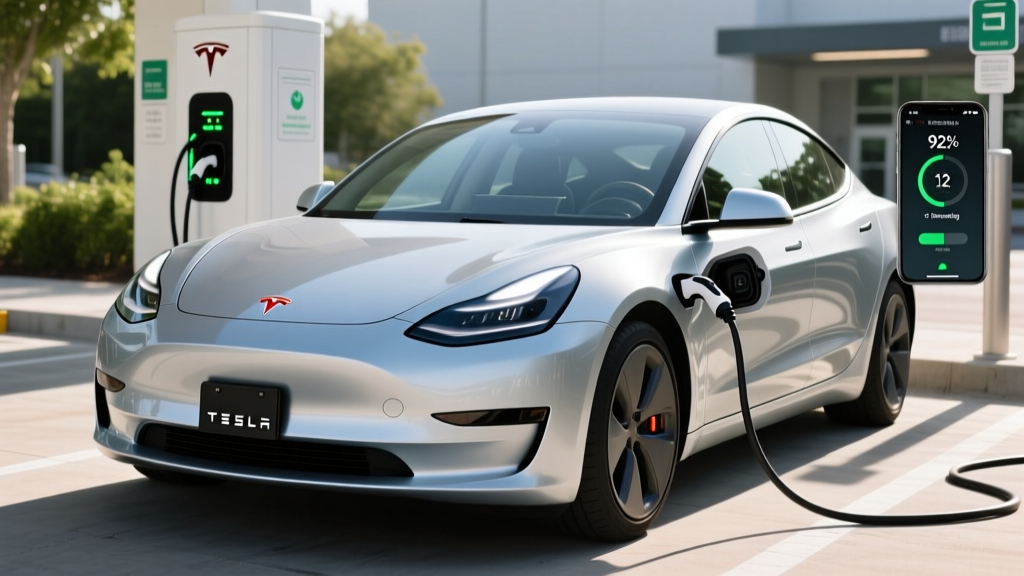
The 2018 Model 3 Long Range supports a maximum AC charge rate of 11.5 kW (48A at 240V) via its onboard charger. On DC fast charging, it can peak at approximately 150 kW on a V2 Supercharger, though V3 Superchargers (250 kW) will still charge the car — the vehicle simply draws what it can handle.
DC Fast Charging: Real Charge Times and the Curve Taper
Peak kW ratings are marketing headlines; sustained charge rate is what actually matters. The 2018 Model 3 Long Range follows a typical NMC charge curve: it ramps quickly to peak power at low State of Charge (SoC), sustains near-peak through the mid-range, then tapers significantly above 80%.
| SoC Window | Avg Power (kW) | Approx. Time | Range Added |
|---|---|---|---|
| 10% → 50% | ~120–140 kW | ~15 minutes | ~150 miles |
| 10% → 80% | ~95–110 kW (avg) | ~30–35 minutes | ~220 miles |
| 80% → 100% | ~15–30 kW (tapered) | ~35–45 minutes | ~60 miles |
This is why road-trip strategy for the Model 3 Long Range focuses on 10–80% charges: you get the bulk of usable range in about 30 minutes. Pushing to 100% at a Supercharger nearly doubles your stop time for only ~60 additional miles. For daily driving, Tesla recommends setting the charge limit to 80–90% for NMC batteries to maximize long-term battery health.
Preconditioning matters. If you navigate to a Supercharger using the car's built-in navigation, the battery management system will automatically warm or cool the pack to optimal temperature before you arrive. In cold weather, preconditioning can improve your peak charge rate by 20–40%, turning a sluggish 60 kW session into a proper 130+ kW charge.
Home Charger Installation: Costs, Electrical Requirements, and Gotchas
Charging at home is where the 2018 Model 3 Long Range shines as a daily driver. Wake up to a full battery every morning, and you'll rarely need public charging for routine use. But installation costs vary dramatically based on your home's electrical infrastructure.
Electrical Requirements
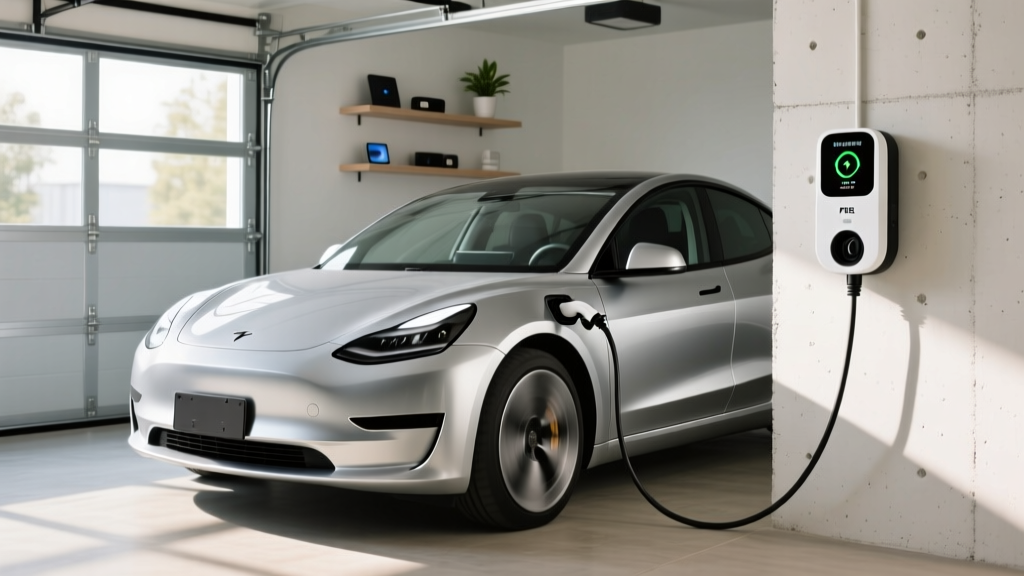
For optimal Level 2 home charging of the Model 3 Long Range, you need a 240V dedicated circuit on a 60-amp breaker, which delivers up to 48 amps continuous to the vehicle (electrical code requires circuits to be rated at 125% of continuous load). This gives you the full 11.5 kW AC charge rate and roughly 44 miles of range per hour of charging.
If your electrical panel is maxed out — common in homes built before 2000 with 100-amp service — you may need a panel upgrade to 200 amps. This is the single biggest cost variable in home EV charger installation.
| Component | Simple Install (Panel Adjacent) | Complex Install (Long Run / Panel Upgrade) |
|---|---|---|
| Level 2 Charger Equipment | $350–$650 | $350–$650 |
| Electrician Labor | $500–$1,200 | $1,500–$3,500 |
| Electrical Permit | $50–$200 | $50–$200 |
| Panel Upgrade (if needed) | $0 | $1,500–$3,000 |
| Conduit / Wiring Materials | $100–$300 | $400–$1,000 |
| Total Estimated Cost | $1,000–$2,350 | $3,800–$8,350 |
Always hire a licensed electrician and pull a permit. Unpermitted EV charger work can void homeowners insurance and create fire risk. The circuit must be dedicated (not shared with other appliances), and outdoor installations require a NEMA 4-rated enclosure and GFCI protection per NEC 2023 code requirements.
Federal Tax Credit for Home Charging Equipment
The IRS Residential Clean Energy Credit (Section 25C) covers 30% of the cost of home EV charging equipment and installation, up to $1,000 per year. This applies to both the charger hardware and electrician labor. Eligibility depends on your tax liability and whether you itemize — consult a tax professional for your specific situation.
Connector Compatibility: NACS, CCS, and Adapter Needs
The 2018 Tesla Model 3 Long Range was built with a proprietary Tesla connector (now standardized as NACS — North American Charging Standard). In 2026, the charging landscape has shifted significantly toward NACS adoption, but compatibility questions remain for older vehicles and non-Tesla networks.
| Connector Type | Native / Adapter Needed | Network Access |
|---|---|---|
| NACS (Tesla) | Native — built-in port | Tesla Supercharger network, Tesla Destination Chargers |
| CCS1 | Tesla CCS Adapter (~$175–$250) | Electrify America, EVgo, ChargePoint DC stations |
| CHAdeMO | No practical adapter available | Not compatible — legacy standard, largely phased out |
| J1772 (Level 2 public) | Tesla J1772 Adapter (included with vehicle) | Public Level 2 stations, workplace chargers |
In 2026, the Tesla Supercharger network is the largest and most reliable DC fast-charging network in North America, and NACS has been adopted by Ford, GM, Rivian, Hyundai, and most major automakers. Your 2018 Model 3 Long Range has a significant infrastructure advantage: native access to over 25,000 Supercharger stalls nationwide without any adapter.
However, carrying the Tesla CCS adapter is smart for redundancy. In areas where Supercharger coverage is sparse — particularly rural corridors in the Mountain West and parts of the Southeast — Electrify America or EVgo CCS stations may be your only DC fast-charging option. The adapter plugs into your Tesla port on one end and accepts a CCS1 connector on the other.
Level 2 Home Charger Equipment Picks for the Model 3 Long Range
Since the 2018 Model 3 can accept up to 11.5 kW (48A) on Level 2, pairing it with a charger that can deliver that full rate is the move. Here are three proven options in 2026:
Tesla Wall Connector (Gen 4)
- Power output: Up to 11.5 kW (48A)
- Connector: NACS (native Tesla)
- Cable length: 24 feet
- Smart features: Wi-Fi, OTA updates, power sharing with second unit, load management
- Price: ~$475
- Best for: Tesla-only households wanting max charge rate and seamless integration
ChargePoint Home Flex
- Power output: Up to 12 kW (50A, configurable down to 16A)
- Connector: J1772 (use Tesla adapter) or NACS pigtail version
- Cable length: 23 feet
- Smart features: Wi-Fi, app scheduling, Alexa integration, energy tracking
- Price: ~$550–$650
- Best for: Multi-EV households (Tesla + non-Tesla) needing flexibility
Emporia Level 2 EV Charger
- Power output: Up to 11.5 kW (48A)
- Connector: J1772 (use Tesla adapter) or NACS version
- Cable length: 24 feet
- Smart features: Wi-Fi, energy monitoring, solar integration, scheduling
- Price: ~$350–$400
- Best for: Budget-conscious install wanting full 48A output and energy monitoring
For a 2018 Model 3 Long Range, the Tesla Wall Connector is the natural choice — it delivers the car's maximum 11.5 kW rate with no adapter needed, and power sharing lets you install a second unit on the same circuit if you add another EV later. A full charge from 10% to 100% takes approximately 7–8 hours at 11.5 kW, which is ideal for overnight charging.
Charging Cost Per Mile: Home vs. Public vs. Gas
One of the strongest ownership arguments for the 2018 Model 3 Long Range is fuel cost savings, but the math depends heavily on where and when you charge. Here's how it breaks down using the car's real-world efficiency of approximately 26 kWh/100 miles (mixed driving, accounting for aging battery and climate use).
| Charging / Fuel Scenario | Rate | Cost Per Mile | Annual Cost (12,000 mi) |
|---|---|---|---|
| Home charging (off-peak utility rate) | $0.09/kWh | $0.023 | $280 |
| Home charging (national avg residential) | $0.17/kWh | $0.044 | $530 |
| Tesla Supercharger (avg 2026) | $0.30/kWh | $0.078 | $936 |
| Public DC fast (Electrify America / EVgo) | $0.38/kWh | $0.099 | $1,186 |
| Gas sedan (28 MPG, $3.40/gal) | $3.40/gallon | $0.121 | $1,457 |
Home charging at off-peak rates delivers a per-mile cost roughly 80% lower than gasoline. Even exclusive Supercharger use costs about 36% less per mile than gas. The key insight: home charging access is where the economics truly work. If you rely solely on public DC fast charging, savings narrow considerably — especially in states with high electricity rates like California, Massachusetts, or Hawaii.
Check whether your utility offers an EV-specific time-of-use (TOU) rate plan. Many utilities offer rates as low as $0.06–$0.10/kWh for overnight charging (typically 11 PM to 6 AM), which maximizes your savings. Some utilities even offer rebates of $250–$500 for enrolling in an EV rate plan.
Battery Longevity and Warranty for the 2018 Model 3 Long Range
Tesla covers the 2018 Model 3 Long Range battery with an 8-year / 120,000-mile warranty (whichever comes first), guaranteeing a minimum of 70% capacity retention. For a 2018 vehicle, this warranty extends through the 2026 model year — meaning many examples are approaching or have just passed the 8-year mark.
Real-world fleet data suggests the 75 kWh NMC pack in the 2018 Model 3 Long Range typically retains 85–92% of original capacity at the 8-year point under normal use patterns. Aggressive DC fast charging (frequent 100% charges, regular Supercharging in extreme heat without preconditioning) can accelerate degradation toward the lower end of that range.
If you're buying used, here's what to check:
- Navigate to Settings → Software → Additional Vehicle Information to view nominal vs. typical range, which hints at degradation
- Request a Tesla service battery health report (may require a service visit)
- Look for a history of predominantly Level 2 home charging vs. exclusive Supercharging in the vehicle's charge logs
- Verify the battery warranty hasn't been voided by aftermarket modifications or salvage title history
Out-of-warranty battery replacement for the Model 3 Long Range currently runs $12,000–$16,000 through Tesla service centers, though third-party refurbishment options are emerging at $8,000–$11,000 as the fleet ages.
Safety and Electrical Code Considerations
EV charging draws sustained high current for hours — unlike most household appliances that cycle on and off. This makes proper installation critical:
- Dedicated circuit required: Your Level 2 charger must be on its own breaker — no sharing with dryers, HVAC, or other loads
- GFCI protection: NEC 2023 requires ground-fault circuit interrupter protection for all EV charging outlets (hardwired units typically have built-in GFCI)
- Outdoor rating: If your charger is outdoors or in an unconditioned garage, ensure it carries a NEMA 4 (weatherproof) rating
- Wire gauge: A 60-amp circuit requires 6 AWG copper wire minimum; longer runs may need 4 AWG to prevent voltage drop
- Hardwired vs. plug: Hardwired installations (no plug) are generally preferred for 48A+ chargers — they eliminate the NEMA 14-50 outlet as a failure point and are required by some jurisdictions for circuits above 40A
Never use an extension cord for EV charging. Never plug a Level 2 charger into an outlet shared with other high-draw appliances. And always verify your electrician pulls a permit — it protects you legally and ensures the work is inspected to code.
Frequently Asked Questions
How much does it cost to install a home EV charger for a 2018 Tesla Model 3?
A straightforward Level 2 installation with the electrical panel nearby typically costs $1,000–$2,350 all-in (charger, electrician, permit, materials). If your panel needs an upgrade to 200A or the run is long through finished walls, expect $3,800–$8,350. The IRS Section 25C credit can offset 30% of equipment and labor up to $1,000.
How fast will each charging level add range to the Model 3 Long Range?
Level 1 (120V) adds roughly 3–5 miles per hour — adequate only for overnight trickle charging. Level 2 (240V, 48A) adds about 44 miles per hour, fully recharging the 75 kWh battery in 7–8 hours. DC fast charging at a Supercharger adds up to 170 miles in 15 minutes at peak rate, though the 10–80% session averages 30–35 minutes.
Which connector and charger is compatible with the 2018 Model 3 Long Range?
The 2018 Model 3 uses the native Tesla connector (now called NACS). It works directly with Tesla Superchargers, Tesla Wall Connectors, and Tesla Destination Chargers. For CCS1 public DC fast chargers, you need the Tesla CCS adapter ($175–$250). For J1772 Level 2 public chargers, use the J1772 adapter that came with the car.
How much does charging cost per mile vs. gas?
At a national average residential electricity rate of $0.17/kWh, the 2018 Model 3 Long Range costs approximately $0.044/mile to charge at home — about 64% less than a 28 MPG gas sedan at $3.40/gallon ($0.121/mile). Off-peak utility rates can drop home charging to $0.023/mile. Even exclusive Supercharger use at $0.30/kWh costs $0.078/mile, still 36% cheaper than gas.
What electrical upgrades might I need for a home charger?
If your home has a 100-amp electrical panel (common in pre-2000 construction), you'll likely need a panel upgrade to 200 amps ($1,500–$3,000) to add a 60-amp dedicated EV circuit. Homes with 200-amp panels usually have sufficient capacity, but the breaker space availability and wire run distance to your garage or parking spot will determine labor cost. An electrician's load calculation is the definitive answer — most offer this assessment for free or as part of a quote.
Should I charge my 2018 Model 3 Long Range to 100% daily?
No. Tesla recommends a daily charge limit of 80–90% for NMC battery packs to maximize longevity. Set 100% only when you need maximum range for a road trip, and try to begin driving shortly after reaching full charge rather than letting the car sit at 100% SoC for extended periods. The battery management system handles balancing, but sustained high SoC accelerates calendar degradation in NMC chemistry.