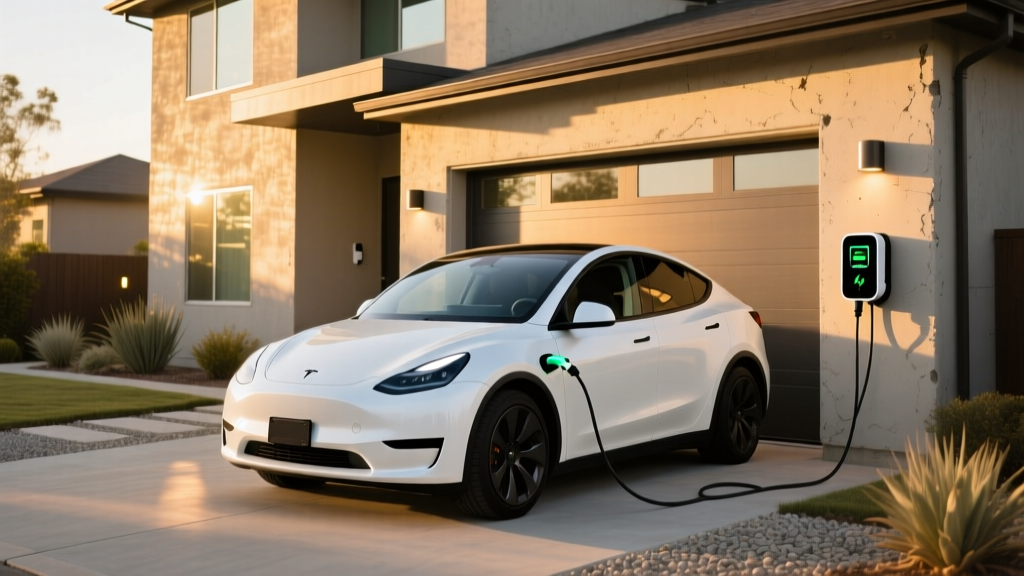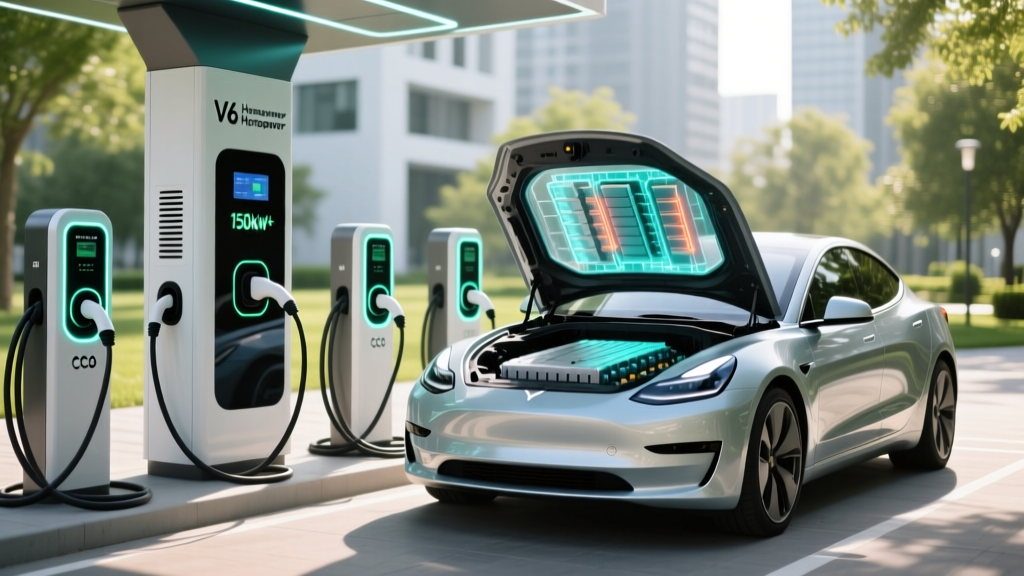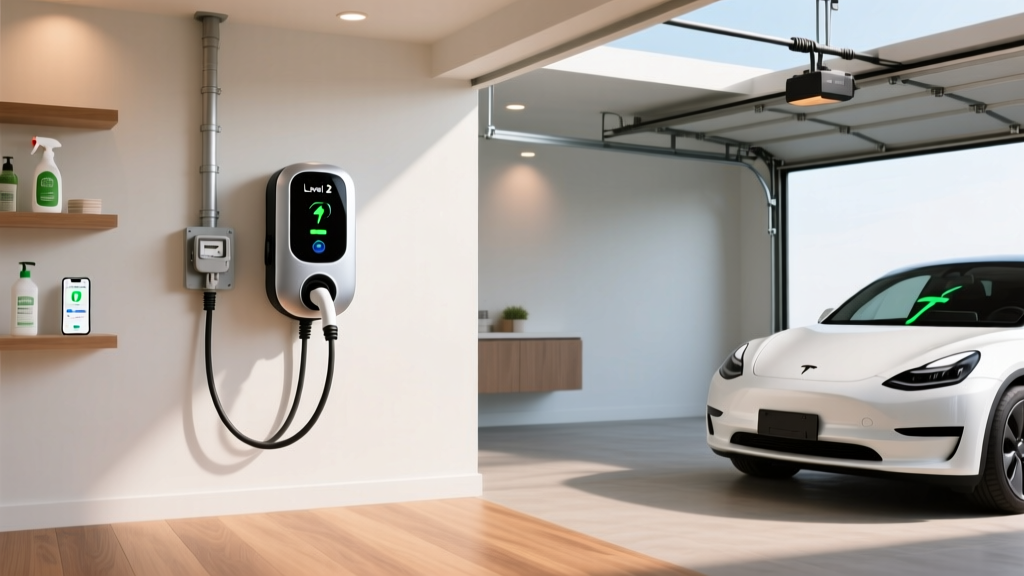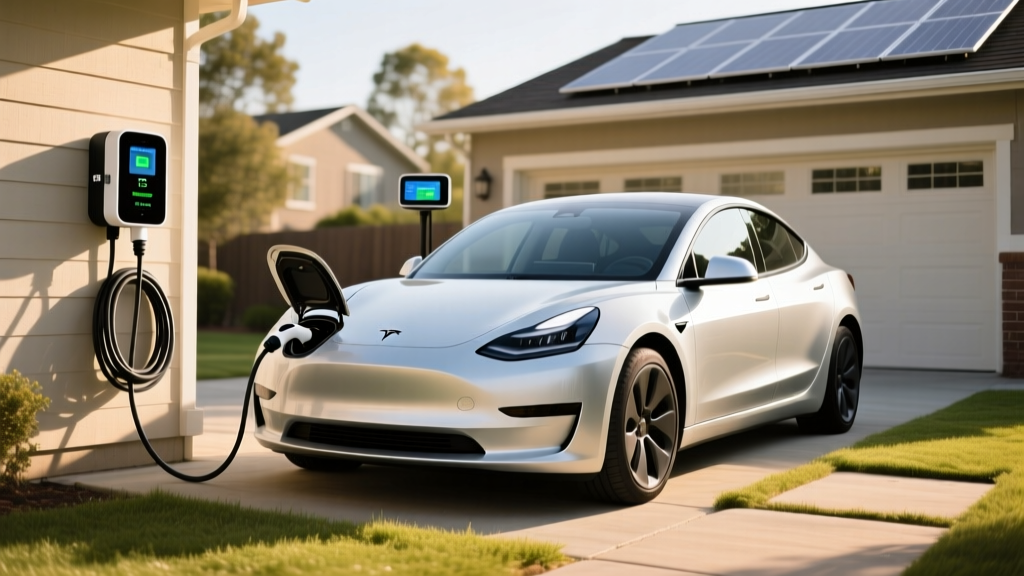
The 2018 Tesla Model 3 Long Range remains one of the most popular used EVs on the road. With an EPA-estimated 310 miles of range, dual-motor all-wheel drive, and a 4.5-second 0-60 mph time, it still holds up against newer competitors. But owning this car in 2026 means understanding how to charge it efficiently — at home, on road trips, and across an evolving public network that now includes NACS-standardized chargers.
This guide covers everything a 2018 Model 3 Long Range owner (or prospective buyer) needs to know about charging infrastructure, home installation costs, connector compatibility, and real-world ownership economics.
2018 Tesla Model 3 Long Range: Key Specs at a Glance
Before diving into charging specifics, here are the numbers that define this car's performance and energy needs:
| Spec | Value |
|---|---|
| EPA Range | 310 miles |
| Battery Capacity | ~75 kWh usable (NMC chemistry) |
| 0-60 mph | 4.5 seconds (Long Range AWD) |
| Horsepower | ~346 hp (dual motor) |
| Max DC Fast Charge Rate | ~170 kW peak |
| Level 2 Charge Rate | 11.5 kW (48A onboard charger) |
| EPA Efficiency | 126 MPGe combined |
| Connector (Factory) | Tesla (now NACS) |
Charging Levels Explained: How Fast Can You Add Miles?
EV charging operates across three levels, each defined by its power output in kilowatts (kW). Remember: kW measures power (how fast energy flows), while kWh measures energy (how much the battery stores — like gallons in a gas tank).
| Level | Power (kW) | Voltage | Miles of Range/Hour | Best For |
|---|---|---|---|---|
| Level 1 | 1.2-1.9 kW | 120V | 3-5 mi/hr | Overnight trickle, emergencies |
| Level 2 | 3.3-19.2 kW | 240V | 12-56 mi/hr | Daily home charging |
| DC Fast Charging | 50-350 kW | 400-800V DC | 150-1,000+ mi/hr | Road trips, quick top-ups |
For the 2018 Model 3 Long Range, Level 2 is the practical daily standard. The car's onboard charger accepts up to 11.5 kW (48 amps at 240V), adding roughly 44 miles of range per hour — enough to fully recharge the ~75 kWh battery in about 7-8 hours.
On DC fast charging, the 2018 Model 3 peaks at approximately 170 kW on a V2 Supercharger or compatible CCS station (with adapter). A typical 10-80% charge takes about 25-30 minutes, though the charge curve tapers significantly above 60% to protect battery health.
Home Charger Installation: Electrical Requirements and Costs
Installing a Level 2 home charger is the single biggest quality-of-life upgrade for any EV owner. For the 2018 Model 3 Long Range, you'll want a 240V circuit capable of delivering at least 40-48 amps to take full advantage of the car's 11.5 kW onboard charger.
Electrical Requirements
- Circuit: Dedicated 60-amp breaker (to support continuous 48A draw per NEC 80% rule)
- Wiring: 6 AWG copper (or 4 AWG aluminum) for runs up to 50 feet
- Outlet vs. hardwired: NEMA 14-50 outlet offers flexibility; hardwired is more reliable and often required for higher-amperage units
- Panel capacity: Most homes need 200-amp service minimum; older homes with 100-amp panels will likely need an upgrade
Installation Cost Breakdown
| Component | Typical Range |
|---|---|
| Level 2 Charger Unit | $400 - $700 |
| Electrician Labor (standard install) | $500 - $1,500 |
| Permit & Inspection | $50 - $250 |
| Panel Upgrade (if needed, 100A→200A) | $1,500 - $3,500 |
| Conduit & Wiring (long runs) | $200 - $800 |
| Total (no panel upgrade) | $950 - $2,450 |
| Total (with panel upgrade) | $2,450 - $6,000+ |
The wide range reflects real-world variables: garage distance from the panel, local labor rates, and whether your electrical service can handle the additional load. Always get a load calculation from a licensed electrician before committing to a charger spec.
Connector Compatibility: NACS, CCS, and Adapters
The 2018 Tesla Model 3 was built with Tesla's proprietary connector, which in late 2022 was opened as the North American Charging Standard (NACS). By 2026, NACS has become the dominant connector in North America, with nearly every major automaker adopting it.
This is good news for Model 3 owners: your native connector is now the industry standard. However, some older public chargers still use CCS1, so understanding adapter needs is essential.
| Connector | Native to 2018 Model 3? | Adapter Needed? | Availability (2026) |
|---|---|---|---|
| NACS (Tesla) | Yes — factory connector | No | Dominant; Superchargers, most new public stations |
| CCS1 | No | Yes — Tesla CCS adapter (~$250) | Declining but still present at Electrify America, some older stations |
| CHAdeMO | No | Not recommended | Largely obsolete in North America |
| J1772 (Level 2 public) | No | Yes — Tesla J1772 adapter (included with car) | Common at destination chargers, workplaces |
Tesla sells an official CCS1-to-NACS adapter that enables charging at non-Tesla DC fast stations. If you plan to road-trip outside Supercharger coverage, this adapter is a worthwhile investment.
Charging Cost Per Mile: EV vs. Gas in 2026
One of the strongest arguments for the Model 3 Long Range is its low per-mile energy cost compared to a comparable gas sedan. Here's how the numbers break down across different charging scenarios:
| Scenario | Rate | Cost to Full Charge (~75 kWh) | Cost Per Mile |
|---|---|---|---|
| Home Off-Peak (utility TOU) | $0.08-$0.12/kWh | $6.00 - $9.00 | $0.02 - $0.03/mi |
| Home Standard Rate | $0.13-$0.18/kWh | $9.75 - $13.50 | $0.03 - $0.04/mi |
| Public Level 2 (ChargePoint, etc.) | $0.20-$0.35/kWh | $15.00 - $26.25 | $0.05 - $0.08/mi |
| DC Fast (Supercharger V3 avg.) | $0.28-$0.40/kWh | $21.00 - $30.00 | $0.07 - $0.10/mi |
| Gas Sedan (30 MPG, $3.50/gal) | $3.50/gallon | — | $0.12/mi |
At home on off-peak rates, the 2018 Model 3 Long Range costs roughly $0.02-$0.03 per mile to "fuel" — about a quarter of what a 30 MPG gas sedan costs at current gas prices. Even on DC fast chargers at highway rates, you're still paying less per mile than gasoline.
According to fueleconomy.gov, the 2018 Model 3 Long Range achieves 126 MPGe combined, making it one of the most efficient vehicles in its class.
Recommended Home Chargers for the 2018 Model 3
Since the Model 3 can accept up to 11.5 kW (48A), pairing it with a charger that maxes out this capability ensures the fastest possible home charging. Here are top picks for 2026:
Tesla Wall Connector (Gen 3)
- Power Output: Up to 11.5 kW (48A)
- Connector: NACS (native Tesla)
- Cable Length: 24 feet
- Smart Features: Wi-Fi, OTA updates, power sharing with second unit
- Price: ~$475
- Why: Seamless integration, fastest charge for your Model 3, no adapter needed
ChargePoint Home Flex
- Power Output: Up to 12 kW (50A, configurable down)
- Connector: NACS or J1772 (select at purchase)
- Cable Length: 23 feet
- Smart Features: Wi-Fi, app scheduling, utility demand-response integration
- Price: ~$550-$650
- Why: Excellent for mixed-EV households; robust app and scheduling
Emporia Level 2 EV Charger
- Power Output: Up to 11.5 kW (48A)
- Connector: NACS or J1772
- Cable Length: 24 feet
- Smart Features: Wi-Fi, energy monitoring, solar integration
- Price: ~$350-$400
- Why: Budget-friendly with full amperage and energy-tracking features
Safety, Code, and Electrical Considerations
Home EV charger installation is not a DIY project. The National Electrical Code (NEC) requires specific protections that a licensed electrician will ensure are met:
- Dedicated circuit: Your Level 2 charger must have its own breaker — it cannot share a circuit with other appliances
- GFCI protection: NEC 2020 and later require ground-fault circuit interrupter protection for EV charging outlets (hardwired units may have internal GFCI)
- Outdoor rating: If installing outside, the charger and any outlet must carry a NEMA 4 or NEMA 4X weather-resistance rating
- Load calculation: Your electrician should perform a NEC Article 220 load calculation to confirm your panel can handle the additional continuous draw without overloading
- Permit and inspection: Most jurisdictions require a permit and post-installation inspection; skipping this can void insurance coverage in the event of an electrical fire
For older homes (pre-2000), the likelihood of needing a panel upgrade is significant. A 100-amp panel serving a home with electric heating, an electric dryer, and an EV charger will almost certainly need to be upgraded to 200 amps. Budget $1,500-$3,500 for this work, depending on your utility's requirements and local labor rates.
DC Fast Charging: Superchargers and the 2018 Model 3
The 2018 Model 3 Long Range supports DC fast charging at up to approximately 170 kW on Tesla's V2 Superchargers and V3/V4 stations (though V3 stations cap older Model 3s below the 250 kW available to newer architectures).
Real-world charging times for the ~75 kWh battery:
- 10-80% at V3 Supercharger: ~25-30 minutes
- 10-80% at V2 Supercharger (150 kW): ~35-40 minutes
- 10-80% at CCS station (with adapter, 150 kW): ~30-35 minutes
The charge curve matters: the car pulls peak power between roughly 10-40% state of charge, then tapers progressively. Charging from 80-100% at a DC fast charger is extremely slow and wasteful — reserve DCFC for the 10-80% window and finish at home.
Tesla's Supercharger network remains the most reliable public charging infrastructure in North America. According to Tesla's official network page, there are over 6,500 Supercharger stations globally as of early 2026, with near-universal NACS availability.
Frequently Asked Questions
How much does it cost to install a home EV charger for a 2018 Model 3?
A standard installation with an existing 200-amp panel typically costs $950-$2,450 including the charger, electrician labor, and permit. If your home needs a panel upgrade from 100A to 200A, total costs can reach $2,450-$6,000 or more.
How fast will each charging level add range to my Model 3 Long Range?
Level 1 (120V) adds about 3-5 miles per hour. Level 2 at 48A/11.5 kW adds approximately 44 miles per hour. DC fast charging at peak 170 kW can add up to 170 miles in 15 minutes, though the rate tapers as the battery fills.
Which connector does my 2018 Model 3 use, and do I need adapters?
Your car uses the Tesla/NACS connector natively. You'll need the included J1772 adapter for some public Level 2 stations, and optionally a Tesla CCS adapter (~$250) for non-Tesla DC fast chargers still using CCS1.
How much does charging cost per mile vs. gas?
Home charging on off-peak rates costs roughly $0.02-$0.03 per mile. DC fast charging on road trips runs $0.07-$0.10 per mile. A comparable 30 MPG gas sedan at $3.50/gallon costs about $0.12 per mile — making the Model 3 significantly cheaper to fuel in nearly every scenario.
What electrical upgrades might I need?
If your home has a 100-amp electrical panel, you'll likely need a 200-amp upgrade ($1,500-$3,500). You'll also need a dedicated 60-amp breaker, appropriate-gauge wiring (6 AWG copper), and possibly a new conduit run from panel to garage. A licensed electrician's load calculation is the definitive answer.
Does the 2018 Model 3 Long Range still hit 4.5 seconds 0-60 in 2026?
The 4.5-second 0-60 mph time was measured with a new battery. With 8-15% degradation typical for a 2018 NMC battery at this age, acceleration may be marginally slower — but the dual-motor torque delivery still provides thrilling real-world performance. Tesla's battery care guidelines recommend keeping daily charge between 20-80% to minimize long-term degradation.
Is the 2018 Model 3 Long Range Still a Smart Buy in 2026?
At current used-market prices (typically $18,000-$26,000 depending on mileage and condition), the 2018 Model 3 Long Range offers exceptional value: 310 miles of EPA range, a 4.5-second 0-60 time, native NACS compatibility, and access to the Supercharger network. Home charging infrastructure costs have stabilized, and the per-mile fuel savings over gas remain compelling.
The main considerations are battery health (request a State of Health reading before purchasing), potential panel-upgrade costs for older homes, and the fact that newer EVs offer faster DC charging architectures. But for daily driving and moderate road-trip use, this car remains one of the best electrified values available.