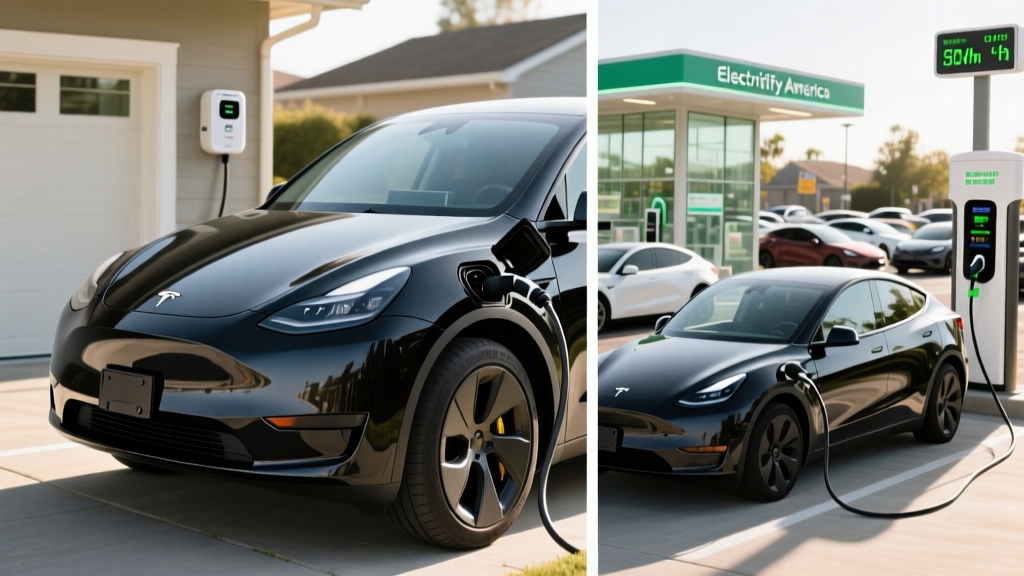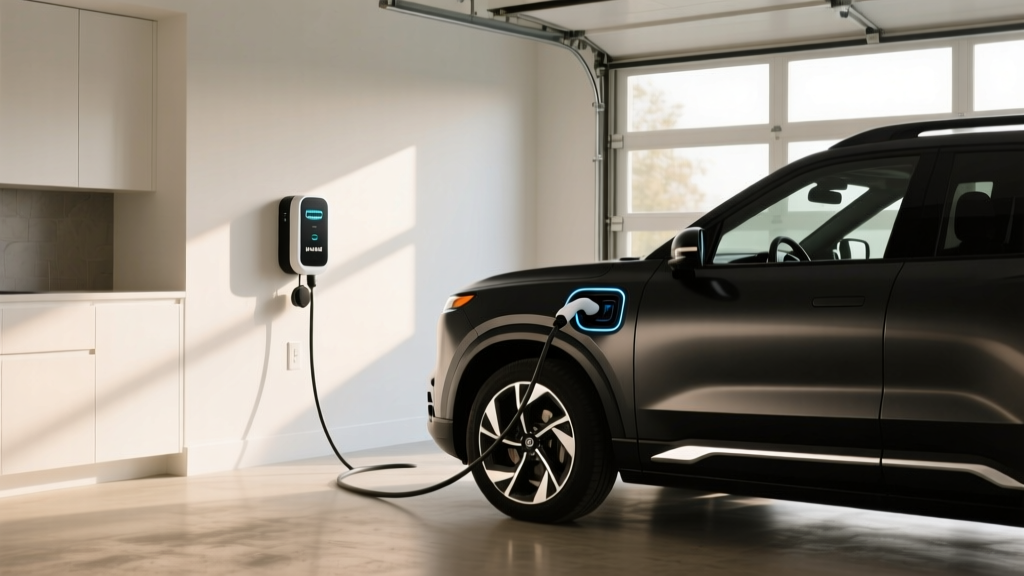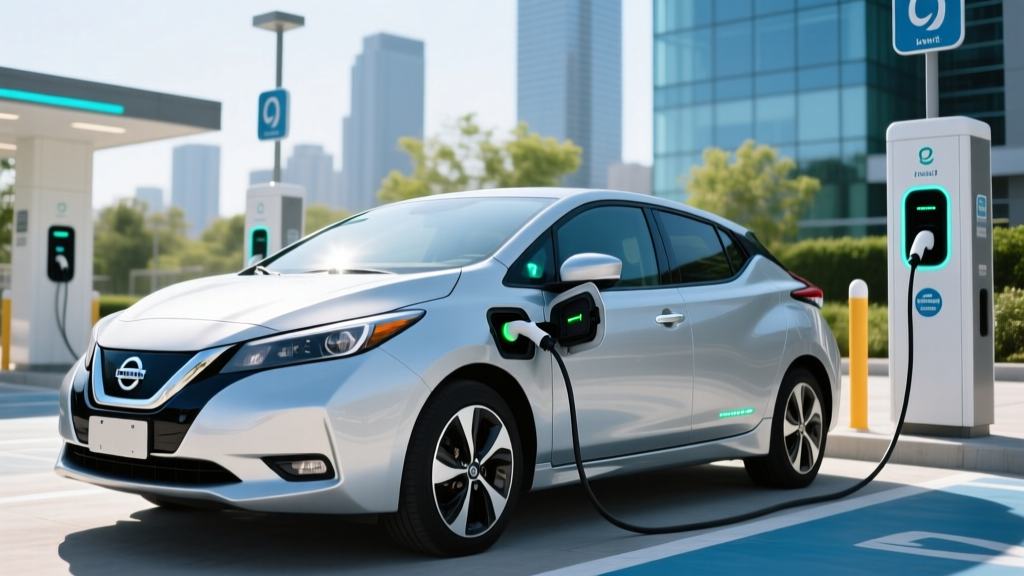
The 2018 Nissan Leaf was a milestone EV — the first model year to offer the larger 40 kWh battery pack, pushing the EPA-rated range to 151 miles. If you own one, are buying one used, or are comparing it against newer EVs, understanding how to charge it efficiently and what that range actually means in the real world is essential. This guide breaks down the 2018 Nissan Leaf range, every charging option available to it, home installation costs, and the connector ecosystem you need to know about in 2026.
2018 Nissan Leaf Range: EPA Sticker vs. Real-World Driving
The 2018 Leaf comes with a 40 kWh lithium-ion battery pack (approximately 38 kWh usable), paired with a 110 kW (147 hp) electric motor. Nissan rates it at 151 miles EPA combined, with an efficiency of 112 MPGe combined (30 kWh/100 mi). That was class-leading for an affordable EV in 2018, but real-world results depend heavily on how and where you drive.
| EPA Combined | 151 miles |
| Highway (70 mph, moderate temps) | ~120–135 miles |
| City / stop-and-go with regen | ~145–160 miles |
| Cold weather (below 32°F, heater on) | ~90–115 miles |
The 2018 Leaf lacks a heat pump — it uses resistive cabin heating, which draws significant battery power in winter. Highway driving at sustained speeds also reduces range because the Leaf's aerodynamics and single-speed reduction gear don't favor high-velocity efficiency. Plan for ~100 miles of reliable range in worst-case winter highway conditions.
Battery degradation is another factor for any used 2018 Leaf. Nissan's battery warranty covers 8 years/100,000 miles against capacity loss below 9 bars (out of 12) on the dashboard capacity indicator. According to fueleconomy.gov, most Leafs from this era retain 85–92% of original capacity after 5–7 years depending on climate and charging habits. Always check the battery health bars on the instrument cluster before purchasing used.
Charging Levels Explained: How Fast Can a 2018 Leaf Charge?
Before comparing speeds, a critical distinction: kW (kilowatts) measures charging power — how fast energy flows into the battery. kWh (kilowatt-hours) measures energy capacity — how much the battery holds. The 2018 Leaf's battery holds about 38 kWh usable. A charger delivering 6.6 kW will take roughly 5.75 hours to fill it from empty; a 50 kW DC fast charger can add a meaningful charge in 30–40 minutes.
| Level | Power (kW) | Miles Added/Hour | 0–100% Time | Best Use Case |
|---|---|---|---|---|
| Level 1 (120V outlet) | 1.4 kW | ~4–5 mi/hr | ~35–38 hours | Overnight top-up, emergencies |
| Level 2 (240V home/public) | 6.6 kW (Leaf's onboard max) | ~22–25 mi/hr | ~5.5–6 hours | Daily home charging, workplace |
| DC Fast (CHAdeMO) | Up to 50 kW | ~130–150 mi/hr (peak) | ~40 min (10–80%) | Road trips, quick top-ups |
The 2018 Leaf's onboard charger maxes out at 6.6 kW for Level 2 AC charging. Even if you install a 48-amp (11.5 kW) home charger, the Leaf will only draw 6.6 kW. For DC fast charging, the Leaf uses the CHAdeMO connector and peaks at approximately 46–50 kW. That's modest by 2026 standards — newer EVs charge at 150–350 kW — but it's sufficient for adding 80–100 miles in a 30-minute stop.
Charge curve reality: The Leaf's DC fast charging rate peaks near 46 kW up to about 50–60% state of charge, then tapers significantly. Charging from 80–100% on DC fast can take as long as the 0–80% portion. For battery longevity, most owners charge to 80% daily and reserve 100% for longer trips.
Home Charger Installation: Costs, Electrical Requirements & Panel Upgrades
Installing a Level 2 home charger is the single biggest upgrade a Leaf owner can make for daily convenience. Here's what's involved and what it actually costs.
Electrical Requirements
A Level 2 charger for the Leaf requires a 240V dedicated circuit. Since the Leaf draws a maximum of 6.6 kW (about 27.5 amps at 240V), a 40-amp circuit with a NEMA 14-50 outlet or hardwired connection is the standard recommendation. This provides headroom and future-proofs for a higher-draw EV later.
Panel upgrade considerations: Most modern homes with 200-amp electrical service can accommodate a 40-amp EV circuit without issue. However, older homes with 100-amp panels, homes already running multiple high-draw appliances (electric range, dryer, HVAC), or homes with limited breaker slots may require a panel upgrade to 200 amps. This adds $1,500–$3,500 to your project and is the single biggest variable in installation cost.
Installation Cost Breakdown
| Component | Simple Install (near panel) | Complex Install (long run / upgrades) |
|---|---|---|
| Level 2 charger (equipment) | $300–$600 | $300–$600 |
| Electrician labor (2–4 hrs typical) | $300–$600 | $800–$2,000 |
| Electrical permit | $50–$150 | $50–$200 |
| Conduit, wiring, outlet (NEMA 14-50) | $50–$150 | $200–$600 |
| Panel upgrade (if needed) | N/A | $1,500–$3,500 |
| TOTAL | $700–$1,500 | $2,850–$6,900 |
Get at least two quotes from licensed electricians. Ask specifically whether your panel has capacity for a 40-amp breaker and whether the run from panel to garage/carport requires conduit through walls or under a crawlspace. The National Electrical Contractors Association can help you find qualified installers.
Safety & Code Requirements
- Dedicated circuit: EV chargers must be on their own dedicated breaker — never shared with other appliances.
- GFCI protection: NEC 2020 and later require GFCI protection for outdoor receptacles used for EV charging. Hardwired chargers with built-in GFCI are an alternative.
- Outdoor rating: If your charger is installed outside, it must carry a NEMA 4 (weatherproof) rating. Most quality Level 2 chargers meet this standard.
- Cable management: Avoid running charging cables across walkways or driveways where they create trip hazards or can be damaged by vehicles.
Connector Compatibility: CHAdeMO, CCS, and the NACS Transition
The 2018 Nissan Leaf uses two connectors:
- J1772 for Level 1 and Level 2 AC charging (the universal standard for all non-Tesla EVs in North America)
- CHAdeMO for DC fast charging
This is important because CHAdeMO is being phased out across North America's public charging infrastructure. Most new DC fast chargers installed in 2024–2026 prioritize CCS1 and the growing NACS (Tesla) standard. However, CHAdeMO connectors remain available at many Electrify America, EVgo, and older ChargePoint stations.
| Connector | Type | 2018 Leaf Compatible? | Availability Trend (2026) |
|---|---|---|---|
| J1772 | AC Level 1/2 | ✅ Native | Universal, still widely available |
| CHAdeMO | DC Fast | ✅ Native | ⚠️ Declining — fewer new installations |
| CCS1 | DC Fast | ❌ No adapter available | Widely available but not Leaf-compatible |
| NACS (Tesla) | DC Fast / AC | ❌ No CHAdeMO-to-NACS adapter exists | Rapidly expanding (Tesla Supercharger network) |
The hard truth for Leaf owners: There is currently no reliable, commercially available adapter that converts a CHAdeMO vehicle to CCS or NACS. This means your DC fast charging options are limited to stations that still maintain CHAdeMO connectors. Use apps like PlugShare or ChargeHub to verify CHAdeMO availability along your routes. For daily driving and overnight Level 2 home charging, the J1772 connector works everywhere and you won't face any compatibility issues.
Level 2 Charger Recommendations for the 2018 Leaf
Since the Leaf caps at 6.6 kW, you don't need a 48-amp charger — but installing one gives you flexibility if you add a second EV later. Here are proven options:
Emporia Level 2 EV Charger
- Power: 48A / 11.5 kW max (Leaf will draw 6.6 kW)
- Connector: J1772 (universal)
- Cable: 24 ft
- Smart features: Wi-Fi, app scheduling, energy monitoring, solar integration
- Price: ~$350–$400
- Why for Leaf: Budget-friendly, excellent energy tracking, lets you schedule off-peak charging to reduce costs
ChargePoint Home Flex
- Power: Configurable 16A–50A / up to 12 kW (NEMA 14-50 or hardwire)
- Connector: J1772
- Cable: 23 ft
- Smart features: Wi-Fi, Alexa integration, ChargePoint network access, amperage adjustable
- Price: ~$550–$650
- Why for Leaf: Adjustable amperage means you can set it to 32A if your panel is tight; robust build quality
Grizzl-E Smart
- Power: 40A / 10 kW max
- Connector: J1772
- Cable: 24 ft
- Smart features: OCPP-compatible, app control, firmware updates
- Price: ~$450–$500
- Why for Leaf: Built in Canada, extreme cold-weather tested (-40°F), NEMA 4 outdoor rated — ideal for unheated garages or outdoor installs
Tesla Universal Wall Connector
- Power: 48A / 11.5 kW max
- Connector: NACS + J1772 adapter included
- Cable: 24 ft
- Smart features: Wi-Fi, power sharing (two units on one circuit), OTA updates
- Price: ~$550–$600
- Why for Leaf: Future-proof — charges your Leaf via included J1772 adapter today, and any Tesla/NACS vehicle tomorrow
For a Leaf-only household, the Emporia offers the best value. If you anticipate owning a Tesla or NACS-equipped EV in the future, the Tesla Universal Wall Connector is the most forward-looking choice.
Charging Cost Per Mile: Leaf vs. Gas Car
One of the strongest arguments for the 2018 Leaf is operating cost. At 30 kWh/100 miles (its EPA combined consumption), here's what charging actually costs across different scenarios:
| Charging/Fuel Scenario | Rate | Cost Per Mile (Leaf) | Cost Per Mile (30 MPG gas @ $3.50/gal) |
|---|---|---|---|
| Home (off-peak utility rate) | $0.09/kWh | $0.027 | $0.117 |
| Home (average US rate) | $0.16/kWh | $0.048 | $0.117 |
| Public Level 2 (ChargePoint, etc.) | $0.25–$0.35/kWh | $0.075–$0.105 | $0.117 |
| DC Fast (CHAdeMO, EVgo/Electrify America) | $0.35–$0.50/kWh | $0.105–$0.150 | $0.117 |
The takeaway: Home charging on an off-peak rate saves roughly $0.09/mile compared to gas — about $1,350/year for a 15,000-mile driver. Even at average home rates, the Leaf costs less than half per mile to fuel. DC fast charging is the one scenario where costs can match or exceed gas, so it should be used strategically for road trips rather than as your primary charging method.
Many utilities offer time-of-use (TOU) plans that drop rates to $0.07–$0.10/kWh overnight. Programming your Emporia or ChargePoint charger to start at 10 PM can cut your fuel cost to under 3 cents per mile.
Frequently Asked Questions
How much does it cost to install a home EV charger for a 2018 Nissan Leaf?
A straightforward Level 2 installation (charger near the electrical panel, 240V/40A circuit, no panel upgrade) typically runs $700–$1,500 including equipment, electrician labor, and permit. Complex installations requiring long conduit runs, trenching, or a panel upgrade to 200 amps can reach $2,850–$6,900. Always get itemized quotes.
How fast will each charging level add range to my Leaf?
Level 1 (120V wall outlet) adds about 4–5 miles per hour — enough for overnight recovery of 40–50 miles. Level 2 (240V, 6.6 kW) adds about 22–25 miles per hour, fully recharging the 40 kWh battery in roughly 5.5–6 hours. DC fast charging at 50 kW via CHAdeMO can add roughly 80–100 miles in 30 minutes, tapering significantly above 80% state of charge.
Which connector and charger is compatible with my 2018 Leaf?
For Level 1 and Level 2 charging, your Leaf uses the standard J1772 connector — every Level 2 home charger and public AC station in North America supports this natively. For DC fast charging, your Leaf requires CHAdeMO. There is no adapter to convert your Leaf to CCS or NACS. Check PlugShare for CHAdeMO-equipped stations near you.
How much does charging a 2018 Leaf cost per mile vs. a gas car?
Charging at home on the US average rate ($0.16/kWh), the Leaf costs about $0.048/mile — compared to roughly $0.117/mile for a 30 MPG gas car at $3.50/gallon. Off-peak home rates can drop that to under $0.03/mile. DC fast charging is the most expensive option at $0.10–$0.15/mile, roughly matching gas costs.
What electrical upgrades might I need for a home charger?
If your home has a 200-amp panel with available breaker slots and capacity, you likely need only a new 40-amp breaker and wiring run. Homes with 100-amp service, heavily loaded panels, or no available slots may require a panel upgrade ($1,500–$3,500). An electrician's load calculation will determine this — ask for one before committing. Some utilities offer rebates for panel upgrades tied to EV adoption; check with your local provider.
Will a 2018 Nissan Leaf work as a daily driver in 2026?
Absolutely — if your daily round-trip commute is under 80–90 miles and you can charge at home overnight. The 151-mile EPA range (realistically 120–140 in mixed driving) covers most daily needs. The limitations appear on road trips (CHAdeMO availability is shrinking) and in extreme cold (range can drop to ~90–115 miles). For a second car, commuter vehicle, or urban driver, a well-maintained 2018 Leaf remains one of the most cost-effective EVs on the used market.