If you own or are considering a used first-generation 40 kWh Nissan Leaf (model year 2018), understanding how to charge it efficiently is the difference between loving EV ownership and feeling trapped by a 151-mile EPA sticker. The 2018 Leaf was a landmark — it introduced the larger 40 kWh battery to the mass market — but its CHAdeMO connector, passive battery thermal management, and 50 kW DC fast-charge ceiling create a unique charging profile that differs sharply from modern CCS or NACS-equipped EVs.
This guide covers exactly what the 2018 Leaf can accept at every charging level, what you need to install at home, connector compatibility (and why CHAdeMO is a shrinking network), real cost-per-mile math, and the equipment that makes the most sense for this specific car in 2026.
2018 Nissan Leaf Range: EPA vs. Real World
The 2018 Nissan Leaf with the 40 kWh battery pack carries an EPA-estimated 151 miles of range on the base S trim (16-inch wheels). The SV and SL trims with 17-inch alloy wheels drop slightly to 151 miles as well, though real-world testing shows minor variance. The battery itself holds roughly 40 kWh total / ~38 kWh usable of NMC (nickel-manganese-cobalt) lithium-ion energy.
- Highway (70+ mph, warm weather): Expect ~120–135 miles due to higher aero drag and no regenerative braking benefit at steady speed.
- Cold weather (below 32°F / 0°C): Range can drop 25–35%, yielding as little as 100–115 miles. The 2018 Leaf lacks a heat pump (resistance cabin heater draws ~3–5 kW) and has no active battery thermal management — cold-soaked batteries accept charge far more slowly.
- City / moderate climate: 145–155 miles is achievable thanks to aggressive regen braking and lower average speeds.
Efficiency is rated at 112 MPGe combined (30 kWh/100 mi), which is competitive even by 2026 standards. The car uses a 110 kW (147 hp) AC motor producing 236 lb-ft of torque, with a 0–60 mph time around 7.9 seconds.
Charging Levels Explained: What the Leaf Can Accept
Before we get into speeds, let's nail down the single most important EV distinction: kW (kilowatts) measures power — the rate of energy flow. kWh (kilowatt-hours) measures energy — the total capacity of the battery. Think of kW as the size of the hose, and kWh as the size of the bucket. The 2018 Leaf's bucket is ~40 kWh. The hose sizes it can accept are:
| Level | Voltage / Amps | Max Power (kW) | Miles Added per Hour | 0–100% Time (40 kWh) |
|---|---|---|---|---|
| Level 1 (120V household) | 120V / 12A | ~1.4 kW | ~4–5 mi/hr | ~28–35 hours |
| Level 2 (240V home/public) | 240V / 30A | ~6.6 kW | ~22–25 mi/hr | ~6–7 hours |
| DC Fast (CHAdeMO) | ~400V DC | ~50 kW peak | ~150–175 mi/hr (to 80%) | ~40 min (0–80%) |
Critical real-world caveat on DC fast charging: The 2018 Leaf peaks at roughly 45–50 kW only between ~10–50% State of Charge (SoC). Above 60%, the charge curve tapers aggressively — from 80–100% you may see only 10–15 kW. This is partly because the Leaf uses passive air cooling for the battery pack. Without liquid thermal management, the car restricts charge rate to prevent overheating, especially on repeated fast charges or in hot weather (Nissan's so-called "Rapidgate" issue). Plan DC fast sessions as 10–80% top-ups, not 0–100% fills.
Home Charger Installation: Requirements, Costs & Panel Gotchas
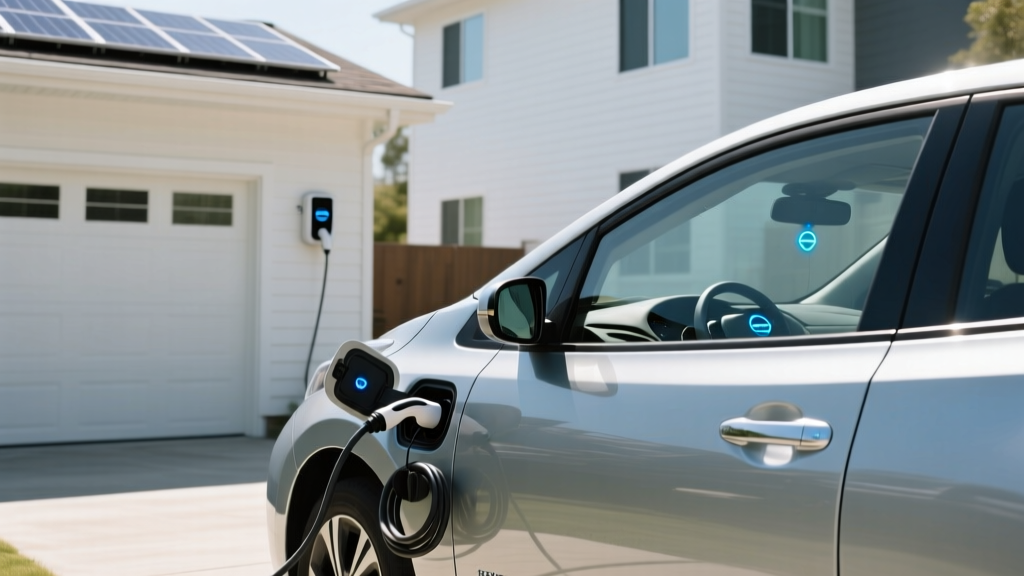
For daily driving, Level 2 home charging is the only practical solution for a 2018 Leaf. The onboard charger accepts up to 6.6 kW (240V / 27.5A), meaning you need a dedicated 240V circuit — typically a 40-amp breaker (NEC requires circuits be rated at 125% of continuous load, so a 32A charger needs a 40A breaker).
What Your Electrical Panel Needs
Before buying a charger, check your main service panel:
- Service capacity: Most modern homes have 100A or 200A service. A 40A EV circuit is fine on 200A panels but may push a 100A panel to its limit — especially if you also run electric heat, a dryer, and an oven simultaneously.
- Available breaker slots: You need two adjacent slots for a 240V double-pole breaker.
- Panel age: Homes built before 1990 may need a panel upgrade (100A → 200A) to safely add EV charging. This is the single biggest surprise cost for older-home buyers.
| Component | Low End | High End | Notes |
|---|---|---|---|
| Level 2 EVSE equipment | $250 | $650 | 32A–40A, J1772 connector, 18–25 ft cable |
| Electrician labor (standard install) | $400 | $1,200 | Depends on run length from panel to garage |
| Permit & inspection | $50 | $250 | Varies by municipality |
| Panel upgrade (if needed) | $1,500 | $3,500 | 100A → 200A service upgrade |
| TOTAL (no panel upgrade) | $700 | $2,100 | Most homeowners: $1,000–$1,500 |
| TOTAL (with panel upgrade) | $2,200 | $5,600 | Older homes only |
Safety & Code Requirements
- Dedicated circuit: NEC Article 625 requires a dedicated branch circuit for EV charging — no sharing with other outlets.
- GFCI protection: 2020 NEC (and later) requires GFCI on receptacles used for EV charging in garages. Hardwired units may bypass this requirement in some jurisdictions.
- Outdoor rating: If installing outside, the EVSE must carry a NEMA 4 or NEMA 4X rating (rain/dust/splash resistant).
- NEMA 14-50 vs hardwired: A NEMA 14-50 outlet gives you portability (take the charger when you move), but a hardwired install is often cheaper and avoids GFCI nuisance trips.
Note: Always hire a licensed electrician. Final specs depend on your home's wiring, local code amendments, and utility requirements. The NEC and your local AHJ (Authority Having Jurisdiction) govern the final installation.
Connector Compatibility: CHAdeMO's Shrinking Network
The 2018 Nissan Leaf uses the J1772 connector for Level 1 and Level 2 AC charging (universal across all non-Tesla EVs sold in North America) and CHAdeMO for DC fast charging. This is the Leaf's biggest long-term liability.
| Connector | Used By | Network Availability |
|---|---|---|
| J1772 (AC L1/L2) | All non-Tesla EVs, including 2018 Leaf | Universal — every public L2 station |
| NACS (Tesla) | Tesla; Ford, GM, Rivian, others (2025+) | Largest network (Superchargers); adapters available for CCS cars |
| CCS1 (Combo) | Hyundai, Kia, VW, BMW, most non-Tesla (2019+) | Electrify America, EVgo, ChargePoint — widely available |
| CHAdeMO | Nissan Leaf (all years), Mitsubishi Outlander PHEV | Declining — Electrify America removed most CHAdeMO plugs by 2024 |
What this means for Leaf owners: Electrify America, once the largest CHAdeMO provider, phased out CHAdeMO connectors at most stations by 2024–2025. Your best DC fast-charging options in 2026 are EVgo (still maintains CHAdeMO at many legacy stations), some ChargePoint locations, and independent networks. Before road-tripping, check PlugShare or your EV's navigation for verified CHAdeMO availability along your route. There is currently no commercially available CHAdeMO-to-NACS or CHAdeMO-to-CCS adapter for DC fast charging — the protocols are fundamentally different.
Charging Cost: Per Mile vs. Gasoline
One of the strongest arguments for the 2018 Leaf is operating cost. At 30 kWh/100 mi (its EPA combined efficiency), here's what you'll pay:
| Scenario | Rate | Leaf $/mile | Gas Car $/mile ($3.50/gal) |
|---|---|---|---|
| Home charging (off-peak utility rate) | $0.10/kWh | $0.030 | $0.117 |
| Home charging (national avg.) | $0.16/kWh | $0.048 | $0.117 |
| Public Level 2 (ChargePoint, etc.) | $0.25/kWh | $0.075 | $0.117 |
| DC Fast Charging (EVgo, etc.) | $0.40/kWh | $0.120 | $0.117 |
Key insight: At home, the Leaf costs roughly 60–75% less per mile than a 30 MPG gas car. But if you rely exclusively on DC fast charging at $0.40/kWh, the Leaf actually costs slightly more per mile than gasoline. This is why home Level 2 charging is non-negotiable for EV economics — it's where the savings live.
Recommended Level 2 Chargers for the 2018 Leaf
Since the Leaf maxes out at 6.6 kW, you don't need a 48A charger. A 32A unit (7.7 kW output) will fully saturate the Leaf's onboard charger and leave headroom for a future EV. Here are three proven options:
Emporia Level 2 Smart Charger
- Output: 40A / 9.6 kW (Leaf will draw 27.5A / 6.6 kW)
- Connector: J1772 (directly compatible)
- Cable: 24 ft
- Smart features: Wi-Fi, app scheduling, energy monitoring, solar integration
- Price: ~$250
- Verdict: Best value — full smart features at a budget price.
ChargePoint Home Flex
- Output: Up to 50A / 12 kW (configurable via DIP switches)
- Connector: J1772
- Cable: 23 ft
- Smart features: Wi-Fi, Alexa, scheduling, detailed session logs
- Price: ~$550
- Verdict: Premium build, excellent app, future-proof for higher-power EVs.
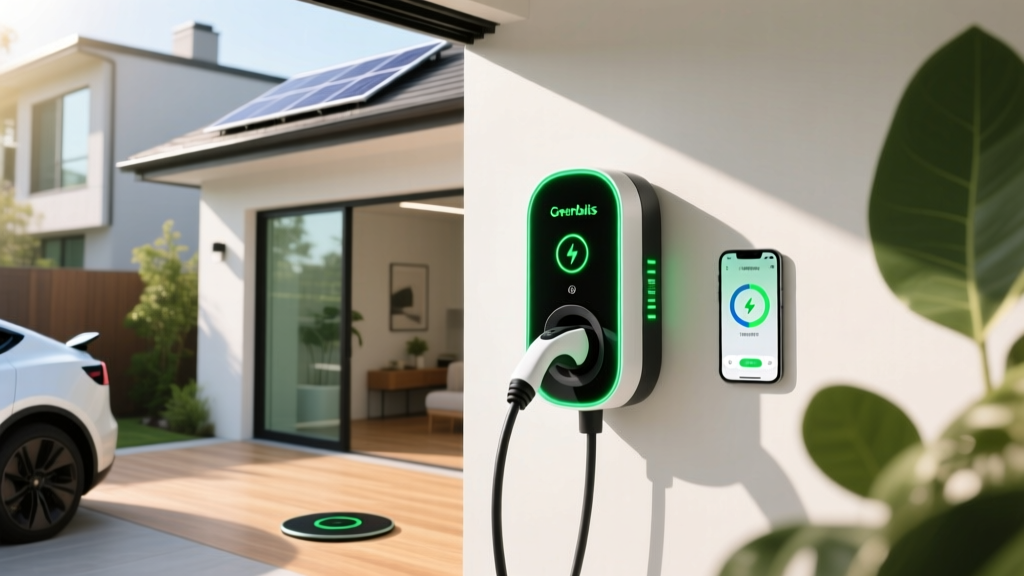
Grizzl-E Smart
- Output: 40A / 9.6 kW
- Connector: J1772
- Cable: 24 ft
- Smart features: OCPP-compatible, works with utility demand-response programs
- Price: ~$400
- Verdict: Rugged, outdoor-rated (NEMA 4), ideal for cold climates and garage-less installs.
Pro tip: Install a 40A or 50A circuit even though the Leaf only needs ~28A. When you eventually upgrade to a modern EV with an 11.5 kW or 19.2 kW onboard charger, you won't need to re-run wiring.
Battery Longevity & Ownership Considerations
The 2018 Leaf's battery warranty was 8 years / 100,000 miles against defects and capacity loss below 9 bars (out of 12) on the dashboard capacity gauge. By 2026, most 2018 Leafs are approaching or past the 8-year mark — meaning warranty coverage may have expired unless you're under 100,000 miles and still within the date window.
Degradation data from Leaf owners (via Leaf Spy and MyNissanLeaf forums) shows typical capacity retention of 85–92% after 6–7 years for garage-kept, moderate-climate cars. Hot-climate cars (Arizona, Texas) and those frequently DC fast-charged show faster degradation — as low as 78–82% retention. Since the pack is passively cooled, avoiding repeated same-day fast charges and keeping SoC between 20–80% for daily use extends longevity.
If you're buying a used 2018 Leaf in 2026, always check the battery capacity bars on the dash (12 = full health; 10 or fewer signals notable degradation) and consider a Leaf Spy OBD-II scan for precise State of Health (SoH) percentage.
Frequently Asked Questions
How much does it cost to install a home EV charger for the 2018 Leaf?
Most homeowners spend $1,000–$1,500 for a standard Level 2 install (equipment + electrician + permit) if no panel upgrade is needed. If your home has older 100A service and needs a panel upgrade to 200A, expect $2,200–$5,600 total.
How fast will each charging level add range to my Leaf?
Level 1 (120V): ~4–5 miles per hour. Level 2 (240V, 6.6 kW): ~22–25 miles per hour. DC Fast (CHAdeMO, 50 kW): ~150–175 miles per hour up to 80% SoC, tapering sharply above that.
Which connector and charger is compatible with the 2018 Leaf?
J1772 for all Level 1 and Level 2 AC charging (universal). CHAdeMO for DC fast charging. There are no DC adapters from CHAdeMO to CCS or NACS, so you're limited to stations with CHAdeMO plugs.
How much does charging the Leaf cost per mile vs. a gas car?
At home ($0.16/kWh national average), the Leaf costs about $0.048/mile vs. $0.117/mile for a 30 MPG gas car at $3.50/gallon — a 59% savings. On expensive DC fast chargers ($0.40/kWh), the Leaf costs $0.12/mile, slightly more than gas.
What electrical upgrades might I need for a Level 2 charger?
You need a dedicated 240V circuit (40A breaker for a 32A charger). Homes with 100A service may need a panel upgrade to 200A ($1,500–$3,500). You also need two adjacent breaker slots and, for outdoor installs, a NEMA 4-rated EVSE.
Can I use a Tesla Supercharger with the 2018 Leaf?
No. Tesla Superchargers use the NACS connector and proprietary communication protocol. There is no adapter that allows a CHAdeMO-equipped Leaf to charge at a Supercharger or any NACS DC fast station.
Is the 2018 Leaf still worth owning in 2026?
For a commuter who can charge at home and drives under 100 miles daily, absolutely — it's one of the cheapest EVs to operate. For road trips or apartment dwellers without home charging, the shrinking CHAdeMO network and 151-mile EPA range make it a tough choice versus a modern CCS or NACS-equipped EV.