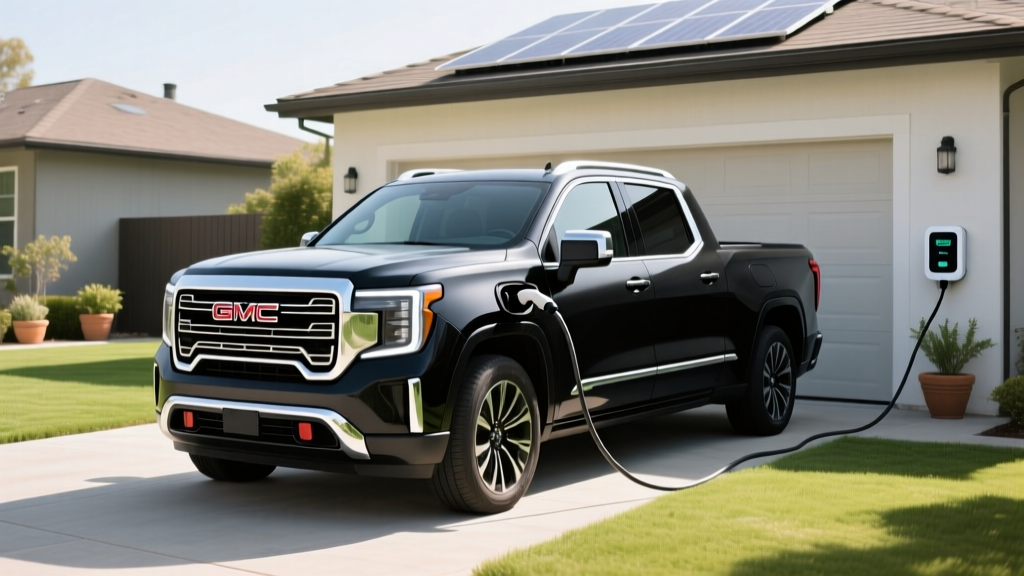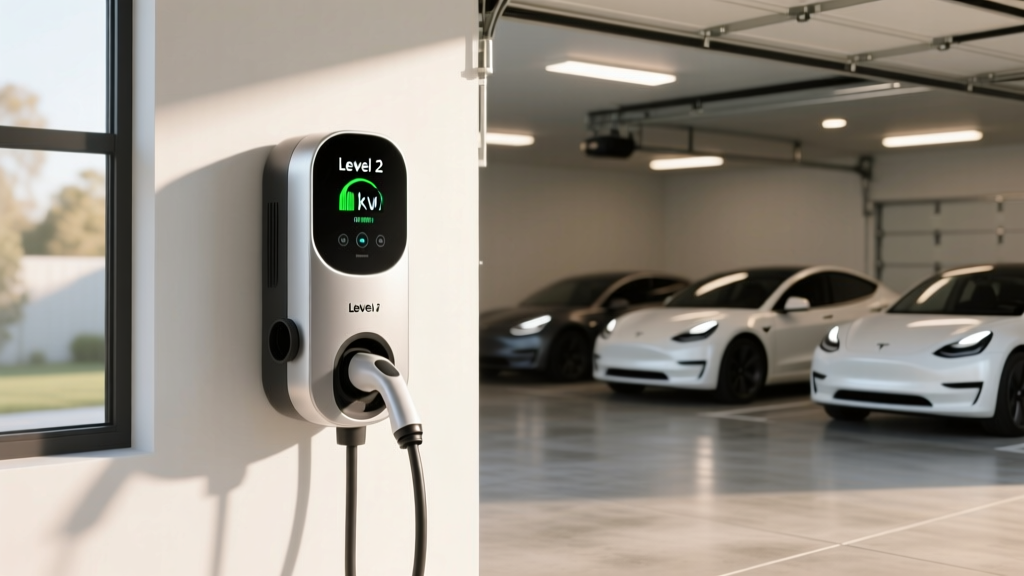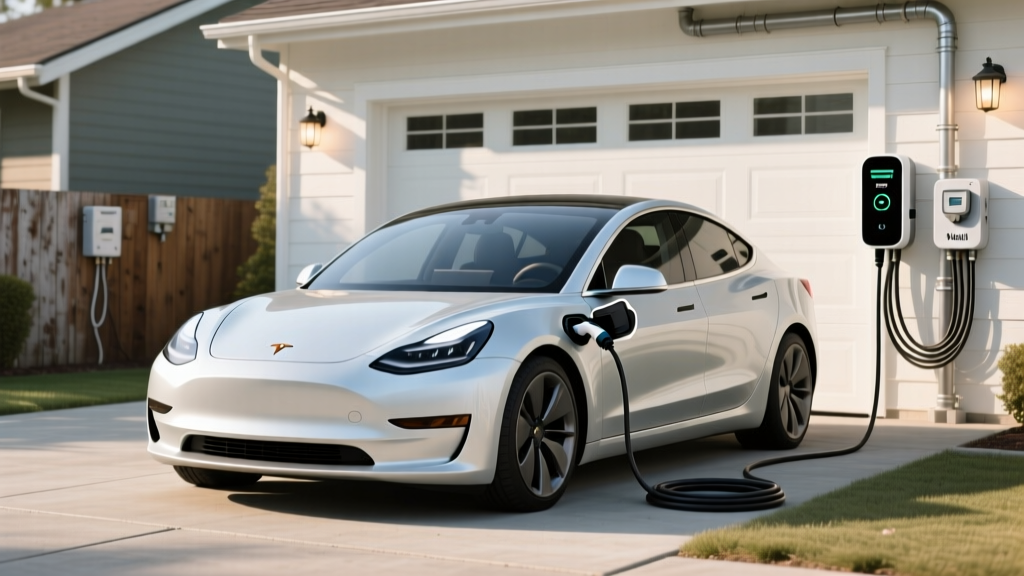
The 2018 Tesla Model 3 Long Range remains one of the most popular used EVs on the road in 2026. With an EPA-rated 310 miles of range and a blistering 0-60 mph time of 4.8 seconds (4.4 seconds for the dual-motor AWD variant), it still outperforms many new EVs on paper. But owning one in 2026 means navigating a charging landscape that has shifted dramatically since the car left the Fremont factory — including Tesla's NACS connector becoming the de facto North American standard and the proliferation of home Level 2 equipment.
If you've just purchased a 2018 Model 3 Long Range — or you're considering one — this guide covers everything you need to charge it efficiently at home and on the road, with exact kW figures, real install costs, and per-mile economics.
2018 Model 3 Long Range: Key Specs at a Glance
| Spec | 2018 Model 3 Long Range (RWD) | 2018 Model 3 Long Range (AWD) |
|---|---|---|
| EPA Range | 310 mi | 310 mi |
| Battery (usable) | ~75 kWh (NMC) | ~75 kWh (NMC) |
| 0-60 mph | 4.8 sec | 4.4 sec |
| Horsepower | 271 hp | 346 hp |
| Max DC Fast Charge | ~170 kW peak | ~170 kW peak |
| Onboard Charger (Level 2) | 11.5 kW (48A) | 11.5 kW (48A) |
| Connector | NACS (Tesla proprietary) | NACS (Tesla proprietary) |
| EPA Efficiency | 130 MPGe | 120 MPGe |
Charging Levels Explained: kW, Miles per Hour, and What Each Means
The single most important distinction in EV charging is kW (kilowatts) versus kWh (kilowatt-hours). Kilowatts measure power — the rate at which energy flows into your battery, like water pressure from a hose. Kilowatt-hours measure energy — the total amount stored, like gallons in a tank. Your 2018 Model 3 Long Range has roughly 75 kWh of usable battery capacity, and you fill it at varying kW rates depending on your charging source.
| Charging Level | Voltage / Amperage | Max Power (kW) | Miles of Range Added per Hour | Best Use Case |
|---|---|---|---|---|
| Level 1 (120V household) | 120V / 12A | ~1.4 kW | ~4–5 mi/hr | Overnight trickle; emergencies |
| Level 2 (240V home/public) | 240V / 40–48A | 9.6–11.5 kW | ~30–44 mi/hr | Daily home charging; workplace |
| DC Fast Charging | 400V+ DC | Up to 170 kW (Model 3) | ~500–750 mi/hr (peak) | Road trips; rapid top-ups |
The 2018 Model 3 Long Range's onboard charger accepts up to 11.5 kW on Level 2 (48 amps at 240V). That means a full charge from 0–100% at home takes roughly 8 hours. For daily driving, most owners charge from 20–80%, which takes about 4 hours on a 48A Level 2 circuit — easily accomplished overnight.
On DC fast charging, the 2018 Model 3 peaks around 170 kW but only sustains that rate briefly below 30% state of charge (SoC). The charge curve tapers significantly: expect roughly 15–20 minutes from 10–50%, then a progressive slowdown. A 10–80% session typically takes 25–35 minutes at a V2 Tesla Supercharger (150 kW) or 20–28 minutes at a V3/V4 Supercharger (250 kW) where the car can accept its peak rate.
Home Level 2 Installation: Electrical Requirements, Costs, and Panel Upgrades
Installing a dedicated Level 2 charger at home is the single biggest quality-of-life upgrade for any EV owner. For a 2018 Model 3 Long Range, you want a 240V circuit rated for at least 60 amps to deliver the full 48A (EVSE circuits must be rated at 125% of the continuous load, per NEC Article 625).
What Your Electrician Will Evaluate
- Panel capacity: A 60A circuit requires spare capacity on your main service panel. Most modern 200A panels can accommodate this, but older 100A or 150A panels may need a service upgrade ($1,500–$3,500).
- Wire run distance: Longer runs from panel to garage/driveway require thicker (and more expensive) copper wire — typically 6 AWG for a 60A circuit.
- Permit requirements: Nearly all jurisdictions require an electrical permit for EVSE installation, typically $50–$200.
- Outdoor vs. indoor: Outdoor installations need a weather-rated (NEMA 4) enclosure and GFCI protection per NEC 2023 code.
| Cost Component | Typical Range | Notes |
|---|---|---|
| Level 2 EVSE equipment | $400–$750 | Wall Connector, ChargePoint, Emporia |
| Electrician labor (standard install) | $500–$1,500 | Varies by wire run length and complexity |
| Electrical permit | $50–$200 | Required in most jurisdictions |
| Panel upgrade (if needed) | $1,500–$3,500 | Only if existing panel lacks capacity |
| Total (no panel upgrade) | $950–$2,450 | Most homes with 200A service |
| Total (with panel upgrade) | $2,450–$5,950 | Older homes with 100–150A panels |
Federal Tax Credit for Home Charging Equipment
Under IRS §30C (Alternative Fuel Vehicle Refueling Property Credit), you may claim up to 30% of the cost of home EVSE installation — capped at $1,000 — on your federal tax return. This credit has income and census-tract eligibility requirements. Consult a tax professional to confirm your qualification.
Connector Compatibility: NACS, CCS, and Adapter Needs for the 2018 Model 3
The 2018 Tesla Model 3 uses the Tesla proprietary connector — now formally standardized as NACS (North American Charging Standard, SAE J3400). This is a significant advantage in 2026, as NACS has been adopted by Ford, GM, Rivian, Hyundai, and most other major automakers, making it the dominant connector in North America.
| Connector | Network Access | 2018 Model 3 Compatibility |
|---|---|---|
| NACS (Tesla) | Tesla Supercharger (17,000+ stalls), growing third-party NACS stations | Native — no adapter needed |
| CCS1 (Combo) | Electrify America, EVgo, ChargePoint DC stations | Requires CCS adapter (~$175–$250 from Tesla or third-party) |
| CHAdeMO | Limited — mostly legacy Nissan Leaf infrastructure | Not compatible; no practical adapter exists |
| J1772 (Level 2 public) | Public Level 2 stations everywhere | Requires J1772-to-Tesla adapter (included with car, or ~$50 replacement) |
The 2018 Model 3 came with a J1772 adapter in the original kit. If yours is missing, Tesla sells replacements, and third-party options are widely available. For CCS DC fast charging at non-Tesla networks, you'll need a CCS1-to-NACS adapter — Tesla's official adapter retails for roughly $175 and supports up to 150 kW, which covers the Model 3's peak acceptance rate.
One major 2026 advantage: Tesla Superchargers are now open to non-Tesla NACS vehicles, meaning the network is busier but also better maintained and more numerous than ever. The Tesla app provides real-time stall availability and routing.
Cost to Charge: Per-Mile Economics vs. Gasoline
One of the strongest ownership arguments for a used 2018 Model 3 Long Range is the dramatic per-mile fuel cost advantage over gasoline vehicles. Here's how it breaks down across common charging scenarios:
| Charging Scenario | Cost per kWh | Cost for 75 kWh (full charge) | Cost per Mile (310 mi range) |
|---|---|---|---|
| Home — off-peak utility rate | $0.08–$0.12 | $6.00–$9.00 | $0.019–$0.029 |
| Home — standard rate | $0.13–$0.18 | $9.75–$13.50 | $0.031–$0.044 |
| Public Level 2 (workplace, retail) | $0.20–$0.35 | $15.00–$26.25 | $0.048–$0.085 |
| Tesla Supercharger (DC fast) | $0.25–$0.40 | $18.75–$30.00 | $0.060–$0.097 |
| Non-Tesla DC fast (EA, EVgo) | $0.35–$0.55 | $26.25–$41.25 | $0.085–$0.133 |
Gasoline comparison: A comparable 2018 BMW 3 Series (330i, 28 MPG combined) at $3.40/gallon costs roughly $0.121 per mile. Even charging exclusively at Tesla Superchargers, the Model 3 undercuts that by 20–50%. Home off-peak charging delivers a per-mile cost that's 75–85% lower than gasoline.
Recommended Home Charging Equipment for the 2018 Model 3
Since the 2018 Model 3 can accept up to 11.5 kW (48A) on Level 2, you want an EVSE that can deliver at least that rate. Here are the top picks for 2026:
Tesla Wall Connector
- Power: Up to 11.5 kW (48A)
- Connector: NACS native
- Cable length: 24 ft
- Smart features: Wi-Fi, OTA updates, load sharing with second unit, Tesla app integration
- Price: ~$475
- Best for: Tesla-only households; seamless integration
Emporia Vue Level 2 Charger
- Power: Up to 11.5 kW (48A)
- Connector: NACS (2025+ models) or J1772 with adapter
- Cable length: 24 ft
- Smart features: Solar integration, energy monitoring, scheduling via app
- Price: ~$399
- Best for: Solar-panel homes; budget-conscious buyers
ChargePoint Home Flex
- Power: Up to 12 kW (50A, configurable down to 16A)
- Connector: J1772 (use Tesla adapter) or NACS pigtail version
- Cable length: 23 ft
- Smart features: Alexa integration, scheduling, amperage adjustable to match circuit
- Price: ~$650
- Best for: Multi-EV households with mixed connectors
Grizzl-E Smart
- Power: Up to 10 kW (40A)
- Connector: J1772 (use Tesla adapter) or NACS
- Cable length: 24 ft
- Smart features: Basic app, extreme cold rated (-40°F), rugged aluminum case
- Price: ~$449
- Best for: Cold climates; outdoor installs; durability priority
Editor's pick for 2018 Model 3 owners: The Tesla Wall Connector is the obvious choice — native NACS, full 48A utilization, and seamless app integration. If you have solar panels or want energy monitoring, the Emporia Vue is a strong runner-up at a lower price point. The ChargePoint Home Flex is ideal if you also own a non-Tesla EV or anticipate one.
DC Fast Charging Realities: Charge Curve, Supercharger Tiers, and Road Trip Planning
The 2018 Model 3 Long Range was one of the first vehicles to demonstrate that DC fast charging speed matters more than peak kW claims. Here's what you need to know about real-world charging on the road:
Understanding the Charge Curve
Your Model 3 does not charge at 170 kW for the entire session. Like all lithium-ion batteries, the charge rate tapers as the battery fills. The typical curve looks like this:
- 10–30% SoC: Peak rate of 150–170 kW (at a V3+ Supercharger)
- 30–50% SoC: ~120–140 kW
- 50–70% SoC: ~80–100 kW
- 70–80% SoC: ~50–65 kW
- 80–100% SoC: Drops below 20 kW — avoid charging past 80% on road trips unless necessary
This is why a 10–80% session takes roughly 25–35 minutes, but 80–100% can take another 30+ minutes. Plan road-trip stops to charge from ~15% to ~70% for the fastest average rate and shortest total stops.
Supercharger Network in 2026
Tesla's Supercharger network now exceeds 6,500 stations and 60,000+ individual stalls globally. V3 Superchargers (250 kW) are the most common, and V4 units (with CCS/NACS integrated cables) are rolling out at new locations. For the 2018 Model 3, V2 stalls (150 kW) still deliver excellent speeds since the car's peak acceptance is ~170 kW anyway.
Use the Tesla in-car navigation for automatic battery preconditioning — the car warms the battery when you navigate to a Supercharger, which can reduce charge times by 20–30% in cold weather.
Safety, Code Compliance, and Best Practices
EV charging involves sustained high-current electrical loads, making code compliance and safety practices critical:
- Dedicated circuit: Your Level 2 EVSE must be on its own dedicated circuit — never shared with other appliances. NEC Article 625 requires this for all continuous loads exceeding 12A.
- GFCI protection: NEC 2023 and later codes require GFCI (Ground-Fault Circuit Interrupter) protection for outdoor EVSE installations. Most modern EVSEs have built-in GFCI, but your electrician should verify compliance with local code.
- Outdoor rating: If installing outside, ensure the EVSE is rated NEMA 4 (weather-resistant). The Tesla Wall Connector, ChargePoint Home Flex, and Grizzl-E all carry NEMA 4 ratings.
- Cable management: Avoid running cables across driveways or walkways where they can be damaged by vehicles or create trip hazards. Use a wall-mounted holster or cable organizer.
- Smoke alarm and ventilation: While EV charging does not produce exhaust fumes, lithium-ion battery thermal events are a (rare) risk. Ensure your garage has a functioning smoke detector. A garage-rated fire extinguisher (Class ABC) is recommended.
- Utility notification: Many utilities require or incentivize notification when you install an EVSE. Some offer time-of-use (TOU) rates that dramatically reduce charging costs. Check with your provider before installation.
Frequently Asked Questions
How much does it cost to install a home EV charger for a 2018 Model 3?
For most homes with a 200A electrical panel, expect $950–$2,450 total (equipment + electrician + permit). If your home needs a panel upgrade from 100A to 200A, add $1,500–$3,500. The Tesla Wall Connector ($475) plus a standard 60A circuit install is the most common configuration.
How fast will each charging level add range to my 2018 Model 3 Long Range?
Level 1 (120V) adds roughly 4–5 miles per hour — enough only for overnight trickle charging. Level 2 (240V, 48A) adds 35–44 miles per hour, fully recharging overnight. DC fast charging adds the equivalent of 500–750 miles per hour at peak, but tapers as the battery fills; a 10–80% session takes 25–35 minutes.
Which connector and charger is compatible with my 2018 Model 3?
Your car uses NACS natively, giving you direct access to all Tesla Superchargers and the growing network of third-party NACS stations. For CCS stations (Electrify America, EVgo), you need a CCS1-to-NACS adapter (~$175). For public Level 2 stations with J1772 connectors, you need the J1772-to-Tesla adapter (originally included with the car).
How much does charging cost per mile compared to gas?
Home charging at typical utility rates costs $0.02–$0.04 per mile. Even Tesla Supercharging averages $0.06–$0.10 per mile. A comparable gas sedan at 28 MPG and $3.40/gallon costs $0.12 per mile. Home charging saves 65–85% on fuel costs per mile driven.
What electrical upgrades might I need for a Level 2 charger?
The most common upgrade is a panel service increase from 100A or 150A to 200A, required if your existing panel lacks spare capacity for a 60A circuit. Your electrician will perform an NEC Article 220 load calculation to determine this. Other potential upgrades include adding a sub-panel (for long wire runs), replacing aluminum wiring with copper, or upgrading your meter base. Homes built after 2000 with 200A service rarely need upgrades.
Is it safe to charge a 2018 Model 3 to 100% every night?
Tesla recommends setting your daily charge limit to 80% for NMC batteries (which your 2018 Long Range uses) to minimize long-term degradation. Charge to 100% only before road trips or when you need the full range. The car's battery management system (BMS) handles balancing, but consistent 100% storage accelerates capacity loss — expect 2–3% additional degradation over 5 years compared to 80% daily charging.