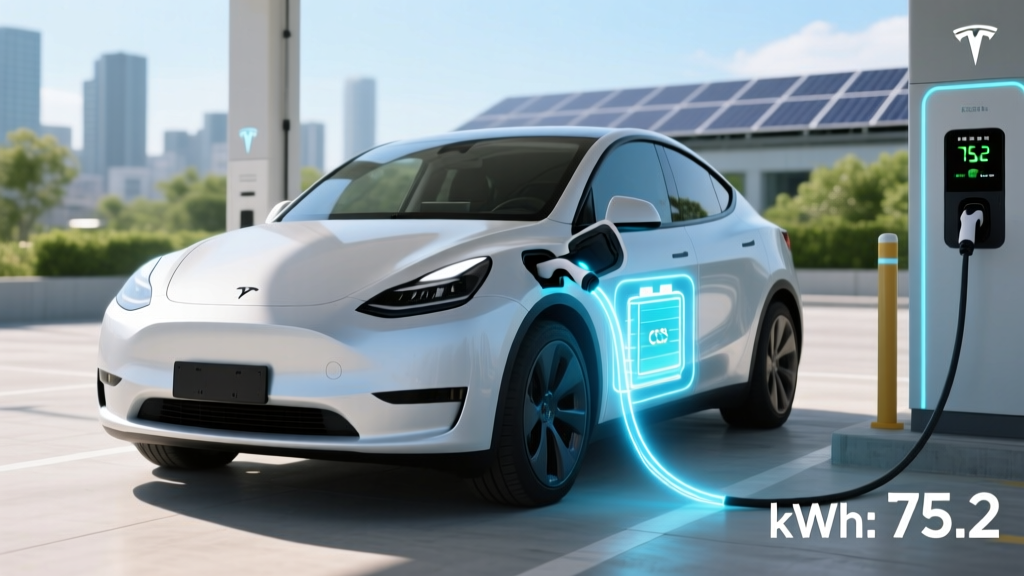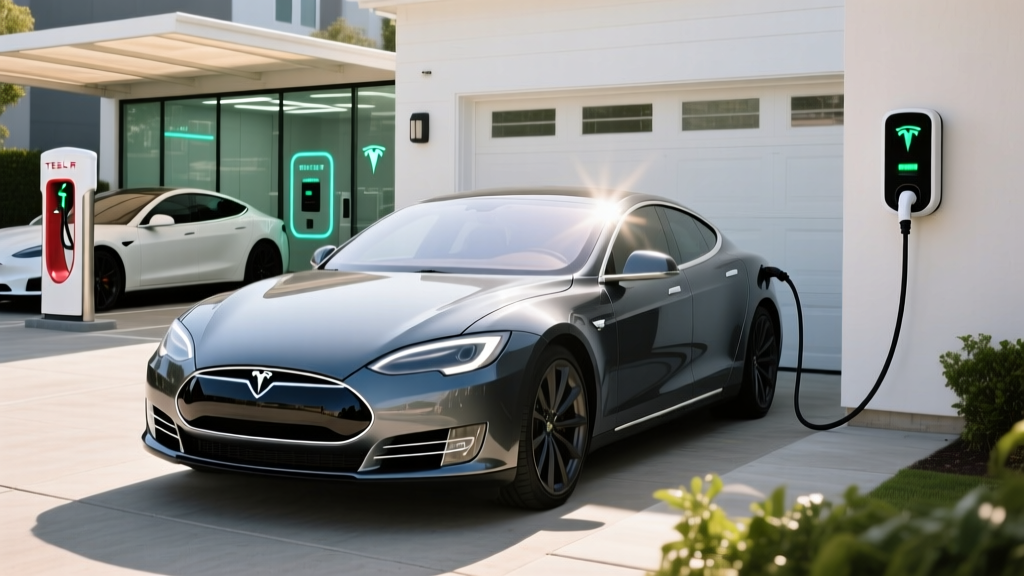
The 2017 Tesla Model S 100D was a landmark vehicle in the EV transition, offering an EPA-estimated 335 miles of range on a single charge — a figure that remains competitive even by 2026 standards. But extracting every mile from its 100 kWh battery pack (approximately 98 kWh usable) depends entirely on how you charge, where you charge, and what equipment you use at home. This guide breaks down the exact charging speeds, installation requirements, connector compatibility, and real-world costs of keeping a Model S 100D powered up in 2026.
EPA estimate: 335 miles | Real-world highway (75 mph, 70°F): ~290–310 miles | Cold-weather highway (30°F): ~240–270 miles
Source: fueleconomy.gov. Actual range varies with speed, temperature, elevation, and HVAC use. Battery degradation on a 2017 model may reduce capacity to 85–92% of original after 8+ years.
Understanding Charging Levels: Level 1, Level 2, and DC Fast Charging
Before plugging in, it is essential to understand the difference between kW (kilowatts), which measures the rate of power delivery — how fast energy flows into your battery — and kWh (kilowatt-hours), which measures total energy capacity — how much the battery holds. Your 2017 Model S 100D has roughly 98 kWh of usable battery capacity. A charger delivering 11.5 kW will take approximately 8.5 hours to fill it from 0 to 100% (minus charging-curve taper at high states of charge).
| Charging Level | Voltage | Max Power (kW) | Miles of Range Added per Hour | Best Use Case |
|---|---|---|---|---|
| Level 1 (Standard 120V) | 120V AC | 1.2–1.4 kW | 3–4 mi/hr | Emergency top-off, overnight trickle |
| Level 2 (240V Home/Public) | 240V AC | 7.2–19.2 kW | 22–58 mi/hr | Daily home charging, workplace, destination |
| DC Fast Charging (Supercharger/CCS) | 400V+ DC | Up to 120 kW (Model S 100D) | ~200–300 mi/hr (peak) | Road trips, rapid top-up |
The 2017 Model S 100D is equipped with dual onboard chargers capable of accepting up to 16.6 kW on Level 2 AC (72 amps at 240V with the High Amperage Charger upgrade; standard dual chargers accept 80 amps/19.2 kW on later builds, but the 2017 100D typically maxes at 72A). On DC fast charging, the 100D peaks around 120 kW at Tesla Superchargers (V2 stalls), tapering significantly above 60% state of charge. A 10–80% session at a V2 Supercharger takes approximately 40–50 minutes. At V3/V4 Superchargers (250–350 kW), the 2017 100D cannot take advantage of the higher peak rate — its battery architecture limits DC intake to roughly 120 kW.
Home Charger Installation: Electrical Requirements and Costs
Most 2017 Model S 100D owners will want a Level 2 home charger to replenish 200+ miles overnight. The most common setup is a 240V/60A dedicated circuit feeding a 48-amp continuous charger (NEC code requires a 20% headroom, so a 48A charger needs a 60A breaker). This delivers approximately 11.5 kW to the vehicle, adding roughly 35 miles of range per hour — enough to fully recharge the 100D overnight.
Electrical Panel Considerations
Before installing, assess your home's electrical panel. A 60A dedicated EV circuit requires available capacity on your main panel. Homes with 100A main service often need a panel upgrade to 200A, which adds significant cost. Homes built after 2000 typically have 200A panels with spare capacity. Your licensed electrician will perform a load calculation per NEC Article 220 to determine if your panel can handle the additional draw.
| Cost Component | Typical Range (USD) | Notes |
|---|---|---|
| Level 2 Charger Equipment | $400–$700 | Wall Connector, ChargePoint, Emporia |
| Electrician Labor (standard install) | $600–$1,500 | Depends on run length from panel to garage |
| Electrical Permit | $50–$250 | Varies by municipality |
| Panel Upgrade (if needed) | $1,500–$3,500 | 100A → 200A service upgrade |
| Total (no panel upgrade) | $1,050–$2,450 | Most homes with adequate panel capacity |
| Total (with panel upgrade) | $2,550–$5,950 | Older homes with 100A service |
For the 2017 Model S 100D specifically, the Tesla Wall Connector is the most seamless option, as it natively uses the NACS (Tesla) connector and can deliver up to 48A (11.5 kW) on a 60A circuit, or up to 80A (19.2 kW) on a 100A circuit if your home's electrical service supports it. At 80A, the 100D's dual onboard chargers can accept up to 16.6–19.2 kW, cutting a full charge to roughly 5.5 hours.
Connector Compatibility: NACS, CCS, and CHAdeMO for the 2017 Model S
The 2017 Model S 100D was built with Tesla's proprietary connector, which in 2024 was formally standardized as NACS (North American Charging Standard). By 2026, NACS has become the dominant connector in North America, adopted by Ford, GM, Rivian, Hyundai, and most major automakers. This means your 2017 Model S is natively compatible with the largest and most reliable charging network in the country — Tesla Superchargers — without any adapter.
| Connector Type | 2017 Model S 100D Compatible? | Adapter Required? | Network Access |
|---|---|---|---|
| NACS (Tesla) | Yes — native | No | Tesla Supercharger, Tesla Destination, most new public chargers |
| CCS1 | Yes — with adapter | Tesla CCS Adapter (~$175) | Electrify America, EVgo, ChargePoint CCS stations |
| CHAdeMO | Yes — with adapter | Tesla CHAdeMO Adapter (discontinued, aftermarket ~$300–$450) | Limited; mostly legacy Nissan/Mitsubishi stations |
| J1772 (Level 2 public) | Yes — with included adapter | Tesla J1772 Adapter (included with car) | Public Level 2 stations, workplaces, hotels |
The Tesla CCS1 Adapter is a critical accessory for any 2017 Model S owner in 2026. It unlocks access to Electrify America, EVgo, and other non-Tesla DC fast chargers, providing redundancy on road trips through areas where Supercharger coverage may have gaps. Note that when using a CCS adapter on a 2017 100D, DC charge speeds are still limited to the car's ~120 kW peak — you will not see the 350 kW that some CCS stations advertise.
Charging Cost Breakdown: Per kWh and Per Mile vs. Gasoline
One of the strongest ownership arguments for the 2017 Model S 100D in 2026 is the cost-per-mile advantage over internal combustion. The 100D achieves an EPA-rated 101 MPGe combined (33 kWh/100 miles). Using that efficiency figure, here is what charging actually costs across different scenarios:
| Charging Scenario | Avg. $/kWh | Cost per 100 Miles | Cost per Mile | Equivalent Gas MPG at $3.50/gal |
|---|---|---|---|---|
| Home — Off-Peak (utility rate) | $0.08–$0.12 | $2.64–$3.96 | $0.026–$0.040 | 88–133 MPG |
| Home — Standard Rate | $0.13–$0.18 | $4.29–$5.94 | $0.043–$0.059 | 59–81 MPG |
| Public Level 2 (ChargePoint, etc.) | $0.20–$0.35 | $6.60–$11.55 | $0.066–$0.116 | 30–53 MPG |
| Tesla Supercharger (V2/V3) | $0.25–$0.40 | $8.25–$13.20 | $0.083–$0.132 | 26–42 MPG |
| Electrify America / CCS DC Fast | $0.35–$0.55 | $11.55–$18.15 | $0.116–$0.182 | 19–30 MPG |
For comparison, a gasoline sedan averaging 28 MPG at $3.50/gallon costs $0.125 per mile in fuel alone. A home-charged Model S 100D on off-peak rates costs roughly $0.03–$0.04 per mile — a 70% savings per mile driven. Even at public DC fast-charger rates, the 100D remains cost-competitive with efficient gas vehicles. Over 15,000 miles per year, home charging saves roughly $1,200–$1,500 annually compared to gasoline.
Recommended Home Charging Equipment for the 2017 Model S 100D
Given the 100D's ability to accept up to 72A (16.6 kW) on Level 2 AC, investing in a high-amperage charger maximizes your overnight replenishment. Below are three recommended options as of 2026:
Tesla Wall Connector (Gen 4)
- Max Output: 48A (11.5 kW) on 60A circuit; up to 80A (19.2 kW) on 100A circuit
- Connector: NACS (native Tesla) — no adapter needed
- Cable Length: 24 ft
- Smart Features: Wi-Fi, OTA updates, Power Sharing (link two units on one circuit), Tesla app integration
- Price: ~$475 (48A model)
- Best For: Tesla-only households seeking seamless integration
Emporia Vue Level 2 Charger
- Max Output: 48A (11.5 kW) on 60A circuit
- Connector: J1772 (use Tesla J1772 adapter) or NACS version available
- Cable Length: 24 ft
- Smart Features: Energy monitoring, scheduling, solar integration, load management
- Price: ~$399
- Best For: Homes with solar panels or those wanting detailed energy tracking
ChargePoint Home Flex
- Max Output: 50A (12 kW) on 60A circuit (configurable down to 16A)
- Connector: J1772 (use Tesla adapter) or NACS pigtail option
- Cable Length: 23 ft
- Smart Features: Wi-Fi, app scheduling, Alexa integration, flexible amperage dip-switch
- Price: ~$549
- Best For: Multi-EV households or renters who may move (portable hardwired/NEMA options)
For the 2017 Model S 100D specifically, the Tesla Wall Connector at 80A on a 100A circuit is the only way to fully exploit the dual onboard chargers. However, a 100A circuit requires a robust electrical panel — most homeowners will opt for a 60A circuit delivering 48A/11.5 kW, which still replenishes roughly 335 miles in about 8.5 hours.
Safety, Electrical Code, and Installation Best Practices
EV charging places a sustained high-amperage load on your home's electrical system — unlike an oven or dryer that cycles on and off, an EV charger may run at full draw for 6–10 hours continuously. This makes proper installation critical.
- Dedicated Circuit: Your Level 2 charger must be on its own dedicated breaker — never shared with other appliances. A 60A breaker for a 48A charger is the standard configuration per NEC 625.
- GFCI Protection: NEC 2020 and later require GFCI (Ground Fault Circuit Interrupter) protection for EV charging outlets. Hardwired chargers (like the Wall Connector) have built-in ground fault protection; NEMA 14-50 receptacle installations require a GFCI breaker, which adds $50–$100 to the electrical cost.
- Outdoor Rating: If your charger is mounted outside or in an exposed carport, ensure it carries a NEMA 4 or IP65 rating. The Tesla Wall Connector and ChargePoint Home Flex are both rated for outdoor use.
- Wire Gauge: A 60A circuit requires 4 AWG copper wire (or 2 AWG aluminum) for runs up to 50 feet. Longer runs may require upsizing to prevent voltage drop. Your electrician will calculate this per NEC Table 310.15.
- Permit and Inspection: Virtually all jurisdictions require an electrical permit for EV charger installation. The inspection ensures proper grounding, breaker sizing, and wire gauge — do not skip this step, as unpermitted work can void homeowner's insurance claims.
Charging Time Examples for the 100 kWh Battery
Below are approximate charging times for the 2017 Model S 100D's ~98 kWh usable battery from 10% to 80% state of charge — the typical road-trip charging window, since charging slows dramatically above 80% to protect battery health:
| Charging Method | Power Delivered | 10–80% Time (approx.) | Notes |
|---|---|---|---|
| 120V Level 1 (Mobile Connector) | 1.2 kW | ~57 hours | Emergency only; adds ~3 mi/hr |
| 240V / 32A (NEMA 14-50) | 7.7 kW | ~8.9 hours | Common dryer-outlet setup |
| 240V / 48A (Wall Connector, 60A circuit) | 11.5 kW | ~5.9 hours | Standard recommended home setup |
| 240V / 72A (Wall Connector, 100A circuit) | 16.6 kW | ~4.1 hours | Requires dual onboard chargers + 100A circuit |
| Tesla V2 Supercharger (DC) | Up to 120 kW (peak) | ~45–50 minutes | Average sustained ~75 kW due to taper |
| Tesla V3/V4 Supercharger (DC) | Limited to ~120 kW by car | ~45–50 minutes | No speed benefit over V2 for this model |
| CCS DC Fast (via adapter) | Up to ~120 kW | ~45–55 minutes | Varies by station output and battery temp |
Charging-curve reality check: The 100D's peak 120 kW DC rate is only sustained between roughly 10–30% SoC. From 30–60%, it tapers to ~80–90 kW. From 60–80%, it drops further to ~40–55 kW. This is why a "10–80% in 45 minutes" figure is much slower than the peak rate alone would suggest. Preconditioning the battery (the car does this automatically when a Supercharger is set as the navigation destination) warms the pack and can improve charge acceptance by 10–15% in cold weather.
Frequently Asked Questions
How much does it cost to install a home EV charger for a 2017 Model S 100D?
A standard Level 2 installation with a 60A dedicated circuit and Tesla Wall Connector typically costs $1,050–$2,450 including equipment, electrician labor, and permit. If your home requires a panel upgrade from 100A to 200A service, add $1,500–$3,500, bringing the total to $2,550–$5,950. Always get 2–3 quotes from licensed electricians, and check whether your utility offers a rebate — many utilities in 2026 offer $250–$1,000 toward EV charger installation.
How fast will each charging level add range to my Model S 100D?
Level 1 (120V) adds roughly 3–4 miles per hour. Level 2 at 48A (11.5 kW) adds approximately 35 miles per hour. DC fast charging at a Tesla Supercharger can add up to 170 miles in 30 minutes at peak rate, though the charging curve taper means a full 10–80% session takes 45–50 minutes.
Which connector and charger is compatible with my 2017 Model S 100D?
Your Model S uses the NACS (Tesla) connector natively. For public Level 2 J1772 stations, use the Tesla J1772 adapter (included with the car). For non-Tesla DC fast chargers (Electrify America, EVgo), you need the Tesla CCS1 Adapter (~$175 from Tesla). The Tesla Wall Connector or any NACS-equipped Level 2 charger works without adapters at home.
How much does charging cost per mile compared to gasoline?
At home on off-peak utility rates ($0.08–$0.12/kWh), the 100D costs approximately $0.03–$0.04 per mile. A comparable gasoline sedan at 28 MPG and $3.50/gallon costs $0.125 per mile. Even at Tesla Supercharger rates ($0.25–$0.40/kWh), the 100D costs $0.08–$0.13 per mile — still competitive with efficient gas cars. Over 15,000 annual miles, home charging saves $1,200–$1,500 versus gasoline.
What electrical upgrades might I need for a Level 2 charger?
If your home has a 200A electrical panel with available breaker slots and capacity (determined by a NEC Article 220 load calculation), you likely need no upgrade — just a new 60A breaker and wire run. If your home has a 100A panel, is already near capacity, or has a long wire run from panel to garage (over 50 feet requiring larger wire gauge), you may need a panel upgrade ($1,500–$3,500) or a sub-panel installation. Homes with older knob-and-tube or aluminum wiring may require additional remediation.
Does battery degradation affect the 2017 Model S 100D range in 2026?
Yes. After 8–9 years and 80,000–120,000 miles, most 100 kWh Tesla packs retain approximately 85–92% of original capacity, based on fleet data from TeslaFi and community tracking. This means a 100D that originally delivered 335 EPA miles may now deliver 285–310 miles at full charge. Tesla's battery warranty covers 8 years/unlimited miles for the 2017 model year, meaning many 100Ds are at or past the warranty boundary. If capacity drops below 70% within the warranty period, Tesla replaces the pack. Out-of-warranty replacement costs range from $12,000–$18,000 depending on pack availability and labor.
Sources: fueleconomy.gov (EPA range and efficiency data), Tesla Home Charging Installation Guide, IRS §30D Clean Vehicle Credit rules. Electrical work should always be performed by a licensed electrician; final specifications depend on your home's specific wiring and local code requirements.