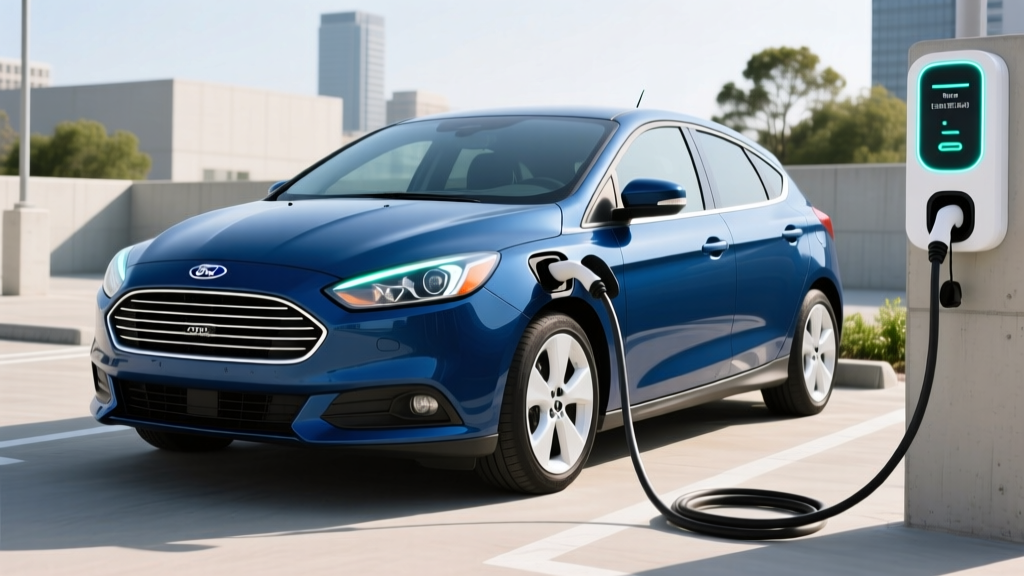
If you're researching the 2017 Ford Focus Electric range and charging logistics, you're likely either considering this used EV or already own one and want to optimize your charging setup. The Focus Electric was Ford's first mass-market battery-electric vehicle, and while it's been discontinued since 2018, thousands remain on the road as affordable used-EV options. This guide covers everything you need to know about its real-world range, charging speeds at every level, home installation costs, and the right equipment to keep it running efficiently in 2026.
2017 Ford Focus Electric: Range, Battery, and Efficiency Specs
The 2017 model year was significant for the Focus Electric because Ford upgraded the battery from the original 23 kWh pack (used in 2012–2016 models) to a 33.5 kWh lithium-ion battery (NMC chemistry). This bumped the EPA-rated range from 76 miles to 115 miles. The motor produces 143 horsepower and 184 lb-ft of torque, with a 0–60 mph time of approximately 9.3 seconds.
| Spec | Value |
|---|---|
| Battery Capacity (usable) | 33.5 kWh (NMC) |
| EPA Range | 115 miles |
| Real-World Range (highway, 70 mph) | ~90–100 miles |
| Real-World Range (cold weather, 30°F) | ~75–85 miles |
| MPGe (combined) | 107 MPGe |
| Energy Consumption | 31 kWh/100 mi |
| Motor Output | 143 hp / 184 lb-ft |
| 0–60 mph | ~9.3 seconds |
| DC Fast Charge Port | CHAdeMO (optional) |
| AC Charge Port | J1772 (Level 1 & 2) |
| Max AC Charge Rate | 6.6 kW |
| Max DC Fast Charge Rate | ~50 kW |
| Battery Warranty (original) | 8 years / 100,000 miles |
Charging Levels Explained: How Fast Can You Recharge the Focus Electric?
Understanding the three charging levels is essential for any EV owner. The critical distinction: kW (kilowatts) measures power — how fast energy flows into the battery. kWh (kilowatt-hours) measures energy — the battery's total capacity. Think of kW as the flow rate of a hose and kWh as the size of the bucket.
| Level | Voltage | Max Power (kW) | Miles of Range Added per Hour | Full Charge Time (0–100%) |
|---|---|---|---|---|
| Level 1 (standard outlet) | 120V | 1.2–1.4 kW | ~4–5 miles/hr | ~24–28 hours |
| Level 2 (home/public AC) | 240V | 6.6 kW | ~22–25 miles/hr | ~5–6 hours |
| DC Fast Charge (CHAdeMO) | 400V+ | ~50 kW | ~150–170 miles/hr (peak) | 10–80% in ~30 min |
Level 1 charging uses a standard 120V household outlet and the portable cordset that came with the car. At 1.2–1.4 kW, it adds roughly 4–5 miles of range per hour. For a 33.5 kWh battery, a full charge takes over 24 hours. This is practical only for overnight top-ups if your daily driving is under 30 miles.
Level 2 charging at 240V is the practical standard for daily home charging. The Focus Electric's onboard charger maxes out at 6.6 kW, meaning even if you plug into a 48-amp charger capable of 11.5 kW, the car will only draw 6.6 kW. At that rate, you'll add about 22–25 miles of range per hour, and a full charge takes 5–6 hours — easily achievable overnight.
DC Fast Charging was available on the 2017 Focus Electric via a CHAdeMO connector (optional on some trims, standard on others). At approximately 50 kW peak, you can charge from 10% to 80% in roughly 30 minutes. However, the charge curve tapers significantly above 80% to protect battery health, so the final 20% can take nearly as long as the first 80%. Note: CHAdeMO infrastructure has been declining in the U.S. as the industry shifts to NACS and CCS1, so plan public fast-charging routes carefully.
Home Charger Installation: Electrical Requirements, Costs, and Upgrades
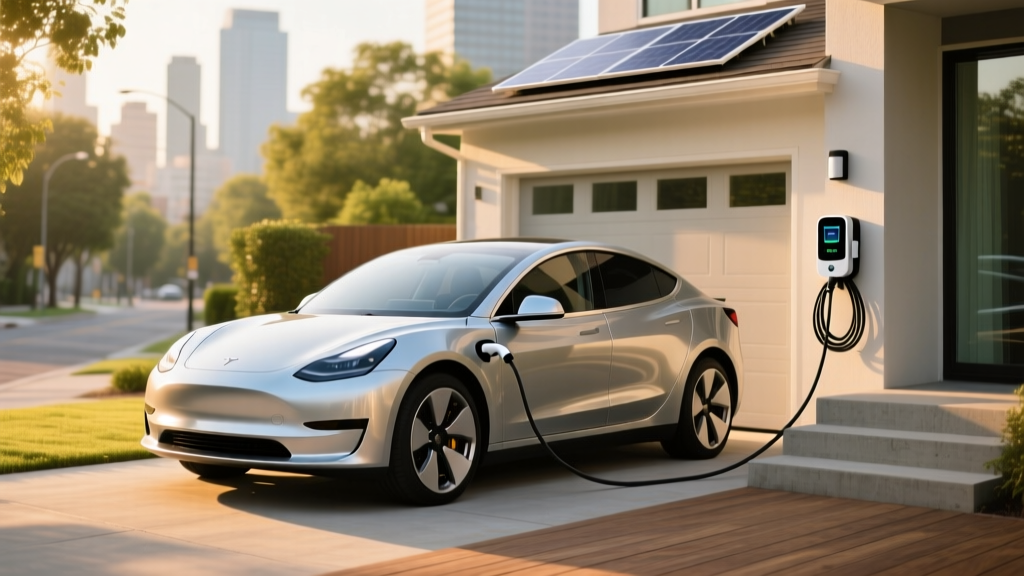
Installing a Level 2 home charger is the single most impactful upgrade for daily EV ownership. Here's what the Focus Electric requires and what you should budget.
Electrical Requirements
The Focus Electric draws up to 6.6 kW on Level 2, which translates to approximately 28 amps at 240V. Best practice is to install a circuit rated for 125% of the continuous load, meaning you need a 40-amp dedicated circuit (or a 50-amp circuit for future-proofing). This requires a 240V outlet (NEMA 14-50 or hardwired connection) run from your electrical panel.
Do You Need a Panel Upgrade?
Many homes built before 2000 have 100-amp electrical panels. Adding a 40-amp EV circuit may push total load close to capacity, especially if you already have electric range, dryer, and HVAC. A licensed electrician will perform a load calculation to determine if your panel can handle the addition. If not, a panel upgrade to 200 amps typically costs $1,500–$3,000 — a significant but one-time investment that also increases your home's resale value.
| Component | Low Estimate | High Estimate | Notes |
|---|---|---|---|
| Level 2 Charger (equipment) | $300 | $700 | 32A–48A smart chargers |
| Electrician labor | $500 | $2,000 | Depends on run length, conduit |
| Electrical permit | $50 | $200 | Varies by municipality |
| Panel upgrade (if needed) | $1,500 | $3,000 | 100A → 200A service |
| Total (no panel upgrade) | $850 | $2,900 | Most homes with 200A panels |
| Total (with panel upgrade) | $2,350 | $5,900 | Older homes with 100A service |
Safety and Code Considerations
- Dedicated circuit: The EV charger must be on its own breaker — never shared with other appliances.
- GFCI protection: The 2023 NEC update requires GFCI protection for all EV charging outlets. Hardwired chargers may have this built in.
- Outdoor rating: If installing outside, ensure the charger carries a NEMA 4 or NEMA 4X rating for weather resistance.
- Permit and inspection: Most jurisdictions require a permit and post-installation inspection. Skipping this can void homeowner's insurance coverage for electrical fires.
- Wire gauge: A 40-amp circuit typically requires 8 AWG copper wire; a 50-amp circuit requires 6 AWG. Your electrician will size appropriately.
Connector Compatibility: CHAdeMO, CCS1, and NACS Explained
The 2017 Ford Focus Electric uses two connectors:
- J1772 for Level 1 and Level 2 AC charging (the universal standard for all non-Tesla EVs in North America)
- CHAdeMO for DC fast charging (a legacy standard being phased out in favor of CCS1 and NACS)
| Connector | Type | Used By | Focus Electric Compatible? |
|---|---|---|---|
| J1772 | AC (Level 1/2) | All non-Tesla EVs | Yes — native |
| NACS (Tesla) | AC + DC | Tesla; Ford, GM, Rivian (2025+) | No — adapter not available for CHAdeMO vehicles |
| CCS1 | DC Fast | Most modern non-Tesla EVs | No — different standard |
| CHAdeMO | DC Fast | Nissan Leaf, older Focus Electric, Mitsubishi | Yes — native (if equipped) |
The CHAdeMO challenge in 2026: As major automakers have adopted NACS (Tesla's connector) and Electrify America has standardized on CCS1, CHAdeMO chargers are becoming scarce. Many newer Electrify America and EVgo stations no longer include CHAdeMO connectors. Before purchasing a used Focus Electric, verify that CHAdeMO fast chargers exist along your common routes. Apps like PlugShare let you filter by connector type. For daily driving within the Focus Electric's range, home Level 2 charging will cover most needs, making DC fast charging less critical.
Charging Cost: How Much Does It Cost to Drive the Focus Electric?
One of the strongest arguments for EV ownership is lower fuel cost per mile. Here's how the Focus Electric stacks up against a comparable gas car, using its real-world consumption of 31 kWh per 100 miles.
| Scenario | Rate | Cost per Mile (Focus Electric) | Cost per Mile (Gas Car, 30 MPG) |
|---|---|---|---|
| Home charging (off-peak, $0.12/kWh) | $0.12/kWh | $0.037 | — |
| Home charging (peak, $0.22/kWh) | $0.22/kWh | $0.068 | — |
| Public Level 2 ($0.35/kWh) | $0.35/kWh | $0.109 | — |
| DC Fast Charge ($0.48/kWh) | $0.48/kWh | $0.149 | — |
| Gasoline ($3.40/gallon, 30 MPG) | $3.40/gal | — | $0.113 |
At home off-peak rates, the Focus Electric costs roughly 3.7 cents per mile to fuel — about one-third the cost of a 30 MPG gas car at $3.40/gallon. Even at peak residential rates, it's competitive. However, frequent DC fast charging at public rates can exceed gas costs, which is why home charging access is the single biggest factor in EV economics.
For a driver covering 12,000 miles per year, home off-peak charging costs approximately $444 annually versus $1,360 for gas — a savings of about $916 per year. Over five years, that's roughly $4,580 in fuel savings, which substantially offsets the used purchase price.
Recommended Home Chargers for the Focus Electric
Since the Focus Electric's onboard charger is limited to 6.6 kW (28 amps), you don't need the most powerful charger on the market. However, installing a 48-amp unit future-proofs your setup for your next EV. Here are three solid options:
Emporia Level 2 Smart Charger
- Power: 48A / 11.5 kW (car will draw 6.6 kW max)
- Connector: J1772
- Cable length: 24 ft
- Smart features: Wi-Fi, app scheduling, energy monitoring, solar integration
- Price: ~$350
- Best for: Budget-conscious buyers who want smart scheduling for off-peak rates
ChargePoint Home Flex
- Power: Configurable 16A–50A / up to 12 kW
- Connector: J1772
- Cable length: 23 ft
- Smart features: Wi-Fi, Alexa integration, app-based amperage adjustment
- Price: ~$550
- Best for: Flexibility — set amperage to match your circuit capacity
Grizzl-E Smart
- Power: 40A / 9.6 kW
- Connector: J1772
- Cable length: 24 ft
- Smart features: OCPP-compatible, works with utility demand-response programs
- Price: ~$450
- Best for: Cold-climate durability (rated to -40°F), outdoor installs
Any of these chargers will fully charge the Focus Electric's 33.5 kWh battery overnight in 5–6 hours. The Grizzl-E is particularly well-suited for outdoor installations in northern climates, while the Emporia offers the best value for smart scheduling to take advantage of time-of-use electricity rates.
Battery Health and Degradation: What to Expect from a 2017 Model
Any used EV buyer should evaluate battery State of Health (SoH). The Focus Electric's NMC battery was liquid-cooled — an advantage over the passively-cooled Nissan Leaf of the same era, which suffered more degradation in hot climates. Ford's original battery warranty covered 8 years or 100,000 miles (10 years/150,000 miles in CARB states like California) against capacity loss below 70%.
By 2026, most 2017 Focus Electric batteries are out of warranty. Real-world degradation data from owner forums suggests most packs retain 85–92% of original capacity after 7–8 years and 60,000–80,000 miles, depending on climate and charging habits. This means a car that originally delivered 115 EPA miles may now deliver 97–106 miles when fully charged.
To check SoH before purchasing, use an OBD-II dongle with an app like LeafSpy (which supports some Ford EVs) or request a battery health report from a Ford dealer. Avoid vehicles with SoH below 80% unless the price reflects a significant discount.
Frequently Asked Questions
How much does it cost to install a home EV charger for the Focus Electric?
Expect $850–$2,900 for a standard installation with a 200-amp panel. If your home has a 100-amp panel and needs an upgrade, the total can reach $2,350–$5,900. Equipment costs $300–$700; the rest is labor, wire, conduit, and permits.
How fast will each charging level add range to the Focus Electric?
Level 1 (120V) adds about 4–5 miles per hour. Level 2 (240V, 6.6 kW) adds about 22–25 miles per hour. DC fast charging (CHAdeMO, ~50 kW) adds roughly 150–170 miles per hour at peak, though this tapers above 80% SoC.
Which connector and charger is compatible with the 2017 Focus Electric?
For AC charging (Level 1 and Level 2), the car uses the J1772 connector, which is standard on all non-Tesla EVs. For DC fast charging, it uses CHAdeMO. It is not compatible with CCS1 or NACS (Tesla) without an adapter, and no reliable CHAdeMO-to-CCS adapter currently exists for the Focus Electric.
How much does charging cost per mile compared to gas?
At home off-peak rates ($0.12/kWh), the Focus Electric costs about 3.7 cents per mile. A comparable 30 MPG gas car at $3.40/gallon costs about 11.3 cents per mile. Home charging saves roughly $916 per year for a 12,000-mile driver.
What electrical upgrades might I need for a Level 2 charger?
You'll need a dedicated 40-amp, 240V circuit. If your electrical panel is 100 amps and already near capacity, you may need a panel upgrade to 200 amps ($1,500–$3,000). A licensed electrician will perform a load calculation to determine this. Homes with 200-amp panels typically need only the new circuit and outlet.
Is the 2017 Ford Focus Electric still a good buy in 2026?
It depends on your needs. With 115 miles of EPA range (less in real-world conditions), it works well as a commuter car for drivers with predictable routes under 80 miles round-trip and reliable home charging. Its affordability on the used market (typically $8,000–$13,000) makes it one of the cheapest ways into EV ownership. However, the declining CHAdeMO network limits road-trip practicality, and the modest range means range planning is essential. If you need more range or fast-charging flexibility, consider a used Chevrolet Bolt EV (238-mile range, CCS1) or a second-generation Nissan Leaf (149–226 miles, CHAdeMO but more widely supported).