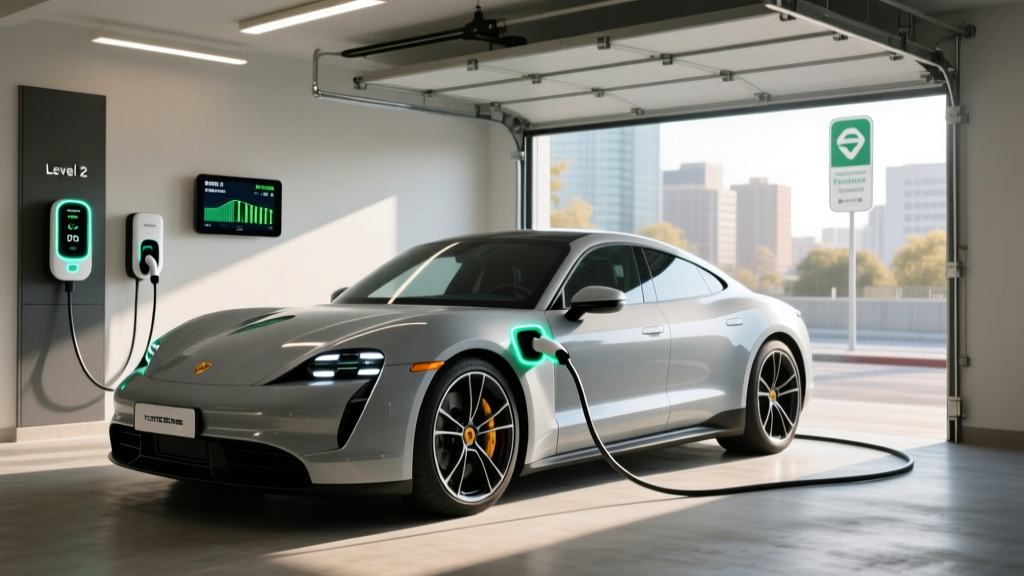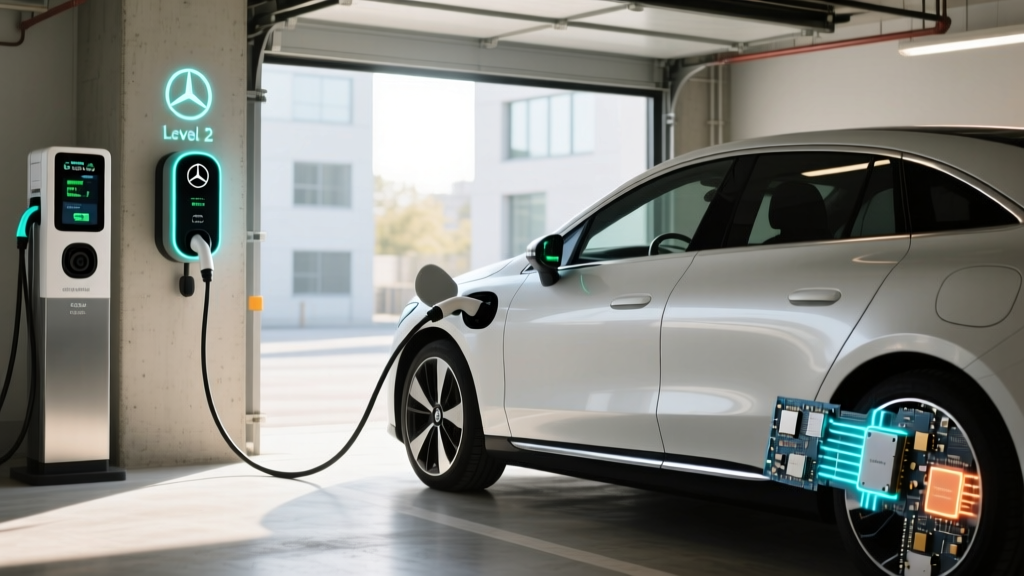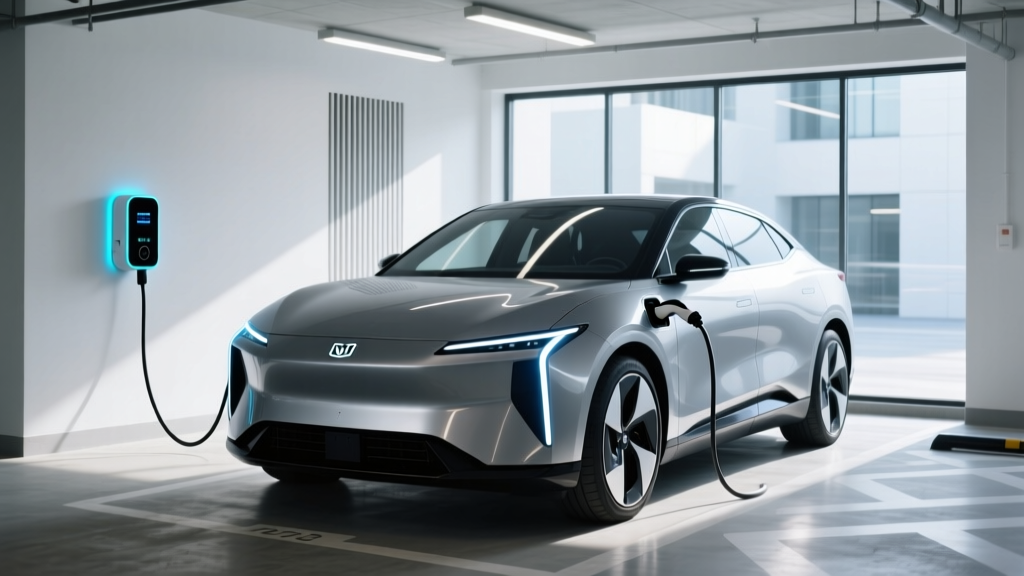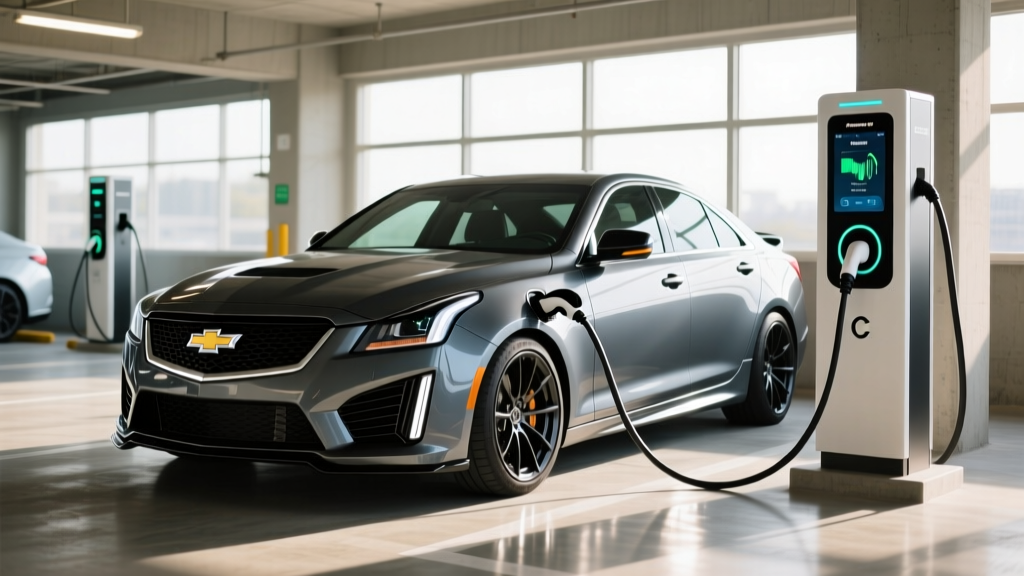
If you're coming from a 2017 Chevy SS supercharged — that 6.2L LSA V8 pushing 640 hp and 14 MPG combined — the jump to an electric vehicle is as much about rewiring your fueling habits as it is about swapping powertrains. The SS demanded premium gas and a nearby station; an EV demands a home charging plan and an understanding of kilowatts. This guide breaks down every charging variable you need to budget for, from panel upgrades to cost-per-mile math, so the transition from supercharged V8 to silent torque feels calculated, not chaotic.
Charging Levels Explained: Speed, Power, and Real-World Range Added
The single most important distinction in EV charging is between kW (kilowatts), which measures the rate of power delivery, and kWh (kilowatt-hours), which measures the total energy stored in your battery. Think of kW as the width of the pipe and kWh as the size of the tank. Every charging conversation below uses these units precisely.
| Level | Voltage | Max Power (kW) | Miles of Range Added per Hour | Typical Use Case |
|---|---|---|---|---|
| Level 1 | 120V AC | 1.4–1.9 kW | 3–5 miles | Overnight top-off, PHEVs, low-mileage drivers |
| Level 2 | 240V AC | 7.2–19.2 kW | 20–60 miles | Home daily charging, workplace, hotels |
| DC Fast Charge | 400–800V DC | 50–350 kW | 150–1,200+ miles (equivalent/hr) | Road trips, highway corridors, 10–80% in 15–30 min |
For a typical 75 kWh battery (like a Tesla Model Y Long Range or Hyundai Ioniq 5), Level 2 at 11.5 kW will refill the pack from empty in roughly 7 hours — perfect for overnight. DC fast charging at a 250 kW stall can take that same battery from 10–80% in about 18–25 minutes, though the charge curve tapers significantly above 80% to protect battery health.
Home Charger Installation: Electrical Requirements, Costs, and Gotchas
The most common question from former ICE owners — especially those in older homes that once had no reason to pull heavy 240V circuits — is: How much does it cost to install a home EV charger? The honest answer spans a wide range depending on your electrical panel's capacity and the distance from panel to garage.
| Cost Component | Low End | High End | Notes |
|---|---|---|---|
| Level 2 EVSE Equipment (hardwired or plug-in) | $350 | $750 | 40A–48A smart chargers; Wi-Fi enabled |
| Electrician Labor (240V/50A circuit run) | $600 | $2,500 | Depends on run length, wall type, conduit |
| Permit & Inspection | $50 | $300 | Varies by municipality; required for code compliance |
| Electrical Panel Upgrade (100A → 200A) | $1,500 | $4,000 | Needed if panel is at or near capacity |
| Total (no panel upgrade) | $1,000 | $3,550 | Most homes with 200A service |
| Total (with panel upgrade) | $2,500 | $7,550 | Older homes, 100A service, or heavy existing loads |
What Electrical Upgrades Might I Need?
A Level 2 charger running at 48 amps requires a dedicated 60-amp circuit (the National Electrical Code requires continuous loads to be derated to 80% of breaker capacity). Your electrician will assess:
- Panel capacity: A 200-amp panel with spare breaker slots is ideal. A 100-amp panel in a home with electric range, dryer, and HVAC may need an upgrade.
- Wire gauge: 6 AWG copper for runs up to ~50 feet; 4 AWG for longer runs to minimize voltage drop.
- GFCI protection: NEC 2020+ requires GFCI breakers for EV receptacles (NEMA 14-50). Hardwired units may bypass this requirement depending on jurisdiction.
- Outdoor rating: If your charger mounts outside, ensure the EVSE is NEMA 4 rated and the connector holster is weather-sealed.
For owners transitioning from a 2017 Chevy SS supercharged — a car that likely lived in a garage with only a standard 120V outlet — budgeting for a full 240V circuit installation is essential. Don't skip the permit: unpermitted electrical work can void home insurance claims and complicate resale.
Connector Compatibility: NACS, CCS1, and CHAdeMO in 2026
The connector landscape has consolidated significantly. Here's which plug fits which EV and whether you'll need an adapter for public charging.
| Connector | Brands Using It (2026 Models) | Home Charger Availability | Public Network Access |
|---|---|---|---|
| NACS (Tesla / North American Charging Standard) | Tesla, Ford, GM, Rivian, Volvo, Polestar, Hyundai, Kia (2025+) | Tesla Wall Connector, Lectron, Emporia | Tesla Supercharger (20,000+ stalls), growing third-party |
| CCS1 (Combined Charging System) | Legacy VW, BMW, Mercedes, Stellantis models; pre-2025 Hyundai/Kia | ChargePoint Home Flex, Emporia, Blink | Electrify America, EVgo, ChargePoint DC |
| CHAdeMO | Nissan Leaf (legacy), Mitsubishi Outlander PHEV | Limited new equipment | Declining availability; some Electrify America stalls |
Adapter needs: If you own a CCS1-equipped EV, a Tesla NACS DC adapter (~$200–$250) unlocks Supercharger access. Ford and GM NACS-native vehicles need a CCS adapter for Electrify America stalls. Always verify adapter compatibility with your specific model year before purchase.
Cost to Charge: Per-Mile Math vs. Your Old V8
The 2017 Chevy SS supercharged with its 6.2L V8 averaged roughly 14 MPG combined on premium fuel. At $4.00/gallon premium, that's $0.286 per mile in fuel alone. Here's how EV charging scenarios compare:
| Charging Scenario | Cost per kWh | Efficiency (kWh/100mi) | Cost per Mile | Annual Fuel Cost (12,000 mi) |
|---|---|---|---|---|
| Home Level 2 (off-peak utility rate) | $0.08–$0.13 | 28 kWh | $0.022–$0.036 | $264–$432 |
| Home Level 2 (standard residential rate) | $0.14–$0.18 | 28 kWh | $0.039–$0.050 | $468–$600 |
| Public Level 2 (network charging) | $0.25–$0.40 | 28 kWh | $0.070–$0.112 | $840–$1,344 |
| DC Fast Charging (road trip / public) | $0.35–$0.55 | 30 kWh* | $0.105–$0.165 | $1,260–$1,980 |
| 2017 Chevy SS Supercharged (premium gas) | $4.00/gal | 14 MPG | $0.286 | $3,432 |
*DC fast charging slightly reduces efficiency due to thermal management overhead and charging losses.
Even in the worst-case scenario (exclusive DC fast charging at $0.55/kWh), an EV costs roughly $0.165/mile — still 42% less than the SS supercharged on premium. Home charging at off-peak rates drops that to under $0.04/mile, an 87% reduction. According to fueleconomy.gov, most current EVs achieve 100–130 MPGe combined, translating to 25–33 kWh per 100 miles depending on weight and aerodynamics.
Equipment Recommendations: Level 2 Chargers Worth Installing
Not all Level 2 chargers are equal. Here are three proven units with exact specs for a 2026 home installation:
Tesla Wall Connector (Gen 4)
- Power Output: Up to 11.5 kW (48A) on a 60A circuit
- Connector: NACS native; J1772 adapter included
- Cable Length: 24 feet
- Smart Features: Wi-Fi, OTA updates, load sharing (pair up to 6 units on one circuit), access control
- Price: ~$475
- Best For: NACS-native vehicles (Tesla, Ford, GM, Rivian); cleanest integration
ChargePoint Home Flex (2nd Gen)
- Power Output: Up to 12 kW (50A) configurable via dip switches
- Connector: J1772 (CCS vehicles) or NACS (selectable at purchase)
- Cable Length: 23 feet
- Smart Features: Wi-Fi, ChargePoint app scheduling, Alexa integration, energy reports
- Price: ~$599
- Best For: Multi-EV households with mixed connector needs
Emporia Vue Level 2 Charger
- Power Output: Up to 11.5 kW (48A)
- Connector: J1772 or NACS options
- Cable Length: 24 feet
- Smart Features: Wi-Fi, solar integration (pairs with Emporia Vue energy monitor), scheduled charging, utility demand-response programs
- Price: ~$399
- Best For: Solar-equipped homes; budget-conscious installs with full smart features
All three units support hardwired installation (preferred for highest amperage and no GFCI breaker requirement) or NEMA 14-50 plug-in configuration. Hardwiring eliminates the ~$80–$150 GFCI breaker cost and is generally more reliable long-term.
Charging Time Examples: What to Expect with Common Battery Sizes
Real-world charging times depend on battery capacity, onboard charger limits (for Level 2), and the DC fast-charge curve. Here are benchmarks for popular 2026 models:
| Vehicle | Battery (kWh usable) | Level 2 at 11.5 kW (0–100%) | DC Fast 10–80% (peak kW) |
|---|---|---|---|
| Tesla Model Y Long Range | 75 kWh (NMC) | ~7 hours | ~22 min (250 kW peak) |
| Hyundai Ioniq 5 (Long Range) | 77.4 kWh (NMC) | ~7.5 hours | ~18 min (240 kW peak, 800V) |
| Ford F-150 Lightning (Extended) | 131 kWh (NMC) | ~12 hours | ~41 min (150 kW peak) |
| Chevrolet Equinox EV (3RS) | 85 kWh (NMC) | ~8 hours | ~30 min (150 kW peak) |
| BMW i4 eDrive40 | 81.5 kWh (NMC) | ~8 hours | ~31 min (200 kW peak) |
For daily driving, most owners charge between 20–80% State of Charge to minimize battery stress. A Level 2 home charger replenishes a typical 30-mile daily commute in under an hour — plug in when you get home, and the car is ready before you wake up.
Safety, Code, and Long-Term Ownership Considerations
Earn trust from your local inspector and your home insurance provider by following these non-negotiables:
- Dedicated circuit: Your Level 2 charger must be on its own breaker — never shared with a dryer, range, or HVAC compressor.
- Permit and inspection: Required in virtually every US jurisdiction. An unpermitted install can trigger insurance denial on electrical fire claims.
- Load management: If your panel is near capacity but you want to avoid a full upgrade, consider a smart load-management device (e.g., Emporia Smart Load Center or Tesla Wall Connector load-sharing) that dynamically throttles the charger when other heavy loads activate.
- Utility rebates: Many utilities offer $250–$1,000 rebates for Level 2 installations, particularly if you agree to time-of-use rates or demand-response programs. Check with your local provider before purchasing equipment.
- Federal tax credit: The IRS Residential Clean Energy Credit covers 30% of home EV charger equipment and installation costs, up to $1,000, through 2032. This applies to both the EVSE hardware and the electrician's labor for the dedicated circuit.
From 640 HP Supercharged to 300+ Mile EV: Making the Switch Pay Off
The 2017 Chevy SS supercharged was a performance bargain — a Holden Commodore in a Chevy badge with a blown LSA making 640 hp and 590 lb-ft. But at 14 MPG, $4,000+ annual fuel bills, and rising maintenance on a 9-year-old supercharged V8, the economics favor a switch.
A 2026 EV like the Hyundai Ioniq 5 N delivers 641 hp (N Grin Boost), 0–60 in 3.4 seconds, and 260 miles of EPA range — with fuel costs under $600/year on home charging. The performance translates; the fuel bill doesn't.
Choose DC fast charging as primary if: You lack home charging access (apartment/condo), your commute is under 40 miles with frequent public charger access, or you accept $0.12–$0.17/mile as a trade-off for convenience.
Invest in a panel upgrade if: Your home has 100A service, you plan to add solar or a heat pump alongside the EV, or you want to future-proof for a second EV charger.
Frequently Asked Questions
How much does it cost to install a home EV charger?
Expect $1,000–$3,550 for a standard Level 2 installation in a home with a 200-amp panel. If your panel needs upgrading from 100A to 200A, add $1,500–$4,000. The IRS Residential Clean Energy Credit covers 30% of costs up to $1,000, reducing your net expense.
How fast will each charging level add range?
Level 1 (120V) adds 3–5 miles per hour. Level 2 (240V, 48A) adds 30–45 miles per hour depending on vehicle efficiency. DC fast charging at 150–250 kW can add 150–300 miles in a 20–25 minute session (10–80%), though the charge curve tapers above 80%.
Which connector/charger is compatible with my EV?
As of 2026, most new EVs from Ford, GM, Rivian, Hyundai, Kia, and Tesla use NACS. Legacy CCS1 vehicles (pre-2025 VW, BMW, Mercedes) still use CCS. Check your vehicle's charge port — if it's a single large oval, it's likely NACS; if it has two extra DC pins below a J1772 inlet, it's CCS1. CHAdeMO is limited to older Nissan Leafs and Mitsubishi PHEVs.
How much does charging cost per mile vs. gas?
Home Level 2 charging at off-peak rates costs roughly $0.03–$0.05 per mile. DC fast charging costs $0.11–$0.17 per mile. By comparison, a 2017 Chevy SS supercharged at 14 MPG on $4.00 premium costs $0.29 per mile. Even the most expensive public EV charging is 40–60% cheaper per mile than a supercharged V8.
What electrical upgrades might I need?
A dedicated 60-amp, 240-volt circuit is standard for a 48-amp Level 2 charger. If your panel is 100 amps or has no spare breaker slots, you'll need a panel upgrade ($1,500–$4,000). Older homes may also need service lateral upgrades from the utility. A licensed electrician can assess this during a load calculation — always get this done before purchasing equipment.
Is a smart charger worth the extra cost?
Yes, for most owners. Smart features like scheduled charging (to hit off-peak utility rates), energy monitoring, and remote start/stop add $50–$150 to the equipment cost but can save $100–$300 annually through optimized time-of-use scheduling. Utilities increasingly require smart chargers for demand-response rebate programs.