The 2016 Kia Soul EV: Range Reality a Decade Later
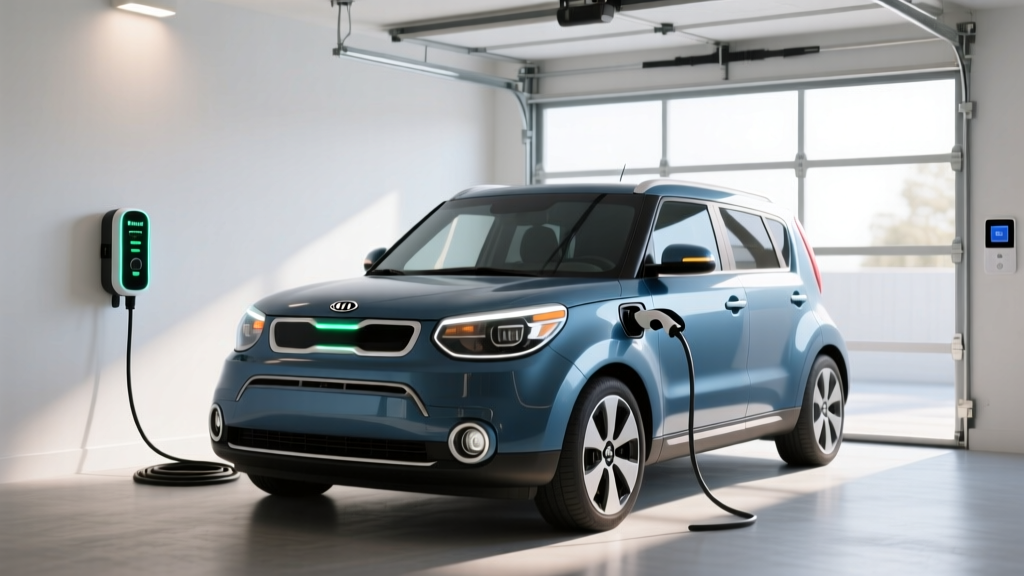
The 2016 Kia Soul EV was one of the first affordable, practical electric crossovers sold in the United States. With its boxy silhouette, surprisingly usable interior, and zero tailpipe emissions, it attracted urban drivers looking for an EV that didn't look like a science experiment. But the number that defines ownership of this first-generation Soul EV is its EPA-estimated range of 93 miles from a 27 kWh usable battery pack (30 kWh total capacity).
In 2026, that 93-mile EPA figure demands context. Real-world range for a 2016 Soul EV on the used market will almost certainly be lower due to battery degradation over ten years of charge cycles. Expect 70–85 miles of usable range in mixed driving from a well-maintained example, and potentially 55–65 miles in cold weather (below 40°F) when the resistive cabin heater draws heavily from the pack. Highway driving at 70+ mph will also compress range toward the lower end of that window.
EPA sticker: 93 miles | Real-world mixed (2026, moderate degradation): ~70–85 miles | Cold-weather/highway: ~55–65 miles | Battery: 30 kWh total / 27 kWh usable, NMC chemistry
If you own or are considering buying a 2016 Soul EV, understanding how to charge it efficiently — at home and in public — is essential to making the car livable. This guide covers every charging level, connector compatibility, home installation costs, equipment picks, and the per-mile economics of keeping this EV on the road.
Charging Levels Explained: How Fast Will Each Add Range?
EV charging is measured in kW (kilowatts), which represents the rate of power delivery — think of it as how fast electrons flow into the battery. The battery's capacity is measured in kWh (kilowatt-hours), which represents the total energy stored — analogous to gallons in a gas tank. Confusing these two is the most common EV literacy mistake. A 7.2 kW charger delivering power for one hour adds 7.2 kWh of energy to the battery.
The 2016 Kia Soul EV accepts a maximum of 6.6 kW on Level 2 AC charging and up to approximately 50 kW on DC fast charging via its CHAdeMO port. Here's how each level translates into real range added:
| Level | Power (kW) | Voltage / Amps | Miles of Range Added per Hour | Full Charge Time (0–100%) |
|---|---|---|---|---|
| Level 1 (120V outlet) | 1.2–1.4 kW | 120V / 12A | ~4–5 miles/hr | ~22–27 hours |
| Level 2 (240V home/public) | Up to 6.6 kW | 240V / 28A (car-limited) | ~22–26 miles/hr | ~4.5–5 hours |
| DC Fast (CHAdeMO) | Up to ~50 kW | 200–450V DC | ~120–150 miles/hr (peak) | ~30–40 min (10–80%) |
Level 1 charging uses a standard 120V household outlet and the portable cord that came with the car. At roughly 4–5 miles of range per hour, a full charge takes over 22 hours. This is practical only as a trickle-charge supplement — for example, plugging in overnight to recover 40–50 miles, which covers most daily commutes.
Level 2 charging at 240V is the backbone of practical EV ownership. The 2016 Soul EV's onboard charger is rated at 6.6 kW, meaning even if you connect it to a 48A or 80A Level 2 station, the car will only draw 6.6 kW maximum (approximately 28 amps at 240V). A 40A circuit is more than sufficient for this vehicle.
DC fast charging bypasses the onboard charger entirely and delivers DC current directly to the battery. The 2016 Soul EV uses the CHAdeMO connector for DC fast charging and can accept up to approximately 50 kW. On a 50 kW station, expect a 10–80% charge in roughly 30–35 minutes. Note that charge speed tapers significantly above 80% State of Charge (SoC) to protect battery health — the final 20% can take as long as the first 60%.
Home Charger Installation: Costs, Electrical Requirements & Panel Upgrades
Installing a dedicated Level 2 home charger is the single biggest quality-of-life upgrade for any EV owner, and it's especially impactful for a shorter-range EV like the 2016 Soul EV where daily top-ups keep you within your range envelope.
Electrical Requirements
For the 2016 Soul EV's 6.6 kW onboard charger, you need a 240V circuit rated at a minimum of 30 amps (the National Electrical Code requires circuits to be rated at 125% of the continuous load, so a 24A continuous draw needs a 30A circuit). Most homeowners install a 40A or 50A circuit to accommodate future EVs or higher-power chargers. The circuit must be dedicated — no sharing with other appliances.
If your home has a 100-amp electrical panel (common in homes built before the 1990s), adding a 40A EV circuit may require a panel upgrade to 200 amps. This is one of the most significant and often overlooked costs of home EV charging. A licensed electrician will perform a load calculation to determine whether your existing panel can handle the additional draw.
Installation Cost Breakdown
| Component | Typical Cost Range | Notes |
|---|---|---|
| Level 2 Charger (Equipment) | $300–$700 | Smart Wi-Fi chargers; hardwired or NEMA 14-50 plug |
| Electrician Labor | $500–$2,000 | Depends on run length, conduit, wall penetration |
| Electrical Permit | $50–$200 | Required in most jurisdictions; varies by city/county |
| Panel Upgrade (if needed) | $1,500–$3,500 | 100A → 200A upgrade; not always required |
| Total (no panel upgrade) | $850–$2,900 | Average straightforward install: ~$1,200–$1,800 |
| Total (with panel upgrade) | $2,350–$6,400 | Older homes with 100A service |
Factors that push installation toward the higher end include long wire runs from the panel to the garage (50+ feet), the need to trench conduit for detached garages, or upgrading service from the utility. Homes with a 200A panel and a garage adjacent to the electrical panel often see installs in the $1,000–$1,500 range.
Safety & Code Considerations
- Dedicated circuit: NEC requires a dedicated breaker for EV charging equipment — no shared circuits.
- GFCI protection: The 2020 NEC (and later editions adopted by most states by 2026) requires GFCI protection for outdoor receptacles used for EV charging. Hardwired chargers with built-in ground-fault protection satisfy this requirement.
- Outdoor rating: If your charger is installed outdoors (carport, driveway), ensure the unit carries a NEMA 4 or IP65 weather-resistance rating.
- Connector holster & cable management: Keep the cable off the ground to prevent wear and tripping hazards.
- Permit & inspection: Skipping the permit risks insurance claim denials and code violations. Most utilities also require proof of permitted installation to qualify for off-peak EV rate plans.
Connector Compatibility: CHAdeMO, CCS1 & NACS in 2026
The 2016 Kia Soul EV was built before the industry consolidated around the CCS1 and NACS (Tesla) standards. This matters significantly for public DC fast charging in 2026.
| Connector Type | Used For | 2016 Soul EV Compatibility |
|---|---|---|
| J1772 | Level 1 & Level 2 AC charging | ✅ Native — car's AC port is J1772 |
| CHAdeMO | DC fast charging | ✅ Native — car's DC port is CHAdeMO |
| CCS1 (Combo) | DC fast charging (most modern EVs) | ❌ Not compatible — adapter required* |
| NACS (Tesla) | DC fast charging (Tesla Superchargers) | ❌ Not compatible — adapter required* |
The CHAdeMO challenge in 2026: The CHAdeMO standard, once common on Nissan Leafs, Kia Soul EVs, and Mitsubishi Outlander PHEVs, has been largely phased out of new public charging infrastructure. Most new DC fast charging stations deployed by Electrify America, EVgo, and independent operators use CCS1 or NACS connectors. However, many legacy CHAdeMO stations remain operational, particularly in urban areas and along corridors built out between 2014–2019.
Adapter options: As of 2026, CHAdeMO-to-CCS1 adapters exist but are expensive ($400–$700) and not all support full 50 kW throughput. CHAdeMO-to-NACS adapters for Tesla Supercharger access are in limited availability and typically require enrollment in specific adapter programs. For most 2016 Soul EV owners, the practical approach is to identify CHAdeMO-equipped stations along your regular routes using apps like PlugShare or the Alternative Fuels Data Center station locator, and rely primarily on home Level 2 charging for daily needs.
Cost to Charge: Per-Mile Economics vs Gasoline
One of the strongest arguments for keeping a 2016 Soul EV on the road is the low per-mile energy cost. The Soul EV averages approximately 31 kWh per 100 miles (or roughly 3.2 miles/kWh) according to fueleconomy.gov. Here's how that translates into real dollars:
| Scenario | Rate | Cost per 100 Miles | Cost per Mile |
|---|---|---|---|
| Home charging (off-peak utility rate) | $0.10/kWh | $3.10 | $0.031 |
| Home charging (national avg residential) | $0.17/kWh | $5.27 | $0.053 |
| Public Level 2 (network pricing) | $0.30/kWh | $9.30 | $0.093 |
| DC fast charging (CHAdeMO station) | $0.40/kWh | $12.40 | $0.124 |
| Gasoline equivalent (25 MPG avg, $3.40/gal) | $3.40/gal | $13.60 | $0.136 |
At home on an off-peak rate plan, the 2016 Soul EV costs roughly 3 cents per mile to fuel — about one-quarter the cost of a comparable gasoline vehicle. Even at public DC fast charging rates, the Soul EV is competitive with or cheaper than gasoline on a per-mile basis.
Utility EV rate plans: Many utilities in 2026 offer time-of-use (TOU) rate plans specifically for EV owners, with off-peak rates between $0.07–$0.12/kWh for overnight charging (typically 11 PM – 7 AM). Enrolling in one of these plans is one of the highest-impact financial decisions a Soul EV owner can make. Check with your local utility or your state's public utility commission for available EV rate schedules.
Recommended Home Level 2 Chargers for the 2016 Soul EV
Since the 2016 Soul EV's onboard charger maxes out at 6.6 kW (28A at 240V), you don't need an ultra-high-power station. However, investing in a 40A or 48A charger future-proofs your installation for your next EV. Here are three strong options:
Emporia Vue Level 2 Smart Charger
Power Output: Up to 48A (11.5 kW on 240V) — Soul EV will draw 28A / 6.6 kW max
Connector: J1772 (native fit for Soul EV)
Cable Length: 24 feet
Smart Features: Wi-Fi, scheduling, energy monitoring, utility TOU integration, load management
Price: ~$399
Best for: Budget-conscious owners who want smart scheduling to optimize off-peak charging costs
ChargePoint Home Flex
Power Output: Up to 50A (12 kW on 240V) — configurable to match your circuit
Connector: J1772 (native fit)
Cable Length: 23 feet
Smart Features: Wi-Fi, app-based scheduling, Alexa integration, detailed session history
Price: ~$549
Best for: Reliable mid-range option with strong app ecosystem and broad utility compatibility
Tesla Universal Wall Connector (with J1772 adapter)
Power Output: Up to 48A (11.5 kW on 240V)
Connector: NACS native; includes J1772 adapter in box for non-Tesla EVs
Cable Length: 24 feet
Smart Features: Wi-Fi, over-the-air updates, Power Sharing for multi-charger setups, load management
Price: ~$599
Best for: Households planning to add a Tesla/NACS vehicle alongside the Soul EV — one charger serves both
All three chargers support hardwired installation (preferred for highest reliability and code compliance) or NEMA 14-50 plug connection. For the 2016 Soul EV, any of these on a 40A circuit will deliver the car's maximum 6.6 kW charge rate with headroom for future vehicles.
Charging Time Examples: What to Expect in Practice
With the 2016 Soul EV's 27 kWh usable battery, charging sessions are relatively short compared to modern long-range EVs with 75–100 kWh packs. Here are realistic time estimates:
- Level 1 (120V, 1.4 kW): 0% to 100% in approximately 22–27 hours. Practical only for overnight top-ups recovering 35–50 miles.
- Level 2 (240V, 6.6 kW): 0% to 100% in approximately 4.5–5 hours. A typical daily top-up from 30% to 80% takes about 2 hours.
- DC Fast (CHAdeMO, 50 kW): 10% to 80% in approximately 30–35 minutes. Charge rate tapers sharply above 80%, with 80–100% taking an additional 20–30 minutes.
Charge curve reality: The 50 kW peak rate on the Soul EV's CHAdeMO port is sustained only between roughly 10–50% State of Charge. Above 50%, the rate begins tapering, dropping to approximately 25–30 kW by 70% SoC and below 15 kW past 85%. This is normal lithium-ion battery management — the battery management system (BMS) reduces current to prevent heat damage and lithium plating. For daily driving, charging to 80% on DC fast and topping off the rest at home on Level 2 is the most time-efficient and battery-friendly approach.
Frequently Asked Questions
How much does it cost to install a home EV charger for a 2016 Kia Soul EV?
A straightforward Level 2 installation with an existing 200A panel typically costs $850–$2,900 (equipment + electrician + permit). If your home needs a panel upgrade from 100A to 200A, expect $2,350–$6,400 total. Get at least two quotes from licensed electricians and confirm they pull a permit.
How fast will each charging level add range to the 2016 Soul EV?
Level 1 (120V) adds about 4–5 miles per hour. Level 2 (240V at 6.6 kW) adds about 22–26 miles per hour. DC fast charging on CHAdeMO at 50 kW can add 120–150 miles per hour at peak, though the small 27 kWh battery means a 10–80% session takes only about 30–35 minutes.
Which connector and charger is compatible with my 2016 Kia Soul EV?
For Level 1 and Level 2 AC charging, the 2016 Soul EV uses the J1772 connector — this is the universal standard and works with virtually every home charger and public Level 2 station. For DC fast charging, the car uses CHAdeMO, which is increasingly rare at new public stations. CCS1 and NACS (Tesla) are not natively compatible and require expensive adapters.
How much does charging cost per mile compared to gas?
At the national average residential electricity rate of ~$0.17/kWh, the 2016 Soul EV costs approximately $0.053 per mile to charge at home — compared to roughly $0.136 per mile for a 25 MPG gasoline vehicle at $3.40/gallon. On off-peak utility rates ($0.10/kWh), the cost drops to about $0.031 per mile, roughly one-quarter the cost of gasoline.
What electrical upgrades might I need for home charging?
If your home has a 200A electrical panel with available capacity, you likely only need a dedicated 40A 240V circuit — no panel upgrade required. Homes with 100A panels, older wiring, or no available breaker slots may need a panel upgrade ($1,500–$3,500) or a load-management device that throttles the charger when other high-draw appliances are running. A licensed electrician's load calculation is the definitive answer.
Is the 2016 Kia Soul EV battery covered under warranty in 2026?
Kia's original EV battery warranty was 10 years/100,000 miles (whichever comes first) for capacity retention below 70%. For a 2016 model, this warranty window has expired or is expiring in 2026 depending on the original in-service date. Check your specific vehicle's warranty status with a Kia dealer using the VIN. Replacement battery packs for the first-generation Soul EV, if available, typically cost $5,000–$9,000 including labor through Kia's authorized service network.
Does the 2016 Soul EV qualify for any tax credits in 2026?
The federal §30D new EV tax credit does not apply to used vehicle purchases in the traditional sense, but the used clean vehicle credit (up to $4,000 or 30% of the sale price, whichever is less) may apply if you purchase this vehicle from a dealer in 2026. Eligibility requires the sale price to be $25,000 or less, buyer income below $75,000 (single) / $150,000 (joint), and purchase from a licensed dealer. Consult the IRS used clean vehicle credit page and a tax professional for your specific situation.
For official EPA range and efficiency data on the 2016 Kia Soul EV, visit fueleconomy.gov. For public charging station locations including CHAdeMO availability, use the DOE Alternative Fuels Data Center.