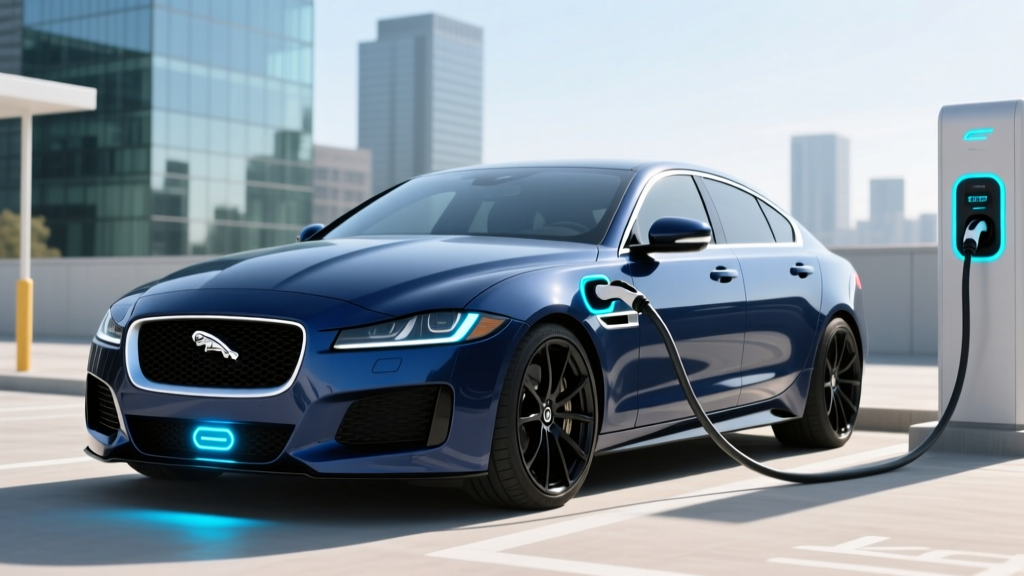
Why an EV-Swapped 2016 Jaguar XF Supercharged Needs a Charging Strategy
The 2016 Jaguar XF Supercharged left the factory with a 5.0-liter V8 producing 340 hp (or 380 hp in the S variant), a ZF 8-speed automatic, and an EPA-rated 18/27 mpg. A growing niche of restomod shops and DIY builders are pulling that AJ133 V8 and replacing it with a Tesla Large Drive Unit or Cascadia Motion stack, a 60–85 kWh battery pack, and a modern CCS or NACS charge port. The result: 350+ hp of instant torque in a 3,800-lb aluminum chassis that handles like the XF always should have.
But a successful EV swap doesn't end at the drivetrain. Charging infrastructure — home Level 2, public DC fast charging, and connector choice — determines whether the car is a weekend toy or a daily driver. This guide breaks down exactly what you need to charge a converted 2016 Jaguar XF Supercharged, with real numbers for costs, speeds, and electrical requirements.
Battery: 60–85 kWh (common swap packs)
Charge port: CCS1 or NACS (builder's choice)
Onboard charger: 6.6–11.5 kW AC
DC fast charge: 50–150 kW peak (pack-dependent)
Charging Levels Explained: Speeds in kW and Miles Per Hour
Before choosing equipment, you need to understand the three charging tiers and what each delivers. Remember: kW (kilowatts) is power — the rate of energy flow. kWh (kilowatt-hours) is energy — the battery's capacity. A 75 kWh battery charged at 7.5 kW takes roughly 10 hours from 0–100%.
| Level | Voltage / Amps | Power (kW) | Miles Added/Hour | Best For |
|---|---|---|---|---|
| Level 1 | 120V / 12A | 1.4 kW | 3–5 mi/hr | Overnight top-up, emergency |
| Level 2 (Home) | 240V / 32–48A | 7.7–11.5 kW | 25–44 mi/hr | Daily home charging |
| DC Fast Charge | 300–500V DC | 50–350 kW | 150–800+ mi/hr | Road trips, rapid top-up |
For an EV-swapped XF with an estimated 3.2–3.5 mi/kWh efficiency (similar to a Tesla Model S or Porsche Taycan), Level 2 at 11.5 kW adds roughly 37–40 miles of range per hour. A 75 kWh pack from 10–80% SoC at a 50 kW DC charger takes approximately 60–75 minutes, depending on the pack's charge curve and thermal management.
Home Charger Installation: Electrical Requirements and Costs
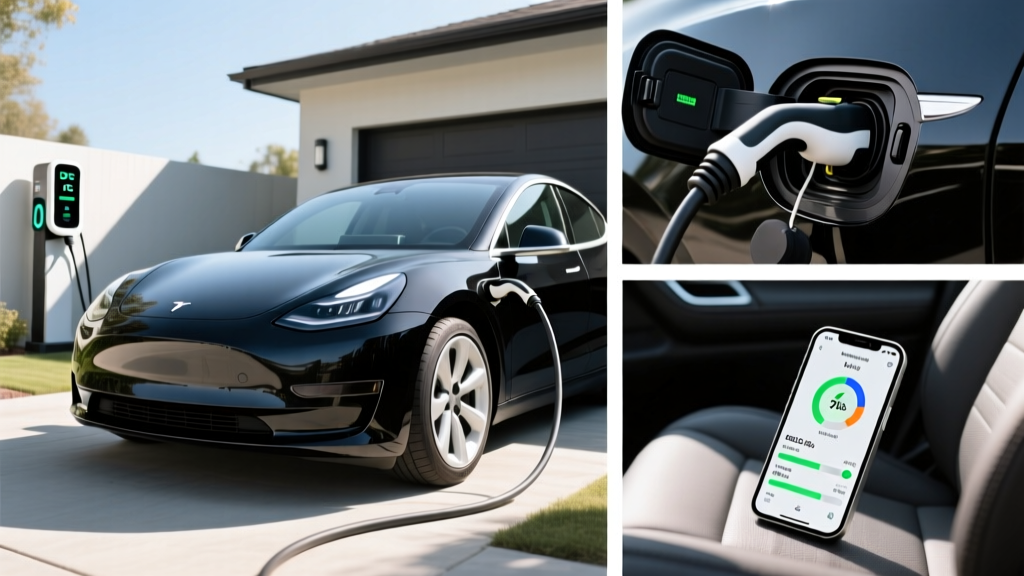
A Level 2 home charger is the backbone of daily EV ownership. For an EV-swapped XF with an 11.5 kW onboard charger, you want a 48-amp (11.5 kW) or 40-amp (9.6 kW) Level 2 unit on a dedicated 240V circuit.
Electrical Requirements
- Circuit: Dedicated 50A or 60A breaker (for 40A or 48A chargers respectively)
- Wire: 6 AWG copper (50A) or 4 AWG copper (60A) in conduit
- Panel capacity: Minimum 200A main service recommended; a 100A panel may require a panel upgrade to 200A ($1,500–$3,500)
- GFCI protection: NEC 2023+ requires GFCI for EV outlets; hardwired chargers have internal GFCI
- Permit: Required in most jurisdictions; typically $50–$200
| Component | Low Estimate | High Estimate | Notes |
|---|---|---|---|
| Level 2 Charger (40–48A) | $400 | $750 | Emporia, ChargePoint, Wallbox |
| Electrician Labor | $500 | $2,000 | Depends on panel-to-garage distance |
| Materials (wire, conduit, breaker) | $150 | $500 | Longer runs = higher cost |
| Permit & Inspection | $50 | $200 | Varies by municipality |
| Panel Upgrade (if needed) | $1,500 | $3,500 | 100A → 200A service upgrade |
| Total (no panel upgrade) | $1,100 | $3,450 | |
| Total (with panel upgrade) | $2,600 | $6,950 |
Homes built before 1990 frequently have 100A panels that lack spare breaker slots. If your swap build lives in an older garage, budget for the panel upgrade. Some utilities offer rebates of $200–$500 for Level 2 installations — check with your local provider.
Connector Compatibility: NACS, CCS1, and Adapters
Your EV-swapped XF's charge port depends entirely on what the builder installed. Most conversion shops in 2026 default to either NACS (the Tesla-standard connector now adopted by nearly all OEMs) or CCS1 (the legacy standard). Here's what each gives you access to:
| Connector | Networks Accessible | Adapter Needed? | Max DC kW |
|---|---|---|---|
| NACS (Tesla) | Tesla Supercharger, Electrify America (NACS stalls), EVgo (NACS) | CCS→NACS adapter (~$200) for legacy CCS stations | 250 kW (V3 Supercharger) |
| CCS1 | Electrify America, EVgo, ChargePoint DC, Ionity (EU) | NACS→CCS adapter (~$250) for Tesla Superchargers | 350 kW (EA Hyper-Fast) |
| CHAdeMO | Limited (legacy Nissan stations) | Rare adapters; not recommended for swaps | 62.5 kW |
Recommendation for swap builders: Install a NACS charge port. As of 2026, the Tesla Supercharger network has over 30,000 stalls in North America, offering the most reliable DC fast-charging experience. A CCS-to-NACS adapter in the trunk covers the remaining Electrify America and EVgo stations.
Cost to Charge: Home vs. Public vs. Gas Comparison
The 2016 Jaguar XF Supercharged with its 5.0L V8 averaged roughly 20 mpg combined. At $3.50/gallon (2026 national average for premium), that's $0.175 per mile in fuel alone. An EV-swapped XF consuming 3.3 mi/kWh (30.3 kWh/100mi) costs dramatically less:
| Charging Scenario | $/kWh | Cost Per Mile | Annual Cost (12,000 mi) |
|---|---|---|---|
| Home (off-peak utility rate) | $0.11 | $0.033 | $396 |
| Home (standard rate) | $0.16 | $0.048 | $576 |
| Public Level 2 (ChargePoint, etc.) | $0.25 | $0.076 | $912 |
| DC Fast Charge (Electrify America) | $0.48 | $0.145 | $1,740 |
| Gas (2016 XF V8, 20 mpg, $3.50/gal) | — | $0.175 | $2,100 |
Even relying entirely on DC fast charging, the EV-swapped XF saves $360/year over the original V8. Charge 80%+ at home on off-peak rates and you're looking at $1,700 in annual fuel savings. Over five years, that's $8,500 — enough to offset a significant portion of the swap cost.
Equipment Recommendations: Level 2 Chargers for Your Swap
Here are three Level 2 chargers well-suited to a converted XF, selected for reliability, smart features, and compatibility:
Emporia Vue EV Charger (48A)
- Power: 11.5 kW (48A / 240V)
- Connector: NACS (J3400) or J1772
- Cable length: 24 ft
- Smart features: Wi-Fi, energy monitoring, solar integration, scheduling
- Price: ~$400
- Best for: Budget-conscious builders who want energy data
ChargePoint Home Flex (50A)
- Power: 12 kW (50A / 240V, configurable 16–50A)
- Connector: NACS or J1772
- Cable length: 23 ft
- Smart features: Wi-Fi, Alexa, app scheduling, amperage adjustment
- Price: ~$550
- Best for: Flexible amperage if panel capacity is tight
Wallbox Pulsar Plus (48A)
- Power: 11.5 kW (48A / 240V)
- Connector: NACS or J1772
- Cable length: 25 ft
- Smart features: Wi-Fi + Bluetooth, Power Sharing (dual units), Eco-Smart solar
- Price: ~$650
- Best for: Two-car garages or solar-integrated homes
All three units are hardwired (preferred for 48A+ to avoid NEMA 14-50 receptacle overheating concerns) and carry NEMA 4 outdoor ratings for garage or exterior mounting. If your swap uses a CCS1 port, select the J1772 connector variant and use a J1772-to-CCS adapter for AC charging, or specify NACS and carry a CCS adapter for DC.
Charging Time Examples: 60 kWh, 75 kWh, and 85 kWh Swap Packs
Swap battery sizes vary by builder and budget. Here are realistic 10–80% charge times for three common pack sizes, assuming an average 3.3 mi/kWh efficiency (roughly 198–280 miles of usable range):
| Pack Size | Usable Range (est.) | Level 2 @ 11.5 kW (10–80%) | DC @ 50 kW (10–80%) | DC @ 150 kW (10–80%) |
|---|---|---|---|---|
| 60 kWh | ~198 mi | ~3.7 hours | ~50 min | ~22 min* |
| 75 kWh | ~248 mi | ~4.6 hours | ~63 min | ~28 min* |
| 85 kWh | ~280 mi | ~5.2 hours | ~72 min | ~32 min* |
*150 kW times assume the pack supports that charge rate with active thermal management. Many DIY swaps use air-cooled packs limited to 50–75 kW DC — check your builder's specs.
Safety and Code Considerations for Home EV Charging
NEC Article 625 governs EV charging installations. Key requirements for your swapped XF's home charger:
- Dedicated circuit: The Level 2 charger must be on its own breaker — no shared circuits with dryers, welders, or HVAC.
- GFCI protection: NEC 2023 (625.54) requires personnel protection. Hardwired units integrate GFCI internally; receptacle-plugged units need a GFCI breaker.
- Outdoor rating: If mounted outside, the charger must be NEMA 4 (rain/splash rated). All recommended units above meet this.
- Cable management: Retractors or hooks prevent tripping hazards and cable damage. Avoid running cables across driveways.
- Ventilation: Not required for modern sealed chargers, but the installation area should be free of combustible materials within 3 feet.
- Disconnect: A readily accessible disconnect (the breaker qualifies) is required within sight of the charger.
Always hire a licensed electrician familiar with NEC 625. Permits and inspections protect your home insurance coverage — unpermitted EV charger installs can void claims in the event of an electrical fire.
Frequently Asked Questions
How much does it cost to install a home EV charger?
Expect $1,100–$3,450 for a standard installation (equipment, electrician, wire, permit) if your panel has capacity. If your home needs a 100A-to-200A panel upgrade, add $1,500–$3,500, bringing the total to $2,600–$6,950. Get three quotes from licensed electricians and ask specifically about their NEC 625 experience.
How fast will each charging level add range?
For an EV-swapped XF at ~3.3 mi/kWh: Level 1 (1.4 kW) adds 3–5 miles per hour. Level 2 at 11.5 kW adds ~37–40 miles per hour. DC fast charging at 50 kW adds ~165 miles per hour (sustained), while 150 kW can add 400+ miles per hour at peak — though charge-curve taper reduces sustained rates significantly above 60% SoC.
Which connector/charger is compatible with my EV swap?
This depends on what your conversion builder installed. If the car has a NACS port, you can use Tesla Superchargers natively and CCS stations with an adapter. If it has CCS1, you access Electrify America and EVgo directly, and need a NACS-to-CCS adapter for Superchargers. Confirm your port type with your builder before purchasing home equipment.
How much does charging cost per mile vs gas?
Home charging at $0.11–$0.16/kWh costs $0.03–$0.05 per mile. The original 2016 XF Supercharged V8 at 20 mpg on $3.50 premium costs $0.175 per mile. That's a 70–80% reduction in fuel cost per mile when charging at home. Even exclusive DC fast charging at $0.48/kWh ($0.145/mi) saves ~17% over gasoline.
What electrical upgrades might I need?
The most common upgrade is a panel replacement from 100A to 200A service ($1,500–$3,500), needed in older homes that lack breaker space or total amperage headroom. You may also need a new meter socket, utility service drop upgrade, or a sub-panel in a detached garage ($800–$2,000). A load calculation by your electrician determines whether your existing panel can support a 50–60A EV circuit alongside existing loads.