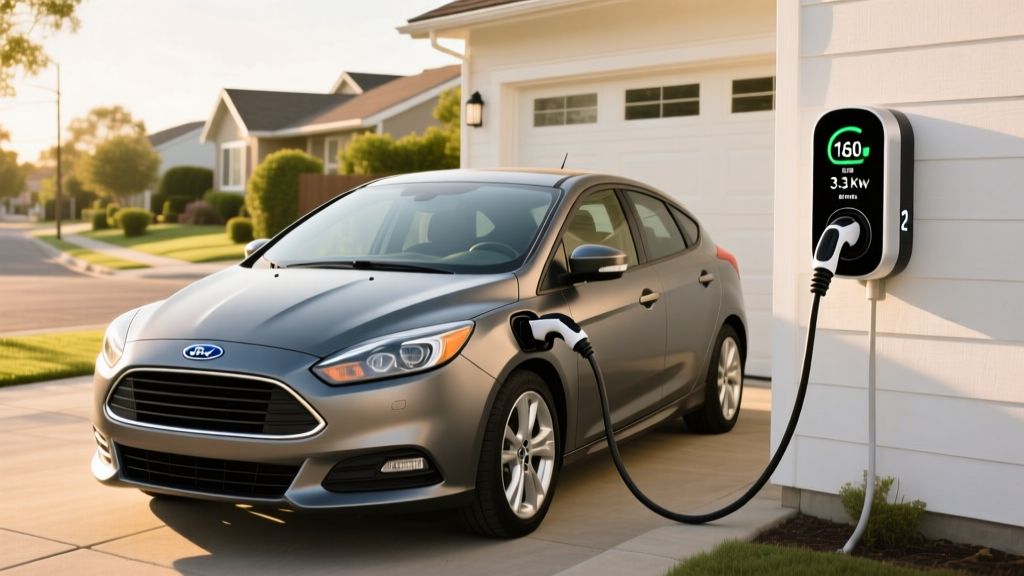
The 2016 Ford Focus Electric was Ford's first mass-market battery-electric vehicle, built on the global Focus platform and sold in limited volumes before being discontinued. If you own one today, are considering buying one on the used market, or simply need to understand what charging infrastructure this older EV requires, this guide breaks down everything — from the EPA range sticker to the electrical work needed in your garage.
Because the Focus Electric has a relatively small battery by modern standards, charging it is straightforward and inexpensive. But the connector standards, home electrical requirements, and cost-per-mile math are the same principles that apply to any EV — making this a practical case study in early-EV ownership.
2016 Ford Focus EV Range: EPA vs. Real World
The 2016 Ford Focus Electric carries a 23 kWh usable lithium-ion battery (NMC chemistry, liquid-cooled) and is rated by the EPA at 76 miles of range with a combined efficiency of 105 MPGe (roughly 32 kWh/100 miles). That's the window-sticker number — here's what to actually expect:
- EPA Combined: 76 miles
- Mild weather, city/suburban driving: 70–80 miles (regen braking helps in stop-and-go)
- Highway (65–75 mph sustained): 60–68 miles (aerodynamic drag dominates at speed)
- Cold weather (below 35°F): 50–60 miles (cabin heating and battery resistance reduce usable capacity by 20–35%)
- With battery degradation (8+ years old): Expect 85–92% of original capacity, so roughly 65–70 miles EPA-equivalent when new-equivalent is 76
Source: fueleconomy.gov
The Focus Electric's liquid-cooled battery pack has held up better than the passive-cooled Nissan LEAF of the same era, but any 8-to-10-year-old lithium-ion pack will show some degradation. Ford's original battery warranty was 8 years/100,000 miles with a capacity-retention threshold — most 2016 models are now past that coverage window, so a pre-purchase battery health check (via an OBD-II reader or dealer scan tool reporting State of Health) is essential.
Charging Levels Explained: How Fast Can You Add Range?
EV charging is measured in kW (kilowatts), which is the rate of power delivery — think of it like the flow rate of a hose. The battery capacity is measured in kWh (kilowatt-hours), which is the total energy stored — think of it as the size of the bucket. The 2016 Focus Electric has a 23 kWh bucket; here's how fast each hose fills it.
| Charging Level | Voltage / Amperage | Power (kW) | Miles of Range Added per Hour | Full Charge Time (0–100%) |
|---|---|---|---|---|
| Level 1 (standard outlet) | 120V / 12A | ~1.4 kW | ~4 miles/hr | ~17–19 hours |
| Level 2 (home/public AC) | 240V / 30–32A | 6.6 kW (Focus EV onboard charger max) | ~22 miles/hr | ~3.5–4 hours |
| DC Fast Charging | CHAdeMO connector | Up to 50 kW | ~150+ miles/hr (theoretical) | 10–80% in ~30 min |
Critical detail: The 2016 Focus Electric's onboard AC charger is rated at 6.6 kW. Even if you plug into a 48-amp Level 2 station capable of delivering 11.5 kW, the car will only accept 6.6 kW. This is a hard ceiling set by the car's internal hardware, not the charger.
For DC fast charging, the 2016 model uses the CHAdeMO connector standard and can accept up to roughly 50 kW. At that rate, a 10–80% charge takes approximately 30 minutes. However, charge speed tapers significantly above 80% State of Charge (SoC) as the battery management system protects cell longevity — expect the final 20% to take nearly as long as the first 80%.
Home Charger Installation: Electrical Requirements and Costs
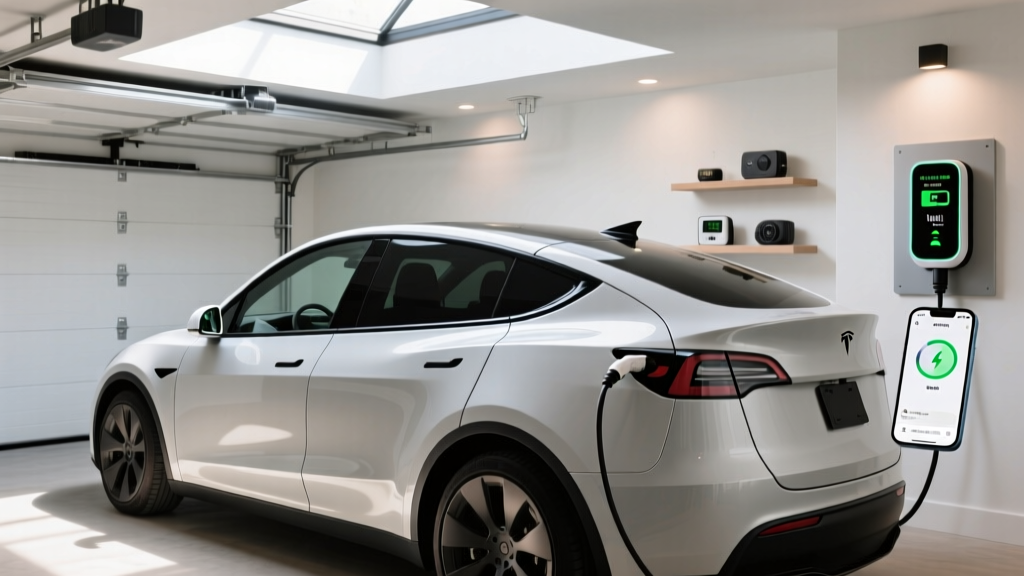
For daily charging of a 23 kWh battery, a Level 2 home charger is the practical choice. Level 1 (120V) would require nearly a full day to refill the pack from empty — fine for topping off, but not for regular use. Here's what a Level 2 install actually involves.
Electrical Requirements for Level 2
- Circuit: Dedicated 40-amp, 240V circuit (breaker rated at 125% of continuous load = a 32A charger needs a 40A breaker)
- Wire: 8 AWG copper (or 6 AWG for longer runs over 50 feet)
- Outlet vs. hardwired: NEMA 14-50 receptacle (allows charger portability) or hardwired junction box (preferred by some electricians for reliability and code compliance in certain jurisdictions)
- Panel capacity: Your main electrical panel must have spare amperage headroom. A typical 100-amp panel in an older home may be near capacity already — adding a 40A circuit could require a panel upgrade to 200 amps
Installation Cost Breakdown
| Component | Typical Cost Range | Notes |
|---|---|---|
| Level 2 EV charger (hardware) | $300 – $700 | 32A–40A smart chargers; see equipment picks below |
| Electrician labor (standard install) | $500 – $1,500 | Varies by run length from panel to garage, wall type, conduit needs |
| Electrical permit | $50 – $200 | Required in most jurisdictions; ensures code compliance |
| Panel upgrade (if needed) | $1,500 – $3,500 | 100A → 200A upgrade; common in pre-2000 homes |
| GFCI breaker (if required by code) | $50 – $100 | NEC 2020+ requires GFCI on 14-50 receptacles in garages |
| Total (no panel upgrade) | $850 – $2,500 | Most straightforward garage installs |
| Total (with panel upgrade) | $2,350 – $6,300 | Older homes with 100A service |
Panel upgrade gotcha: This is the single biggest surprise cost for EV buyers in older homes. Before purchasing any charger, have a licensed electrician perform a load calculation on your panel. If you're already running central AC, an electric dryer, and an electric range on a 100A panel, a 40A EV circuit may push you over the safe limit.
Safety and Code Considerations
- Dedicated circuit: Never share the EV charger circuit with other appliances. EV charging is a continuous load (3+ hours), which has specific NEC derating requirements.
- GFCI protection: The 2020 and 2023 National Electrical Code require ground-fault protection for 240V receptacles in garages. Some EV chargers have built-in GFCI, which can cause nuisance tripping with a GFCI breaker — consult your electrician on the best approach.
- Outdoor rating: If your charger will be mounted outside, ensure the unit carries a NEMA 4 (weatherproof) rating. Most quality chargers are rated for outdoor use, but the connector holster should shield the plug from rain and debris.
- WiFi/smart features: Smart chargers allow scheduling (to charge during off-peak utility rates), energy monitoring, and remote start/stop — worthwhile for cost optimization.
Connector Compatibility: CHAdeMO, CCS1, and NACS
The 2016 Ford Focus Electric uses two connectors:
- AC charging (Level 1 & Level 2): J1772 — the universal North American AC connector. Every non-Tesla EV sold in the US through 2024 uses this. Tesla Mobile Connectors and Wall Connectors now include a J1772 adapter, and aftermarket J1772-to-NACS adapters are widely available.
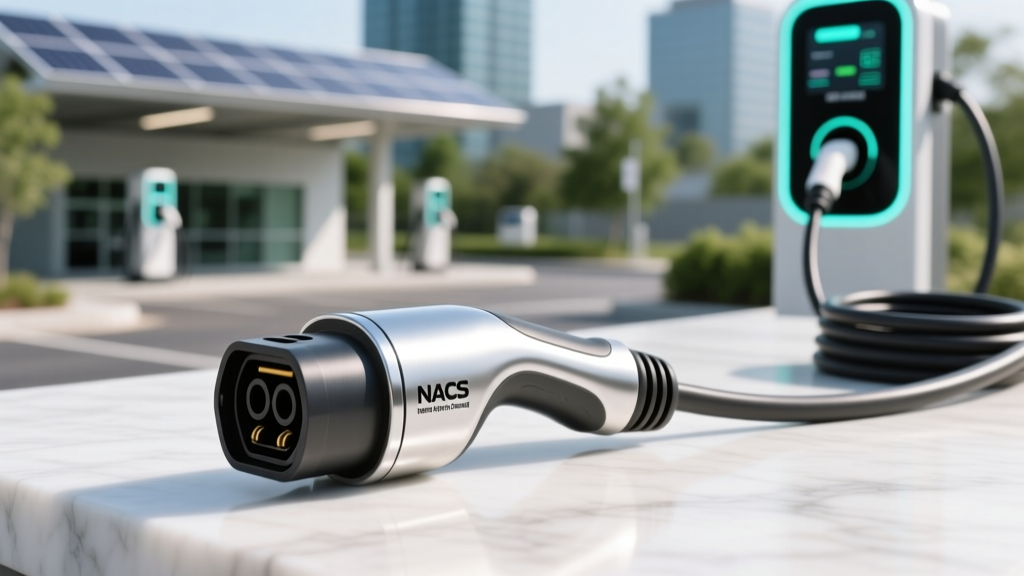
- DC fast charging: CHAdeMO — this is the critical limitation. The Focus Electric predates Ford's adoption of CCS1, and CHAdeMO infrastructure is declining rapidly in the US as CCS1 and NACS (Tesla's standard) dominate.
| Connector | Used On | 2016 Focus EV Compatible? | Adapter Available? |
|---|---|---|---|
| J1772 (AC) | All non-Tesla EVs (Level 1 & 2) | Yes — native | N/A |
| CHAdeMO (DC) | Nissan LEAF, Mitsubishi, older Focus EV | Yes — native | No CCS-to-CHAdeMO adapter exists for DC |
| CCS1 (DC) | Ford Mustang Mach-E, F-150 Lightning, most modern EVs | No | No practical adapter for DC fast charging |
| NACS / Tesla (DC) | All Tesla vehicles; most new EVs from 2025+ | No | No adapter available for CHAdeMO vehicles |
What this means practically: You can charge at any Level 2 public station (J1772 is universal), but DC fast charging options are increasingly limited to CHAdeMO-equipped stations — which are becoming rare. Plan road trips carefully and rely on apps like PlugShare to filter for CHAdeMO availability. For daily driving within the Focus Electric's 76-mile range, home Level 2 charging will cover nearly all needs.
Charging Cost: Per-Mile Math vs. Gas
One of the strongest arguments for keeping a Focus Electric on the road is fuel cost. Here's how the numbers break down across different charging scenarios, using the car's real-world efficiency of approximately 32 kWh per 100 miles (0.32 kWh/mile).
| Scenario | Electricity Rate ($/kWh) | Cost per Full Charge (23 kWh) | Cost per Mile | Equivalent Gas Price (at 28 MPG) |
|---|---|---|---|---|
| Home off-peak (time-of-use rate) | $0.09 | $2.07 | $0.029 | $0.81/gallon |
| Home standard rate (national avg) | $0.16 | $3.68 | $0.051 | $1.43/gallon |
| Public Level 2 (ChargePoint, EVgo) | $0.30 | $6.90 | $0.096 | $2.69/gallon |
| DC fast charging (CHAdeMO, Electrify America) | $0.45 | $10.35 | $0.144 | $4.03/gallon |
At home on a standard rate, you're paying the equivalent of $1.43 per gallon. Even at public DC fast chargers, the cost per mile undercuts most gasoline vehicles. The Focus Electric's small battery makes full charges remarkably cheap — under $4 at most residential rates.
Utility tip: Many utilities offer time-of-use (TOU) plans that drop rates to $0.07–$0.10/kWh overnight (typically 10 PM – 6 AM). A smart charger with scheduling lets you automatically charge during these windows, cutting your fuel cost to under 3 cents per mile.
Recommended Level 2 Chargers for the Focus Electric
Since the Focus Electric maxes out at 6.6 kW onboard charging, you don't need a 48-amp charger — a 32-amp unit (7.7 kW deliverable) is more than sufficient and places less demand on your electrical panel (requiring only a 40A circuit vs. a 60A circuit for higher-power units).
Emporia Level 2 Smart Charger
- Power output: 48A max (11.5 kW) — Focus EV will draw 32A / 6.6 kW
- Connector: J1772 (native for Focus EV)
- Cable length: 24 feet
- Smart features: WiFi, app scheduling, energy monitoring, solar integration
- Price: ~$399
- Best for: Budget-conscious buyers who want smart scheduling for TOU rates
ChargePoint Home Flex
- Power output: Configurable 16A–50A (up to 12 kW) — set to 32A for Focus EV
- Connector: J1772
- Cable length: 23 feet
- Smart features: WiFi, Alexa integration, detailed app analytics, flexible amperage dip-switch
- Price: ~$549
- Best for: Future-proofing — adjustable amperage works with any EV you buy next
Grizzl-E Smart (United Chargers)
- Power output: 40A (9.6 kW)
- Connector: J1772
- Cable length: 24 feet
- Smart features: OCPP-compatible, app control, robust aluminum enclosure
- Price: ~$449
- Best for: Outdoor installs and cold-climate durability (rated to -40°F)
All three chargers use the J1772 connector native to the Focus Electric and deliver more than enough power for its 6.6 kW onboard limit. The ChargePoint Home Flex is our top pick for versatility — its dip-switch amperage configuration means you can dial it to match any circuit, from a 20A outlet in a rental to a 60A hardwired run in a new build.
Charging Time Examples: What to Expect with a 23 kWh Battery
The Focus Electric's small battery is actually an advantage for charging time — it fills up far faster than a 75+ kWh pack in a long-range SUV. Here are practical scenarios:
- Daily top-up (40 miles driven, ~13 kWh used): Level 2 at 6.6 kW refills in approximately 2 hours
- Near-empty to full (0–100%): Level 2 at 6.6 kW takes approximately 3.5 hours
- DC fast charge (10–80%): ~50 kW CHAdeMO station delivers approximately 30 minutes — but remember, CHAdeMO stations are increasingly scarce
- Level 1 overnight (12 hours on 120V): Adds roughly 48 miles — enough to refill ~63% of the battery overnight
For context, a modern long-range EV with an 85 kWh battery requires 12+ hours on Level 2 to fill from empty. The Focus Electric's compact battery makes even modest charging infrastructure effective.
Ownership Practicalities for a 2016 Focus Electric in 2026
If you're buying or keeping a 2016 Focus Electric today, here are the ownership realities beyond charging:
- Battery health: Request a State of Health (SoH) reading. Packs retaining above 90% capacity are common in liquid-cooled Fords, but individual history matters (frequent DC fast charging and deep discharges accelerate degradation).
- Tax credits: The federal §30D new-vehicle credit does not apply to used EV purchases of this age. However, the used EV credit (IRC §25E) offers up to $4,000 (30% of sale price, capped at $4,000) for qualified used EVs sold for $25,000 or less through a licensed dealer, subject to buyer income limits. A 2016 Focus Electric typically sells well under this cap. Verify current eligibility at irs.gov.
- Insurance: Generally affordable for a compact EV of this age; shop quotes as EV-specific policies vary by carrier.
- Maintenance: Minimal — no oil changes, no transmission fluid, regenerative braking extends pad life. Budget for cabin air filter, brake fluid flush (every 2–3 years), tire rotation, and eventual 12V battery replacement.
- CHAdeMO decline: Factor in limited DC fast charging access when planning trips beyond the car's range. Networks like Electrify America have largely standardized on CCS1 and NACS.
Frequently Asked Questions
How much does it cost to install a home EV charger?
A standard Level 2 home charger installation (40A circuit, 240V, no panel upgrade) typically costs $850 to $2,500 including the charger hardware ($300–$700), electrician labor ($500–$1,500), and permit ($50–$200). If your home has a 100-amp electrical panel that needs upgrading to 200 amps, add $1,500–$3,500, bringing the total to $2,350–$6,300. Always get a load calculation from a licensed electrician before committing.
How fast will each charging level add range to the Focus Electric?
Level 1 (120V) adds roughly 4 miles of range per hour. Level 2 (240V, 6.6 kW — the car's maximum) adds approximately 22 miles per hour. DC fast charging on CHAdeMO at 50 kW can theoretically add 150+ miles per hour, but the small 23 kWh battery means you'll hit 80% in about 30 minutes and the curve tapers sharply after that.
Which connector and charger is compatible with my 2016 Focus Electric?
For AC charging (Level 1 and Level 2), the Focus Electric uses the J1772 connector — the universal North American standard. Any J1772 Level 2 home charger or public station will work. For DC fast charging, it uses CHAdeMO, which is becoming less common. There is no practical adapter to convert CCS1 or NACS DC fast charging to CHAdeMO.
How much does charging cost per mile vs. gas?
Charging at home on a national average rate ($0.16/kWh), the Focus Electric costs approximately $0.05 per mile — equivalent to paying $1.43 per gallon of gas in a 28 MPG vehicle. On off-peak utility rates ($0.09/kWh), it drops to under 3 cents per mile. Public DC fast charging ($0.45/kWh) raises the cost to about 14 cents per mile, still competitive with gas at current prices.
What electrical upgrades might I need for a Level 2 charger?
The most common upgrade is a panel capacity increase from 100A to 200A in older homes — this costs $1,500–$3,500. You'll also need a dedicated 40-amp, 240V circuit with 8 AWG wire and either a NEMA 14-50 outlet or hardwired connection. Homes built after 2000 with 200A panels usually have sufficient headroom. A GFCI breaker may be required by code for receptacle installations in garages.
Is the 2016 Focus Electric still practical as a daily driver?
Yes — for the right use case. If your daily commute is under 40 miles round-trip and you have access to Level 2 home charging, the 76-mile EPA range (60–70 real-world) is sufficient. The low running costs, minimal maintenance, and cheap charging make it an economical second car or urban commuter. The main limitation is declining CHAdeMO DC fast charging infrastructure, which restricts road-trip flexibility.