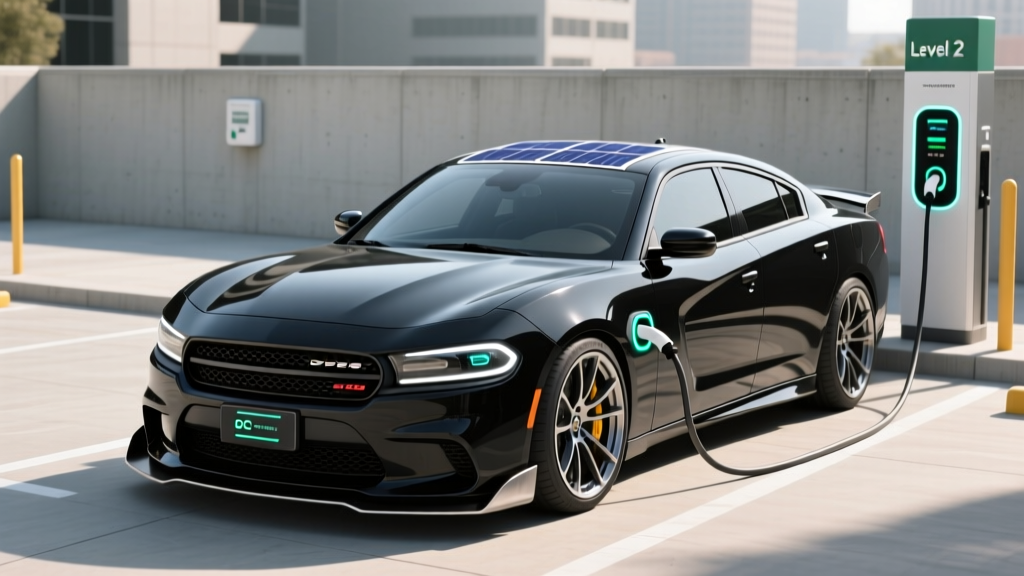
If you're exploring the keyword "2016 Dodge Charger" in an EV context, you've likely encountered one of two scenarios: either you're researching an aftermarket EV conversion of the popular 2016 Dodge Charger sedan, or you've seen the term used loosely in EV forums and search results. The 2016 Dodge Charger was never produced as a factory electric vehicle — it shipped with either a 3.6L V6 or various HEMI V8 engines. However, the growing EV-conversion community has increasingly targeted iconic American sedans and muscle cars as donor vehicles, and the Charger's spacious engine bay and robust chassis make it a candidate for custom electrification.
This guide addresses the charging reality for anyone operating a 2016 Dodge Charger EV conversion — or any similar aftermarket electric build — covering charging levels, home installation requirements, connector compatibility, per-mile costs, and the equipment you'll need to keep a converted EV running reliably in 2026.
Charging Levels Explained: Speeds, Power, and Range Added Per Hour
Every EV — factory or converted — charges across one of three levels. Your 2016 Dodge Charger conversion's onboard charger specification (measured in kW) determines how fast it can accept AC power at home. DC fast charging bypasses the onboard charger entirely, sending DC current straight to the battery management system (BMS).
| Level | Voltage | Power (kW) | Miles of Range Added per Hour | Typical Use Case | 10–80% Time (75 kWh pack) |
|---|---|---|---|---|---|
| Level 1 | 120V AC | 1.0–1.4 kW | 3–5 mi/hr | Overnight / emergency top-off | ~54 hours (not practical) |
| Level 2 | 240V AC | 3.3–19.2 kW | 12–75 mi/hr | Home daily charging, workplace | ~4–10 hours (depends on onboard charger) |
| DC Fast Charge | 400–800V DC | 50–350 kW | 150–1,200 mi/hr | Road trips, rapid top-ups | ~18–45 minutes (varies by peak kW and curve) |
Real-world conversion note: Most 2016 Dodge Charger EV conversions use battery packs in the 50–100 kWh range with aftermarket BMS systems. The onboard AC charger is typically a 3.3 kW or 6.6 kW unit (some builders install dual chargers for 13.2 kW). This means Level 2 charging at home will add roughly 12–25 miles of range per hour for most conversions — adequate for overnight replenishment but a significant step down from a factory EV like the Hyundai Ioniq 6 (which accepts 10.9 kW AC and achieves ~44 mi/hr on Level 2).
Home Charger Installation: Electrical Requirements and Cost Breakdown
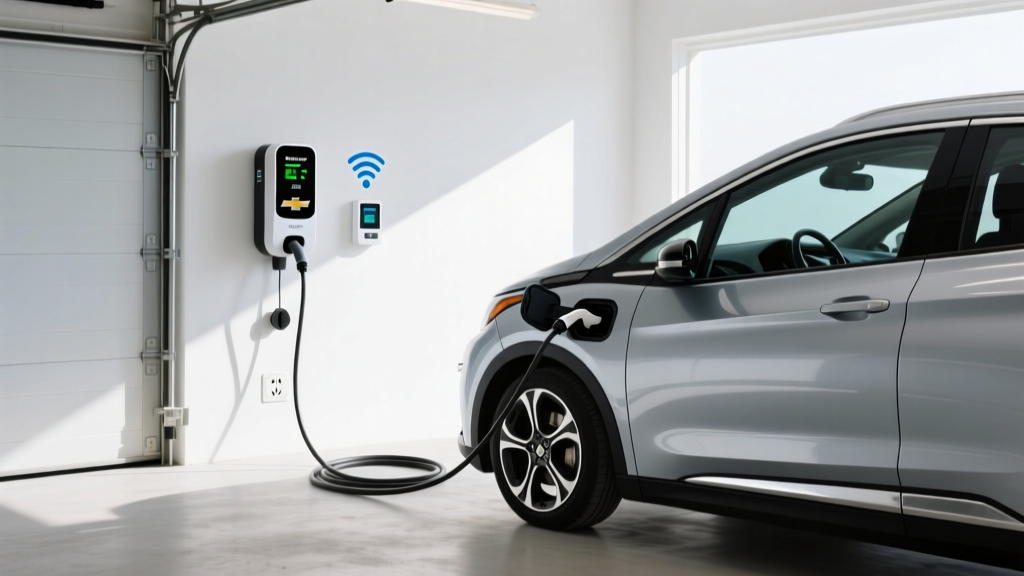
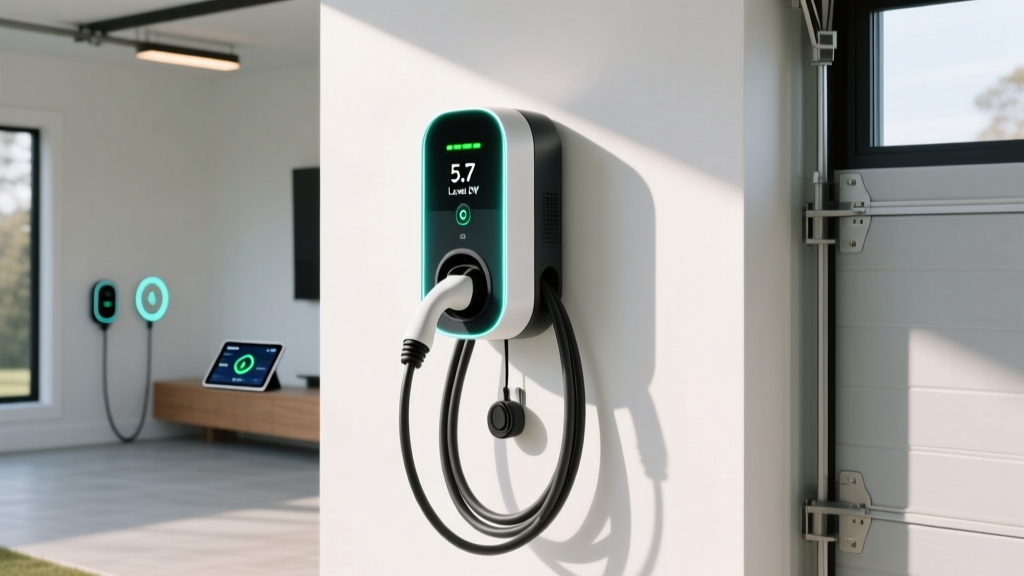
Installing a dedicated Level 2 home charging station is the single most impactful upgrade for daily EV ownership. For a 2016 Dodge Charger conversion, you'll typically want a 240V circuit rated for 40–50 amps, which supports continuous charging at 32–40 amps (electrical code requires circuits rated at 125% of continuous load).
Electrical Panel Considerations
Most modern homes have a 200-amp main electrical panel. Adding a 40A or 50A dedicated circuit is straightforward if your panel has spare capacity — typically defined as at least 20% headroom above your existing calculated load. Homes built before 1990, or those already running multiple high-draw appliances (electric range, dryer, HVAC), may require a panel upgrade from 100A or 150A to 200A or even 400A service.
A panel upgrade adds significant cost. According to HomeAdvisor's 2025–2026 national data, upgrading from 100A to 200A service typically costs $1,500–$3,500 including permits and utility coordination. In some jurisdictions, utility companies offer rebates for panel upgrades tied to EV adoption.
| Component | Low-End Cost | High-End Cost | Notes |
|---|---|---|---|
| Level 2 EVSE hardware (charger unit) | $350 | $750 | 32A–48A smart chargers; Wi-Fi enabled models cost more |
| Electrician labor (standard install) | $500 | $1,500 | Varies by run length from panel to garage/carport |
| Electrical permit | $50 | $250 | Required in most jurisdictions; varies by municipality |
| Conduit, wiring, breaker (materials) | $100 | $400 | 6 AWG copper for 50A circuit; longer runs = more cost |
| Panel upgrade (if needed) | $1,500 | $3,500 | 100A→200A service; not needed for most modern homes |
| Total (no panel upgrade) | $1,000 | $2,900 | Typical scenario for homes with 200A service |
| Total (with panel upgrade) | $2,500 | $6,400 | Older homes or maxed-out panels |
Safety and Code Requirements
Any Level 2 installation must comply with NEC Article 625 (Electric Vehicle Charging System Equipment). Key requirements include:
- Dedicated circuit: Your EVSE must have its own breaker — no sharing with other appliances.
- GFCI protection: NEC 2020 and later requires ground-fault circuit-interrupter protection for all EV charging outlets. Many modern EVSE units have built-in GFCI; if yours doesn't, your electrician must install a GFCI breaker.
- Outdoor rating: If your charger is mounted outside, the EVSE must carry a NEMA 4 or NEMA 4X rating for weather resistance. All connectors and junction boxes must be rated for wet locations.
- NEMA 14-50 vs hardwired: A NEMA 14-50 outlet gives you portability (take the charger when you move), but hardwired installations eliminate one potential failure point and are preferred for outdoor mounts. Some jurisdictions now require hardwired connections for 48A+ circuits per NEC 625.40.
Connector Compatibility: NACS, CCS1, CHAdeMO, and Conversion Adapters
For a factory EV, connector choice is simple — your car came with one. For a 2016 Dodge Charger EV conversion, the builder selects the charge port, which means you need to understand the current connector landscape in 2026.
| Connector | AC Level 2 | DC Fast Charge | Adopting Brands | Conversion Suitability |
|---|---|---|---|---|
| NACS (Tesla / SAE J3400) | Yes | Yes (up to 350 kW at V4 Superchargers) | Tesla, Ford, GM, Rivian, Hyundai, Kia, Volvo, most major OEMs by 2025–2026 | Best choice for new conversions — largest fast-charge network access |
| CCS1 (Combined Charging System) | Yes (J1772 upper) | Yes (up to 350 kW) | Legacy standard; still supported at most public stations | Good — widely supported but network shrinking relative to NACS |
| CHAdeMO | No (uses separate J1772) | Yes (up to 400 kW, rare) | Nissan (Leaf), Mitsubishi (legacy) | Avoid for conversions — declining infrastructure |
Adapter needs: If your conversion was built with a CCS1 port, you'll want a CCS-to-NACS adapter ($150–$300) to access Tesla Superchargers, which now welcome non-Tesla vehicles at many locations through Tesla's Open Supercharger program. If your conversion uses a NACS port, you may need a NACS-to-J1772 adapter (~$100–$150) for some older public Level 2 stations. Always verify your adapter's rated amperage and voltage before use — cheap adapters can overheat at sustained high current.
For DC fast charging in a conversion, the practical reality is more complex. Most aftermarket battery packs and BMS systems are not rated for the charge rates that factory EVs handle. While a Hyundai Ioniq 5 can peak at 240 kW on DC fast charge (10–80% in ~18 minutes), a typical Charger conversion with a 75 kWh pack might accept 50–100 kW DC at peak, making 10–80% take 35–55 minutes. Always consult your BMS documentation for maximum charge C-rates.
Cost to Charge: Per-Mile Economics vs Gasoline
One of the most compelling arguments for converting a 2016 Dodge Charger to electric is the fuel cost reduction. The original 5.7L HEMI V8 Charger returned an EPA-estimated 19 MPG combined. Let's compare that against typical EV conversion efficiency.
A professionally built Charger EV conversion with a 75–100 kWh pack typically achieves 2.5–3.5 miles per kWh (roughly 85–110 MPGe equivalent), depending on drivetrain efficiency, vehicle weight, and driving style. We'll use 3.0 mi/kWh as a representative figure.
| Scenario | Cost per kWh or Gallon | Vehicle Efficiency | Cost per Mile | Annual Fuel Cost (12,000 mi) |
|---|---|---|---|---|
| Home Level 2 (national avg residential rate) | $0.16/kWh | 3.0 mi/kWh | $0.053 | $640 |
| Home Level 2 (off-peak TOU rate) | $0.08/kWh | 3.0 mi/kWh | $0.027 | $320 |
| Public Level 2 (network pricing) | $0.30/kWh | 3.0 mi/kWh | $0.10 | $1,200 |
| DC Fast Charge (public) | $0.40/kWh | 3.0 mi/kWh | $0.133 | $1,600 |
| Gasoline (5.7L HEMI V8 original) | $3.40/gal | 19 MPG combined | $0.179 | $2,148 |
Bottom line: Home charging a converted Charger costs roughly $0.03–$0.05 per mile — a 72–85% reduction versus the original gasoline powertrain. Even exclusive DC fast charging at public stations undercuts gasoline by about 26%. Most conversion owners charge at home 85–90% of the time, making the blended real-world cost closer to $0.06/mile, or roughly $720/year for 12,000 miles of driving.
For current electricity rates in your area, the U.S. Energy Information Administration (EIA) publishes monthly state-by-state average residential electricity prices.
Equipment Recommendations: Level 2 Chargers for Conversions
When selecting a Level 2 home charger for a conversion vehicle, prioritize reliability, adjustable amperage (so you can match your onboard charger's max acceptance rate), and connector compatibility. Here are three proven options in 2026:
Emporia Level 2 Smart Charger
- Power output: Up to 48A (11.5 kW at 240V)
- Connector: J1772 (NACS adapter available)
- Cable length: 24 ft
- Smart features: Wi-Fi, app scheduling, energy monitoring, solar integration
- Price: ~$399
- Best for: Budget-conscious owners who want smart scheduling for off-peak TOU rates
ChargePoint Home Flex
- Power output: Configurable 16A–50A (3.8–12 kW at 240V)
- Connector: J1772 or NACS (configurable at purchase)
- Cable length: 23 ft
- Smart features: Wi-Fi, Alexa integration, charge scheduling, detailed session history
- Price: ~$549–$649
- Best for: Owners who want a configurable amperage to match conversion onboard charger limits
Tesla Wall Connector (Universal)
- Power output: Up to 48A (11.5 kW at 240V)
- Connector: NACS with integrated J1772 adapter (Magic Dock style)
- Cable length: 24 ft
- Smart features: Wi-Fi, over-the-air updates, power sharing between units
- Price: ~$599
- Best for: NACS-equipped conversions; seamless Supercharger network integration
Conversion-specific tip: If your aftermarket onboard charger maxes out at 6.6 kW (28A), there's no benefit to a 48A home charger — you'll only ever pull 28A. Match your EVSE amperage to your onboard charger to avoid overspending on hardware and electrical work. A 32A circuit (requiring a 40A breaker) is sufficient for most conversions and reduces installation cost.
Charging Time Examples for Common Conversion Battery Sizes
Below are estimated charging times for typical battery pack sizes used in Charger-class EV conversions. Times assume an 80% depth of discharge (charging from 20% to 100% SoC) and account for typical charge-curve taper above 80%.
| Battery Pack Size | 60 kWh | 75 kWh | 100 kWh |
|---|---|---|---|
| Level 1 (1.4 kW) | ~34 hours | ~43 hours | ~57 hours |
| Level 2 at 3.3 kW | ~14.5 hours | ~18 hours | ~24 hours |
| Level 2 at 6.6 kW | ~7.3 hours | ~9 hours | ~12 hours |
| Level 2 at 11.5 kW | ~4.2 hours | ~5.2 hours | ~7 hours |
| DC Fast at 50 kW peak | ~55 min (10–80%) | ~70 min (10–80%) | ~90 min (10–80%) |
Charge curve reality: No EV — factory or converted — sustains peak DC charge rate for the entire session. A pack rated for 50 kW peak might sustain that rate from 10–40% SoC, then taper to 35 kW through 60%, and drop to 15–20 kW above 80%. This is why manufacturers quote 10–80% times rather than 0–100%: the last 20% can take as long as the first 80%. For conversions, work with your BMS manufacturer to understand the recommended charge curve profile.
Frequently Asked Questions
How much does it cost to install a home EV charger?
A typical Level 2 home installation costs $1,000–$2,900 total (equipment, electrician, permit, and materials) when your electrical panel has adequate capacity. If a panel upgrade from 100A to 200A is needed, total cost ranges from $2,500–$6,400. Always get at least two quotes from licensed electricians who have specific EVSE installation experience.
How fast will each charging level add range?
Level 1 (120V) adds 3–5 miles per hour — suitable only for overnight trickle or emergency use. Level 2 (240V) adds 12–75 miles per hour depending on your onboard charger's kW rating — this is the daily workhorse for home charging. DC fast charging adds 150–1,200 miles per hour at peak rates, making it practical for road-trip stops of 20–45 minutes.
Which connector/charger is compatible with my EV conversion?
For a 2016 Dodge Charger conversion built in 2024–2026, NACS (SAE J3400) is the recommended connector — it provides access to Tesla's Supercharger network (the largest and most reliable in North America) plus growing third-party networks. If your conversion was built earlier with CCS1, adapters are available for NACS stations. Avoid CHAdeMO for any new conversion build due to declining public infrastructure support.
How much does charging cost per mile vs gas?
Home Level 2 charging at the national average residential rate ($0.16/kWh) costs approximately $0.05/mile for a typical conversion achieving 3.0 mi/kWh. With off-peak time-of-use rates ($0.08/kWh), that drops to roughly $0.03/mile. The original 2016 Charger 5.7L V8 at 19 MPG and $3.40/gallon costs $0.18/mile — making home EV charging 72–85% cheaper per mile.
What electrical upgrades might I need?
If your home has a 200A panel with at least 20% spare capacity, you likely need nothing beyond a dedicated 40A or 50A breaker and a wiring run to your garage or carport. Homes with 100A or 150A service, or panels already near capacity (common with electric heat, range, and dryer), may require a service upgrade to 200A or 400A. Your electrician will perform a load calculation per NEC Article 220 to determine this. Some utilities offer EV-specific rates or panel-upgrade rebates — check with your provider before committing to work.
Can I use a federal tax credit for home charger installation?
The federal Alternative Fuel Vehicle Refueling Property Credit (IRS Form 8911) covers 30% of home EVSE hardware and installation costs, up to $1,000 per tax year. However, eligibility is restricted to equipment installed in a census tract that qualifies as a low-income or non-urban area. Consult a tax professional to determine whether your address qualifies — this credit is not universally available and rules are subject to legislative change.