Understanding the 2016 Dodge Charger and Modern EV Charging
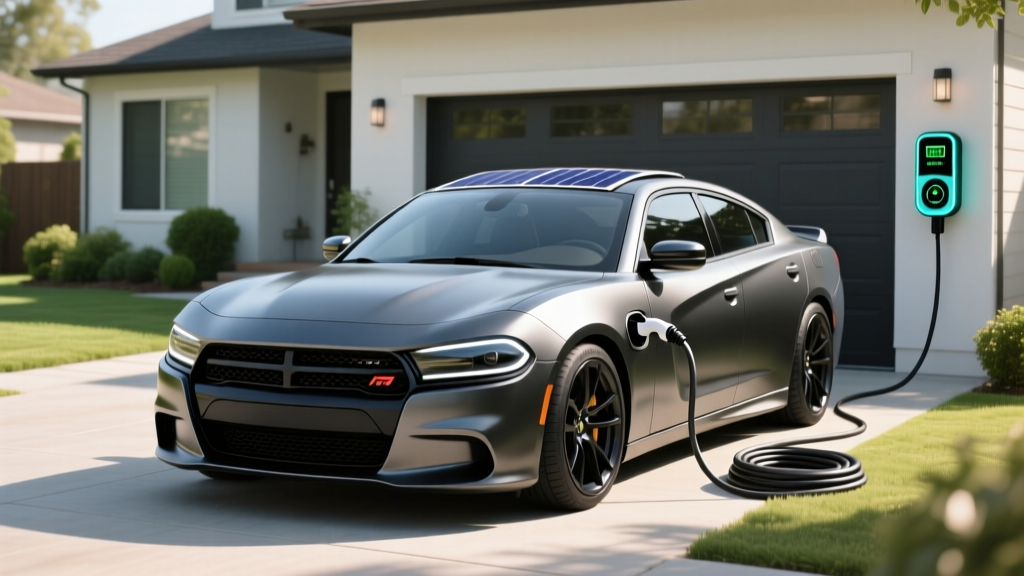
If you've searched for "2016 Dodge Charger" and landed on EV charging content, you're likely either cross-shopping the iconic muscle sedan against modern electric vehicles, or you've encountered the 2024+ Dodge Charger Daytona EV and want to understand what charging infrastructure looks like. The 2016 Dodge Charger itself is a conventional internal-combustion vehicle — available with V6 and V8 HEMI engines, producing between 292 hp (3.6L Pentastar V6) and 707 hp (Hellcat 6.2L supercharged V8), with EPA fuel economy ranging from 19-31 MPG combined depending on powertrain.
This guide uses the 2016 Charger as a cost-comparison baseline while teaching you everything about EV charging infrastructure — whether you're considering the new Dodge Charger Daytona EV (the brand's first electric muscle car, starting around $59,595 MSRP with up to 317 miles of EPA range on the R/T trim) or any other battery-electric vehicle. We'll cover charging levels, home installation costs, connector types, and real cost-per-mile data so you can make an informed decision.
kW (kilowatts) = power, the rate at which electricity flows. Think of it as the speed of water from a hose.
kWh (kilowatt-hours) = energy, the total amount of electricity stored or consumed. Think of it as gallons in a bucket.
A 77 kWh battery charged at 11.5 kW takes roughly 6.7 hours. Peak DC fast-charge kW is never sustained for the full session — charge curves taper significantly above 80% State of Charge (SoC).
Charging Levels Explained: Level 1, Level 2, and DC Fast Charging
Every EV owner needs to understand the three charging tiers. Your daily routine, commute length, and home electrical setup determine which levels you'll rely on most.
| Level | Voltage | Power (kW) | Miles Added/Hour | Best For | Typical Location |
|---|---|---|---|---|---|
| Level 1 | 120V AC | 1.0–1.9 kW | 3–5 mi/hr | Overnight top-ups, PHEVs, low-mileage drivers | Standard household outlet |
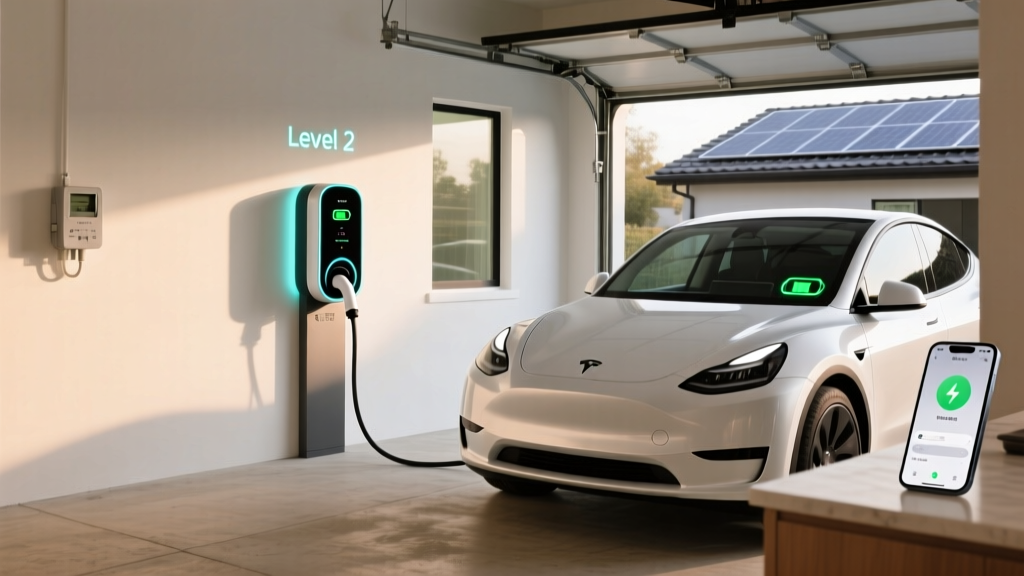
| Level 2 | 240V AC | 3.3–19.2 kW | 12–75 mi/hr | Daily home/workplace charging, full overnight refill | Home garage, workplaces, public destinations |
| DC Fast Charge | 400–800V DC | 50–350 kW | 150–1,000+ mi/hr | Road trips, quick 10-80% stops | Dedicated public fast-charging stations |
Real-world charging time examples (for a typical 77 kWh usable battery, like the one in the Dodge Charger Daytona R/T):
- Level 1 (1.4 kW): 0–100% in ~55 hours — impractical for full BEVs, acceptable for PHEVs with smaller packs
- Level 2 (11.5 kW / 48A): 0–100% in ~6.7 hours — ideal overnight charge for most EV owners
- DC Fast Charge (150 kW peak): 10–80% in ~27 minutes; note that charging speed tapers sharply above 80% SoC to protect battery health
The charge curve taper is critical to understand: a vehicle that advertises "200 kW peak" may only sustain that rate between 10–40% SoC, dropping to 50–80 kW by the time you reach 80%. Always evaluate 10–80% times rather than peak kW claims.
Home EV Charger Installation: Costs, Electrical Requirements, and Panel Upgrades
Installing a Level 2 home charger is the single most impactful upgrade for EV ownership. Here's what you need to know about electrical requirements, costs, and potential gotchas.
Electrical Requirements for Level 2 Home Charging
- Voltage: 240V AC (same as your electric dryer or oven)
- Circuit amperage: 40A–60A dedicated circuit for 32A–48A continuous charging (NEC requires circuits rated 125% above continuous load)
- Wire gauge: 6 AWG copper for 50A circuits; 4 AWG for 60A circuits (varies by run length and local code)
- Dedicated circuit: Required — you cannot share the circuit with other appliances
- GFCI protection: Required by NEC 2020+ for EV charging outlets in garages
Installation Cost Breakdown
| Component | Low End | High End | Notes |
|---|---|---|---|
| Level 2 charger (hardwired or NEMA 14-50) | $250 | $700 | Smart Wi-Fi chargers cost more; basic units are cheaper |
| Electrician labor (install circuit + outlet) | $300 | $800 | Depends on panel proximity and wall type |
| Electrical permit | $50 | $200 | Varies by municipality; some bundle with inspection |
| Panel upgrade (if needed: 100A → 200A) | $1,500 | $4,000 | Older homes with 100A service often need this for 48A+ chargers |
| Total (no panel upgrade) | $600 | $1,700 | Most newer homes with 200A panels fall in this range |
| Total (with panel upgrade) | $2,100 | $5,700 | Common in pre-1990 homes or those already near panel capacity |
Safety and Code Considerations
- Dedicated circuit: Never share your EV circuit with other loads — this is both a code violation and a fire risk
- NEMA 14-50 vs hardwired: A 14-50 outlet allows charger portability; hardwired connections support higher amperage (up to 60A/14.4 kW) and eliminate the outlet as a failure point
- Outdoor-rated equipment: If charging outside, ensure the charger has a NEMA 4 or NEMA 4X rating for weather resistance
- Cable management: Choose 20–25 foot cables for garage flexibility; shorter cables (18 ft) may not reach all parking positions
- UL certification: Only purchase UL-listed chargers — uncertified units from overseas marketplaces pose serious safety risks
Connector Compatibility: NACS, CCS1, and CHAdeMO
The connector landscape has consolidated significantly. As of 2025, nearly every major automaker has committed to the North American Charging Standard (NACS), originally developed by Tesla. Here's what you need to know:
| Connector | Also Known As | Adopted By | DC Fast Charge? | Adapter Needed? |
|---|---|---|---|---|
| NACS | Tesla connector, J3400 | Tesla, Ford, GM, Rivian, Hyundai, Kia, Dodge (Daytona EV), most others by 2025-2026 | Yes (up to 350 kW at V4 Superchargers) | CCS→NACS adapter (~$150-$250) for older CCS vehicles |
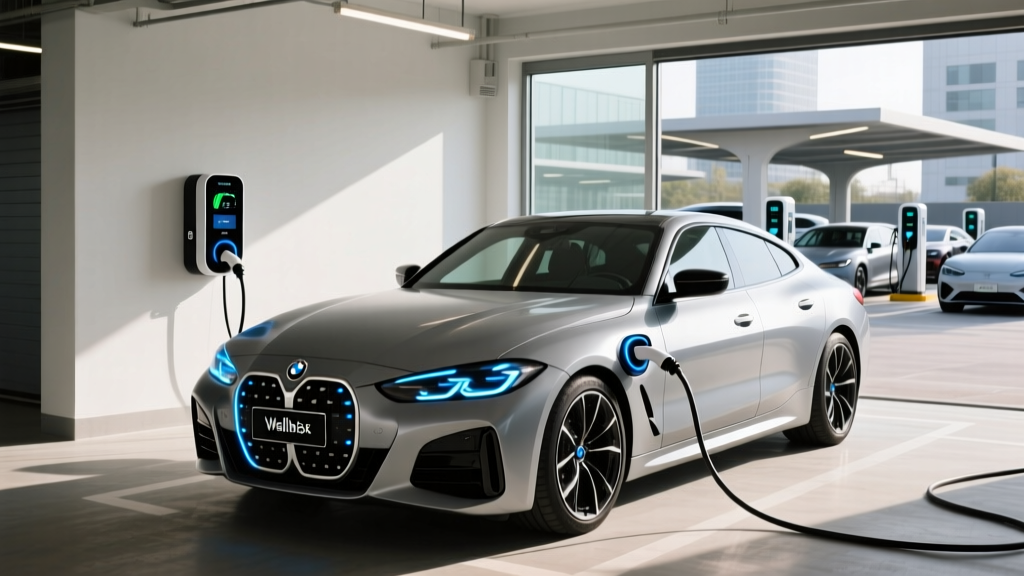
| CCS1 | Combined Charging System | VW, BMW, some legacy models; being phased out on new vehicles | Yes (up to 350 kW) | NACS→CCS adapter needed for Supercharger access |
| CHAdeMO | — | Nissan Leaf (legacy only); no new vehicles since ~2022 | Yes (up to 100 kW) | Limited adapter options; network declining |
For Dodge Charger Daytona EV buyers: The vehicle uses the NACS connector natively, giving you direct access to the Tesla Supercharger network (over 25,000 stalls in North America) without adapters. This is a significant practical advantage over CCS-equipped vehicles, which require adapters and may face compatibility issues at some Supercharger stalls.
Charging Cost Per Mile: EV vs the 2016 Dodge Charger
Let's put real numbers to the cost question. We'll compare a 2016 Dodge Charger (V6, EPA 23 MPG combined) against a modern EV using national average electricity and fuel prices.
| Scenario | Energy Cost | Efficiency | Cost Per Mile | Annual Cost (12,000 mi) |
|---|---|---|---|---|
| 2016 Charger V6 (gas, 23 MPG) | $3.25/gal | 23 MPG | $0.141 | $1,692 |
| 2016 Charger Hellcat (gas, 16 MPG) | $3.25/gal | 16 MPG | $0.203 | $2,438 |
| EV — Home Level 2 (off-peak) | $0.13/kWh | 3.0 mi/kWh | $0.043 | $516 |
| EV — Home Level 2 (standard rate) | $0.17/kWh | 3.0 mi/kWh | $0.057 | $684 |
| EV — Public Level 2 (network pricing) | $0.30/kWh | 3.0 mi/kWh | $0.100 | $1,200 |
| EV — DC Fast Charge (road trips) | $0.42/kWh | 3.0 mi/kWh | $0.140 | $1,680 |
Key takeaway: Home-charged EVs cost 60–70% less per mile than the 2016 Charger V6. However, if you rely exclusively on DC fast charging (apartment dwellers without home charging access), your per-mile cost approaches that of a fuel-efficient V6. The economics overwhelmingly favor home Level 2 charging.
Note: The federal §30D clean vehicle tax credit can provide up to $7,500 for qualifying new EVs, subject to MSRP caps ($55,000 for sedans), buyer income limits ($150K single / $300K joint), and battery critical-mineral sourcing requirements. As of 2025, this can be transferred to the dealer at point of sale as an instant discount. Always verify current-year eligibility with a tax professional and the IRS.
Recommended Level 2 Home Chargers (2025–2026 Picks)
Based on reliability testing, smart features, and value, here are three chargers we recommend for most EV owners:
ChargePoint Home Flex
- Power: Up to 12 kW (50A circuit, 40A continuous)
- Connector: NACS (native); J1772 with adapter
- Cable: 23 ft
- Smart features: Wi-Fi, app scheduling, Alexa integration, energy tracking
- Price: ~$549
- Best for: Most homeowners wanting flexibility and smart scheduling
Tesla Wall Connector
- Power: Up to 11.5 kW (60A circuit, 48A continuous)
- Connector: NACS native
- Cable: 24 ft
- Smart features: Wi-Fi, OTA updates, power sharing (multiple units on one circuit), load management
- Price: ~$475
- Best for: Tesla and NACS-native vehicles; best value for power output
Emporia Vue + EV Charger
- Power: Up to 11.5 kW (60A circuit, 48A continuous)
- Connector: NACS or J1772 options
- Cable: 24 ft
- Smart features: Whole-home energy monitoring integration, solar-aware charging, detailed cost tracking
- Price: ~$399 (charger only); ~$599 with energy monitor
- Best for: Solar panel owners and energy-conscious households
Public Charging Networks: What to Expect in 2025–2026
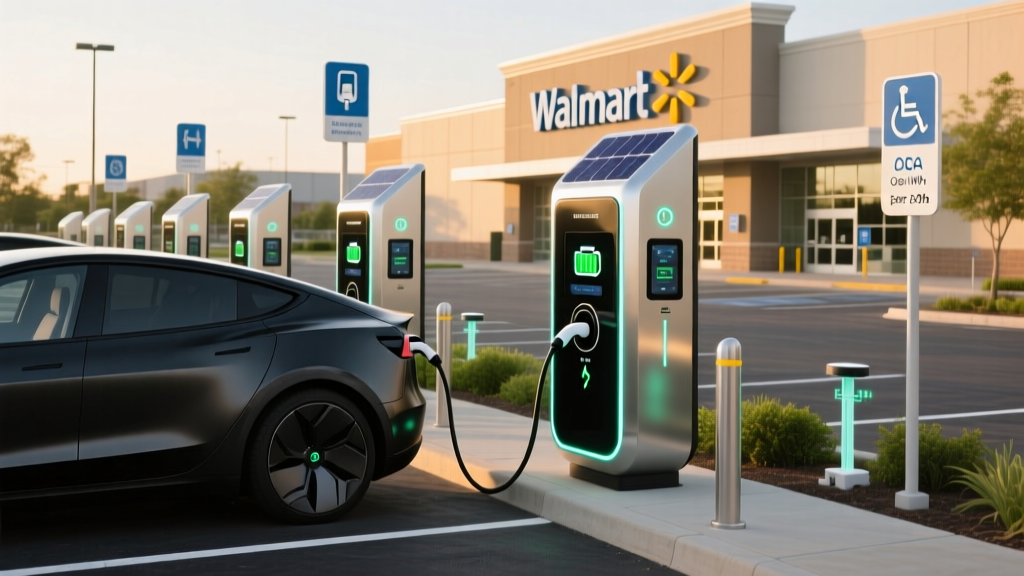
For road trips and occasional top-ups away from home, here's the current public charging landscape:
- Tesla Supercharger network: Now open to NACS-equipped non-Tesla vehicles. Over 25,000 stalls in North America, with V4 cabinets delivering up to 350 kW. Pricing averages $0.30–$0.45/kWh depending on location and time of day.
- Electrify America: Largest non-Tesla DC fast network, with CCS and NACS connectors at newer stations. 150–350 kW chargers. Pricing: $0.31–$0.48/kWh; subscription plans reduce rates.
- EVgo: Growing network with 350 kW stalls at newer locations. NACS and CCS available. Pricing: $0.30–$0.43/kWh.
- ChargePoint: Primarily Level 2 destination charging (workplaces, retail, hotels). Some DC fast locations. Pricing set by site host, typically $0.25–$0.39/kWh.
Reliability note: According to J.D. Power's EV Public Charging Study, Tesla Superchargers consistently score highest in reliability and satisfaction. Non-Tesla networks have improved but still experience higher downtime rates — plan road trips with backup charging stops using apps like A Better Routeplanner (ABRP).
Frequently Asked Questions
How much does it cost to install a home EV charger?
Expect $600–$1,700 for a standard Level 2 installation in a home with adequate electrical panel capacity (200A service with available breaker slots). If your home requires a panel upgrade from 100A to 200A, total costs can reach $2,100–$5,700. Always get a load calculation from a licensed electrician before purchasing equipment.
How fast will each charging level add range?
Level 1 (120V): 3–5 miles per hour. Level 2 (240V, 48A): 30–40 miles per hour for most EVs. DC Fast Charging: 150–1,000+ miles per hour at peak, but actual sessions average much less due to charge-curve taper. A 10–80% DC fast charge on a modern EV typically takes 18–35 minutes depending on peak kW capability and battery preconditioning.
Which connector/charger is compatible with my EV?
Check your vehicle's charge port. New 2025+ vehicles from most major brands (Tesla, Ford, GM, Hyundai, Kia, Rivian, Dodge) use NACS. Older non-Tesla EVs typically use CCS1. The Nissan Leaf uses CHAdeMO (legacy). If you own a CCS vehicle, NACS-to-CCS adapters ($150–$250) enable Supercharger access. For home Level 2, NACS-native chargers (Tesla Wall Connector, ChargePoint Home Flex with NACS) are the forward-looking choice.
How much does charging cost per mile vs gas?
Home-charged EVs cost approximately $0.04–$0.06 per mile (depending on local electricity rates), compared to $0.14/mile for a 2016 Dodge Charger V6 at 23 MPG and $3.25/gallon gasoline. DC fast charging on road trips costs roughly $0.14/mile — comparable to a fuel-efficient gas car. The savings are maximized with home Level 2 charging on time-of-use (off-peak) rates.
What electrical upgrades might I need?
The most common upgrade is a panel capacity increase (100A → 200A) for older homes. You may also need: a new dedicated 240V circuit run from the panel to your garage, a NEMA 14-50 outlet or hardwired junction box, GFCI breaker (required by NEC 2020+), and potentially a sub-panel if your main panel is far from the charging location. A licensed electrician should perform a NEC Article 220 load calculation to determine your home's available capacity before any EV charger purchase.
Should I precondition my EV battery before DC fast charging?
Yes. Battery preconditioning (called "battery heating" or "fast-charge prep" in vehicle settings) warms the battery pack to optimal temperature before you arrive at a DC fast charger. This can improve peak charge rates by 20–40% in cold weather and reduce the 10–80% session time by several minutes. Most EVs with navigation will automatically precondition when you route to a charging station. For vehicles like the Dodge Charger Daytona EV, enable this feature in the vehicle's charging settings.
Sources: fueleconomy.gov (EPA ratings), IRS §30D tax credit guidance, NHTSA, manufacturer specifications.