The 2016 Spark EV: Range, Battery, and Why Charging Strategy Matters
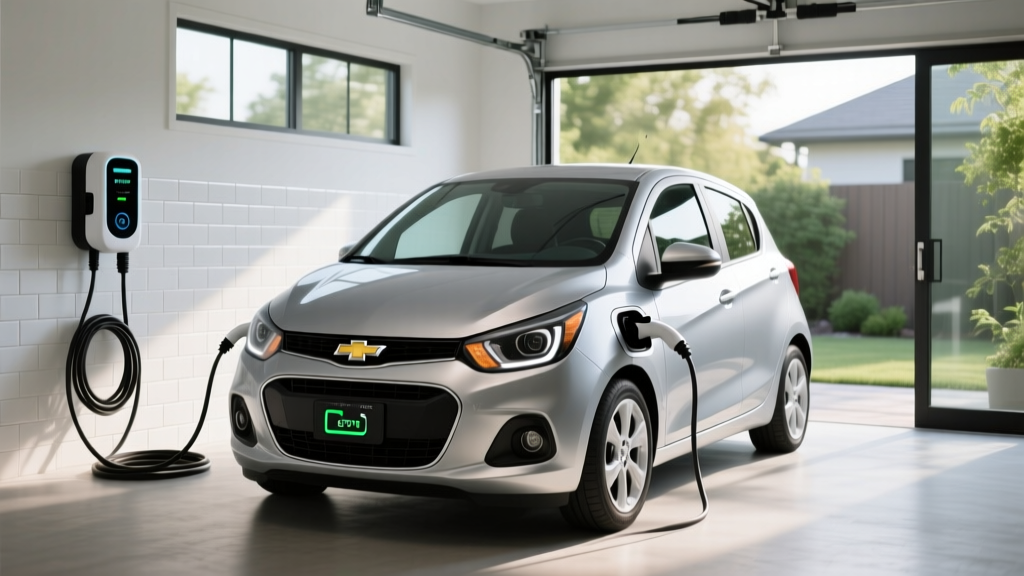
The 2016 Chevrolet Spark EV is a discontinued city commuter that still punches above its weight in urban efficiency. Its 19 kWh lithium-ion battery (NMC chemistry) delivers an EPA-estimated 82 miles of range, with a combined efficiency of 119 MPGe per fueleconomy.gov. In real-world mixed driving, expect 65–75 miles on the highway and potentially less in sustained cold weather — the Spark EV lacks a heat pump, so resistive cabin heating can shave 15–20% off range below 40°F.
Because the battery is small, the Spark EV is one of the most forgiving EVs to charge at home — but connector compatibility and DC fast-charging limitations require careful planning. This guide covers every charging scenario, home installation costs, and the exact equipment that works with this model.
EPA estimate: 82 miles (combined city/highway).
Real-world city: ~75–82 miles (regenerative braking helps in stop-and-go).
Real-world highway (70 mph): ~60–70 miles.
Cold weather (below 32°F, heater on): ~55–65 miles.
The 19 kWh battery has no large buffer; once the low-SoC warning hits, plan to plug in soon.
Charging Levels Explained: How Fast Will Each Level Add Range?
Understanding the difference between kW (power, the rate of charging) and kWh (energy, the battery capacity) is essential. The Spark EV's battery holds 19 kWh of energy. A 7.2 kW Level 2 charger delivers 7.2 kilowatts of power per hour — meaning a full charge takes roughly 2.6 hours from empty. A DC fast charger can deliver far more power but only up to the car's acceptance rate.
| Level | Voltage / Power | Spark EV Charge Rate | Miles Added per Hour | Full Charge Time (0–100%) |
|---|---|---|---|---|
| Level 1 (120V household) | 120V / 1.4 kW | ~1.4 kW | ~4–5 mi/hr | ~14–17 hours |
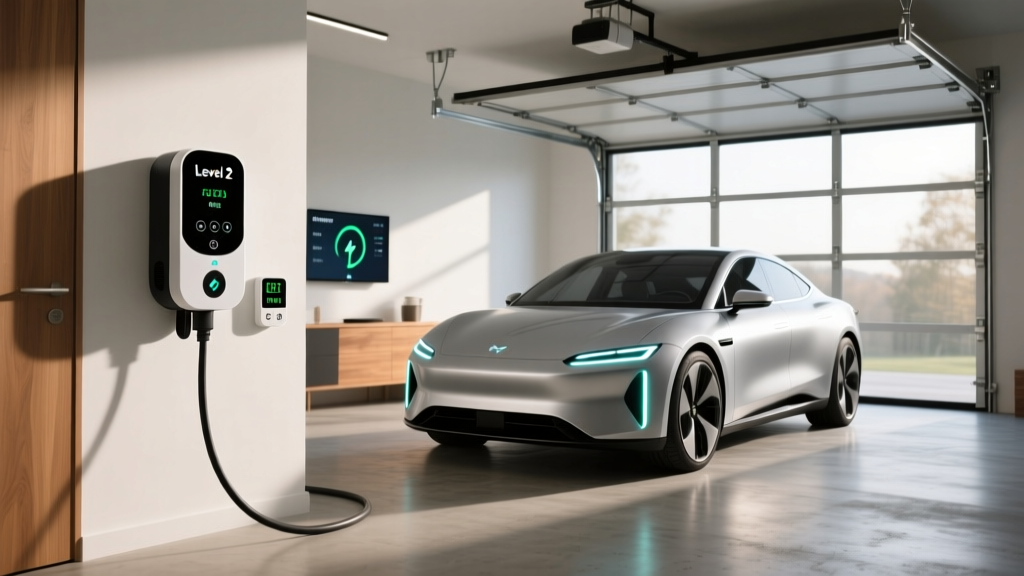
| Level 2 (240V home/public) | 240V / 3.3–7.2 kW | 3.3 kW max (onboard limit) | ~12–14 mi/hr | ~5.5–6 hours |
| DC Fast (CCS Combo or CHAdeMO) | 400V+ / up to 50 kW | ~40–50 kW peak (w/ DC option) | ~150+ mi/hr equivalent | 10–80% in ~20–30 min |
Critical Spark EV detail: The 2016 model's onboard AC charger is capped at 3.3 kW. Even if you plug into a 7.2 kW or 11.5 kW Level 2 station, the car will only draw 3.3 kW. This means a higher-powered home charger won't charge the Spark EV any faster — but it will future-proof your setup for a next vehicle.
DC Fast Charging caveat: Not all 2016 Spark EVs were equipped with the DC fast-charge option. GM offered it as a $750 add-on, and it requires the SAE Combo (CCS1) port. If your Spark EV only has a J1772 port (no CCS pins below), it cannot DC fast-charge at all. Check your charge port before relying on public fast chargers.
Home Charger Installation: Electrical Requirements and Cost Breakdown
Because the Spark EV maxes out at 3.3 kW on Level 2, you could technically charge it on a standard 120V outlet overnight and recover 40–50 miles in 10 hours — enough for most daily commutes. However, a 240V Level 2 home station is strongly recommended for convenience, safety, and battery longevity.
Electrical Requirements
- Circuit: A dedicated 240V/20A circuit is sufficient for the Spark EV's 3.3 kW draw (a NEMA 6-20 outlet or hardwired station).
- Breaker: 20A double-pole breaker minimum. If installing a 40A charger for future vehicles, you'll need a 50A breaker.
- Panel capacity: Most modern 200A panels can accommodate an EV circuit. Older homes with 100A service may require a panel upgrade ($1,500–$3,000) or a load-management device.
- Permit: Most jurisdictions require an electrical permit for new 240V circuits ($50–$200).
Installation Cost Breakdown
| Item | Budget Scenario | Typical Scenario | Complex Scenario |
|---|---|---|---|
| Level 2 Charger (Equipment) | $200–$300 | $350–$550 | $500–$700 |
| Electrician Labor | $300–$500 | $500–$1,000 | $1,000–$2,000 |
| Electrical Permit | $50–$100 | $100–$150 | $150–$250 |
| Panel Upgrade (if needed) | N/A | N/A | $1,500–$3,000 |
| Total | $550–$900 | $950–$1,700 | $3,150–$5,950 |
The budget scenario assumes a short cable run from a 200A panel to a nearby garage. The complex scenario involves a panel upgrade, long conduit runs, or trenching for a detached garage. Always get a licensed electrician's assessment — NEC Article 625 governs EV charging installations and requires a dedicated circuit.
Connector Compatibility: What Plugs Into a 2016 Spark EV?
The 2016 Spark EV uses the SAE J1772 connector for Level 1 and Level 2 AC charging — the same standard used by virtually every non-Tesla EV sold in North America through 2024. For DC fast charging (if equipped), it uses the CCS1 (Combo) connector, which adds two DC pins below the J1772 inlet.
| Connector Type | Spark EV Compatible? | Adapter Needed? | Notes |
|---|---|---|---|
| J1772 (Level 1 & 2) | ✅ Native | None | Works at all public Level 2 stations (ChargePoint, EVgo L2, Blink) |
| CCS1 (DC Fast) | ✅ If DC option equipped | None | Check for two DC pins below J1772 inlet |
| NACS (Tesla / North American Charging Standard) | ⚠️ With adapter | J1772-to-NACS adapter (~$100–$200) | Required for Tesla Superchargers and NACS-equipped public stations (expanding through 2026) |
| CHAdeMO (DC Fast) | ❌ Not compatible | No practical adapter | CHAdeMO is being phased out in North America |
2026 adapter reality: As automakers transition to NACS (the Tesla-derived standard now adopted by Ford, GM, Rivian, Hyundai, and others), many new public chargers ship with NACS cables only. If you plan to use Tesla Superchargers — which now accept non-Tesla vehicles via the Supercharger network — you'll need a J1772-to-NACS adapter. However, note that the Spark EV's 3.3 kW AC limit and ~50 kW DC limit mean you won't benefit from the high-speed stalls; you'll charge at the car's maximum regardless of the station's capability.
Cost to Charge: Per-Mile Economics vs. Gasoline
The Spark EV's small battery makes it one of the cheapest EVs to charge — especially at home on off-peak electricity. Here's how the per-mile cost breaks down across common scenarios.
| Scenario | Rate ($/kWh) | Cost for Full 19 kWh | Cost per Mile (82 mi range) |
|---|---|---|---|
| Home off-peak (utility TOU rate) | $0.08–$0.12 | $1.52–$2.28 | $0.019–$0.028 |
| Home standard rate | $0.14–$0.18 | $2.66–$3.42 | $0.032–$0.042 |
| Public Level 2 (ChargePoint, EVgo) | $0.25–$0.49 | $4.75–$9.31 | $0.058–$0.114 |
| DC Fast Charging (EA, EVgo) | $0.35–$0.55 | $6.65–$10.45 | $0.081–$0.127 |
| Gas car comparison (30 MPG, $3.40/gal) | — | — | $0.113 |
Bottom line: Charging at home on off-peak rates, the Spark EV costs roughly 2–3 cents per mile — about 4–5× cheaper than a 30 MPG gas car at $3.40/gallon. Even on public DC fast chargers at the high end, per-mile cost is comparable to gasoline. For a 12,000-mile/year driver, home charging saves approximately $1,000–$1,200 annually versus gas.
Recommended Home Chargers for the Spark EV
Given the Spark EV's 3.3 kW onboard charger, a 16A/240V station (3.8 kW) is a perfect match. However, most buyers should install a 32A or 48A charger to future-proof for their next EV. Here are three recommendations spanning budget to premium.
Budget Pick: Emporia Level 2 Charger
- Power Output: 48A / 11.5 kW max (Spark EV will draw 3.3 kW)
- Connector: J1772 (NACS version available)
- Cable Length: 24 ft
- Smart Features: Wi-Fi, app scheduling, solar integration, energy monitoring
- Price: ~$250–$300
- Best for: Spark EV owners who want data and will keep the charger for a future EV
Best Value: ChargePoint Home Flex
- Power Output: Up to 50A / 12 kW (adjustable via DIP switch)
- Connector: J1772 (NACS adapter included in 2025+ models)
- Cable Length: 23 ft
- Smart Features: Wi-Fi, Alexa, ChargePoint app, scheduling, usage stats
- Price: ~$450–$550
- Best for: Reliable daily charging with a proven network ecosystem
Premium Pick: Grizzl-E Smart
- Power Output: 40A / 9.6 kW
- Connector: J1772 or NACS (selectable at purchase)
- Cable Length: 24 ft
- Smart Features: OCPP-compatible, works with multiple apps, outdoor-rated (NEMA 4), built in Canada
- Price: ~$450–$500
- Best for: Outdoor installations, extreme climates, and universal app compatibility
Safety note: All three chargers are UL-listed or certified to UL standards. Never use a non-UL-listed charger — it may void homeowner's insurance in the event of an electrical fire. Ensure your electrician installs a GFCI breaker for outdoor installations per NEC 2023 requirements.
Public Charging Networks: Where and How to Charge a Spark EV
The Spark EV's J1772/CCS1 connectors are compatible with every major public network in the United States. Here's what to expect:
- ChargePoint: Largest Level 2 network; most stations are free or $0.25–$0.49/kWh. Ideal for topping up at workplaces and shopping centers.
- EVgo: Offers both Level 2 and DC fast charging. DC stations deliver up to 350 kW, but the Spark EV will cap at ~50 kW. Pricing: $0.30–$0.45/kWh.
- Electrify America: DC fast chargers (150–350 kW). The Spark EV will charge at its max ~50 kW. Pricing: $0.43–$0.55/kWh (or $0.15/kWh with Pass+ subscription at $4/month).
- Tesla Supercharger (Magic Dock / adapter): Select Supercharger stalls now feature the Magic Dock (built-in CCS adapter) for non-Tesla vehicles. Alternatively, use a J1772-to-NACS adapter. Speeds limited to Spark EV's max draw.
Charge curve reality check: On DC fast charging, the Spark EV will pull ~40–50 kW from 10–50% SoC, then taper significantly above 70%. Plan to charge to 80% and go — the last 20% can take as long as the first 70% due to the taper. A 10–80% session takes approximately 20–30 minutes at a 50 kW station.
Safety, Code, and Installation Best Practices
- ✅ Dedicated circuit — never share the EV circuit with other appliances
- ✅ GFCI protection required for outdoor installations (NEC 2023, Article 625)
- ✅ NEMA 4 (outdoor) rated charger if installed outside
- ✅ Permit and inspection — unpermitted work may void insurance and create resale issues
- ✅ Load calculation — electrician should verify your panel has spare capacity before energizing
- ✅ Proper wire gauge — 10 AWG for 20A, 6 AWG for 50A circuits (copper)
- ❌ Never use an extension cord for EV charging
- ❌ Never plug into a standard 15A outlet for sustained Level 1 charging without verifying the circuit isn't shared
Frequently Asked Questions
How much does it cost to install a home EV charger for a Spark EV?
A basic 240V/20A installation with a budget charger runs $550–$900 if your panel has capacity and the run is short. A typical installation with a mid-range smart charger and moderate cable run costs $950–$1,700. If your home needs a panel upgrade (common in pre-1990 homes with 100A service), total cost can reach $3,000–$6,000. The Spark EV's low 3.3 kW draw means you can use a smaller, less expensive circuit than most modern EVs require.
How fast will each charging level add range to the Spark EV?
Level 1 (120V): approximately 4–5 miles of range per hour. Level 2 (240V, 3.3 kW): approximately 12–14 miles per hour. DC Fast Charging (50 kW): approximately 150+ miles per hour equivalent, or 10–80% in about 20–30 minutes. Remember, the Spark EV's 3.3 kW onboard charger caps Level 2 speed regardless of station output.
Which connector and charger is compatible with my 2016 Spark EV?
For Level 1 and Level 2 AC charging, the Spark EV uses the standard J1772 connector — compatible with virtually every home charger and public Level 2 station. For DC fast charging (if your vehicle has the option), it uses CCS1 (SAE Combo). To use Tesla Superchargers, you'll need a J1772-to-NACS adapter or a Supercharger stall equipped with Tesla's Magic Dock. CHAdeMO is not compatible.
How much does charging cost per mile compared to gas?
Charging at home on off-peak electricity costs approximately 2–3 cents per mile. Public Level 2 runs 6–11 cents per mile, and DC fast charging costs 8–13 cents per mile. A comparable 30 MPG gas car at $3.40/gallon costs about 11 cents per mile. Home charging saves the average Spark EV driver $1,000–$1,200 per year versus gasoline.
What electrical upgrades might my home need?
The Spark EV's low power draw (3.3 kW / 14A at 240V) is forgiving. Most 200A panels can accommodate a dedicated 20A/240V circuit without issue. Homes with 100A service, older wiring, or panels near capacity may need a panel upgrade ($1,500–$3,000), a load-management device that throttles the charger when other appliances run, or a service upgrade from the utility. A licensed electrician can perform a load calculation to determine your specific needs.
Can I charge the Spark EV on a regular 120V outlet?
Yes. The included Level 1 cordset plugs into a standard 120V/15A household outlet and delivers about 4–5 miles of range per hour. For the Spark EV's 82-mile battery, an overnight charge (10–12 hours) recovers 40–60 miles — sufficient for many daily commutes. Ensure the outlet is on a dedicated circuit (not shared with space heaters, microwaves, or air conditioners) and shows no signs of heat damage or discoloration.
Does the Spark EV qualify for any EV tax credits in 2026?
The 2016 Spark EV is no longer in production, so the federal §30D new-vehicle tax credit does not apply. However, if you're purchasing one as a used EV, the Used Clean Vehicle Credit (up to $4,000 or 30% of sale price, whichever is less) may apply if the sale price is $25,000 or less, you meet income thresholds ($75,000 single / $150,000 joint), and you purchase from a licensed dealer. Confirm eligibility with a tax professional and review current IRS guidance, as rules are subject to change.
Spec Summary: 2016 Chevrolet Spark EV
| Specification | Value |
|---|---|
| EPA Range | 82 miles |
| Battery Capacity | 19 kWh (NMC lithium-ion) |
| EPA Efficiency | 119 MPGe combined |
| Onboard AC Charger | 3.3 kW (J1772) |
| DC Fast Charge | ~50 kW peak (CCS1, optional) |
| Motor Output | 140 hp / 327 lb-ft torque |
| 0–60 mph | ~7.2 seconds |
| Battery Warranty (original) | 8 years / 100,000 miles |
| Original MSRP | ~$25,995 (before incentives) |
| Production Status | Discontinued after 2016 model year |