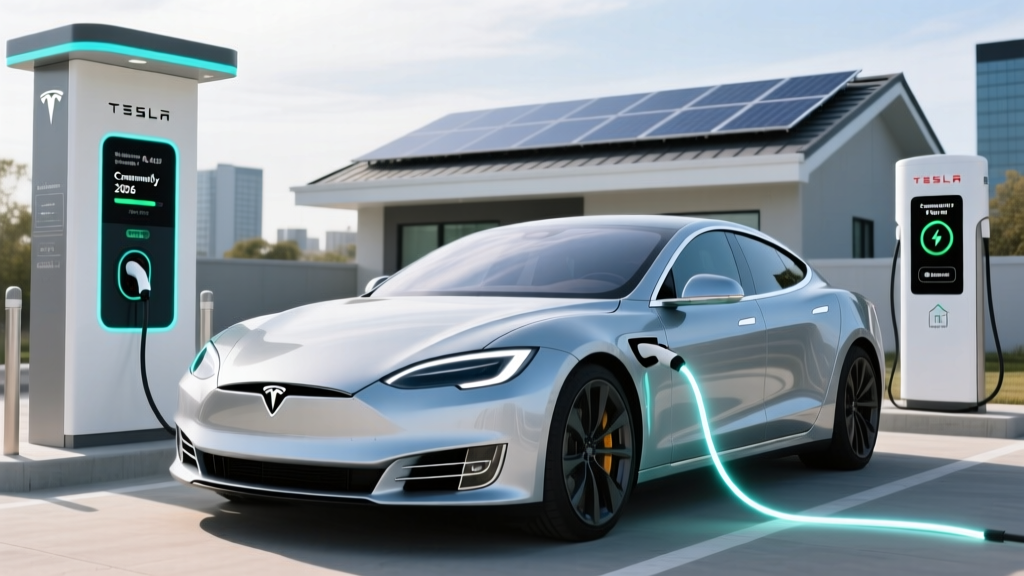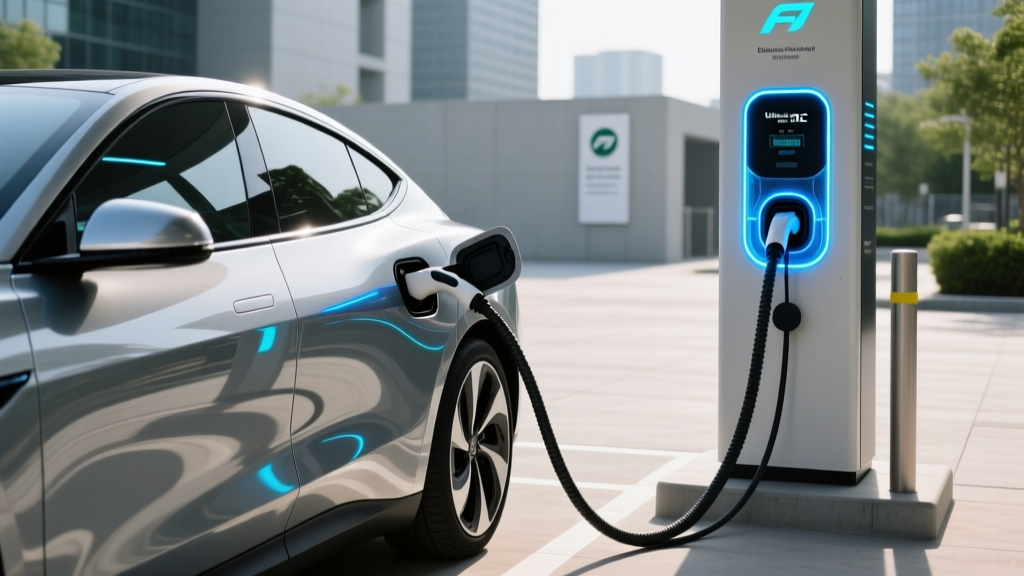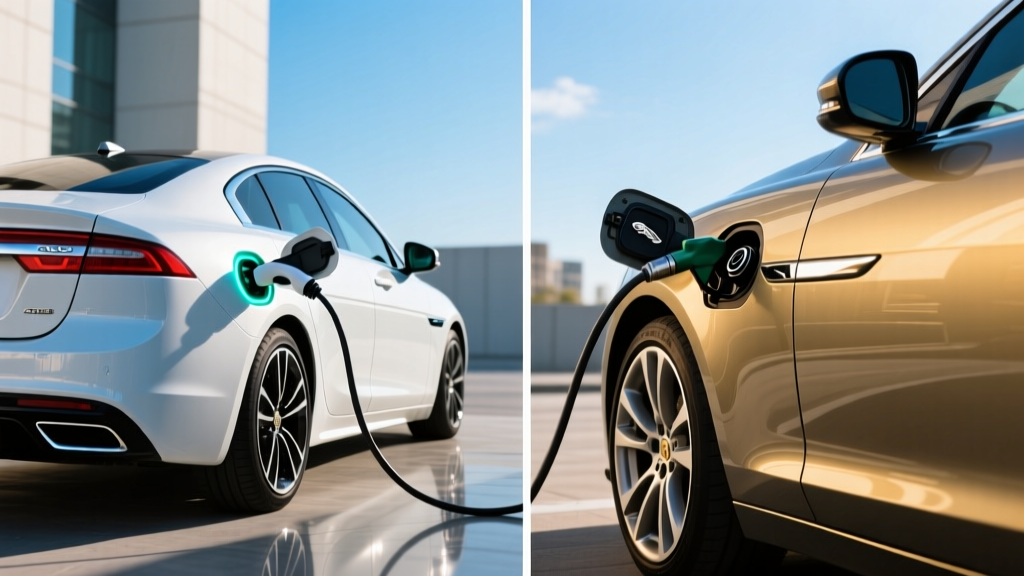
It sounds like an odd matchup: a supercharged V8 British sedan from 2015 against the modern EV charging ecosystem. But for cross-shoppers weighing a used luxury performance car against a new electric vehicle, the real question is always operational cost. The 2015 Jaguar XF 5.0L Supercharged (the XFR-S and Supercharged trims) pushes 470–550 horsepower and delivers thrilling performance — at the pump. Meanwhile, a properly equipped home EV charger can refuel an electric car for a fraction of the per-mile cost.
This guide breaks down everything you need to know about EV charging infrastructure — levels, home installation, equipment, connectors, and costs — while using the 2015 Jaguar XF 5.0L Supercharged as a real-world fueling-cost baseline. Whether you're considering trading the Jag for an EV or just want to understand the charging landscape, the numbers below tell the full story.
Charging Levels Explained: Speeds in kW and Miles Per Hour
The single most important distinction in EV charging is between kW (kilowatts), which measures power — the rate of energy delivery — and kWh (kilowatt-hours), which measures energy capacity, like gallons in a tank. Confusing these two is the most common EV literacy mistake. A 10 kW charger delivering power for one hour adds 10 kWh to your battery.
There are three charging levels available to EV owners in 2026:
| Level | Voltage | Power (kW) | Miles of Range Added Per Hour | Typical Use |
|---|---|---|---|---|
| Level 1 | 120V AC | 1.0–1.4 kW | 3–5 mi/hr | Overnight trickle; PHEVs; emergency |
| Level 2 | 240V AC | 3.3–19.2 kW | 12–75 mi/hr | Home daily charging; workplace; public AC |
| DC Fast Charge (Level 3) | 200–800V DC | 50–350+ kW | 150–1,000+ mi/hr (peak) | Road trips; highway corridors; 10–80% in 15–30 min |
Real-world nuance: DC fast charging speeds are peak rates, not sustained rates. A vehicle that peaks at 250 kW may only sustain that rate between 10–40% State of Charge (SoC), then taper significantly above 80% to protect battery health. This "charge curve" means a 10–80% session on a 350 kW charger typically takes 18–25 minutes for a modern 75–100 kWh battery, not the theoretical minimum.
How Much Does It Cost to Install a Home EV Charger?
Home Level 2 charging is the backbone of practical EV ownership. But installation costs vary enormously depending on your home's electrical panel, the distance from the panel to the charging location, and local permit requirements.
Here's a realistic cost breakdown for a 240V / 48A (hardwired) Level 2 home charger installation in 2026:
| Component | Low End | High End | Notes |
|---|---|---|---|
| Level 2 Charger (Equipment) | $350 | $750 | Smart Wi-Fi chargers, 25-ft cable, 40–48A |
| Electrician Labor | $500 | $2,000 | Depends on run length, conduit, wall type |
| Electrical Permit | $50 | $250 | Varies by municipality |
| Panel Upgrade (if needed) | $1,500 | $4,000 | Older 100A panels may need upgrade to 200A |
| Total (No Panel Upgrade) | $900 | $3,000 | Most homes with 200A service |
| Total (With Panel Upgrade) | $2,400 | $7,000 | Homes built before ~1990 with 100A panels |
Panel upgrade gotcha: A Level 2 charger on a 60A circuit (for 48A continuous charging) requires significant headroom on your electrical panel. Homes with 100-amp service — common in houses built before 1990 — often cannot support a 48A charger alongside existing loads (HVAC, electric range, dryer). A licensed electrician will perform a load calculation per NEC Article 220. If your panel is maxed out, you have two options: upgrade to 200A service, or install a lower-amperage charger (e.g., 32A on a 40A circuit), which still adds ~25–30 miles of range per hour — enough for most daily driving.
Which Connector and Charger Is Compatible with My EV?
The connector landscape shifted dramatically between 2023 and 2026. Tesla's North American Charging Standard (NACS) has been adopted by nearly every major automaker, but many EVs on the road still use CCS1. Here's the compatibility map:
| Connector | Brands Using It (Native) | Adapter Needed? |
|---|---|---|
| NACS (Tesla / J3400) | Tesla (all), Ford (2025+), GM (2025+), Rivian (2025+), Volvo/Polestar (2025+), Hyundai/Kia (2026+), BMW, Mercedes, Nissan (2026+) | CCS1→NACS adapters available (~$200–$300) for older CCS vehicles to access Superchargers |
| CCS1 (Combined Charging System) | VW/Audi (legacy), older Ford/GM/Hyundai/Kia (pre-adoption), BMW (pre-2026), Lucid (pre-2025) | NACS→CCS1 adapters for newer vehicles at legacy CCS stations |
| CHAdeMO | Nissan Leaf (pre-2026), Mitsubishi Outlander PHEV (older) | Declining network; no reliable adapter path to NACS/CCS for DC fast charging |
For home Level 2 charging, the situation is simpler: all EVs (including Teslas) can charge on any J1772 Level 2 station. Tesla vehicles come with a J1772 adapter, and most non-Tesla home chargers use the J1772 connector (or NACS for newer models). If you buy a NACS-equipped home charger and own a CCS1 vehicle, a simple adapter solves it.
The 2015 Jaguar XF 5.0L Supercharged: Fuel Cost Baseline
Before we compare charging costs, let's establish what the 2015 Jaguar XF 5.0L Supercharged actually costs to fuel. According to EPA data on fueleconomy.gov, the 2015 XF Supercharged (5.0L V8, 470 hp) rates at:
- EPA Fuel Economy: 15 city / 23 highway / 18 combined MPG
- Fuel tank: 18.4 gallons
- Range: ~331 miles per tank (combined)
- Premium gasoline required (91+ octane)
At a national average of $3.85/gallon for premium (2026 estimate), filling the tank costs roughly $70.84. That works out to approximately $0.214 per mile driven — just in fuel.
If you drive 12,000 miles per year, you're spending roughly $2,568 annually on gasoline with the supercharged Jag. And that's before oil changes, supercharger belt maintenance, and the higher insurance premiums a 470-hp V8 attracts.
EV Charging Cost Per Mile vs. Gas: The Real Numbers
Now let's compare that fuel cost against typical EV charging scenarios. We'll use a mid-size EV with 3.0 miles per kWh efficiency (comparable to a Tesla Model Y, Hyundai Ioniq 5, or Ford Mustang Mach-E — roughly 33 kWh/100mi).
| Charging Scenario | Rate ($/kWh) | Cost Per Mile | Annual Cost (12,000 mi) | Savings vs. Jag |
|---|---|---|---|---|
| Home Level 2 (Off-Peak Utility Rate) | $0.09 | $0.030 | $360 | $2,208/yr |
| Home Level 2 (Standard Residential Avg.) | $0.16 | $0.053 | $640 | $1,928/yr |
| Public Level 2 (Network Pricing) | $0.30 | $0.100 | $1,200 | $1,368/yr |
| DC Fast Charging (Electrify America / EVgo) | $0.48 | $0.160 | $1,920 | $648/yr |
| Tesla Supercharger V4 (Avg.) | $0.35 | $0.117 | $1,400 | $1,168/yr |
| 2015 Jaguar XF 5.0L SC (Gas) | $3.85/gal | $0.214 | $2,568 | — |
Key takeaway: Even if you relied entirely on expensive DC fast charging, a comparable EV would still cost less per mile than fueling the supercharged XF. But the real savings emerge with home charging: off-peak residential rates deliver fuel at roughly 86% less cost per mile than premium gasoline.
For context on charging time, here's how long common EV battery sizes take to charge from 10% to 80% at various speeds:
| Battery Size | Level 2 at 7.7 kW (32A) | Level 2 at 11.5 kW (48A) | DC Fast at 150 kW (peak) | DC Fast at 250 kW (peak) |
|---|---|---|---|---|
| 60 kWh (e.g., base Leaf, Bolt) | ~5.4 hours | ~3.7 hours | ~28 min | ~20 min |
| 77 kWh (e.g., Ioniq 5, Mach-E) | ~7.0 hours | ~4.7 hours | ~32 min | ~22 min |
| 100 kWh (e.g., Model S, Rivian) | ~9.1 hours | ~6.1 hours | ~40 min | ~28 min |
Note: DC fast-charge times assume preconditioned batteries and favorable charge curves. Cold batteries can double these times without preconditioning. Most modern EVs automatically precondition when you navigate to a fast charger.
Recommended Home EV Chargers for 2026
Based on reliability, smart features, and value, here are our top home Level 2 charger picks:
Emporia Vue Level 2 Smart Charger
- Power: 48A (11.5 kW at 240V), hardwired or NEMA 14-50 plug
- Connector: J1772 (works with all EVs; Tesla owners use included adapter)
- Cable Length: 24 feet
- Smart Features: Wi-Fi, energy monitoring via Emporia app, solar integration, scheduled charging, utility rate optimization
- Price: ~$399
- Best For: Budget-conscious buyers wanting full smart features and energy tracking
ChargePoint Home Flex (2nd Gen)
- Power: Up to 50A (12 kW at 240V), adjustable amperage
- Connector: J1772 or NACS (configurable at purchase)
- Cable Length: 23 feet
- Smart Features: Wi-Fi, ChargePoint app, Alexa integration, flexible amperage (set from 16A–50A to match your circuit)
- Price: ~$599 (J1772) / ~$649 (NACS)
- Best For: Flexibility across vehicles and circuit sizes; strong app ecosystem
Tesla Wall Connector (Gen 4)
- Power: 48A (11.5 kW at 240V), hardwired
- Connector: NACS native; J1772 adapter included
- Cable Length: 24 feet
- Smart Features: Wi-Fi, Tesla app, power sharing (link multiple units on one circuit), OTA updates, integrated cable management
- Price: ~$475
- Best For: Tesla owners or households with NACS-equipped vehicles; excellent build quality
Safety, Code, and Electrical Requirements
EV charger installation is not a DIY project. The National Electrical Code (NEC) and local building codes require specific safety measures:
- Dedicated Circuit: Your Level 2 charger must be on its own dedicated circuit — not shared with other appliances. A 48A charger requires a 60A breaker (NEC requires continuous loads to use only 80% of breaker capacity).
- GFCI Protection: NEC 2023 and later require GFCI (Ground Fault Circuit Interrupter) protection for all EV charging outlets. Hardwired chargers have GFCI built into the unit; receptacle-based installations need a GFCI breaker.
- Outdoor Rating: If installing outdoors, the charger must carry a NEMA 4 (weatherproof) rating. All three chargers recommended above are rated for outdoor installation.
- Permit and Inspection: Most jurisdictions require an electrical permit and post-installation inspection. This protects your home insurance coverage and ensures code compliance. Budget $50–$250 for the permit.
- Wire Gauge: A 60A circuit requires 6 AWG copper wire (THHN in conduit) or 4 AWG aluminum. Longer runs may need upsizing to prevent voltage drop. Your electrician will calculate this.
A note on NEMA 14-50 receptacles: Many homeowners opt for a 14-50 outlet rather than hardwiring, giving flexibility to unplug the charger or use the outlet for other purposes (welder, RV). However, some utilities and inspectors now prefer hardwired installations for EV chargers due to the sustained high-current draw. Check with your local authority having jurisdiction (AHJ) before deciding.
Frequently Asked Questions
How much does it cost to install a home EV charger?
Most installations with an existing 200A panel cost between $900 and $3,000 total (equipment, electrician labor, and permit). If your home has an older 100A panel and needs a service upgrade to 200A, expect $2,400–$7,000. The panel upgrade is the single biggest variable.
How fast will each charging level add range?
Level 1 (120V) adds 3–5 miles per hour. Level 2 (240V) adds 12–75 miles per hour depending on amperage and vehicle acceptance rate. DC fast charging adds 150–1,000+ miles per hour at peak, but tapers significantly above 80% SoC — plan around 10–80% times of 18–40 minutes depending on battery size and charger power.
Which connector/charger is compatible with my EV?
For 2026, NACS (J3400) is the dominant standard for new vehicles from Tesla, Ford, GM, Rivian, Hyundai, Kia, and others. Older EVs may still have CCS1 or CHAdeMO. For home Level 2 charging, any J1772 charger works with every EV (Tesla includes an adapter). For DC fast charging on the road, check your vehicle's native connector and whether you need an adapter for Tesla Supercharger access.
How much does EV charging cost per mile compared to the 2015 Jaguar XF 5.0L Supercharged?
The supercharged XF costs approximately $0.214 per mile in premium fuel. Home EV charging at off-peak residential rates costs roughly $0.03/mile — an 86% reduction. Even exclusive DC fast charging ($0.48/kWh) comes in at ~$0.16/mile, still 25% cheaper than the Jag.
What electrical upgrades might I need for a home charger?
The most common upgrade is a panel service increase from 100A to 200A ($1,500–$4,000). You may also need: a new dedicated circuit with appropriate wire gauge, a GFCI breaker, conduit runs through walls or underground (for detached garages), and a permit/inspection. A licensed electrician's load calculation will determine exactly what your home requires.
Sources: fueleconomy.gov (EPA fuel economy data), IRS §30D clean vehicle credit rules, NEC / NFPA electrical code. Tax credit eligibility varies by income, MSRP, and battery sourcing — consult a tax professional. All cost estimates reflect 2026 national averages and vary by region.