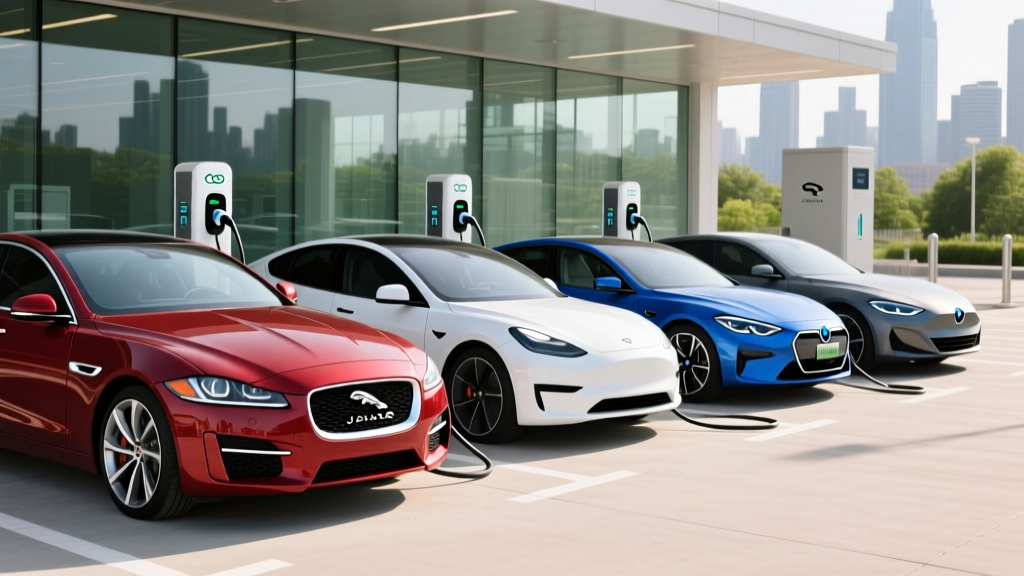
If you're cross-shopping a used luxury sport sedan like the 2015 Jaguar XF 5.0 Supercharged against a new electric vehicle, the sticker price is only the beginning. The XF's 5.0L supercharged V8 delivers 470 horsepower and a 0–60 mph time around 4.9 seconds — thrilling, but thirsty. With EPA-rated fuel economy hovering near 18 MPG combined, filling its 18.4-gallon tank with premium gasoline at $4.50/gallon costs roughly $83 per fill-up.
This guide walks you through the real math of switching from a high-performance gas sedan to a modern EV: how home charging works, what installation actually costs, which connectors you'll encounter, and what you'll pay per mile in 2026.
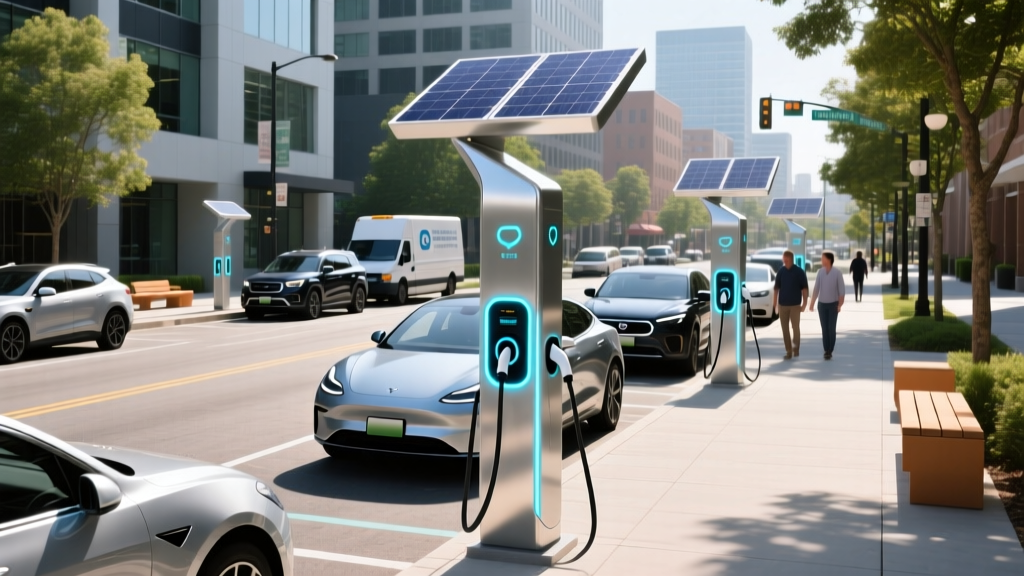
The Charging Landscape: Level 1, Level 2, and DC Fast Charging Explained
Before comparing costs, you need to understand the three tiers of EV charging. The critical distinction: kW (kilowatts) measures power — the rate electricity flows into the battery. kWh (kilowatt-hours) measures energy — the total capacity stored, like gallons in a fuel tank.
| Level | Voltage | Power (kW) | Miles Added/Hour | Best For |
|---|---|---|---|---|
| Level 1 | 120V AC | 1.2–1.9 kW | 3–5 mi/hr | Overnight top-up, PHEVs |
| Level 2 | 240V AC | 7.2–19.2 kW | 20–60 mi/hr | Daily home charging |
| DC Fast | 400–800V DC | 50–350 kW | 150–1,000+ mi/hr | Road trips, rapid top-ups |
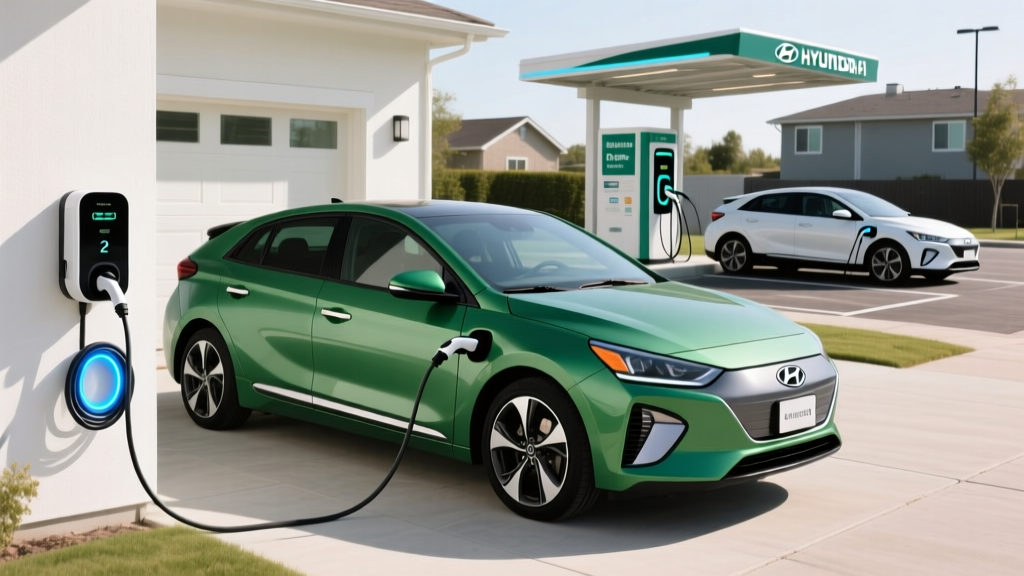
For context: a 2026 Hyundai Ioniq 5 with a 77.4 kWh battery gains roughly 230 miles of range in an 18-minute session on a 240 kW DC fast charger (10–80% State of Charge). That same car fully replenishes overnight on a 48-amp Level 2 home charger in about 7 hours.
Home EV Charger Installation: What It Really Costs
Installing a dedicated Level 2 home charger is the single biggest infrastructure investment for new EV owners. Costs vary dramatically based on your electrical panel's capacity, the distance from the panel to your garage or driveway, and local permit fees.
| Component | Typical Range | Notes |
|---|---|---|
| Charger hardware (Level 2, 40–48A) | $400–$750 | Smart WiFi chargers cost more |
| Electrician labor | $500–$2,000 | Depends on run length, wall type |
| Permit & inspection | $50–$300 | Varies by municipality |
| Electrical panel upgrade (if needed) | $1,500–$4,000 | Older homes with 100A service |
| Total (no panel upgrade) | $950–$3,050 | Most newer 200A-panel homes |
| Total (with panel upgrade) | $2,450–$7,050 | Homes needing 200A service |
What Electrical Upgrades Might I Need?
A 48-amp Level 2 charger requires a dedicated 60-amp, 240-volt circuit (NEC code requires circuits rated at 125% of continuous load). If your home has a 200-amp electrical panel with available capacity, you'll likely just need a new breaker and a wire run. Homes with 100-amp service — common in pre-1980 construction — may need a full panel upgrade to safely support EV charging alongside existing loads like central AC, electric ranges, and dryers.
A licensed electrician will perform a load calculation before recommending a panel upgrade. Don't skip this step: undersized panels create fire hazards.
Connector Compatibility: NACS, CCS1, CHAdeMO, and Adapters
The North American charging connector landscape consolidated significantly by 2026. Tesla's NACS (North American Charging Standard) is now the dominant plug, adopted by Ford, GM, Hyundai, Kia, Rivian, Volvo, and most major automakers. The legacy CCS1 (Combined Charging System) connector persists on some 2024–2025 models and most Electrify America stations. CHAdeMO is effectively discontinued for new vehicles.
| Connector | Brands Using It | Network Access |
|---|---|---|
| NACS (Tesla) | Tesla, Ford, GM, Hyundai, Kia, Rivian, Volvo, Polestar, BMW, Mercedes | Tesla Supercharger + most new public DC stations |
| CCS1 | Legacy VW ID.4 (pre-2026), older BMW i4, Stellantis EVs | Electrify America, EVgo, ChargePoint |
| CHAdeMO | Nissan Leaf (discontinued), Mitsubishi Outlander PHEV | Limited; declining station support |
If you buy a CCS1-equipped EV, a CCS-to-NACS adapter (roughly $200–$300) unlocks Tesla's Supercharger network — critical since Superchargers represent the most reliable DC fast-charging infrastructure in the US. Always verify adapter compatibility with your specific model year before purchasing.
Charging Cost Per Mile vs. the 2015 Jaguar XF 5.0 Supercharged
Here's where the comparison gets concrete. The 2015 Jaguar XF 5.0 Supercharged requires premium unleaded (91+ octane) and returns an EPA-estimated 15 city / 23 highway / 18 combined MPG. At a national average premium price of $4.50/gallon in 2026, you're paying roughly $0.25 per mile just in fuel.
| Scenario | Cost/kWh or Gal | Cost/Mile | Annual (12,000 mi) |
|---|---|---|---|
| 2015 Jaguar XF 5.0 SC (premium gas) | $4.50/gal | $0.25 | $3,000 |
| EV: Home charging (off-peak) | $0.12/kWh | $0.04 | $480 |
| EV: Home charging (standard rate) | $0.17/kWh | $0.05 | $600 |
| EV: Public Level 2 | $0.25/kWh | $0.08 | $960 |
| EV: DC fast charging (public) | $0.40/kWh | $0.12 | $1,440 |
Calculations based on a 3.0 kWh/mile consumption average (typical for a midsize EV sedan like the Hyundai Ioniq 6 or Tesla Model 3). Even using exclusively expensive DC fast chargers, an EV costs less than half per mile compared to the XF's supercharged V8.
Charging Time Examples: What to Expect by Battery Size
Charging speed depends on the battery's usable capacity (kWh), the charger's power output (kW), and the vehicle's onboard charge acceptance curve. Batteries don't charge at peak speed from 0–100%; most EVs taper significantly above 80% State of Charge to protect cell longevity. This is why you'll see manufacturers quote 10–80% charging times rather than 0–100%.
| Vehicle Type | Battery (usable kWh) | Level 2 (48A / 11.5 kW) | DC Fast 10–80% |
|---|---|---|---|
| Compact EV (e.g., Chevy Bolt EV) | 65 kWh | ~6 hours (0–100%) | ~25 min (at 150 kW peak) |
| Midsize sedan (e.g., Tesla Model 3) | 75 kWh | ~7 hours (0–100%) | ~18 min (at 250 kW peak) |
| Midsize SUV (e.g., Hyundai Ioniq 5) | 77.4 kWh | ~7.5 hours (0–100%) | ~18 min (at 240 kW peak) |
| Full-size SUV (e.g., Rivian R1S) | 128 kWh | ~12 hours (0–100%) | ~30 min (at 220 kW peak) |
Recommended Home EV Chargers for 2026
Not all Level 2 chargers are created equal. Here are three proven options across price tiers, all with NACS connectors (CCS adapters available for legacy vehicles).
Emporia Vue EV Charger — Budget Pick
- Power: 48A / 11.5 kW (hardwired) or 40A / 9.6 kW (NEMA 14-50 plug)
- Connector: NACS (J1772 adapter included)
- Cable length: 24 feet
- Smart features: WiFi scheduling, solar integration, energy monitoring via Emporia app
- Price: ~$400 (hardwired) / ~$450 (plug-in)
Best for cost-conscious buyers who want scheduling and solar-aware charging.
ChargePoint Home Flex — Best Overall
- Power: Up to 50A / 12 kW (NEMA 14-50) or 80A / 19.2 kW (hardwired, 100A circuit)
- Connector: NACS or J1772 (configurable)
- Cable length: 23 feet
- Smart features: WiFi, Alexa/Google Home, detailed ChargePoint app with session history
- Price: ~$550–$700 depending on amperage configuration
The flexible amperage makes this ideal if you plan to upgrade your panel later — start at 50A, hardwire to 80A when ready.
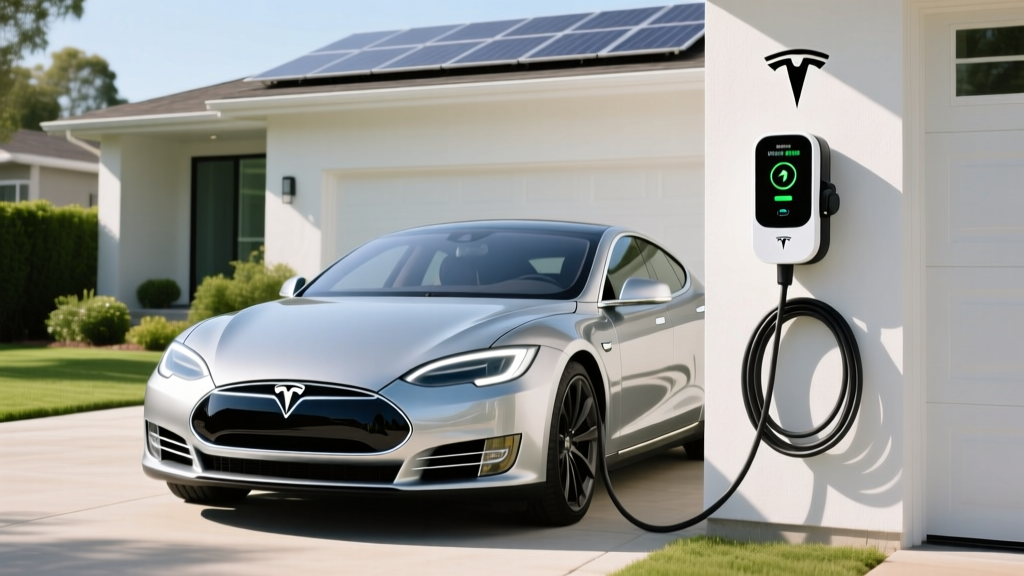
Tesla Wall Connector — Best for Tesla & NACS Owners
- Power: Up to 48A / 11.5 kW (hardwired, 60A circuit)
- Connector: NACS native (J1772 adapter sold separately)
- Cable length: 24 feet
- Smart features: WiFi, over-the-air updates, power-sharing (up to 6 units on one circuit)
- Price: ~$475
Sleek design, reliable firmware, and power-sharing capability make it ideal for multi-EV households.
Safety, Code, and Installation Best Practices
EV charging draws sustained high current for hours — unlike a dryer or oven that cycles on and off. This continuous load demands strict adherence to the National Electrical Code (NEC) and local building codes:
- Dedicated circuit: Your Level 2 charger must have its own breaker — never share a circuit with other appliances.
- 125% rule: A 48A charger requires a 60A breaker (48 × 1.25 = 60). This is non-negotiable per NEC Article 625.
- GFCI protection: Outdoor installations require a Ground Fault Circuit Interrupter breaker or a charger with built-in GFCI.
- Outdoor-rated equipment: If your charger mounts outside, it must carry a NEMA 4 or NEMA 4X rating for weather resistance.
- Permit and inspection: Most jurisdictions require an electrical permit for new 240V circuits. Skipping inspection can void homeowner's insurance claims in the event of an electrical fire.
The Ownership Math: 5-Year Cost Snapshot
Let's put the 2015 Jaguar XF 5.0 Supercharged and a comparable 2026 EV sedan side by side over five years and 60,000 miles of driving.
| Category | 2015 Jaguar XF 5.0 SC (Used) | 2026 Tesla Model 3 Long Range |
|---|---|---|
| Purchase price | ~$22,000 (used market) | $44,990 MSRP (est.) |
| Fuel / energy | $15,000 (premium gas) | $3,000 (home + public mix) |
| Maintenance | $6,500 (oil, brakes, supercharger belt, coolant) | $1,200 (cabin filter, wipers, tire rotation) |
| Insurance (avg) | $8,400 | $10,800 |
| Home charger install | N/A | $2,000 (typical) |
| Federal tax credit | N/A | Up to $7,500 (§30D, subject to IRS eligibility) |
| Estimated 5-year net cost | $51,900 | $54,490 |
The EV costs slightly more over five years when purchased new, but the gap narrows dramatically with lower fuel and maintenance costs. Factor in the XF's depreciation from its used purchase price (likely $8,000–$10,000 further loss) versus the Model 3's retention, and the math tightens further. By year seven, the EV typically breaks even and pulls ahead.
Note on the §30D federal tax credit: Eligibility depends on buyer income caps ($150K single / $300K joint for new EVs), vehicle MSRP caps ($55K sedans), and battery critical-mineral sourcing requirements that tighten annually. Always verify current-year rules on IRS.gov before relying on the credit in your purchase decision. The credit can now be transferred to the dealer at point of sale as an instant rebate.
Frequently Asked Questions
How much does it cost to install a home EV charger?
Most homeowners with a 200-amp electrical panel spend between $950 and $3,050 for a complete Level 2 charger installation including hardware, electrician labor, and permits. Homes requiring a panel upgrade from 100A to 200A service should budget $2,450 to $7,050 total.
How fast will each charging level add range?
Level 1 (120V) adds 3–5 miles of range per hour — suitable for plug-in hybrids with small batteries. Level 2 (240V) adds 20–60 miles per hour depending on amperage, fully recharging most EVs overnight. DC fast charging at 150–350 kW can add 150–1,000+ miles per hour, enabling 10–80% charges in 15–30 minutes.
Which connector and charger is compatible with my EV?
If you buy a 2025–2026 model from Tesla, Ford, GM, Hyundai, Kia, BMW, Mercedes, Rivian, or Volvo, your vehicle uses the NACS connector. Older CCS1-equipped vehicles can access NACS/Supercharger stations with a CCS-to-NACS adapter (~$200–$300). CHAdeMO is limited to older Nissan Leaf and Mitsubishi models with declining public station support.
How much does charging cost per mile vs. premium gas?
At home on off-peak electricity ($0.12/kWh), a typical EV costs about $0.04 per mile — roughly 84% cheaper than the 2015 Jaguar XF 5.0 Supercharged at $0.25 per mile on premium gas. Even exclusive public DC fast charging at $0.40/kWh ($0.12/mile) remains less than half the XF's fuel cost.
What electrical upgrades might I need for a home charger?
A Level 2 charger requires a dedicated 240V circuit rated at 60 amps (for a 48A charger). Homes with 200A electrical panels usually have sufficient capacity. Homes with 100A service or panels already near capacity may need a full panel upgrade ($1,500–$4,000). Always have a licensed electrician perform a load calculation before installation.