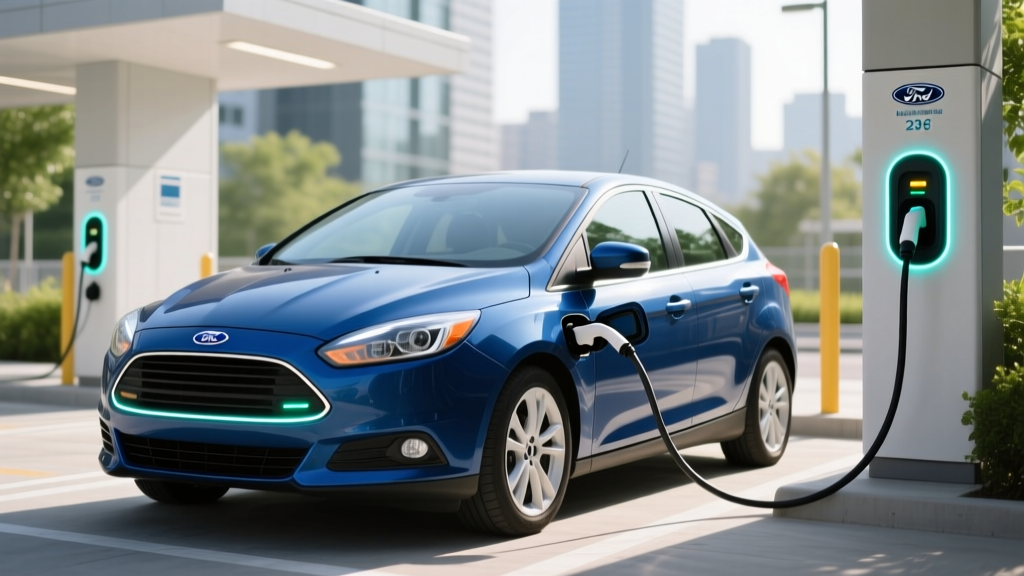
The 2015 Ford Focus Electric was Ford's first serious battery-electric commuter, built on the global Focus platform and sold in limited volumes across California and a handful of ZEV-mandate states. More than a decade later, a growing number of these cars are circulating on the used market at bargain prices — often under $8,000. For budget-minded EV shoppers, the key question isn't just the purchase price; it's whether the 2015 Ford Focus Electric range and charging profile can fit a modern daily routine.
This guide breaks down exactly what to expect from the Focus Electric's 23 kWh battery, walks through every charging level and connector you'll encounter, and lays out the real costs of home charger installation, public charging, and per-mile energy spend in 2026.
2015 Ford Focus Electric: Range, Battery, and Efficiency Specs
Before plugging in, you need to know what you're filling. The 2015 Focus Electric uses a 23 kWh lithium-ion battery pack (roughly 19–20 kWh usable, with a top and bottom buffer to protect longevity). That pack powers a 107 kW (143 hp) electric motor driving the front wheels.
| Spec | Value |
|---|---|
| Battery Capacity | 23 kWh total (~20 kWh usable), LG Chem NMC |
| EPA Range | 76 miles |
| EPA Efficiency | 105 MPGe (32 kWh/100 mi) |
| Motor Output | 107 kW (143 hp), 184 lb-ft torque |
| 0–60 mph | ~9.2 seconds |
| Onboard Charger (Level 2) | 6.6 kW |
| DC Fast Charging | Not supported |
| Charge Port | SAE J1772 (Level 1/2 only) |
| Original MSRP | $29,170 (before incentives) |
| Used Price Range (2026) | $5,500–$9,000 |
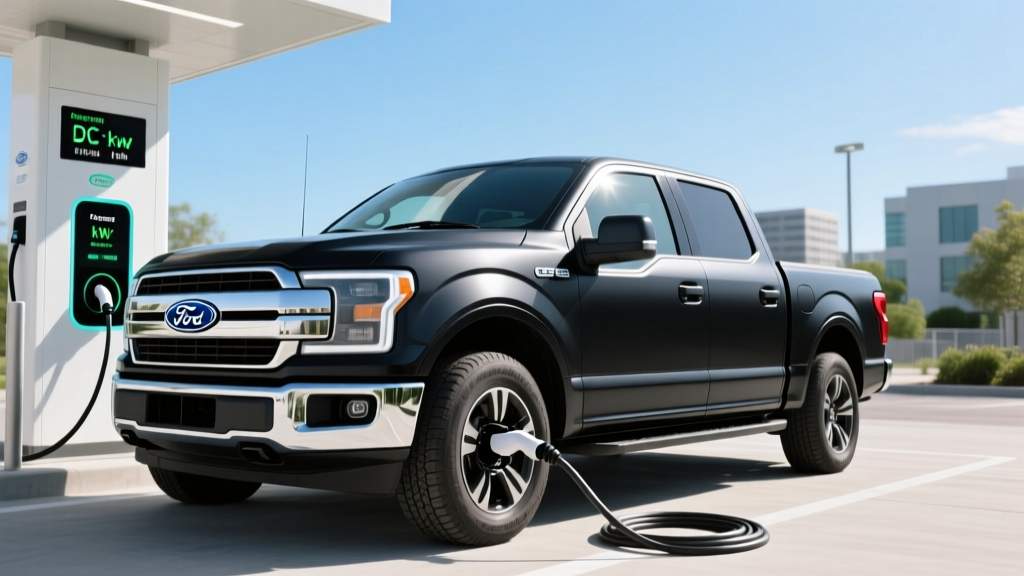
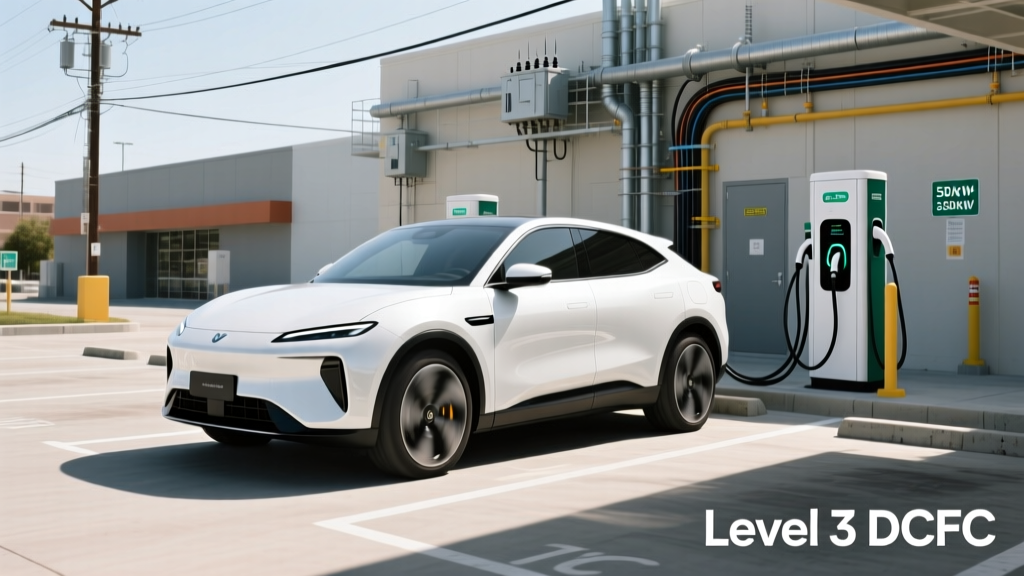
Critical limitation: The 2015 Focus Electric has no DC fast charging capability. There is no CCS1, CHAdeMO, or NACS port. All charging happens via the J1772 AC port at Level 1 or Level 2 speeds. This makes home charging infrastructure essential — you cannot rely on highway DC fast chargers to extend a road trip.
Charging Levels Explained: Speeds and Range Added Per Hour
Understanding EV charging means understanding the difference between kW (kilowatts), which measures the rate of power delivery, and kWh (kilowatt-hours), which measures the total energy stored in the battery. Think of kW as how fast water flows through a hose, and kWh as the total volume of the tank you're filling.
Here's how each charging level applies to the 2015 Focus Electric's 23 kWh pack:
| Level | Voltage / Amperage | Power (kW) | Miles of Range / Hour | Full Charge Time (0–100%) |
|---|---|---|---|---|
| Level 1 (Standard outlet) | 120V / 12A | 1.4 kW | ~3–4 mi/hr | ~18–20 hours |
| Level 2 (Home / public AC) | 240V / 28A (car-limited) | 6.6 kW (max) | ~18–22 mi/hr | ~3.5–4 hours |
| DC Fast Charging | N/A | N/A | N/A | Not supported on Focus Electric |
What this means practically: Even though you can install a 48-amp Level 2 home charger capable of delivering 11.5 kW, the Focus Electric's onboard charger caps intake at 6.6 kW. You'll never charge faster than 6.6 kW on this car, regardless of the station's rated output. A 32-amp (7.7 kW) charger is the sweet spot — it maxes out the car's capability without overspending on hardware you can't fully use.
Level 1 charging on a standard 120V household outlet adds about 3–4 miles per hour. If you drive 25 miles round-trip, you'll need roughly 7–9 hours of Level 1 plug-in time to recover that energy — feasible for overnight charging but tight if you need two full charges in a day.
Home Charger Installation: Electrical Requirements, Costs, and Panel Upgrades
Installing a dedicated Level 2 home charger is the single biggest ownership upgrade for any EV driver. For the Focus Electric, a Level 2 station transforms the car from a slow-charging curiosity into a practical daily commuter that's always topped up by morning.
Electrical Requirements
A Level 2 charger requires a 240-volt dedicated circuit on your home's electrical panel. For a 32-amp charger (ideal for the Focus Electric's 6.6 kW onboard limit), you need a 40-amp breaker (NEC code requires circuits rated at 125% of continuous load). For a 48-amp charger, you need a 60-amp breaker.
Key considerations:
- Panel capacity: Most modern homes have 200-amp service panels, which can typically accommodate a 40A or 60A EV circuit. Older homes with 100-amp panels may need a panel upgrade to 200A — a significant added cost.
- Wire gauge: A 40A circuit requires 8 AWG copper wire; a 60A circuit requires 6 AWG. Longer wire runs (50+ feet from panel to garage) increase material cost.
- Permit: Nearly all jurisdictions require an electrical permit for a new 240V circuit. Your electrician pulls this; cost varies by municipality.
- GFCI protection: The 2020 NEC (and subsequent editions adopted through 2026) requires GFCI protection for EV charging outlets. Hardwired chargers may have GFCI built in; plug-in units on NEMA 14-50 receptacles require a GFCI breaker, which adds $50–$120.
Installation Cost Breakdown
| Item | Basic Install (Short Run) | Complex Install (Long Run / Upgrades) |
|---|---|---|
| Level 2 Charger Equipment | $300–$500 | $500–$750 |
| Electrician Labor (2–6 hrs) | $400–$800 | $1,000–$2,500 |
| Electrical Permit | $50–$150 | $100–$300 |
| GFCI Breaker (if required) | $50–$80 | $80–$120 |
| Panel Upgrade (100A → 200A) | Not needed | $1,500–$3,500 |
| Total Estimated Cost | $800–$1,530 | $3,180–$7,170 |
For most Focus Electric owners with a 200-amp panel and a garage close to the electrical panel, expect to spend $900–$1,600 total for a professional 32-amp or 40-amp Level 2 installation. The federal Residential Clean Energy Credit covers 30% of charger equipment and installation costs (up to $1,000) for equipment placed in service through 2032, provided you live in a qualifying census tract. Check IRS Form 8911 and consult a tax professional for your specific eligibility.
Connector Compatibility: What Fits the Focus Electric?
The 2015 Ford Focus Electric uses the standard SAE J1772 connector for all AC charging. Because the car lacks DC fast charging, you will never use a CCS1, CHAdeMO, or NACS (Tesla) connector on this vehicle.
| Connector | Type | Used By | Focus Electric Compatible? |
|---|---|---|---|
| J1772 | AC Level 1 & 2 | All non-Tesla EVs (2010–2025 era) | Yes — native port |
| NACS (Tesla) | AC + DC | Tesla; most new EVs from 2025+ | No (J1772 adapter not needed; NACS chargers supply DC or Tesla AC) |
| CCS1 | DC Fast | Most non-Tesla EVs 2014+ | No (car has no DC port) |
| CHAdeMO | DC Fast | Nissan LEAF, Mitsubishi (legacy) | No (car has no DC port) |
What about Tesla destination chargers? Some Tesla Wall Connectors at hotels, restaurants, and workplaces provide Level 2 AC power. Older Tesla Wall Connectors use a proprietary Tesla plug; you'd need a Tesla-to-J1772 adapter (such as the Lectron or TeslaTap, $120–$200) to use them. Newer Tesla Universal Wall Connectors include a built-in J1772 adapter and work natively.
For public Level 2 networks like ChargePoint, Blink, and EVgo's Level 2 stations, the J1772 connector is universal. Simply plug in — no adapter needed.
Charging Cost: Per-Mile Spend vs. Gasoline
One of the strongest arguments for owning a used Focus Electric is the fuel-cost advantage. At 32 kWh per 100 miles (its EPA combined consumption), here's what you'll spend in different scenarios:
| Scenario | Rate ($/kWh) | Cost per Full Charge (20 kWh usable) | Cost per Mile |
|---|---|---|---|
| Home — Off-Peak Utility Rate | $0.09/kWh | $1.80 | $0.024/mi |
| Home — Standard Residential Rate | $0.16/kWh | $3.20 | $0.042/mi |
| Public Level 2 (ChargePoint, etc.) | $0.25–$0.39/kWh | $5.00–$7.80 | $0.066–$0.10/mi |
| Gasoline Car (25 MPG, $3.40/gal) | N/A | N/A | $0.136/mi |
The bottom line: Charging at home on off-peak rates, the Focus Electric costs roughly $0.02–$0.04 per mile — about one-quarter to one-third the cost of a comparable 25 MPG gasoline car at $3.40/gallon. Over 12,000 miles per year, that's an annual fuel savings of $1,200–$1,400 compared to gas.
Public Level 2 charging narrows the gap but still beats gasoline in most markets. The key is establishing a reliable home charging routine to capture the lowest rates.
Recommended Home Chargers for the Focus Electric
Since the Focus Electric caps at 6.6 kW, you don't need the most powerful charger on the market. A 32-amp (7.7 kW) unit will fully utilize the car's onboard charger and leave headroom if you later upgrade to a vehicle with a higher acceptance rate. Here are three proven options:
Emporia Vue Level 2 Charger
- Power Output: 48A max (11.5 kW) — Focus Electric will draw 28A/6.6 kW
- Connector: J1772
- Cable Length: 24 ft
- Smart Features: Wi-Fi, app scheduling, energy monitoring, load management with Emporia panel monitor
- Price: ~$350–$400
- Best For: Budget-conscious buyers who want smart scheduling for off-peak utility rates
ChargePoint Home Flex
- Power Output: Configurable 16A–50A (up to 12 kW) — set to 32A for Focus Electric
- Connector: J1772
- Cable Length: 23 ft
- Smart Features: Wi-Fi, app, Alexa integration, flexible amperage via DIP switch
- Price: ~$500–$550
- Best For: Owners who want a brand-name unit with flexible amperage for future EV upgrades
Grizzl-E Smart
- Power Output: 40A max (9.6 kW) — Focus Electric draws 28A/6.6 kW
- Connector: J1772
- Cable Length: 24 ft
- Smart Features: OCPP-compatible, app control, outdoor-rated (IP67), extreme cold tested to -40°F
- Price: ~$450–$500
- Best For: Outdoor installations and cold-climate garages
Our recommendation for Focus Electric owners: The Emporia Vue offers the best value. Its energy-monitoring integration lets you track exact charging costs, and scheduling off-peak sessions is simple through the app. The 48A capacity is overkill for this car but future-proofs your investment.
Safety, Code Compliance, and Installation Best Practices
EV charging is a continuous high-draw electrical load — your charger may run at full power for 3–4 hours straight. This demands proper installation:
- Dedicated circuit: Your Level 2 charger must be on its own dedicated breaker. Never share the circuit with other appliances.
- NEMA 14-50 vs. hardwired: A NEMA 14-50 receptacle offers portability (you can take the charger when you move). Hardwired installations eliminate the receptacle as a failure point and may not require a GFCI breaker (the charger has internal ground-fault protection). Many electricians now recommend hardwired for reliability.
- Outdoor rating: If your charger is installed outside or in an unsealed garage, ensure it carries at least an IP55 rating (dust and water-jet protected). The Grizzl-E's IP67 rating provides the best weather protection.
- Wire sizing: Undersized wire causes voltage drop and heat buildup. Your electrician should calculate wire gauge based on circuit amperage and run length — never cut corners here.
- Inspection: After installation, your local building inspector should verify the work. This is required for the permit to be finalized and protects your homeowner's insurance coverage.
Battery Health and Longevity: What 2026 Buyers Should Know
A 2015 Focus Electric is now 11 years old. Battery degradation is a real consideration. Ford's original warranty covered the battery for 8 years / 100,000 miles against defects and capacity loss below 60%. Most 2015 models are now outside that warranty window.
According to owner reports and EPA data on used EVs, the Focus Electric's 23 kWh LG Chem NMC pack tends to lose 10–18% of original capacity over 10–11 years under normal use. That translates to a real-world range of 60–68 miles on a full charge for a well-maintained example, or as low as 50–55 miles for a pack that saw frequent Level 1-only charging or extreme heat exposure.
Before buying a used Focus Electric, request:
- A state-of-health (SoH) reading from a Ford dealer or independent EV shop (using FORScan or similar OBD-II tool)
- Charging history — frequent 100% charges and storage in extreme heat accelerate degradation
- Verification that the battery thermal management system (liquid-cooled) is functioning — the Focus Electric uses active cooling, which helps longevity compared to passively cooled packs
A replacement battery pack, should you need one, runs $5,000–$8,000 installed through aftermarket EV battery shops — a significant expense relative to the car's value. Most owners find that a degraded but functional pack still serves daily commuting needs within the car's original range envelope.
Frequently Asked Questions
How much does it cost to install a home EV charger for the Focus Electric?
For a straightforward installation with a 200-amp panel and a short wire run, expect $800–$1,600 including a 32-amp Level 2 charger ($300–$500), electrician labor ($400–$800), permit ($50–$150), and GFCI breaker ($50–$80). Homes needing a panel upgrade to 200A should budget an additional $1,500–$3,500.
How fast will each charging level add range?
Level 1 (120V) adds approximately 3–4 miles per hour. Level 2 (240V, 32A) adds approximately 18–22 miles per hour. The Focus Electric does not support DC fast charging, so there is no rapid-charge option for this vehicle.
Which connector and charger is compatible with my 2015 Focus Electric?
The car uses the SAE J1772 connector for all charging. Any J1772 Level 2 home charger or public station is compatible. The car has no DC fast charge port, so CCS1, CHAdeMO, and NACS connectors do not apply.
How much does charging cost per mile compared to gas?
At home off-peak rates ($0.09/kWh), the Focus Electric costs about $0.024 per mile. At standard residential rates ($0.16/kWh), it's about $0.042 per mile. A comparable 25 MPG gas car at $3.40/gallon costs $0.136 per mile — roughly 3–5× more expensive.
What electrical upgrades might I need for a Level 2 charger?
You need a dedicated 240V circuit (40A breaker for a 32A charger). If your home has a 100-amp electrical panel, you may need a panel upgrade to 200 amps ($1,500–$3,500). Homes with 200-amp panels typically need no upgrade. A licensed electrician should perform a load calculation before installation.
Can I use a Tesla Supercharger with the Focus Electric?
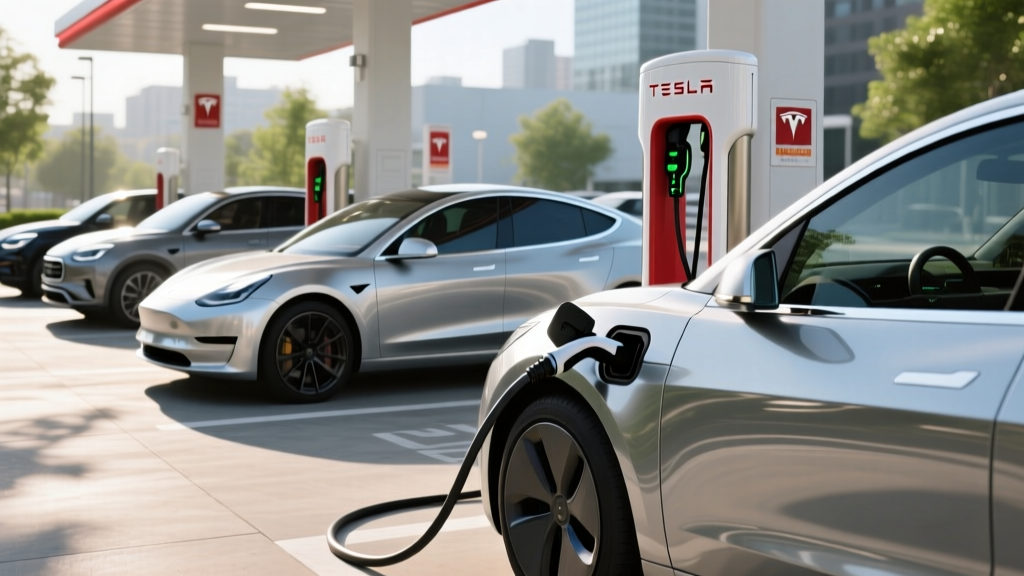
No. Tesla Superchargers deliver DC fast charging via the NACS connector, and the Focus Electric has neither a NACS port nor any DC fast charging capability. You can use Tesla Destination Chargers (Level 2 AC) if you have a Tesla-to-J1772 adapter.
Is the 2015 Focus Electric eligible for any tax credits in 2026?
The original §30D federal tax credit for new EV purchases no longer applies. However, if you buy one as a used EV from a dealer for under $25,000, you may qualify for the Used Clean Vehicle Credit (up to $4,000 or 30% of sale price, subject to income caps: $75,000 single / $150,000 joint). Consult a tax professional and verify eligibility on IRS.gov.
Sources: EPA Fuel Economy — 2015 Ford Focus Electric, IRS Clean Vehicle Credits, Ford Motor Company specifications.