Understanding the Range of the 2015 BMW i3
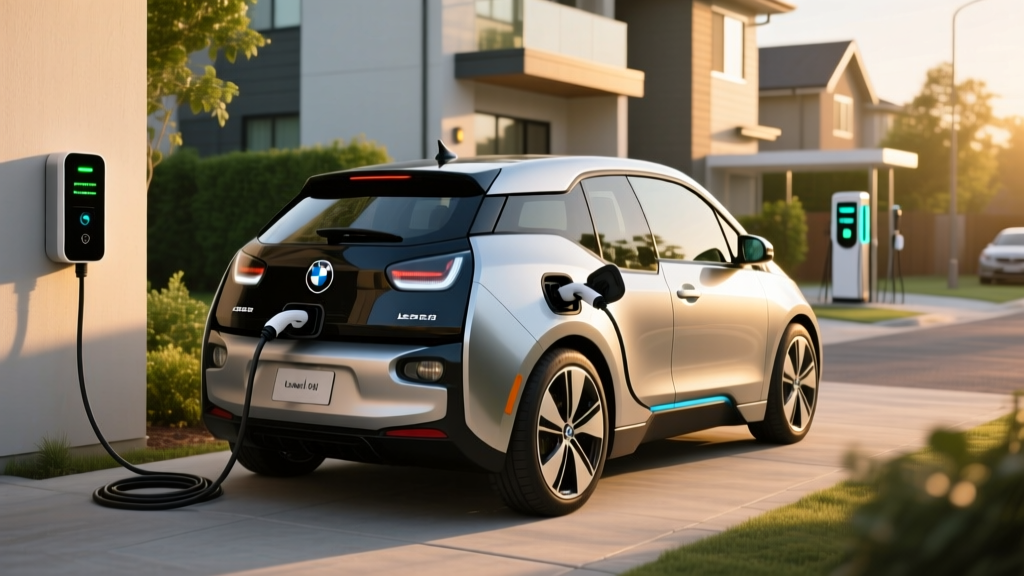
The 2015 BMW i3 is a unique entry in the EV landscape. Built around a carbon-fiber-reinforced plastic (CFRP) passenger cell and a compact 22 kWh lithium-ion battery pack (approximately 18.8 kWh usable), the all-electric BEV version carries an EPA-estimated range of 81 miles. The range-extended electric vehicle (EREV) variant, which pairs the same battery with a 647cc two-cylinder gasoline generator, extends total range to roughly 150 miles combined (72 electric + ~78 gas), according to fueleconomy.gov.
That modest battery size is actually an advantage when it comes to charging: the 2015 i3 fills up faster than nearly any modern long-range EV. But it also means you need to be strategic about your charging setup. This guide walks through exactly how to charge the 2015 i3 at home and in public, what it costs, and which equipment makes sense for a car with this specific battery and connector configuration.
Charging Levels Explained: Speeds in kW and Miles per Hour
Before selecting equipment, it's essential to understand the three charging levels and what each delivers. kW (kilowatts) measures the rate of power delivery — think of it as the speed of water flowing through a hose. kWh (kilowatt-hours) measures total energy stored — the size of the bucket. The 2015 i3's battery holds roughly 18.8 kWh usable, so charging times scale directly against the kW rate.
| Level | Voltage / Amperage | Power (kW) | Miles of Range per Hour | 0–100% Time (18.8 kWh) |
|---|---|---|---|---|
| Level 1 (120V) | 120V / 12A | ~1.4 kW | ~5 mi/hr | ~14–16 hours |
| Level 2 (240V) | 240V / 32A (i3 max) | 7.4 kW (max) | ~25 mi/hr | ~3 hours |
| DC Fast Charge (CCS/CHAdeMO) | Up to 50 kW | ~120+ mi/hr (peak) | ~30 min (0–80%) |
Key takeaway for i3 owners: The 2015 i3's onboard charger maxes out at 7.4 kW on Level 2. Plugging into a 48A or 80A home charger won't charge it any faster — the car limits the intake. A 32A, 240V circuit is the sweet spot, delivering the full 7.4 kW the i3 can accept.
Home Charging Installation: Requirements, Costs, and Panel Considerations
Installing a Level 2 home charger is the single most impactful upgrade for an i3 owner. With only 81 EPA miles of range, overnight Level 2 charging ensures you start every morning with a full battery — effectively making the i3's limited range a non-issue for daily commuting under 60 miles round-trip.
Electrical Requirements
A Level 2 charger for the i3 requires a 240V dedicated circuit. Because the i3 draws a maximum of 32A (7.4 kW), a 40A breaker is the standard recommendation (EV chargers are considered continuous loads under the National Electrical Code, meaning the circuit must be rated at 125% of the continuous draw: 32A × 1.25 = 40A). Wire gauge will typically be 8 AWG copper for runs under 50 feet, though your electrician will confirm based on distance and local code.
Panel Upgrade Considerations
Many homes built before 2000 have 100A main panels. If your panel is already near capacity — running central A/C, an electric dryer, and an electric range — adding a 40A EV circuit may require a panel upgrade to 200A. This is one of the most significant hidden costs in EV adoption. Signs you may need an upgrade:
- Your panel is 100A or less
- You have fewer than 2–4 open breaker slots
- Your utility meter or service drop is rated below 200A
- Your electrician's load calculation exceeds 80% of panel capacity with the EV circuit added
| Component | Typical Cost Range | Notes |
|---|---|---|
| Level 2 Charger (Equipment) | $300–$700 | Smart Wi-Fi chargers; hardwired or NEMA 14-50 plug |
| Electrician Labor (standard install) | $400–$1,200 | Varies by run length, wall type, conduit needs |
| Permit & Inspection | $50–$250 | Required in most jurisdictions; varies by locality |
| Panel Upgrade (if needed) | $1,500–$3,500 | 100A → 200A upgrade; not always required |
| Total (no panel upgrade) | $750–$2,150 | Most common scenario |
| Total (with panel upgrade) | $2,250–$5,650 | Older homes with 100A service |
The IRS §30D tax credit does not cover home charging equipment for most taxpayers — the alternative fuel vehicle refueling property credit (§30C) was modified under the Inflation Reduction Act and is now limited to qualifying census tracts. Check with a tax professional to determine eligibility for your specific address.
Safety and Code Considerations
A properly installed Level 2 circuit must include:
- Dedicated circuit: The EV charger should not share a breaker with other appliances.
- GFCI protection: Required for outdoor receptacles (NEMA 14-50) under NEC 2020 and later. Hardwired installations may not require GFCI at the breaker, but local code varies.
- Outdoor rating: If your charger is mounted outside, it must carry a NEMA 4 or NEMA 4X rating for weather resistance.
- Permit and inspection: Skipping the permit can void homeowner's insurance coverage in the event of an electrical fire. Always pull a permit.
Connector Compatibility: What the 2015 i3 Uses
The 2015 BMW i3 predates the industry-wide shift to the North American Charging Standard (NACS). Its connector configuration depends on the market and whether the DC fast-charge option was selected at purchase:
| Charging Type | Connector on Vehicle | Notes |
|---|---|---|
| Level 1 / Level 2 (AC) | J1772 (Type 1) | Standard on all US-market i3 models |
| DC Fast Charge | CCS1 (Combo) | Only if DC fast-charge option was ordered; not all 2015 i3s have it |
| Tesla Supercharger (NACS) | Not native — adapter required | CCS-to-NACS adapters available (~$200–$350); verify with BMW before use |
| CHAdeMO | Not compatible | CHAdeMO was never offered on the i3 |
Critical check for used i3 buyers: Not every 2015 i3 has DC fast charging. BMW made it an optional extra (~$750 at the time). Check for the CCS1 port below the J1772 inlet on the rear quarter panel. Without it, you're limited to Level 2 at 7.4 kW maximum — meaning no rapid top-ups on road trips. For a car with 81 miles of range, DC fast charging is highly recommended if you plan to drive beyond your daily commute.
If you want to access Tesla's Supercharger network, a CCS-to-NACS adapter from a reputable manufacturer (such as Lectron or A2Z) will allow physical connection, but charging speed will be limited by the i3's ~50 kW DC peak. Note that Tesla Superchargers with "Magic Dock" (built-in CCS adapter) are also accessible without a separate adapter at select locations.
Charging Cost: Per-Mile Economics vs. Gasoline
One of the strongest arguments for the i3 — even with its limited range — is the cost to fuel it. Here's how charging costs break down across common scenarios, using the i3's EPA efficiency rating of 137 MPGe combined (approximately 0.24 kWh per mile) per fueleconomy.gov:
| Scenario | Rate ($/kWh) | Cost for Full Charge (18.8 kWh) | Cost per Mile |
|---|---|---|---|
| Home — Off-Peak Utility Rate | $0.08–$0.12 | $1.50–$2.26 | $0.02–$0.03 |
| Home — Standard Residential Rate | $0.14–$0.18 | $2.63–$3.38 | $0.03–$0.04 |
| Public Level 2 (ChargePoint, etc.) | $0.25–$0.49 | $4.70–$9.21 | $0.06–$0.11 |
| DC Fast Charge (Electrify America, EVgo) | $0.35–$0.55 | $6.58–$10.34 | $0.08–$0.13 |
| Gas Car Comparison (30 MPG, $3.40/gal) | — | — | $0.11/mile |
At home on an off-peak rate, the i3 costs roughly 2–3 cents per mile to drive — about one-quarter the cost of a 30 MPG gasoline car at $3.40 per gallon. Even public DC fast charging, the most expensive option, roughly matches gasoline on a per-mile basis for this efficient vehicle. Over 12,000 miles of annual driving, home charging the i3 costs approximately $300–$400 per year, compared to $1,360 for gasoline.
Recommended Level 2 Chargers for the 2015 BMW i3
Because the i3 caps AC charging at 7.4 kW (32A), you don't need the most powerful charger on the market. A 40A-rated unit on a 40A circuit is the optimal match. That said, installing a higher-capacity charger (48A) on a 60A circuit is a smart future-proofing move if you plan to own a larger-battery EV down the road — the i3 will simply draw what it needs.
Emporia Vue Level 2 Charger
- Power Output: 48A max (11.5 kW) — i3 will draw 32A (7.4 kW)
- Connector: J1772 (directly compatible with i3)
- Cable Length: 24 ft
- Smart Features: Wi-Fi, app scheduling, energy monitoring, solar integration
- Installation: Hardwired or NEMA 14-50
- Price: ~$350–$400
- Best for: Budget-conscious i3 owners who want smart scheduling for off-peak rates
ChargePoint Home Flex
- Power Output: Up to 50A (12 kW) adjustable — set to 40A circuit for i3
- Connector: J1772 (native i3 compatibility)
- Cable Length: 23 ft
- Smart Features: Wi-Fi, Alexa integration, detailed charge logs, scheduled charging
- Installation: Hardwired or NEMA 14-50
- Price: ~$550–$650
- Best for: Owners wanting a proven, UL-listed unit with strong app ecosystem
Tesla Universal Wall Connector
- Power Output: Up to 48A (11.5 kW) — i3 draws 32A
- Connector: Built-in NACS + J1772 adapter included
- Cable Length: 24 ft
- Smart Features: Wi-Fi, OTA updates, power sharing between two units
- Installation: Hardwired only
- Price: ~$600
- Best for: Multi-EV households with a Tesla and an i3 — charges both natively
Grizzl-E Smart
- Power Output: 40A (9.6 kW) — i3 draws 32A
- Connector: J1772
- Cable Length: 24 ft
- Smart Features: Wi-Fi, OCPP protocol, adjustable amperage
- Installation: Hardwired or NEMA 14-50
- Price: ~$450–$500
- Best for: Cold-climate owners — rated to -40°F, rugged Canadian build
For a pure i3-only household, the Emporia Vue offers the best value. Its smart scheduling feature lets you set charging to off-peak utility hours automatically, maximizing your cost savings. If you anticipate upgrading to a Tesla or NACS-equipped vehicle in the future, the Tesla Universal Wall Connector eliminates the need for a second charger.
Charging Times for the 2015 i3: 10–80% and Full Charge Scenarios
The i3's small battery is a charging-speed advantage. Here's what to expect across common scenarios:
- Level 1 (120V, 1.4 kW): 10–80% in approximately 9–10 hours. A full 0–100% charge takes 14–16 hours. Adequate for overnight top-ups if you drive under 30 miles daily.
- Level 2 (240V, 7.4 kW): 10–80% in approximately 1 hour 50 minutes. A full 0–100% charge takes roughly 3 hours. This is the practical daily standard for i3 ownership.
- DC Fast Charge (50 kW CCS): 10–80% in approximately 25–30 minutes. The i3's charge curve is relatively flat up to ~60% SoC, then tapers significantly above 80% to protect the battery. Plan to unplug at 80% for the best time-to-range ratio.
Charge curve note: The 2015 i3's battery management system is conservative. DC fast charging peaks around 43–47 kW from 10–50% SoC, then gradually drops to ~20 kW by 80%, and below 7 kW above 90%. This taper protects the NMC cells from heat-induced degradation but means that charging from 80–100% on DC fast charge is painfully slow. Always plan road-trip stops around 10–80% increments.
Public Charging with the 2015 i3: Network Realities
With only 81 miles of EPA range (and realistically 65–75 on the highway), the i3 depends on public charging infrastructure more than long-range EVs. Here's what to know:
- CCS networks: Electrify America, EVgo, and ChargePoint DC stations all support the i3's CCS1 connector natively.
- Tesla Superchargers: Accessible with a CCS-to-NACS adapter or at Magic Dock-equipped stations. The i3 will charge at roughly 43–47 kW peak — well below Supercharger capabilities, but sufficient for 20–30 minute top-ups.
- CHAdeMO stations: Incompatible. Skip these entirely.
- Level 2 public stations: Widely available at grocery stores, workplaces, and parking garages. At 7.4 kW, expect roughly 25 miles of range per hour — enough for a meaningful top-up during a shopping trip or workday.
For road trips in the i3 BEV (non-REx), plan stops every 55–65 miles to account for highway speed and climate control energy use. Apps like PlugShare and A Better Routeplanner (ABRP) are essential for trip planning with a short-range EV.
Frequently Asked Questions
How much does it cost to install a home EV charger for the 2015 BMW i3?
A standard Level 2 home installation — including a smart charger ($300–$700), electrician labor ($400–$1,200), and a permit ($50–$250) — typically runs $750 to $2,150 if your electrical panel has sufficient capacity. If your home requires a panel upgrade from 100A to 200A, add $1,500–$3,500 to that total. Get at least two quotes from licensed electricians, and always verify they pull a permit.
How fast will each charging level add range to the i3?
Level 1 (120V) adds about 5 miles of range per hour. Level 2 (240V at the i3's 7.4 kW maximum) adds roughly 25 miles per hour. DC fast charging at 50 kW can add over 100 miles per hour at peak, but the i3's small battery means a 10–80% session takes only 25–30 minutes total — you won't be at the charger long enough to see "120 miles added" in practice.
Which connector and charger is compatible with my 2015 BMW i3?
For Level 1 and Level 2 AC charging, the i3 uses the J1772 connector — the universal standard for non-Tesla EVs in North America. Any J1772 Level 2 charger will work. For DC fast charging, the i3 uses CCS1 — but only if the DC fast-charge option was ordered when the car was new. Verify your specific vehicle has the CCS port before planning road trips around DC charging.
How much does charging the i3 cost per mile compared to gas?
Charging at home on off-peak electricity ($0.10/kWh) costs roughly $0.02–$0.03 per mile. A comparable 30 MPG gasoline car at $3.40/gallon costs about $0.11 per mile. That's a 70–80% fuel cost reduction. Even public DC fast charging at $0.48/kWh works out to roughly $0.12/mile — comparable to gasoline, but with zero tailpipe emissions.
What electrical upgrades might I need for a Level 2 charger?
The most common upgrade is a panel capacity increase from 100A to 200A, needed when your existing panel is near its load limit. You'll also need a dedicated 40A, 240V circuit with 8 AWG wire (for runs under 50 ft). Homes with modern 200A panels and available breaker slots typically need no upgrade beyond the new circuit itself. A licensed electrician's load calculation is the definitive answer — don't guess.
Is the 2015 BMW i3 battery still reliable after a decade?
The i3's 22 kWh NMC battery has proven reasonably durable, but some degradation is expected after 10+ years. Most owners report 10–20% capacity loss depending on climate and charging habits — meaning your real-world range may now be 65–73 miles instead of the original 81. BMW's original battery warranty was 8 years/100,000 miles (covering drops below 70% capacity). If you're buying used, request a battery health report from a BMW dealer or use an OBD-II tool with an app like BimmerCode to check remaining capacity.