The Real Story Behind the 2014 Nissan Leaf's Range
If you're researching the 2014 Nissan Leaf range — whether you own one, are considering a used purchase, or simply want to understand what early-adopter EV ownership looks like — you've landed on one of the most important early electric vehicles ever sold. The 2014 Leaf came with a 24 kWh lithium-ion battery pack (usable capacity closer to 21–22 kWh due to buffer) and an EPA-estimated range of 84 miles when new, according to fueleconomy.gov.
Understanding how to charge this vehicle efficiently — and what equipment you need — is essential to making ownership practical. The 2014 Leaf uses the CHAdeMO DC fast-charging standard and a J1772 connector for Level 1 and Level 2 AC charging. That matters because the charging landscape has shifted heavily toward NACS (Tesla's standard) and CCS1, leaving CHAdeMO as a legacy connector with shrinking public infrastructure.
Charging Levels Explained: Speeds, Times, and What Works for Your Leaf
Every EV owner needs to understand three charging levels. The distinction between kW (power — the rate of energy flow) and kWh (energy — the total capacity of the battery) is critical here. Your 2014 Leaf's battery holds roughly 24 kWh of energy total. Charging speed is measured in kW.
| Level | Voltage / Amperage | Max Power (kW) | Miles Added per Hour | 2014 Leaf Full Charge Time |
|---|---|---|---|---|
| Level 1 (120V AC) | 120V / 12A | ~1.4 kW | ~4–5 mi/hr | ~20–24 hours (0–100%) |
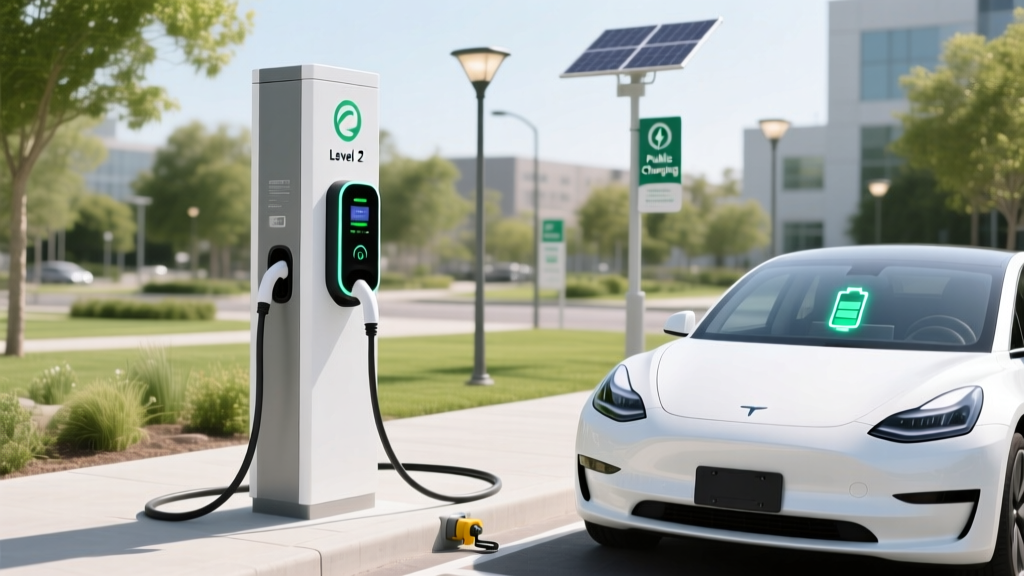
| Level 2 (240V AC) | 240V / 30–32A | 3.3 kW (Leaf's onboard limit) | ~12–14 mi/hr | ~7–8 hours (0–100%) |
| DC Fast (CHAdeMO) | ~350–400V DC | ~46 kW peak | ~80–100 mi/hr (at peak) | ~30 min (10–80%) |
Critical detail for the 2014 Leaf: The onboard AC charger is limited to 3.3 kW. That means even if you plug into a 7.2 kW or 11.5 kW Level 2 station, the Leaf will only draw 3.3 kW. You cannot charge faster on AC power than the car's onboard charger allows. This was an upgrade from the original 2011 Leaf's 3.0 kW charger, but it still caps Level 2 speeds well below most modern EVs.
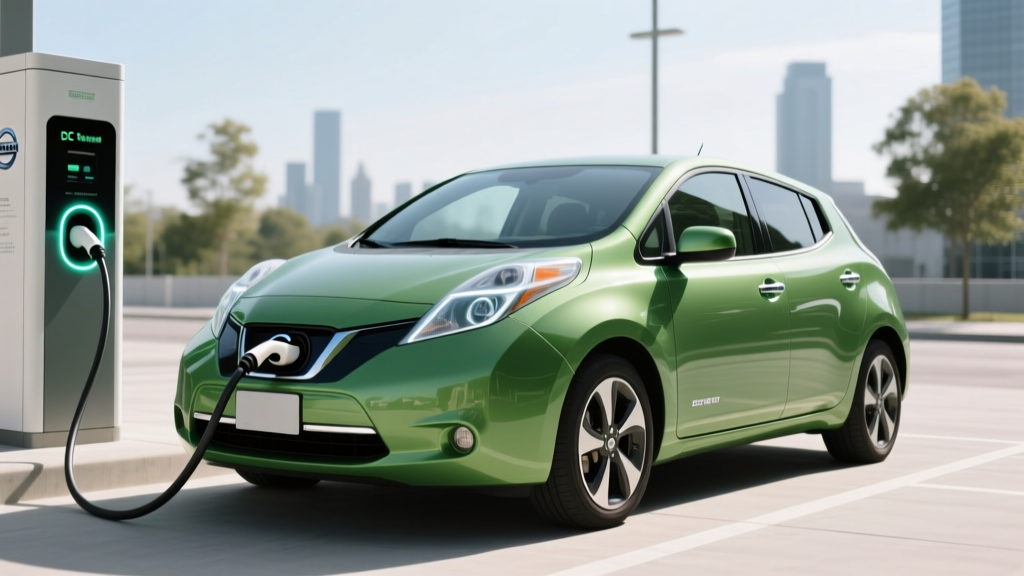
On DC fast charging, the 2014 Leaf peaks around 46 kW via its CHAdeMO port. That's modest by 2026 standards (modern EVs routinely hit 150–350 kW), but for a 24 kWh battery, it delivers a practical 10–80% charge in roughly 25–30 minutes. The charge curve tapers significantly above 80% state of charge to protect the battery — expect the final 20% to take nearly as long as the first 80%.
Home Charger Installation: Electrical Requirements and Costs
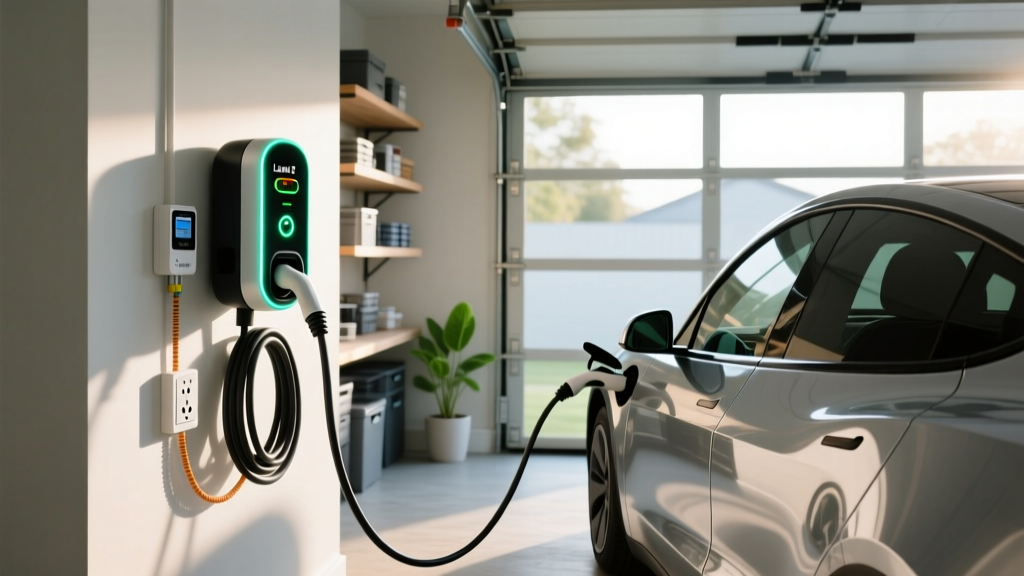
For a 2014 Leaf, Level 1 charging from a standard 120V outlet is genuinely viable if your daily driving is under 30 miles round-trip. Plug in overnight, and you'll recover 35–45 miles of range in 8–10 hours — enough for most commutes. However, Level 2 at home dramatically improves convenience and is worth the investment if you plan to keep the car.
Electrical Requirements for Level 2
A Level 2 home charger for the Leaf requires a 240V dedicated circuit. Because the Leaf's onboard charger maxes at 3.3 kW (roughly 14 amps at 240V), a 20-amp circuit is technically sufficient. However, most electricians will install a 40-amp or 50-amp circuit to future-proof for your next EV, which may draw 7.2–11.5 kW or more.
- Minimum for Leaf today: 240V / 20A circuit (NEMA 6-20 or hardwired)
- Recommended for future-proofing: 240V / 50A circuit (NEMA 14-50 or hardwired)
- Panel capacity: Your home's electrical panel must have room for a new double-pole breaker and sufficient total amperage headroom (typically 200A service is ideal; 100A panels may need an upgrade)
Installation Cost Breakdown
| Item | Low End | High End | Notes |
|---|---|---|---|
| Level 2 EVSE equipment | $200 | $650 | Basic vs. smart/Wi-Fi-enabled units |
| Electrician labor (standard install) | $300 | $800 | Short run from panel to garage; longer runs cost more |
| Permit fees | $50 | $200 | Varies by municipality; some waive for EV installs |
| Electrical panel upgrade (if needed) | $1,500 | $3,500+ | Required if panel is maxed out or only 100A service |
| Total (no panel upgrade) | $550 | $1,650 | Typical scenario for most homes |
| Total (with panel upgrade) | $2,050 | $5,150+ | Older homes with 100A panels |
Panel upgrade reality check: Many homes built before 2000 have 100-amp electrical panels that may already be near capacity. If your panel has no open slots for a double-pole breaker, or if a load calculation shows insufficient headroom, an upgrade to 200A service is mandatory. This is the single biggest variable in home charging cost. Always get a licensed electrician to perform a load calculation before budgeting your install.
The federal Alternative Fuel Vehicle Refueling Property Credit (IRS Form 8911) may cover up to 30% of home charger equipment and installation costs (capped at $1,000 for residential). Check current-year eligibility on irs.gov — income and census-tract requirements apply.
Connector Compatibility: CHAdeMO, J1772, and the Adapter Question
The 2014 Nissan Leaf uses two connectors:
- J1772 — for Level 1 (120V) and Level 2 (240V) AC charging. This is the universal North American AC standard. Every public Level 2 station and every home charger you buy will have a J1772 plug.
- CHAdeMO — for DC fast charging. This Japanese-origin standard was widely adopted by Nissan and Mitsubishi but has lost the standards war to CCS1 and, increasingly, NACS (Tesla's North American Charging Standard).
| Connector | Used By | 2014 Leaf Compatible? | Adapter Available? |
|---|---|---|---|
| J1772 (AC Level 1/2) | All EVs (legacy standard) | ✅ Yes — native | N/A |
| NACS (Tesla / new standard) | Tesla, Ford, GM, Rivian, most 2025+ EVs | ⚠️ AC: Yes w/ adapter; DC: No practical adapter | J1772-to-NACS adapters ~$150–250 (AC only) |
| CCS1 (Combined Charging System) | VW, Hyundai, BMW, most non-Tesla 2020–2024 EVs | ❌ No — no reliable CHAdeMO-to-CCS adapter exists | Not commercially viable for DC |
| CHAdeMO | Nissan Leaf, Mitsubishi Outlander PHEV (legacy) | ✅ Yes — native | N/A (but stations are disappearing) |
The CHAdeMO problem in 2026: Public DC fast-charging networks have overwhelmingly shifted to CCS1 and NACS. Electrify America, EVgo, and most new installations deploy CCS1 and NACS connectors. CHAdeMO stations still exist — particularly older ChargePoint and EVgo locations — but the number shrinks each year. Before relying on public DC fast charging, use apps like PlugShare or A Better Routeplanner to verify CHAdeMO availability along your routes.
For home Level 2 charging, the J1772 connector is universal and future-compatible. If you buy a NACS-equipped home charger (increasingly common in 2026), you'll need a NACS-to-J1772 adapter (roughly $150–$250) to charge the Leaf. Brands like Lectron and A2Z offer reliable options.
Cost to Charge: Home vs. Public vs. Gas Comparison
One of the strongest arguments for owning a 2014 Leaf — even with its limited range — is the fuel cost savings. Here's what charging actually costs.
| Scenario | Rate ($/kWh) | Cost for Full 24 kWh Charge | Cost per Mile (84 mi) |
|---|---|---|---|
| Home — off-peak utility rate | $0.08–$0.12 | $1.92–$2.88 | $0.023–$0.034 |
| Home — standard rate | $0.14–$0.18 | $3.36–$4.32 | $0.040–$0.051 |
| Public Level 2 | $0.20–$0.35 | $4.80–$8.40 | $0.057–$0.100 |
| DC Fast Charging (CHAdeMO) | $0.30–$0.48 | $7.20–$11.52 | $0.086–$0.137 |
| Gasoline car (30 MPG, $3.50/gal) | N/A | $9.80 (per 84 mi equivalent) | $0.117 |
Even at public DC fast-charging rates, the Leaf undercuts a 30 MPG gas car on a per-mile basis. At home off-peak rates, the Leaf costs roughly one-quarter to one-third what a comparable gas car spends per mile. Over 12,000 miles of annual driving, home charging saves $800–$1,200 compared to gasoline.
The 2014 Leaf's EPA-rated efficiency is 114 MPGe combined (120 city / 108 highway), consuming roughly 30 kWh per 100 miles. That's good efficiency by any standard and a big reason the car remains economical to run despite its small battery.
Recommended Home Charging Equipment for the 2014 Leaf
Because the Leaf's onboard charger caps at 3.3 kW, you don't need an expensive high-power home charger. A quality 16-amp or 32-amp Level 2 unit is ideal. Here are proven picks:
Emporia Level 2 Smart Charger — Best Value
- Power output: Up to 48A (11.5 kW) — Leaf will draw its max 3.3 kW
- Connector: J1772 (native fit for Leaf)
- Cable length: 24 feet
- Smart features: Wi-Fi, energy monitoring via app, scheduled charging for off-peak rates, solar integration
- Price: ~$399
- Why it works: Excellent energy tracking helps you monitor exactly how many kWh your Leaf pulls, and smart scheduling lets you charge during the cheapest utility windows.
ChargePoint Home Flex — Premium Pick
- Power output: Up to 50A (12 kW) — adjustable down to 16A for lower-amperage circuits
- Connector: J1772 (also available in NACS; buy J1772 for native Leaf fit)
- Cable length: 23 feet
- Smart features: Wi-Fi, Alexa integration, ChargePoint network access, flexible amperage settings
- Price: ~$599
- Why it works: The adjustable amperage is ideal if your electrical panel has limited capacity — set it to 16A on a 20A circuit and you're covered.
Lectron 32A Portable Level 2 — Budget / No-Electrician Option
- Power output: 32A (7.6 kW max) — Leaf will draw 3.3 kW
- Connector: J1772 with NEMA 14-50 plug
- Cable length: 21 feet
- Smart features: Basic LED status display; no Wi-Fi or app
- Price: ~$199
- Why it works: If you already have a 240V NEMA 14-50 outlet (common for dryers or RVs), you can plug in without a hardwired install. Portable and affordable.
Important note: The 2014 Leaf came with a portable Level 1 trickle charger (120V, J1772, ~1.4 kW). Many used examples still include this unit. It's perfectly adequate for overnight charging if your daily drive is short, but a Level 2 unit cuts charge time by 75%.
Safety and Electrical Code Considerations
Home EV charging is safe when installed correctly, but cutting corners creates real fire and shock risks. Here's what the National Electrical Code (NEC) and best practices require:
- Dedicated circuit: Your EV charger must be on its own dedicated breaker — no sharing with other appliances. EVs draw sustained high current for hours, which shared circuits aren't designed for.
- GFCI protection: NEC 2020 and later requires GFCI (Ground Fault Circuit Interrupter) protection for all EV charging receptacles. Many modern EVSE units have built-in GFCI; if yours doesn't, the breaker must be GFCI-type.
- Outdoor rating: If your charger is installed outdoors or in an unenclosed carport, the EVSE must carry a NEMA 4 or NEMA 4X weather-resistance rating. All three units recommended above meet this standard.
- Cable management: Avoid running charging cables across walkways where they create trip hazards or can be damaged by vehicles. Wall-mounted cable organizers ($15–$30) keep things tidy and safe.
- Permit and inspection: Most jurisdictions require an electrical permit for new 240V circuit installations. The inspection ensures code compliance and protects your home insurance coverage. Never skip this step — unpermitted work can void claims in the event of an electrical fire.
- Load calculation: A licensed electrician should perform an NEC Article 220 load calculation on your panel before installation. This determines whether your panel can handle the additional draw or needs upgrading.
Frequently Asked Questions About Charging the 2014 Nissan Leaf
How much does it cost to install a home EV charger for a 2014 Leaf?
Expect $550–$1,650 for a standard Level 2 installation (equipment, electrician labor, and permit) if your electrical panel has sufficient capacity. If a panel upgrade from 100A to 200A is needed, total costs can reach $2,000–$5,000+. The Leaf's 3.3 kW onboard charger means you can use an affordable 16–32A charger unit ($200–$400), keeping equipment costs low.
How fast will each charging level add range to my 2014 Leaf?
Level 1 (120V) adds roughly 4–5 miles of range per hour. Level 2 (240V) adds about 12–14 miles per hour, limited by the Leaf's 3.3 kW onboard charger. DC fast charging via CHAdeMO can add roughly 60–70 miles in 25–30 minutes (10–80% SoC), though availability of CHAdeMO stations is declining.
Can I use a Tesla Supercharger with my 2014 Leaf?
No. Tesla Superchargers use the NACS connector and Tesla's proprietary communication protocol for DC fast charging. There is no commercially viable adapter that allows a CHAdeMO-equipped Leaf to use a Supercharger. You are limited to CHAdeMO-equipped DC fast stations for rapid charging. For Level 2 AC charging, a NACS-to-J1772 adapter (~$150–$250) would let you use Tesla Wall Connectors or destination chargers.
How much does charging the Leaf cost per mile compared to gas?
Charging at home on off-peak rates costs roughly $0.02–$0.03 per mile. A comparable 30 MPG gas car at $3.50/gallon costs about $0.12 per mile. Even public DC fast charging at $0.35–$0.48/kWh comes in at $0.09–$0.14 per mile — competitive with or cheaper than gasoline. Annual savings for 12,000 miles of driving: $800–$1,200 with home charging.
What electrical upgrades might my home need for a Level 2 charger?
If your home has a 200-amp electrical panel with open breaker slots, you likely need only a new dedicated 240V circuit ($300–$800 in electrician labor). Homes with 100-amp panels, maxed-out breaker boxes, or knob-and-tube wiring will need a panel upgrade ($1,500–$3,500+) before a safe installation is possible. Always get a professional load calculation before committing to a charger purchase.
Is the 2014 Leaf's battery degraded, and does that affect charging?
Yes. Most 2014 Leafs have lost 15–35% of original battery capacity, depending on climate (heat accelerates degradation — Leafs lack active liquid cooling) and charging habits (frequent DC fast charging and regular 100% charges speed up wear). A degraded battery charges faster in absolute time (less total kWh to fill) but delivers fewer miles per charge. Check the battery health bars on the dashboard — 12 bars is perfect; 9 or fewer indicates significant degradation. Nissan's original battery warranty was 8 years/100,000 miles against capacity loss below 9 bars, which has now expired for all 2014 models.
Should I buy a used 2014 Leaf in 2026?
The 2014 Leaf makes sense as a low-cost commuter car if your daily round-trip is under 40 miles, you can charge at home, and the purchase price is under $6,000–$8,000. The limited range and declining CHAdeMO infrastructure make it impractical as a sole vehicle for anyone with longer commutes or frequent road-trip needs. Always verify battery health (bar count), check for any outstanding recalls via NHTSA, and budget for potential battery replacement ($6,500–$9,000 from a Nissan dealer) if capacity is severely degraded.