If you've been driving a 2014 Land Rover Sport Supercharged — that 5.0-liter V8 making 510 hp and sipping fuel at a combined 14 MPG — you've probably felt the pain at the pump. At $3.50/gallon, filling its 27.7-gallon tank runs nearly $97 for roughly 387 miles of range. That's about $0.25 per mile in fuel alone. Now imagine cutting that cost by 60-80% while gaining instant torque and a quieter cabin. That's the promise of going electric, but the transition hinges on one critical question: how will you charge?
This guide walks you through every layer of EV charging — from plugging into a standard outlet to installing a home Level 2 station and using DC fast chargers on road trips. We'll cover exact speeds in kilowatts (kW), real installation costs, connector compatibility, and what you'll actually pay per mile compared to your Supercharged V8.
Understanding EV Charging Levels: Speeds That Matter
EV charging falls into three tiers, each suited to different scenarios. Here's what each level delivers in practical terms:
| Level | Voltage / Amps | Power Output | Miles of Range Added Per Hour | Best For |
|---|---|---|---|---|
| Level 1 | 120V / 12A | ~1.4 kW | 3–5 mi/hr | Overnight top-ups, PHEVs, emergency use |
| Level 2 | 240V / 32–48A | 7.7–11.5 kW | 25–44 mi/hr | Daily home charging, primary setup |
| DC Fast Charge | 400–800V DC | 50–350 kW | 150–1,200+ mi/hr (peak) | Road trips, quick top-ups away from home |
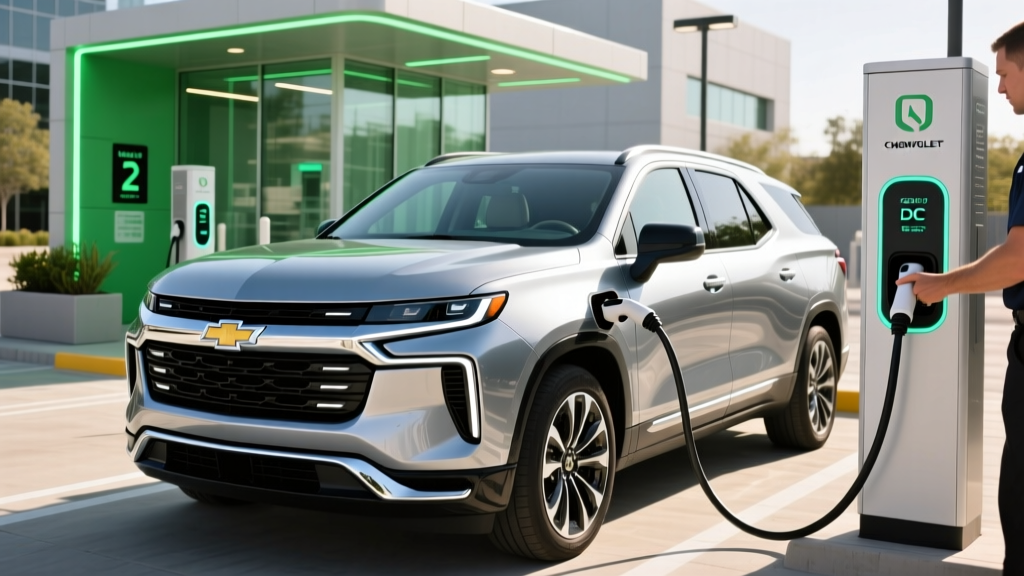
To put this in perspective: a modern electric SUV like the 2026 Hyundai Ioniq 5 (84 kWh usable battery, EPA 305 miles) charging on Level 1 would take roughly 60+ hours from empty to full. On a properly installed Level 2 home charger at 11.5 kW, that same charge takes about 7.5 hours — easily done overnight. On a 250 kW DC fast charger, you can go from 10% to 80% in approximately 18 minutes, adding roughly 215 miles of range.
However, DC fast charging isn't linear. Charge curves taper significantly above 80% State of Charge (SoC) to protect battery health. That 350 kW peak you see advertised? It typically sustains only between 10–50% SoC before stepping down. This is why you'll see 10-80% times quoted rather than 0-100%.
Home Level 2 Installation: Costs, Requirements, and Gotchas
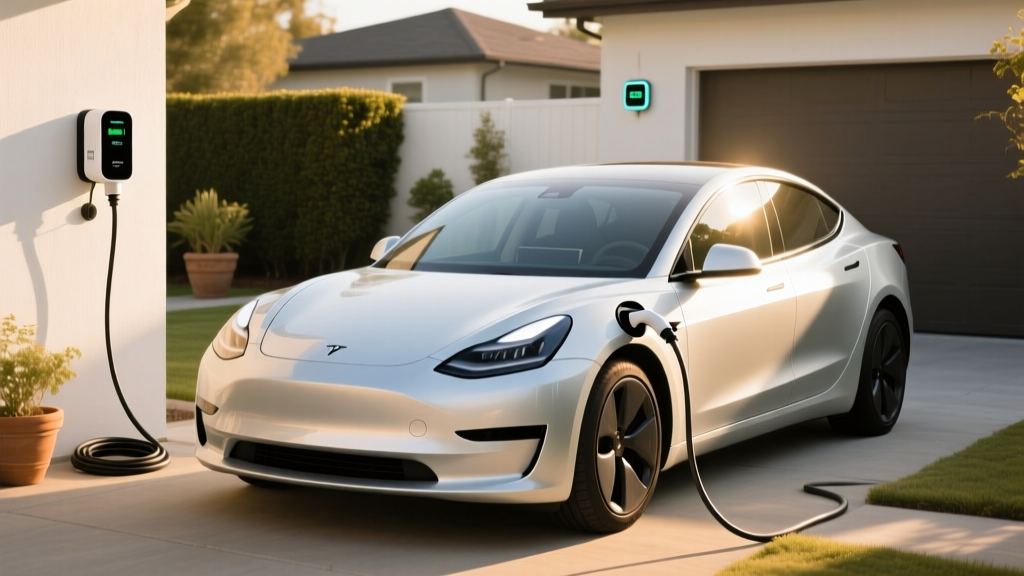
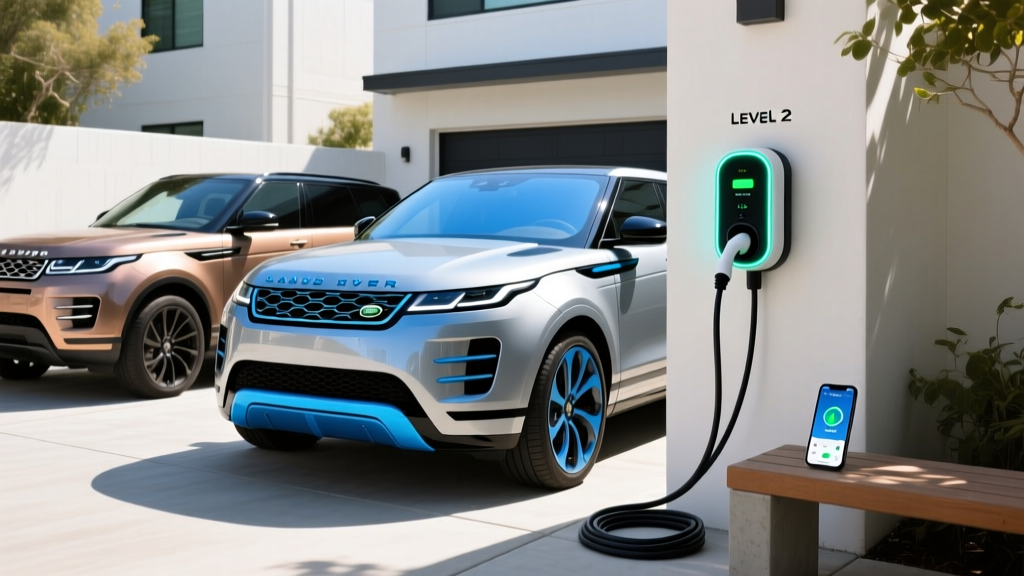
A Level 2 home charger is where 85%+ of EV charging happens for most owners. But installing one isn't as simple as plugging in a dryer. Here's what's involved:
Electrical Requirements
A typical Level 2 charger requires a dedicated 240V circuit — the same voltage your electric dryer or oven uses. Common configurations:
- 40A circuit / 32A continuous charge: Most common, delivers ~7.7 kW. Requires a NEMA 14-50 outlet or hardwired connection.
- 50A circuit / 40A continuous charge: Delivers ~9.6 kW. Requires NEMA 14-50 or hardwired.
- 60A circuit / 48A continuous charge: Delivers ~11.5 kW. Must be hardwired (no plug). Ideal for larger batteries.
Panel upgrade reality check: If your home has a 100A main panel (common in homes built before 2000), you may need a panel upgrade to 200A to safely support an EV charger alongside existing loads. This is especially relevant if you're replacing a gas guzzler like the 2014 Land Rover Sport Supercharged in an older property. A panel upgrade adds $1,500–$3,500 to your project.
Permits and Code
Most jurisdictions require an electrical permit for EV charger installation ($50–$200 depending on locality). Your electrician will pull this, and an inspector will verify the work. Key code requirements include:
- Dedicated circuit (no sharing with other appliances)
- GFCI protection for outdoor installations (NEC 2020+ requirement)
- NEMA 14-50 receptacle must be oriented correctly and mounted at proper height
- Outdoor-rated equipment (NEMA 4 rating) if installed outside
| Cost Component | Typical Range | Notes |
|---|---|---|
| Level 2 Charger (Equipment) | $300–$700 | Smart WiFi-enabled models cost more |
| Electrician Labor | $400–$1,500 | Depends on run length from panel to garage |
| Electrical Permit | $50–$200 | Varies by municipality |
| Panel Upgrade (if needed) | $1,500–$3,500 | 100A → 200A; not always required |
| Total (no panel upgrade) | $750–$2,400 | Most common scenario |
| Total (with panel upgrade) | $2,250–$5,900 | Older homes, high-load panels |
For a straightforward installation — panel within 30 feet of the garage, no upgrades needed — expect to spend roughly $1,200–$1,800 all-in for a quality 48A smart charger. Get at least three quotes from licensed electricians, and verify they have EV charger installation experience.
Connector Compatibility: NACS, CCS, and CHAdeMO Explained
The connector landscape has shifted dramatically. As of 2026, the North American Charging Standard (NACS) — originally Tesla's proprietary plug — has become the dominant connector, with nearly every major automaker adopting it for new vehicles. Here's where things stand:
| Connector | Brands Using It (2026) | Adapter Needed? |
|---|---|---|
| NACS (J3400) | Tesla, Ford, GM, Rivian, Volvo, Polestar, Hyundai/Kia (2025+), Toyota (2025+), BMW, Mercedes | CCS-to-NACS adapters available (~$200–$400) for legacy CCS vehicles |
| CCS1 | Legacy: VW ID.4 (pre-2025), older Bolt EV/EUV, some Stellantis models | NACS-to-CCS adapter needed for Tesla Superchargers |
| CHAdeMO | Nissan Leaf (discontinued), Mitsubishi Outlander PHEV (older) | CHAdeMO stations are declining; limited adapter options |
What this means for your home charger: If you're buying a new EV in 2026, it almost certainly has a NACS port. Buy a NACS-connector home charger. If you currently own a CCS-equipped EV (like a 2023 Hyundai Ioniq 5 or VW ID.4), you can either buy a CCS home charger or use a NACS charger with an adapter. According to the SAE J3400 standard, NACS is now the formalized North American standard.
Charging Cost Per Mile: EV vs Your V8 Supercharged Land Rover
This is where the math gets compelling. Let's compare the fuel cost of a 2014 Land Rover Sport Supercharged against a typical 2026 electric SUV across different charging scenarios.
| Scenario | Cost Per Unit | Efficiency | Cost Per Mile |
|---|---|---|---|
| 2014 LR Sport SC (Gas) | $3.50/gal | 14 MPG combined | $0.250/mi |
| Home Level 2 (Off-Peak) | $0.10/kWh | 3.0 mi/kWh (33 kWh/100mi) | $0.033/mi |
| Home Level 2 (Avg Rate) | $0.16/kWh | 3.0 mi/kWh | $0.053/mi |
| Public Level 2 | $0.25/kWh | 3.0 mi/kWh | $0.083/mi |
| DC Fast Charger | $0.40/kWh | 3.0 mi/kWh | $0.133/mi |
The takeaway: Even at the most expensive DC fast-charging rate, an EV costs roughly half what the Supercharged V8 Land Rover costs per mile. At home on off-peak rates, you're paying 87% less per mile. Over 15,000 miles/year, that's a fuel savings of roughly $3,250 annually with home charging at average rates — or over $3,750 if you can access off-peak utility rates.
According to fueleconomy.gov, the 2014 Land Rover Sport Supercharged gets 12 city / 17 highway / 14 combined MPG. Real-world owners report 11–13 MPG in mixed driving, making the cost gap even wider.
Charging Time Examples: What to Expect With Common Battery Sizes
Battery sizes vary widely across the EV market. Here's how long common scenarios take at each charging level:
75 kWh Battery (e.g., Tesla Model Y RWD)
- Level 1 (1.4 kW): 0–100% in ~54 hours
- Level 2 (11.5 kW): 0–100% in ~6.5 hours
- DC Fast (250 kW peak): 10–80% in ~15 minutes
100 kWh Battery (e.g., Ford F-150 Lightning Extended Range)
- Level 1 (1.4 kW): 0–100% in ~71 hours
- Level 2 (11.5 kW): 0–100% in ~8.7 hours
- DC Fast (150 kW sustained avg): 10–80% in ~30 minutes
18 kWh PHEV Battery (e.g., Toyota RAV4 Prime)
- Level 1 (1.4 kW): 0–100% in ~13 hours (feasible overnight)
- Level 2 (7.7 kW): 0–100% in ~2.3 hours
- DC Fast: Not available on most PHEVs
Real-world note on DC fast charging: Peak charge rates are not sustained rates. A vehicle that advertises "250 kW peak" may only hold that rate from 10–35% SoC before tapering to 150 kW, then 80 kW, then 40 kW as the battery fills. Preconditioning the battery (warming it to optimal temperature via the vehicle's navigation system routing to a charger) can improve sustained rates by 20–30%, especially in cold weather.
Recommended Home Chargers for 2026
Based on reliability, features, and value, here are our top picks for home Level 2 charging:
Best Overall: ChargePoint Home Flex
- Power: Up to 11.5 kW (48A)
- Connector: NACS or CCS (configurable)
- Cable Length: 23 ft
- Smart Features: WiFi, app scheduling, Alexa, energy tracking
- Price: ~$550
- Install: Hardwired or NEMA 14-50
Best Value: Emporia Level 2 EV Charger
- Power: Up to 11.5 kW (48A)
- Connector: NACS (J3400)
- Cable Length: 24 ft
- Smart Features: WiFi, app control, solar integration, load management
- Price: ~$350
- Install: Hardwired or NEMA 14-50
Premium Pick: Tesla Wall Connector
- Power: Up to 11.5 kW (48A)
- Connector: NACS native
- Cable Length: 24 ft
- Smart Features: WiFi, OTA updates, power sharing (multiple units), Tesla app
- Price: ~$475
- Install: Hardwired only
Important: Even if you don't own a Tesla, the Tesla Wall Connector now works with any NACS-equipped vehicle. With most 2025+ EVs shipping with NACS ports, it's a viable option for nearly all new EV buyers. For CCS-equipped vehicles, the ChargePoint Home Flex with a CCS connector or an adapter remains the most flexible choice.
Safety, Code, and Installation Best Practices
EV chargers draw significant sustained current — often for 6–10 hours at a time. This isn't like running a microwave for 90 seconds. Proper installation is critical for safety and insurance compliance:
- Dedicated circuit only: Your EV charger must have its own breaker — never share a circuit with other loads. The NEC requires EVSE circuits to be rated at 125% of the continuous load (a 40A charger needs a 50A breaker).
- GFCI protection: The 2020 NEC (and later revisions) requires GFCI protection for outdoor receptacles used for EV charging. Hardwired installations typically have GFCI built into the charger unit.
- Outdoor rating: If your charger is mounted outside or in an open carport, it must carry a NEMA 4 (watertight) rating. Most quality chargers meet this, but verify before purchasing.
- Cable management: A 23–24 ft cable is standard. Ensure the cable won't be a trip hazard or subject to vehicle drive-over. Wall-mounted cable organizers cost $20–$40.
- Load management: If your panel is near capacity, consider a smart charger with load-management features (like the Emporia or ChargePoint) that can throttle charge rate dynamically to avoid tripping your main breaker.
Always hire a licensed, insured electrician who will pull a permit. Unpermitted work can void your homeowner's insurance in the event of an electrical fire and may cause issues during a home sale. Check the National Electrical Code (NEC) for current requirements in your jurisdiction.
Frequently Asked Questions
How much does it cost to install a home EV charger?
For a typical installation without a panel upgrade, expect $750–$2,400 total (charger + electrician + permit). If your home needs a 200A panel upgrade, total costs range from $2,250–$5,900. The national average for a straightforward install with a quality 48A smart charger is approximately $1,200–$1,800.
How fast will each charging level add range?
Level 1 adds 3–5 miles per hour (fine for PHEVs, impractical for large EV batteries). Level 2 adds 25–44 miles per hour depending on amperage — enough to fully recharge most EVs overnight. DC fast charging adds 150–1,200+ miles per hour at peak rates, enabling 10–80% charges in 15–30 minutes depending on battery size and charger power.
Which connector/charger is compatible with my EV?
For 2025–2026 model-year vehicles, most automakers have switched to NACS (J3400). Tesla has always used NACS. Older CCS-equipped EVs (pre-2025 VW, Hyundai, GM) can use NACS chargers with a CCS-to-NACS adapter (~$200–$400). CHAdeMO is effectively legacy-only (Nissan Leaf). Check your vehicle's charge port or the manufacturer's spec sheet to confirm.
How much does charging cost per mile vs gas?
Home charging at average residential rates ($0.16/kWh) costs roughly $0.05/mile for a typical electric SUV. Compare that to $0.25/mile for the 2014 Land Rover Sport Supercharged at 14 MPG and $3.50/gallon. Even public DC fast charging at $0.40/kWh comes in at ~$0.13/mile — still half the cost of the V8 Land Rover. Over 15,000 annual miles, home charging saves $2,500–$3,750 per year.
What electrical upgrades might I need?
If your home has a 100A main service panel (common in pre-2000 construction), you'll likely need an upgrade to 200A to safely add a 40–60A EV circuit. Other potential upgrades include: running new conduit from the panel to the garage ($200–$800 depending on distance), adding a sub-panel if your main panel is full ($300–$600), or upgrading your utility service drop if the transformer is undersized. A licensed electrician can assess your panel during a site visit — most offer free estimates.
Can I use a regular 120V outlet for EV charging?
Yes — this is Level 1 charging, and it delivers about 3–5 miles of range per hour. For a PHEV with 30–40 miles of electric range, Level 1 can fully recharge overnight. For a full EV with a 75–100 kWh battery, Level 1 is impractical as a primary strategy (50+ hours for a full charge) but works as a backup or for occasional top-ups. Ensure the outlet is on a dedicated 15A or 20A circuit — not shared with other loads — and avoid extension cords.
Does the federal tax credit apply to home charger installation?
The IRS §30C Alternative Fuel Vehicle Refueling Property Credit covers up to 30% of home EV charger equipment and installation costs, with a maximum credit of $1,000. However, eligibility depends on your census tract meeting certain low-income or non-urban criteria. Consult a tax professional and verify current-year rules on IRS.gov before claiming.
Transitioning from a supercharged V8 to an electric SUV is a significant shift — not just in powertrain but in daily routine. The good news: once a Level 2 home charger is installed, your "refueling" becomes effortless. You plug in when you get home, and every morning you start with a full "tank" at a fraction of what that 2014 Land Rover Sport Supercharged cost you at the pump. The upfront investment in a proper home charging setup typically pays for itself in fuel savings within 12–18 months.