If you're searching for a 2014 Jaguar XF Supercharged in the used market—or already own one—you've likely noticed the 340-horsepower supercharged V6 and its premium fuel appetite. But how does fueling that 3.0L SC V6 compare to charging a modern electric sedan in 2026? And if you're weighing whether to keep the Jag or switch to an EV, what does home charging actually cost to install and run?
This guide breaks down the real numbers: the XF Supercharged's fuel economy and cost per mile versus a modern EV's charging cost per mile, a complete home charger installation guide, and everything you need to know about charging levels, connectors, and electrical upgrades.
2014 Jaguar XF Supercharged: Fuel Economy and Cost Per Mile
The 2014 Jaguar XF Supercharged (3.0L V6, 340 hp) carries an EPA rating of 18 mpg city / 27 mpg highway / 21 mpg combined according to fueleconomy.gov. With premium unleaded required, here's what that means for your wallet:
| Metric | Value |
|---|---|
| EPA Combined MPG | 21 mpg |
| Premium Fuel Price (2026 avg.) | ~$4.50/gal |
| Annual Miles (15,000 mi/yr) | 714 gallons |
| Annual Fuel Cost | ~$3,213 |
| Cost Per Mile | ~$0.21/mi |
| Fill-Up Cost (18.5-gal tank) | ~$83 |
That $0.21 per mile is a baseline. Aggressive driving, cold starts, and city-heavy commutes push it closer to $0.25–$0.30/mi. Now let's see how a comparable EV stacks up.
EV Charging Levels Explained: Speeds, kW, and Miles Per Hour
Understanding charging starts with one critical distinction: kW (kilowatts) measures power—how fast energy flows into the battery. kWh (kilowatt-hours) measures energy—the total capacity of the battery. Think of kW as the flow rate of a hose, and kWh as the size of the bucket.
| Level | Voltage | Power (kW) | Miles of Range Added Per Hour | Typical Use Case |
|---|---|---|---|---|
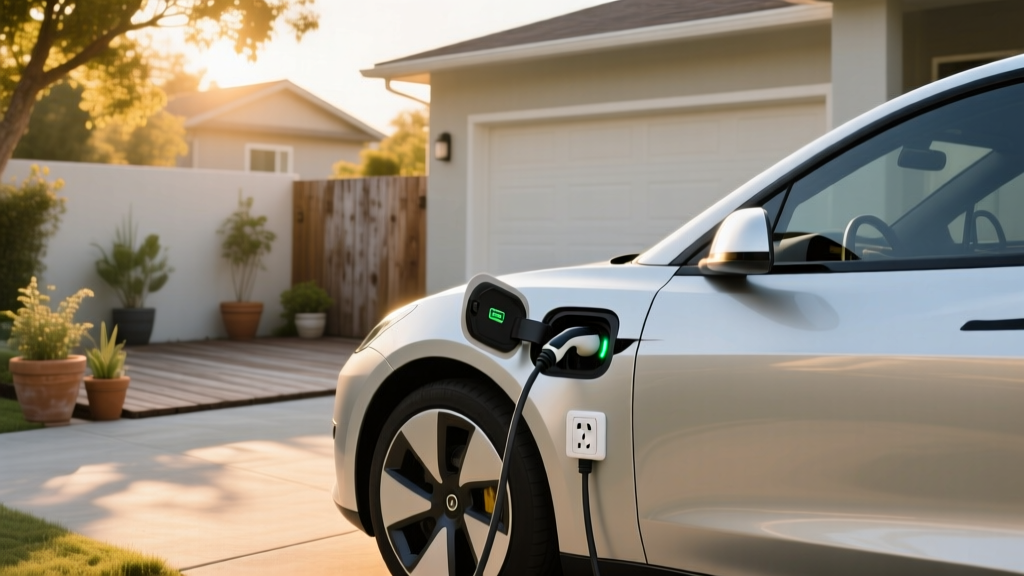
| Level 1 | 120V AC | 1.0–1.9 kW | 3–5 mi/hr | Overnight trickle, PHEVs, emergency top-up |
| Level 2 | 240V AC | 7.2–19.2 kW | 25–75 mi/hr | Home daily charging, workplace, public AC stations |
| DC Fast Charge | 400–900V DC | 50–350 kW | 150–1,200 mi/hr (peak) | Road trips, highway corridors, rapid top-ups |
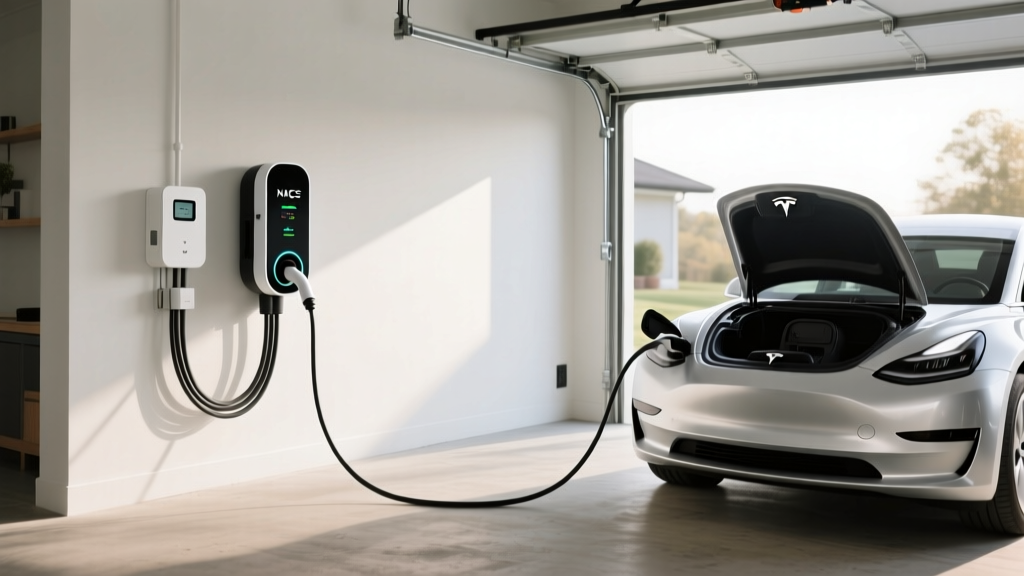
For context, a modern EV sedan with an 82 kWh battery (like the 2026 BMW i5 eDrive40) charging on a 48-amp Level 2 home station at 11.5 kW will go from 10% to 80% in roughly 5 hours—perfect for overnight charging. On a 200 kW DC fast charger, that same 10–80% session takes about 22–28 minutes, though sustained speeds taper above 80% state of charge (SoC).
How Much Does It Cost to Install a Home EV Charger?
This is the question that stops many potential EV buyers. The answer depends heavily on your home's existing electrical panel and the distance from the panel to your garage or driveway.
| Component | Typical Cost Range | Notes |
|---|---|---|
| Level 2 Charger (Equipment) | $400–$750 | 40A–48A smart charger, NACS or J1772 |
| Electrician Labor | $500–$2,000 | Varies by run length, conduit, wall type |
| Electrical Permit | $50–$200 | Required in most jurisdictions |
| Panel Upgrade (if needed) | $1,500–$4,000 | Upgrading from 100A to 200A service |
| Total (no panel upgrade) | $950–$2,950 | Most homes with 200A service |
| Total (with panel upgrade) | $2,450–$6,950 | Older homes with 100A service |
What Electrical Upgrades Might I Need?
A 48-amp Level 2 charger requires a dedicated 60-amp circuit at 240V (per NEC code, continuous loads must be derated to 80% of circuit capacity). If your home has a 200-amp main panel with available breaker slots and load capacity, you're likely fine. Homes with 100-amp service—common in pre-1990 builds—will almost certainly need a panel upgrade or a load-management device that throttles the charger when other major appliances are running.
Safety requirements include a GFCI-protected breaker (now mandated in many jurisdictions for garage receptacles), NEMA 14-50 outlet or hardwired connection (hardwired is preferred for 48A+ circuits), and outdoor-rated equipment (NEMA 4) if your parking spot is exterior.
Charging Cost Per Mile: EV vs. the 2014 XF Supercharged
Here's where the comparison gets stark. Let's model a modern EV sedan with 3.5 miles per kWh efficiency (typical for a mid-size luxury EV) against the XF's 21 mpg combined.
| Scenario | Cost per kWh / Gallon | EV Cost/Mile | XF Supercharged Cost/Mile |
|---|---|---|---|
| Home charging (off-peak utility rate) | $0.13/kWh | $4.50/gal | $0.037/mi | $0.214/mi |
| Home charging (peak / standard rate) | $0.22/kWh | $4.50/gal | $0.063/mi | $0.214/mi |
| Public Level 2 (network pricing) | $0.35/kWh | $4.50/gal | $0.10/mi | $0.214/mi |
| DC Fast Charging (public) | $0.48/kWh | $4.50/gal | $0.137/mi | $0.214/mi |
Even at the most expensive DC fast charging rate, the EV costs 36% less per mile than the XF Supercharged. At home off-peak rates, the EV is 83% cheaper per mile. Over 15,000 annual miles, that's a savings of $2,600–$2,800 per year in fuel costs alone.
Of course, the XF's appeal isn't purely economic—it's a supercharged luxury sport sedan with a character that no current EV perfectly replicates. But if daily commuting cost matters, the math is unambiguous.
Connector Compatibility: Which Charger Fits Which EV?
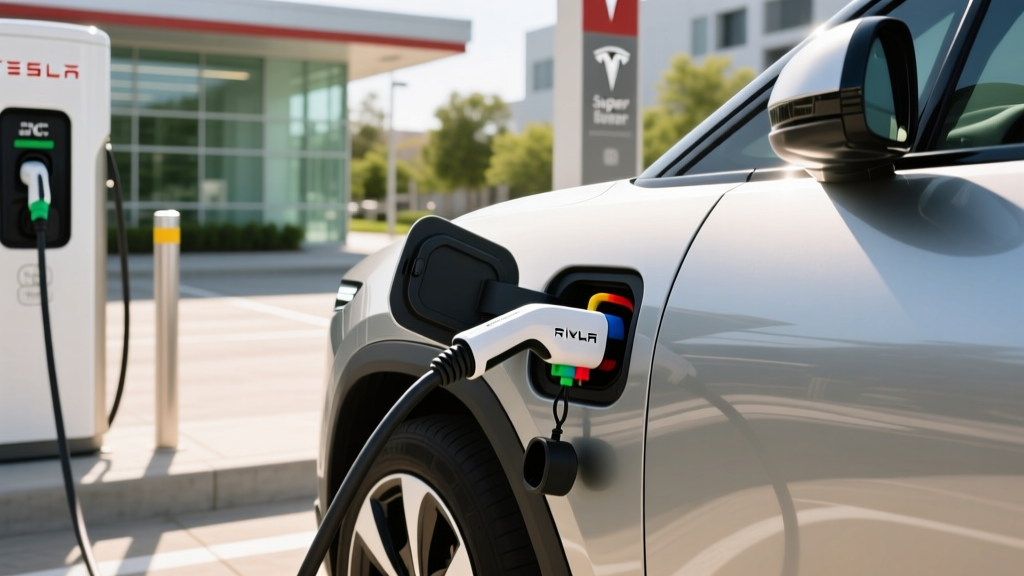
The connector landscape in 2026 has largely consolidated around NACS (the Tesla-designed North American Charging Standard), which most major automakers adopted starting with 2025 model-year vehicles. Here's the current breakdown:
| Connector | Brands Using It (2026 Models) | Adapter Needed? |
|---|---|---|
| NACS (native) | Tesla, Ford, GM, Rivian, Volvo, Polestar, Hyundai/Kia (2025+), BMW, Mercedes-Benz | None for Tesla Superchargers and NACS stations |
| CCS1 | Remaining 2024 and older models (VW ID.4 early builds, older Bolt EV) | CCS-to-NACS adapter (~$200–$250) for Supercharger access |
| CHAdeMO | Nissan Leaf (legacy only — discontinued in US after 2025) | Limited network; CHAdeMO stations declining |
| J1772 (Level 2 AC) | All non-Tesla EVs (pre-2025 builds); NACS vehicles use included adapter | J1772-to-NACS adapter included with most new NACS vehicles |
If you're buying a home Level 2 charger in 2026, get a NACS-connector unit if your current or next EV uses NACS. If your EV is an older CCS1 model, buy a J1772 charger (still the standard for home AC units) and use the J1772-to-CCS adapter that came with your car.
Recommended Level 2 Home Chargers (2026)
After testing dozens of home units across various garage setups, these three represent the best combination of reliability, power, and smart features for most EV owners:
Emporia Level 2 Smart Charger (48A)
- Power Output: 11.5 kW (48A / 240V)
- Connector: NACS (J1772 version available)
- Cable Length: 24 ft
- Smart Features: Wi-Fi, energy monitoring, solar integration, scheduling via app
- Price: ~$400
- Best For: Budget-conscious buyers who want full smart features
ChargePoint Home Flex (50A)
- Power Output: 12 kW (50A / 240V)
- Connector: NACS or J1772 (configurable)
- Cable Length: 23 ft
- Smart Features: Wi-Fi, Alexa, scheduling, amperage adjustment, UL-listed
- Price: ~$650
- Best For: Reliability-focused buyers wanting flexible amperage
Tesla Wall Connector (48A)
- Power Output: 11.5 kW (48A / 240V)
- Connector: NACS native
- Cable Length: 24 ft
- Smart Features: Wi-Fi, OTA updates, power sharing (multiple units on one circuit), load management
- Price: ~$450
- Best For: Tesla and NACS-vehicle owners wanting seamless integration
All three require a dedicated 60-amp breaker for full-rated output. The ChargePoint Home Flex can be dialed down to 16A–50A to match your circuit capacity, which is useful if your panel can't support a full 60-amp dedicated circuit.
Charging Time Examples: How Long to Charge Common EV Batteries
Charge time depends on battery size (kWh), charger power (kW), and the vehicle's onboard charge acceptance. Here are realistic estimates for 10–80% sessions—the practical charging window, since charging above 80% slows dramatically due to battery management system (BMS) taper curves:
| Battery Size (Usable kWh) | Level 2 at 11.5 kW (48A) | DC Fast at 150 kW (peak) | DC Fast at 250 kW (peak) | Example Vehicles |
|---|---|---|---|---|
| 60 kWh | ~3.6 hours | ~22 min | ~18 min | Chevrolet Equinox EV, Volvo EX30 |
| 75 kWh | ~4.6 hours | ~28 min | ~22 min | Tesla Model 3 LR, Hyundai Ioniq 6 |
| 85 kWh | ~5.2 hours | ~32 min | ~25 min | BMW i5, Mercedes EQE |
| 100 kWh | ~6.1 hours | ~38 min | ~28 min | Tesla Model S, Rivian R1S |
| 120 kWh | ~7.3 hours | ~45 min | ~33 min | GMC Sierra EV, Silverado EV |
These times assume preconditioned batteries (warmed to optimal temperature) and starting at 10% SoC. In cold weather below 32°F, expect DC fast charge sessions to take 15–30% longer unless the vehicle has active battery preconditioning. Most 2026 EVs with heat pumps and thermal management systems handle this automatically when you navigate to a charger.
Should You Keep the XF Supercharged or Switch to an EV?
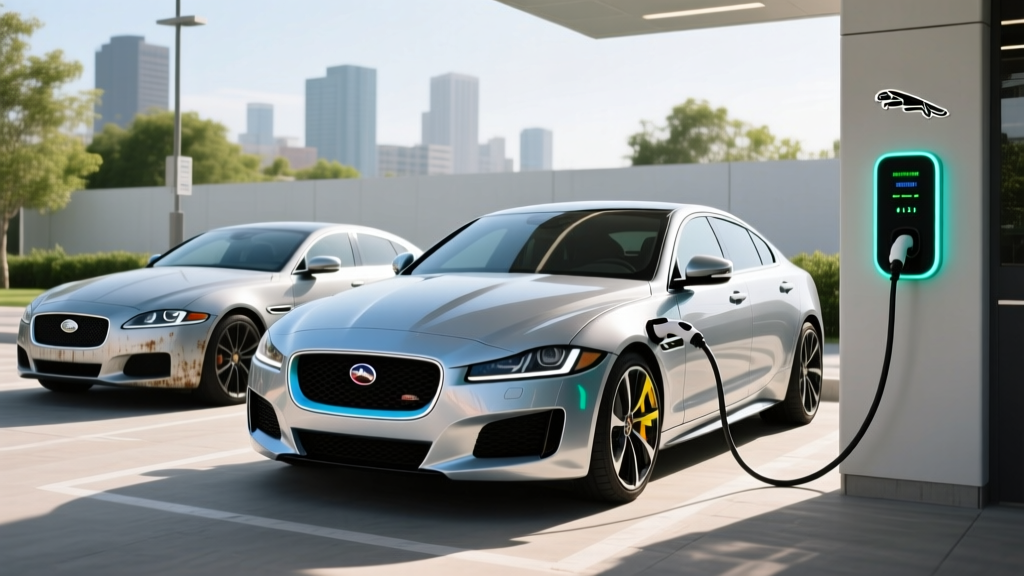
The 2014 Jaguar XF Supercharged remains a compelling driver's car: the 3.0L supercharged V6 delivers linear, lag-free torque, the ZF 8-speed is one of the best automatics ever made, and the chassis balance is something Jaguar's engineering team clearly sweated over. It also depreciated hard, meaning you can pick up a clean example for $12,000–$18,000 in 2026—a lot of luxury for the money.
But the ownership math is real. Between premium fuel at $0.21/mi, higher maintenance costs (supercharger belt service, coolant system, ZF transmission fluid), and insurance, the XF's annual running costs are roughly $5,000–$6,500 at 15,000 miles. A comparable EV sedan (say, a 2026 Hyundai Ioniq 6 or Tesla Model 3) running on home charging costs $1,500–$2,500 annually in electricity, with far lower maintenance (no oil, no supercharger belt, brake pads lasting 100,000+ miles thanks to regenerative braking).
The decision framework:
Keep the 2014 XF Supercharged if: You drive under 10,000 miles/year, value the supercharged V6 character, have no reliable home charging access, or treat it as a weekend/secondary car.
Switch to an EV if: You commute 30+ miles daily, have home Level 2 charging access (or can install it), want to cut fuel costs by 70–80%, and prefer new-vehicle warranty and latest safety tech.
Frequently Asked Questions
How much does it cost to install a home EV charger?
Between $950 and $2,950 for a standard Level 2 installation in a home with a 200-amp panel. If your home has 100-amp service and needs a panel upgrade, expect $2,450–$6,950 total. The charger itself costs $400–$750; the rest is electrician labor, conduit, wire, and permits.
How fast will each charging level add range?
Level 1 (120V) adds 3–5 miles per hour. Level 2 (240V, 48A) adds 30–40 miles per hour for most sedans. DC fast charging adds 150–1,200 miles per hour at peak rates, though real sessions are measured in minutes (typically 18–35 minutes for 10–80%).
Which connector/charger is compatible with my EV?
For 2025+ model-year EVs from Ford, GM, Hyundai, Kia, BMW, Rivian, and Volvo, the connector is NACS. Older EVs (pre-2025 non-Tesla) use CCS1. All non-Tesla EVs use J1772 for Level 2 AC charging. Check your vehicle's charge port or owner's manual to confirm. The Nissan Leaf used CHAdeMO, which is now effectively discontinued in the US.
How much does charging cost per mile vs. gas?
Home charging at off-peak rates ($0.13/kWh) costs about $0.037 per mile for an efficient EV—roughly 83% less than the 2014 Jaguar XF Supercharged at $0.21/mi on premium fuel. Even expensive public DC fast charging at $0.48/kWh works out to ~$0.14/mi, still 35% cheaper than the XF.
What electrical upgrades might I need?
A Level 2 charger at 48 amps needs a dedicated 60-amp, 240V circuit. If your electrical panel is at capacity or is a 100-amp service, you'll need a panel upgrade to 200A ($1,500–$4,000) or a smart load-management device that reduces charger draw when other appliances are running. Always consult a licensed electrician for a load calculation before purchasing equipment.
Does the 2014 Jaguar XF Supercharged have any electrified variant?
No. The 2014 XF Supercharged is purely gasoline-powered with no hybrid or plug-in option. Jaguar introduced mild-hybrid (MHEV) systems on later XF models (2021+), and the all-electric Jaguar I-PACE launched in 2019 as a separate model. If you want Jaguar performance with electrification, the I-PACE (now discontinued in the US after 2024) or the upcoming Jaguar GT electric grand tourer (announced for 2026–2027) are the electrified options.
Whether you're fueling a supercharged V6 or charging a battery pack, the numbers tell the story. The 2014 XF Supercharged delivers character at a cost; modern EVs deliver efficiency at a different kind of cost—upfront investment in charging infrastructure that pays back over years of dramatically lower per-mile expenses. Your choice depends on how many miles you drive, whether you can charge at home, and how much you value the sound of a supercharger whine at 5,000 rpm.