Why the 2014 BMW i3's Charging Setup Still Matters
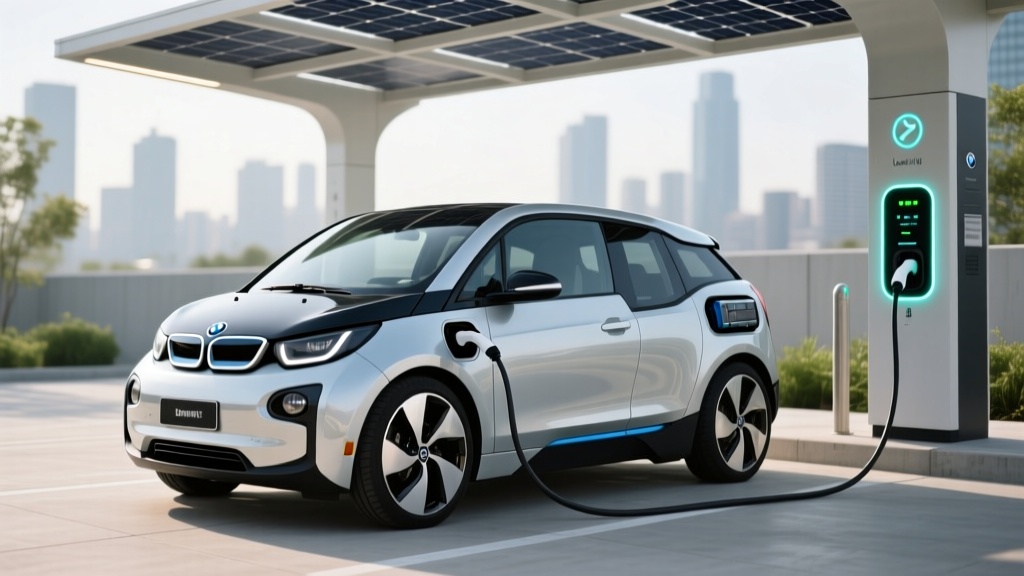
The 2014 BMW i3 was one of the first mass-market EVs built on a dedicated electric platform, and a decade later, thousands are still on the road as affordable used-EV commuter cars. With an EPA-rated 81 miles of range from its 22 kWh (18.8 kWh usable) lithium-ion battery pack, the i3 demands a smart charging strategy to remain practical in 2026. Whether you just picked up a used i3 or you're trying to optimize one you've owned for years, understanding its charging characteristics — and what home equipment makes sense — is critical.
This guide covers everything from the i3's specific charging limits to a full breakdown of home Level 2 installation costs, public charging networks, and the best equipment you can buy today.
EPA Rating: 81 miles (BEV model) | 150 miles combined (Range Extender / REx model with gas engine)
Real-World Expectation: 60–72 miles in mixed driving; 50–60 miles at sustained 70 mph highway speeds; as low as 45–55 miles in freezing weather with cabin heat. The REx adds roughly 65–75 miles of gasoline-generated range on top of the electric portion.
Battery Note: After 10+ years, expect 10–25% degradation depending on climate and charging habits. A 2014 i3 battery in good health may deliver 65–73 real-world miles when new-rated at 81.
Charging Levels Explained: What the i3 Can Actually Accept
The 2014 BMW i3 supports AC Level 1, AC Level 2, and DC fast charging — but with important power ceilings that define your equipment choices. The onboard AC charger maxes out at 7.4 kW (single-phase, 32A), and the DC fast-charge port (optional on 2014 models, standard on later years) uses the CCS1 Combo connector and peaks at roughly 47 kW.
Understanding the difference between kW (power — how fast energy flows) and kWh (energy — how much the battery holds) is essential. The i3's battery holds about 18.8 kWh of usable energy. A 7.4 kW charger can theoretically refill that in roughly 2.5 hours from empty.
| Level | Power (kW) | Miles of Range Per Hour | Full Charge Time (0–100%) | Typical Use Case |
|---|---|---|---|---|
| Level 1 (120V) | 1.3–1.4 kW | ~4–5 mi/hr | ~14–16 hours | Overnight top-up, emergency |
| Level 2 (240V) | Up to 7.4 kW | ~22–25 mi/hr | ~2.5–3 hours | Daily home charging |
| DC Fast Charge (CCS1) | Up to 47 kW | ~120–140 mi/hr (peak) | ~30 min (0–80%) | Road trips, public stations |
Charge curve reality: On DC fast charging, the i3 holds near its 47 kW peak from roughly 0–50% state of charge, then tapers to ~25 kW by 70%, and drops further above 85%. A 10–80% session typically takes about 28–32 minutes at a 50 kW CCS station.
How Much Does It Cost to Install a Home EV Charger?
For a 2014 BMW i3, you don't need a high-power charger — a 32A (7.7 kW) Level 2 unit matches the car's onboard charger perfectly. But installation costs depend heavily on your home's electrical panel, the distance from panel to charging location, and local permit requirements.
| Component | Simple Install (Near Panel) | Complex Install (Far Run / Upgrade) |
|---|---|---|
| Level 2 EVSE equipment (32A–40A) | $350–$650 | $350–$650 |
| Electrician labor (2–4 hrs simple / 6–10 hrs complex) | $300–$600 | $900–$1,800 |
| Materials (conduit, wire, junction box) | $50–$150 | $200–$500 |
| Electrical permit | $50–$150 | $50–$200 |
| Panel upgrade (if 100A panel is full) | $0 (not needed) | $1,500–$3,500 |
| TOTAL | $750–$1,550 | $3,000–$6,650 |
Electrical requirements for the i3: A 40A circuit with a NEMA 14-50 outlet or hardwired connection on a 240V line is ideal. This delivers up to 7.7 kW — slightly above the i3's 7.4 kW acceptance rate, giving you headroom and a future-proof setup if you upgrade to a newer EV later.
Panel upgrade gotcha: Many homes built before 2000 have 100A or 150A panels. Adding a 40A EV circuit may require a load calculation. If your panel is near capacity, a 200A upgrade ($1,500–$3,500) becomes necessary. Always have a licensed electrician perform this assessment — and check whether your utility offers a rebate for panel upgrades tied to EV adoption.
Connector Compatibility: What Plugs Into a 2014 i3?
The 2014 BMW i3 uses the J1772 connector for Level 1 and Level 2 AC charging, and the CCS1 Combo connector for DC fast charging (on models equipped with the DC fast-charge option). It does not natively support the Tesla NACS connector or CHAdeMO.
| Connector Type | Compatible? | Adapter Needed? | Notes |
|---|---|---|---|
| J1772 (Level 1/2 AC) | ✅ Native | None | Standard on all i3 models |
| CCS1 Combo (DC Fast) | ✅ Native (if equipped) | None | Was a $750 option in 2014; check your car |
| NACS (Tesla) | ⚠️ With adapter | J1772-to-NACS or CCS-to-NACS | Needed for Tesla Superchargers; ~$200–$350 |
| CHAdeMO | ❌ Not compatible | Not available | CHAdeMO is largely discontinued in the US |
Adapter note for 2026: As Tesla opens its Supercharger network to non-Tesla EVs via adapters, a CCS-to-NACS adapter ($200–$350 from brands like Lectron or A2Z) lets i3 owners access Tesla's reliable charging infrastructure. However, because the i3 peaks at 47 kW DC, you won't benefit from Tesla's 250 kW V3 stalls — you'll charge at the i3's maximum rate regardless of the station's capability.
Cost to Charge: Home vs. Public vs. Gas
The i3's small 18.8 kWh usable battery makes it one of the cheapest EVs to charge. Here's how costs break down across scenarios, using national averages as of early 2026.
| Scenario | Rate ($/kWh) | Full Charge Cost | Cost Per Mile |
|---|---|---|---|
| Home (off-peak utility rate) | $0.09–$0.14 | $1.69–$2.63 | $0.02–$0.03 |
| Home (standard residential avg) | $0.16–$0.18 | $3.01–$3.38 | $0.04 |
| Public Level 2 (ChargePoint, etc.) | $0.25–$0.49 | $4.70–$9.21 | $0.06–$0.11 |
| DC Fast Charge (Electrify America, EVgo) | $0.35–$0.55 | $6.58–$10.34 | $0.08–$0.13 |
| Gas Car Baseline (30 MPG, $3.30/gal) | — | $8.91 (equiv. distance) | $0.11 |
The i3 achieves 124 MPGe combined per EPA data on fueleconomy.gov, making it one of the most efficient EVs ever sold. Even on expensive public DC fast charging, the i3's cost per mile typically undercuts a 30 MPG gas car. At home on off-peak rates, you're paying roughly 2–3 cents per mile — a fraction of gasoline costs.
Best Home Chargers for the 2014 BMW i3
Because the i3's onboard charger tops out at 7.4 kW (32A), you don't need a 48A or 80A unit. A quality 32A–40A charger is the sweet spot — it maxes out the car's capability without wasting money on excess capacity. Here are three strong picks available in 2026:
Emporia Vue Smart Charger
Power: 40A (9.6 kW max)
Connector: J1772
Cable Length: 24 ft
Smart Features: Wi-Fi, app scheduling, energy monitoring, load management
Price: ~$399
Why for i3: Budget-friendly smart charger with excellent energy tracking. 40A is more than the i3 needs, but the smart scheduling helps you charge on off-peak utility rates.
ChargePoint Home Flex
Power: Configurable 16A–50A (up to 12 kW)
Connector: J1772
Cable Length: 23 ft
Smart Features: Wi-Fi, app control, Alexa integration, flexible amperage
Price: ~$599
Why for i3: Set it to 32A for the i3, then reconfigure to 48A if you buy a newer EV later. The adjustable amperage means one charger can serve multiple vehicles over time.
Tesla Universal Wall Connector
Power: 48A (11.5 kW max)
Connector: NACS with built-in J1772 adapter
Cable Length: 24 ft
Smart Features: Wi-Fi, OTA updates, Tesla app integration
Price: ~$599
Why for i3: The built-in J1772 adapter means it works natively with your i3 today and any future NACS-equipped EV. Excellent build quality and reliability record.
Our pick for i3 owners: The ChargePoint Home Flex offers the best combination of flexibility and value. Set it to 32A on a 40A circuit and you'll charge the i3 at its maximum 7.4 kW rate. The ability to reconfigure amperage later protects your investment.
Safety and Electrical Code Considerations
Installing a Level 2 charger isn't just plugging something in — it's adding a significant continuous load to your home's electrical system. Here's what matters for code compliance and safety:
- Dedicated circuit: NEC (National Electrical Code) requires EV chargers to be on a dedicated circuit — it cannot share with other appliances. For a 32A charger, you need a 40A breaker (NEC requires circuits to be rated at 125% of continuous load).
- GFCI protection: The 2020 NEC update (adopted by most states by 2026) requires GFCI protection for all EV charging outlets. Hardwired installations may not require a GFCI breaker depending on local interpretation, which is one reason hardwired setups are sometimes preferred.
- Outdoor rating: If your charger is installed outside (garage exterior, carport, driveway), the EVSE must carry a NEMA 4 or NEMA 4X weather-resistance rating. All three chargers recommended above meet this standard.
- Wire gauge: A 40A circuit requires 8 AWG copper wire (or 6 AWG aluminum). Your electrician will size wire based on the run length — longer runs may need thicker wire to prevent voltage drop.
- Permit and inspection: Most jurisdictions require an electrical permit for EV charger installation, with a post-install inspection. Budget $50–$200 for the permit. Skipping this can void homeowner's insurance coverage for electrical fires.
According to NFPA's National Electrical Code guidelines, EV charging is classified as a continuous load, meaning the circuit must be derated to 80% of the breaker rating. This is why a "40A circuit" delivers a maximum of 32A continuous — which aligns perfectly with the i3's 7.4 kW (32A) acceptance rate.
Public Charging Tips for the i3 in 2026
The i3's small battery makes public charging both a blessing and a limitation. On one hand, 47 kW DC fast charging fills the 18.8 kWh battery quickly — a 10–80% session takes under 30 minutes. On the other, the limited range means you'll visit chargers more often on longer trips.
Network compatibility: The i3's CCS1 connector works natively with Electrify America, EVgo, and most ChargePoint DC fast stations. With a CCS-to-NACS adapter, you can also access Tesla Superchargers that have been opened to non-Tesla vehicles.
Practical tips:
- Use the i3's built-in preconditioning feature (set departure time in the iDrive menu) to warm the battery before fast charging in cold weather — this can cut charging time by 20–30%.
- Keep DC fast charging to 80% or below. The i3's charge curve drops sharply above 85%, making the last 15% painfully slow.
- The i3's BMW Connected app lets you monitor charging remotely and set charge limits — useful for preserving battery health by avoiding routine 100% charges.
Frequently Asked Questions
How fast will each charging level add range to my 2014 i3?
Level 1 (120V) adds about 4–5 miles of range per hour. Level 2 (240V at 32A) adds 22–25 miles per hour. DC fast charging at 47 kW can add roughly 60 miles in 20 minutes. These figures assume a healthy battery — degraded packs will see slightly lower numbers.
Does my 2014 i3 have DC fast charging?
Not all do. DC fast charging (CCS1) was a $750 factory option on the 2014 i3. Check for the CCS port below the standard J1772 port on the right rear quarter panel, or check your vehicle's build sheet via BMW's VIN decoder. If your i3 lacks DC fast charging, you're limited to Level 2 at 7.4 kW maximum.
What electrical upgrades might I need for a home charger?
If your home has a 200A electrical panel with available breaker slots, you likely just need a new 40A breaker and a wiring run to the charger location ($750–$1,550 total). If your panel is older (100A or 150A) or has no available slots, you may need a panel upgrade ($1,500–$3,500) or a sub-panel installation. A licensed electrician can perform a load calculation to determine this before you buy equipment.
How much does charging cost per mile versus gas?
Charging at home on average residential rates ($0.16–$0.18/kWh), the i3 costs about $0.04 per mile. A comparable 30 MPG gas car at $3.30/gallon costs about $0.11 per mile. That's a 63% savings per mile driven. Over 12,000 miles/year, home charging saves roughly $840 annually versus gasoline.
Can I use a Tesla Supercharger with my 2014 i3?
Yes, with a CCS-to-NACS adapter ($200–$350). Tesla has opened select Supercharger stations to non-Tesla EVs via the Tesla app. However, the i3 will still be limited to its 47 kW DC fast-charge maximum — you won't see Tesla's 250 kW speeds. Always verify station compatibility via the Tesla app before driving there.
Is it worth installing a Level 2 charger for an i3 with only 81 miles of range?
Absolutely. Level 1 (120V) charging takes 14–16 hours for a full charge, which means you can't reliably recharge overnight if you've depleted the battery. Level 2 cuts that to 2.5–3 hours, meaning you can easily top up during evening hours and wake to a full battery every morning. For a short-range EV like the i3, Level 2 home charging is nearly essential for daily usability.
Sources: EPA range and efficiency data from fueleconomy.gov; electrical code requirements from NFPA NEC; BMW i3 specifications from BMW USA archives. Installation costs reflect 2026 national averages — get local quotes for accurate pricing. Tax credit eligibility for used EVs (up to $4,000 under IRC §25E) varies by income and vehicle price — consult IRS.gov for current rules.