Why EV Charging Feels Different After a Supercharged V6
If you've spent years behind the wheel of a 2014 Audi A6 Supercharged (the 3.0T V6 making 310 hp and delivering a seamless surge of torque), the idea of plugging in instead of pumping gas can feel like stepping into the unknown. The good news: home Level 2 charging is faster to "refuel" than you might think, and public DC fast charging has matured dramatically. This guide breaks down exactly what you need to wire, buy, and budget to make the transition smooth — with hard numbers, not marketing fluff.
A quick literacy note before we start: kW (kilowatts) measures power — how fast energy flows into the battery, like water pressure from a hose. kWh (kilowatt-hours) measures energy — the total amount stored in the battery, like gallons in a tank. Confusing the two is the most common EV mistake. We'll keep them distinct throughout.
Charging Levels Explained: Speed, Power, and Real-World Range Added
Every EV owner uses a mix of three charging levels. Here's what each delivers in practice, measured in kW of power and approximate miles of range added per hour of charging.
| Level | Voltage | Typical Power (kW) | Miles of Range Added per Hour | Best Use Case |
|---|---|---|---|---|
| Level 1 | 120V AC | 1.0–1.4 kW | 3–5 mi/hr | Overnight top-up for PHEVs or low-mileage days |
| Level 2 | 240V AC | 7.2–19.2 kW | 25–70 mi/hr | Daily home charging; workplace charging |
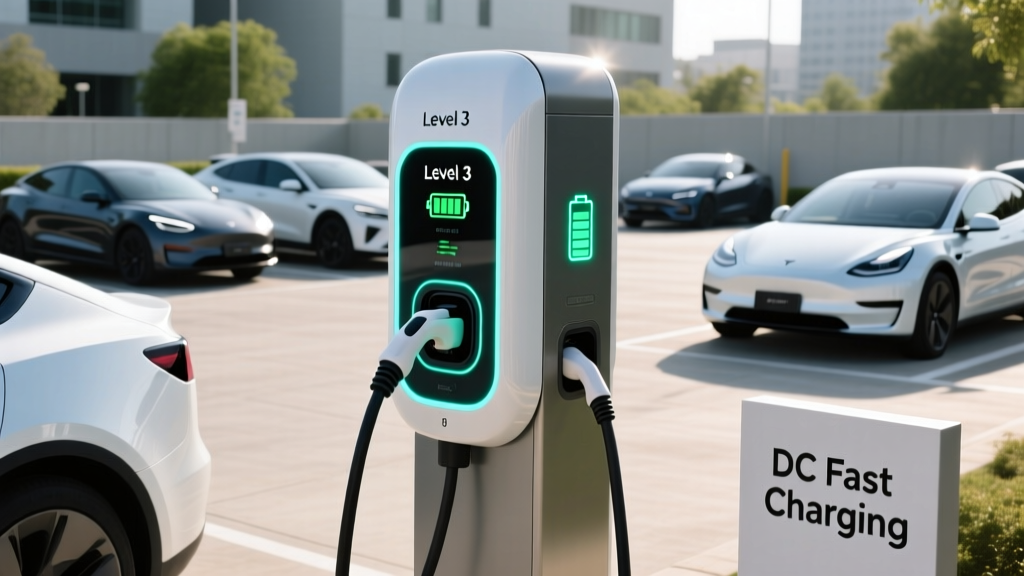
| DC Fast Charge | 400–800V DC | 50–350 kW | 150–1,000+ mi/hr (peak) | Road trips, quick top-ups; 10–80% in 15–35 min |
Real-world nuance: DC fast charging does not sustain peak kW for the entire session. A vehicle rated for a 250 kW peak may only hold that rate between ~10–40% State of Charge (SoC), then taper to protect the battery. Expect a typical 10–80% session on a modern 80–100 kWh battery to take 18–35 minutes depending on architecture (400V vs 800V) and ambient temperature. Cold weather can add 5–10 minutes due to reduced charge acceptance until the battery warms.
Home Charger Installation: Electrical Requirements, Permits, and True Costs
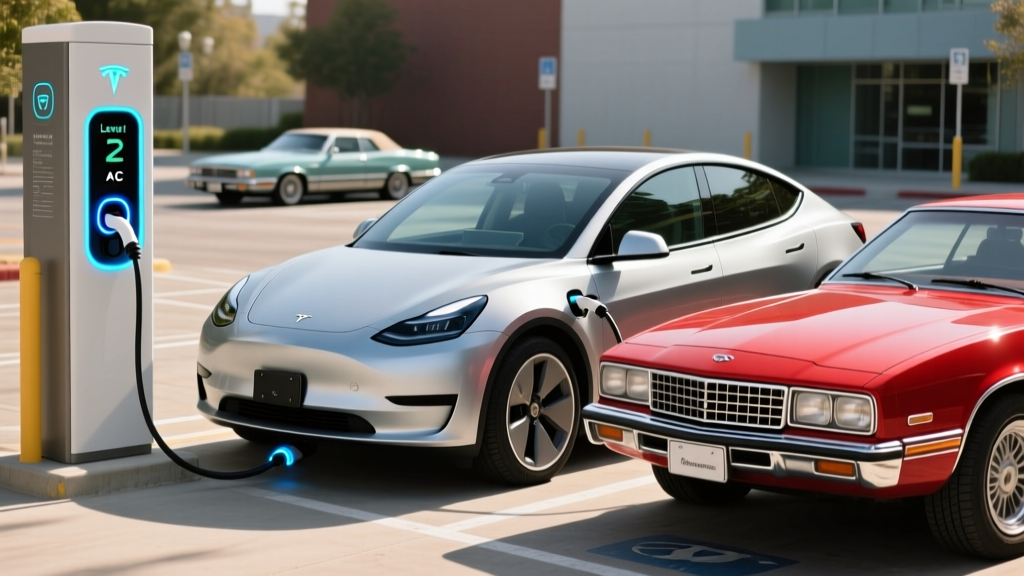
Level 2 home charging is the backbone of EV ownership. Most EV owners do 80–95% of their charging at home, waking up to a full "tank" every morning — something your old A6's 18-gallon gas tank could never match for convenience.
What the Circuit Needs
A typical Level 2 home charger runs on a 240V dedicated circuit, similar to what an electric dryer or oven uses. Common configurations:
- 40-amp circuit / 32-amp continuous charge = 7.7 kW (most common residential setup)
- 50-amp circuit / 40-amp continuous = 9.6 kW (ideal for larger batteries like the Ford F-150 Lightning or Rivian R1S)
- 60-amp circuit / 48-amp continuous = 11.5 kW (requires robust panel capacity; common for Tesla Wall Connector)
National Electrical Code (NEC) requires that continuous loads (like EV charging) use no more than 80% of a circuit's rated amperage. A 40A breaker therefore delivers 32A continuous. This is non-negotiable for safety and code compliance.
Installation Cost Breakdown
Costs vary widely based on your home's electrical panel age, distance from panel to garage, and local labor rates. Here's a realistic range for 2026:
| Item | Simple Install (panel nearby, no upgrade) | Complex Install (long run, panel upgrade) |
|---|---|---|
| Level 2 Charger Equipment (hardwired, 40–48A) | $400–$700 | $400–$700 |
| Electrician Labor | $300–$600 | $800–$1,500 |
| Electrical Permit | $50–$150 | $50–$200 |
| Panel Upgrade (100A → 200A, if needed) | N/A | $1,500–$3,500 |
| Conduit, Wiring, Misc. Materials | $50–$150 | $200–$500 |
| Total Estimated Cost | $800–$1,600 | $2,950–$6,400 |
Panel upgrade reality check: If your home has a 100-amp main panel (common in homes built before the 1990s), you may need an upgrade to 200 amps to safely add a 40–60A EV circuit alongside existing loads. This is the single biggest cost variable. Some utilities and states offer rebates of $200–$1,000 for panel upgrades tied to EV adoption — check your local utility's EV program page. A licensed electrician should perform a load calculation before you commit to a circuit size.
Safety and Code Considerations
- Dedicated circuit: Your EV charger must have its own breaker — never share with other appliances.
- GFCI protection: NEC 2020+ requires GFCI protection for outdoor receptacles; hardwired chargers typically bypass this requirement but check local amendments.
- Outdoor rating: If mounting outside, choose a NEMA 4-rated (weatherproof) enclosure. Most quality chargers (ChargePoint, Tesla, Emporia) are rated for indoor/outdoor use.
- Cable management: A 24-foot cable is standard; some chargers offer 25-foot options. Plan your mount location so the cable reaches your charge port without stretching across a driveway.
Connector Compatibility: NACS, CCS1, CHAdeMO, and Adapters
The connector landscape shifted decisively in 2024–2025 when Ford, GM, Rivian, Volvo, BMW, and most major automakers adopted the North American Charging Standard (NACS) — Tesla's connector — as their native port. By 2026, NACS is the dominant standard for new vehicles sold in North America.
| Connector | Native Vehicles | Adapter Required For |
|---|---|---|
| NACS (Tesla-style) | Tesla (all), Ford (2025+), GM (2025+), Rivian (2025+), Volvo, BMW, Hyundai (2026+), others | Older CCS-equipped EVs at NACS Superchargers (CCS→NACS adapter, ~$200–$300) |
| CCS1 (Combo) | Most 2020–2024 EVs (VW ID.4, Hyundai Ioniq 5 pre-2026, Kia EV6 pre-2026, Chevy Bolt) | NACS→CCS adapter to use Tesla Superchargers (~$200) |
| CHAdeMO | Nissan Leaf (legacy); effectively discontinued for new vehicles | No reliable adapter to CCS/NACS; CHAdeMO stations are declining |
If you're buying a new EV in 2026, it almost certainly has a NACS port natively. If you're buying a slightly used 2022–2024 EV, it likely has CCS1 and will need an adapter for Tesla Supercharger access (which opened to non-Tesla CCS vehicles starting in 2024 via the Magic Dock adapter at select stations, and via purchased adapters from automakers).
For home Level 2 charging, all non-Tesla EVs use a J1772 connector, while Teslas use a proprietary connector (or NACS on newer models). Most home chargers come with J1772; Tesla owners use the included Mobile Connector or a Wall Connector with an integrated Tesla plug. Adapters are inexpensive ($50–$150) and widely available.
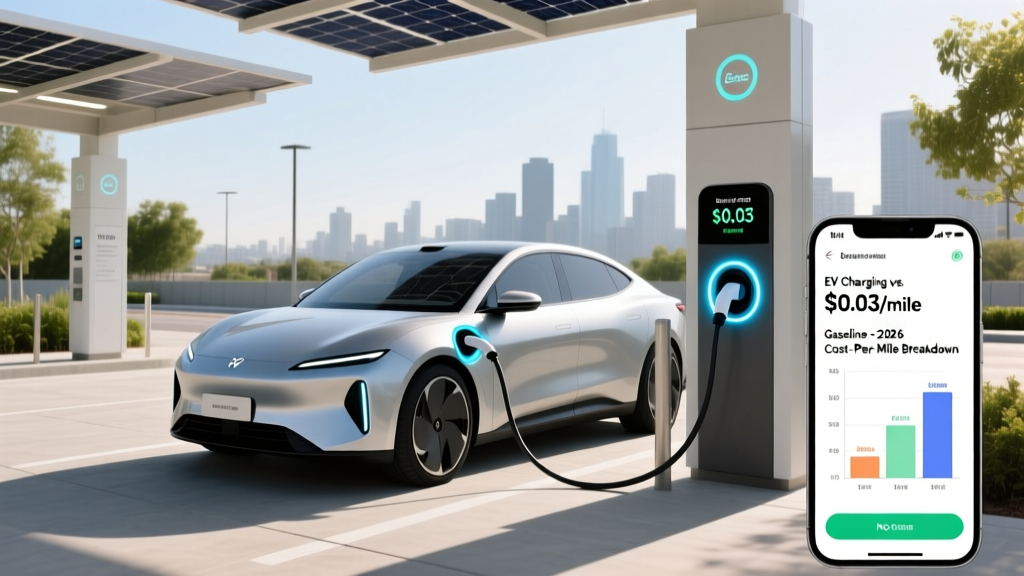
Cost to Charge: Per-Mile Economics vs. Your Old A6 Supercharged
The 2014 Audi A6 3.0T Supercharged gets an EPA-rated 18 city / 27 highway / 21 combined MPG. At $3.50/gallon (a reasonable 2026 national average for premium — the A6 requires 91+ octane), that's roughly $0.167 per mile in fuel alone.
Let's compare that to EV charging across common scenarios, using a typical EV efficiency of 3.0 miles per kWh (representative of vehicles like the Tesla Model Y, Hyundai Ioniq 5, or BMW i4):
| Scenario | Cost per kWh | Cost per Mile (at 3 mi/kWh) | Annual Fuel Cost (12,000 mi) |
|---|---|---|---|
| Home, off-peak utility rate | $0.08–$0.12 | $0.027–$0.040 | $320–$480 |
| Home, standard rate (no TOU plan) | $0.14–$0.18 | $0.047–$0.060 | $560–$720 |
| Public Level 2 (ChargePoint, EVgo L2) | $0.25–$0.40 | $0.083–$0.133 | $1,000–$1,600 |
| DC Fast Charging (Electrify America, Supercharger) | $0.30–$0.55 | $0.100–$0.183 | $1,200–$2,200 |
| 2014 Audi A6 3.0T (premium gas, 21 MPG) | $3.50/gal | $0.167 | $2,004 |
The takeaway: Home charging on a time-of-use (TOU) plan is 4–6× cheaper per mile than fueling the supercharged A6. Even exclusive DC fast charging roughly matches the A6's fuel cost — but most owners charge at home 80%+ of the time. Over five years and 60,000 miles, a home-charged EV saves $7,500–$9,500 in fuel costs compared to the A6 3.0T.
Charging Time Examples: What 10–80% Looks Like for Common Battery Sizes
Most EVs recommend charging to 80% on DC fast chargers to preserve battery health and avoid the slow taper above 80%. Here's what that looks like for popular 2026 models:
- Tesla Model Y Long Range (75 kWh usable, 250 kW peak): 10–80% in approximately 20–25 minutes at a V3/V4 Supercharger. Sustained rate averages ~120 kW due to taper.
- Hyundai Ioniq 5 (77.4 kWh, 800V architecture, 240 kW peak): 10–80% in approximately 18 minutes on a 350 kW-capable station. The 800V system sustains higher rates longer than 400V competitors.
- Ford F-150 Lightning Extended Range (131 kWh, 150 kW peak): 10–80% in approximately 40–45 minutes. Larger batteries take longer even at moderate charge rates.
- BMW i4 eDrive40 (81.5 kWh, 200 kW peak): 10–80% in approximately 30 minutes.
- Chevy Equinox EV (85 kWh, 150 kW peak): 10–80% in approximately 32–35 minutes.
For home Level 2 at 7.7 kW (40A circuit), expect to add roughly 25–30 miles of range per hour. A full overnight session (10 hours) replenishes 250–300 miles — more than enough for daily driving and most next-day road-trip starts.
Recommended Home Chargers for 2026
Not all Level 2 chargers are equal. Here are three proven options across price tiers, all hardwired-capable and outdoor-rated:
Budget Pick: Emporia Vue / Emporia Level 2 Charger
- Power Output: 40A / 9.6 kW (on a 50A circuit)
- Connector: J1772 (NACS adapter included with some bundles)
- Cable Length: 24 feet
- Smart Features: Wi-Fi, app scheduling, energy monitoring, solar integration
- Price: ~$399–$449
- Best for: Budget-conscious buyers who want smart scheduling and energy tracking
Mid-Range Pick: ChargePoint Home Flex (2nd Gen)
- Power Output: Up to 50A / 12 kW (configurable via DIP switch to match your circuit)
- Connector: J1772 (NACS version available for 2025+ vehicles)
- Cable Length: 25 feet
- Smart Features: Wi-Fi, Alexa/Google Home, flexible amperage, detailed app analytics
- Price: ~$599–$699
- Best for: Most homeowners; flexible amperage means it adapts to your panel capacity
Premium Pick: Tesla Wall Connector (Gen 4)
- Power Output: Up to 48A / 11.5 kW (on a 60A circuit)
- Connector: NACS native (J1772 adapter available for non-Tesla EVs)
- Cable Length: 24 feet
- Smart Features: Wi-Fi, over-the-air updates, load sharing (pair two units on one circuit), vehicle-specific charge limits
- Price: ~$450–$500
- Best for: Tesla owners or households with NACS-equipped EVs (Ford, GM, Rivian, BMW 2025+)
What Electrical Upgrades Might You Need?
Beyond the dedicated 240V circuit, here are scenarios that add cost or complexity:
- 100A → 200A panel upgrade: Required if your existing panel is near capacity. Cost: $1,500–$3,500. Timeline: may require utility coordination and a new meter base.
- Subpanel installation: If your garage is far from the main panel (e.g., detached garage), an electrician may install a subpanel closer to the charger. Cost: $400–$800.
- Trenching: For detached garages or long underground conduit runs: $500–$2,000 depending on distance and surface material.
- Smart panel / load management: Devices like the Emporia smart panel or Span drive panel can dynamically limit charger draw when other high-load appliances are running, avoiding a full panel upgrade. Cost: $500–$2,000 for the device and installation.
- Utility service upgrade: In rare cases (very old homes with 60A service), the utility must upgrade the service drop. This can take weeks and cost $1,000–$5,000 depending on your utility's policies.
Always get a load calculation from your electrician before choosing a circuit size. NEC Article 220 defines the methodology, and a proper calculation may reveal you have more headroom than you assumed — or less.
Frequently Asked Questions
How much does it cost to install a home EV charger?
A straightforward Level 2 installation (panel nearby, no upgrade needed) typically costs $800–$1,600 including equipment, electrician labor, and permit. If your home needs a 200A panel upgrade or a long conduit run, expect $2,950–$6,400. Get 2–3 quotes from licensed electricians; prices vary significantly by region.
How fast will each charging level add range?
Level 1 (120V) adds 3–5 miles per hour — adequate only for PHEVs or very low daily mileage. Level 2 (240V) adds 25–70 miles per hour depending on amperage, covering most daily needs overnight. DC fast charging adds 150–1,000+ miles per hour at peak, with typical 10–80% sessions taking 18–45 minutes depending on battery size and vehicle architecture.
Which connector or charger is compatible with my EV?
If you're buying a 2025–2026 model-year EV, it almost certainly uses NACS natively (Tesla, Ford, GM, Rivian, BMW, Volvo, Hyundai). Older 2020–2024 EVs typically use CCS1 and may need a $200–$300 adapter for Tesla Supercharger access. For home Level 2, all EVs accept J1772 (or Tesla's connector), and adapters are inexpensive. The Alternative Fuels Data Center maintains a station locator with connector filtering.
How much does charging cost per mile vs. gas?
Home charging on an off-peak utility rate ($0.08–$0.12/kWh) costs roughly $0.03–$0.04 per mile for a typical EV. Your 2014 Audi A6 Supercharged at 21 MPG combined on premium gas costs about $0.17 per mile in fuel. That's a 4–5× savings with home charging. Even public DC fast charging ($0.35–$0.55/kWh) is comparable to or slightly cheaper than the A6's fuel cost.
What electrical upgrades might I need?
The most common upgrade is a 100A to 200A panel replacement ($1,500–$3,500) if your existing panel lacks capacity for a 40–60A dedicated circuit. Other potential needs include a subpanel for detached garages, trenching for underground conduit, or a smart load-management device to avoid a panel upgrade entirely. A licensed electrician's load calculation is the definitive answer for your home.