If you're researching the 2013 Tesla range, you're likely considering a used Model S — one of the vehicles that launched the modern EV era. More than a decade later, these cars are still on the road, but their batteries have aged, charging standards have shifted, and the ecosystem around them has matured considerably. This guide covers exactly what to expect from a 2013 Model S in terms of real-world range, how to charge it efficiently at home and in public, what equipment you need, and what it all costs.
2013 Tesla Model S Range: EPA vs. Real-World Expectations
The 2013 Model S was offered with three battery configurations. Here's what the EPA rated them at when new, and what you should realistically expect today from a vehicle with 100,000+ miles and a decade of charge cycles.
| Variant | Battery (kWh) | EPA Range (New) | Expected Range Today (2026) |
|---|---|---|---|
| Model S 40 | 40 (software-limited 60) | 139 mi | ~95–115 mi |
| Model S 60 | 60 | 208 mi | ~155–180 mi |
| Model S 85 | 85 | 265 mi | ~195–230 mi |
Real-world caveat: Highway driving at 75+ mph reduces range by 15–20%. Cold weather (below freezing) can cut range another 20–30% due to cabin heating and reduced battery efficiency. These figures assume moderate degradation of 15–25%, which is typical for NMC cells of this vintage according to long-term fleet data.
The 85 kWh variant remains the most desirable for daily usability. If your commute is under 40 miles round-trip, even a degraded 60 kWh pack is workable — provided you have reliable home charging.
Charging Levels Explained: Speeds, Times, and What Each Adds
Understanding the difference between kW (power — the rate of energy delivery) and kWh (energy — the battery's total capacity) is essential. Think of kW as how fast water flows from a hose, and kWh as the size of the bucket you're filling.
| Level | Voltage | Max Power (kW) | Miles of Range Added/Hour | Best For |
|---|---|---|---|---|
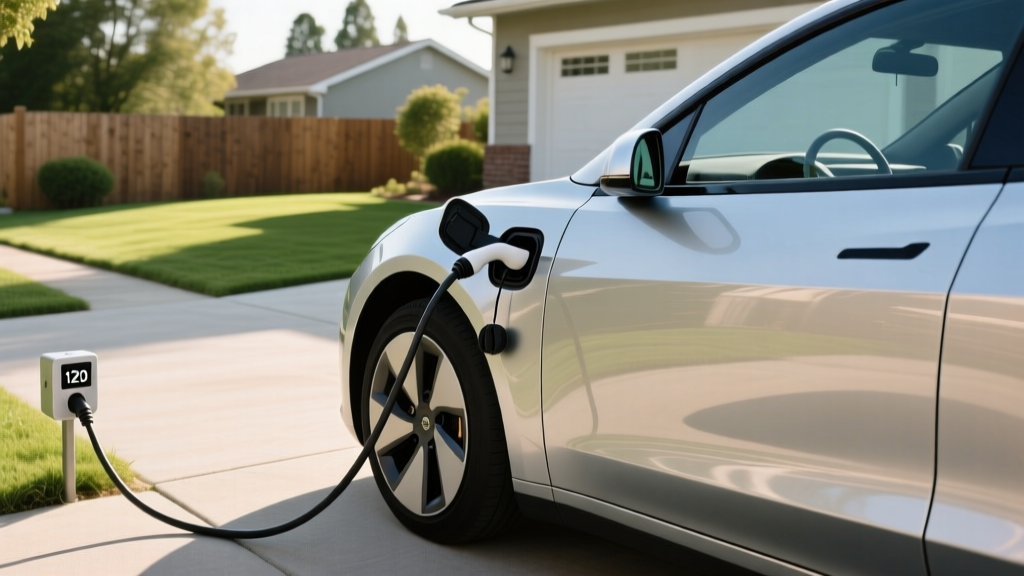
| Level 1 | 120V AC | 1.0–1.4 kW | 3–5 mi/hr | Overnight trickle, emergencies |
| Level 2 | 240V AC | 3.3–19.2 kW | 12–60 mi/hr | Daily home charging |
| DC Fast | 200–500V DC | 50–250+ kW | 150–800+ mi/hr | Road trips, quick top-ups |
Charging Time Examples for the 2013 Model S
The 2013 Model S has an onboard AC charger rated at 10 kW (single charger) or 20 kW (dual charger option). On DC fast charging, it maxes out around 90–120 kW via Tesla Superchargers — impressive for its era but modest by 2026 standards.
| Battery Size | Level 1 (1.2 kW) | Level 2 (10 kW, single charger) | Level 2 (20 kW, dual charger) | DC Fast (Supercharger, 10–80%) |
|---|---|---|---|---|
| 40 kWh | ~30 hours | ~3.5 hours | ~1.8 hours | ~35 minutes |
| 60 kWh | ~45 hours | ~5.5 hours | ~2.8 hours | ~40 minutes |
| 85 kWh | ~65 hours | ~8 hours | ~4 hours | ~50 minutes |
Note: DC fast charging follows a curve — peak rate (up to ~120 kW) is sustained only between roughly 10–50% State of Charge. Above 60%, the rate tapers significantly to protect the cells. A 10–80% session takes roughly 40–50 minutes depending on pack temperature and starting SoC.
Home Charger Installation: Electrical Requirements and Costs
For a 2013 Model S with the single onboard charger (10 kW), you need a 240V circuit capable of delivering at least 40 amps to get the full Level 2 speed. The dual-charger variant (20 kW AC) requires an 80-amp circuit — which most residential panels cannot support without an upgrade.
What Electrical Upgrades Might You Need?
- Standard 200-amp panel: Usually sufficient for a 40A or 50A dedicated EV circuit, assuming you don't have heavy simultaneous loads (electric range, dryer, HVAC all on the same panel).
- Older 100-amp panel: A panel upgrade to 200A may be required. This is one of the most expensive variables in EV charger installation.
- Permit: Most jurisdictions require an electrical permit for a new 240V circuit. Your electrician typically handles this.
- GFCI protection: The 2020 NEC (and subsequent codes) require GFCI protection for EV receptacles. Hardwired chargers may also require GFCI depending on local code interpretation.
| Item | Typical Cost Range |
|---|---|
| Level 2 charger (equipment) | $350–$700 |
| Electrician labor (standard install, 240V/50A) | $500–$1,500 |
| Electrical permit | $50–$200 |
| Panel upgrade (if needed, 100A → 200A) | $1,500–$3,500 |
| Total (no panel upgrade) | $900–$2,400 |
| Total (with panel upgrade) | $2,400–$5,900 |
Always get at least two quotes from licensed electricians. Ask specifically whether your panel has capacity for a dedicated 50A breaker — this is the single biggest cost variable. Some utilities offer rebates for home charger installation; check with your local provider.
Connector Compatibility: Tesla's Proprietary Plug, NACS, and Adapters
The 2013 Model S uses Tesla's proprietary connector (now formally known as NACS — North American Charging Standard). In 2013, this was the only option, and Tesla's Supercharger network was just beginning to expand.
By 2026, NACS has become the dominant standard in North America, adopted by Ford, GM, Rivian, Volvo, and most major automakers. This is actually excellent news for 2013 Model S owners: your car's native connector is now the industry standard for DC fast charging.
| Connector | Standard Use | 2013 Model S Compatibility |
|---|---|---|
| NACS (Tesla) | Tesla Superchargers, most new public DC chargers | Native — no adapter needed |
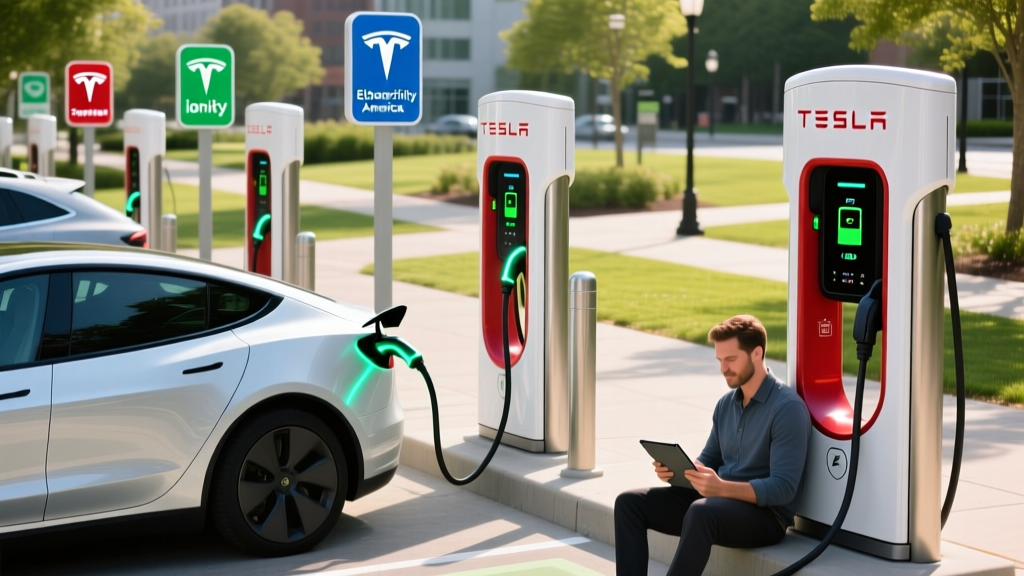
| CCS1 | Electrify America, EVgo, non-Tesla DC chargers | Requires CCS-to-NACS adapter (~$200–$250) |
| CHAdeMO | Legacy Nissan Leaf chargers (phasing out) | Tesla offered a CHAdeMO adapter (discontinued; used market ~$300–$400) |
| J1772 | Public Level 2 chargers (non-Tesla) | Tesla Mobile Connector includes J1772 adapter (included with car or ~$50 replacement) |
Key takeaway: The 2013 Model S charges natively at all Tesla Superchargers. For non-Tesla DC fast chargers (Electrify America, etc.), you'll need a CCS-to-NACS adapter. For public Level 2 stations with J1772 connectors, the J1772 adapter (which came with the car) is all you need.
Cost to Charge: Home vs. Public vs. Gas Comparison
One of the strongest arguments for keeping a 2013 Model S on the road is the fuel cost savings — even with an older battery. Here's a realistic breakdown based on 2026 energy prices.
| Scenario | $/kWh | Cost to Fill 85 kWh Pack | Cost Per Mile (230 mi range) |
|---|---|---|---|
| Home (off-peak utility rate) | $0.10–$0.15 | $8.50–$12.75 | $0.037–$0.055 |
| Home (standard residential rate) | $0.15–$0.20 | $12.75–$17.00 | $0.055–$0.074 |
| Public Level 2 (ChargePoint, etc.) | $0.25–$0.40 | $21.25–$34.00 | $0.092–$0.148 |
| Tesla Supercharger (DC fast) | $0.28–$0.40 | $23.80–$34.00 | $0.103–$0.148 |
| Gasoline equivalent (25 MPG avg, $3.40/gal) | — | $31.28 | $0.136 |
At home on off-peak rates, a 2013 Model S 85 costs roughly $0.04–$0.06 per mile to "fuel" — about one-third the cost of a comparable gas sedan. Even at Supercharger rates, you're paying roughly the same or slightly less than gasoline per mile, with the advantage of zero tailpipe emissions and far fewer maintenance requirements (no oil changes, no transmission fluid, minimal brake wear thanks to regenerative braking).
For context, the 2013 Model S 85 is rated at 89 MPGe combined by the EPA — equivalent to burning gasoline at 89 miles per gallon.
Recommended Home Charging Equipment for the 2013 Model S
Because the 2013 Model S uses the NACS connector natively, you have excellent options. Here are three chargers that pair well with this vehicle, ranging from budget to premium.
Tesla Wall Connector (Gen 3) — Best Overall
- Power output: Up to 11.5 kW (48A on a 60A circuit)
- Connector: NACS (native fit — no adapter)
- Cable length: 24 feet
- Smart features: Wi-Fi, OTA updates, load sharing with second unit, access control
- Price: ~$475
- Why it works: The single onboard charger in the 2013 Model S caps at 10 kW, so the Wall Connector delivers near-maximum AC speed. Seamless integration with Tesla's ecosystem.
Emporia Vue Level 2 Charger — Best Budget Smart Charger
- Power output: Up to 11.5 kW (48A)
- Connector: NACS (2025+ models) or J1772 with adapter
- Cable length: 24 feet
- Smart features: Energy monitoring, scheduling, solar integration, app control
- Price: ~$350–$400
- Why it works: Excellent energy-tracking for cost-conscious owners. Pairs well with home solar setups.
ChargePoint Home Flex — Most Versatile
- Power output: Up to 12 kW (50A, adjustable down to 16A for lower-capacity panels)
- Connector: NACS (2025+ models) or J1772 with Tesla adapter
- Cable length: 23 feet
- Smart features: App scheduling, Alexa integration, amperage flexibility
- Price: ~$550–$650
- Why it works: The adjustable amperage is ideal if your electrical panel is tight on capacity — you can set it to 32A or 40A without an electrician reconfiguring the circuit.
Safety note: All three units are UL-listed and rated for indoor/outdoor use. For outdoor installations, ensure the unit carries a NEMA 4 rating (weather-resistant). Your electrician should install a dedicated circuit — never share an EV charger circuit with other high-draw appliances. The National Electrical Code (NEC Article 625) governs EV charging installations; your licensed electrician will ensure compliance.
Public Charging and Road Trips in a 2013 Model S
The 2013 Model S benefits from full access to Tesla's Supercharger network — which, as of 2026, includes over 6,500 stations and 65,000+ stalls across North America. This is the single biggest ownership advantage over non-Tesla EVs of the same vintage.
However, plan road trips carefully:
- Range buffer: With a degraded 85 kWh pack (~200 miles real-world), plan Supercharger stops every 140–160 miles to maintain a comfortable buffer.
- Charging time: Expect 30–50 minutes per stop (10–80% SoC). Older packs charge more slowly at high SoC due to cell balancing needs.
- CCS adapters: If traveling in areas with limited Supercharger coverage, a CCS-to-NACS adapter (~$200–$250) opens up Electrify America and EVgo stations.
- Preconditioning: Navigate to a Supercharger using the car's built-in navigation. The Model S will begin warming the battery en route, which significantly improves charging speed — especially in cold weather. This is one of Tesla's most underrated features.
Frequently Asked Questions
How much does it cost to install a home EV charger for a 2013 Tesla Model S?
Expect $900–$2,400 for a standard installation (Level 2 charger + electrician + permit) if your electrical panel has sufficient capacity. If a panel upgrade from 100A to 200A is needed, add $1,500–$3,500. The Tesla Wall Connector (~$475) is the most cost-effective equipment choice since it uses the NACS connector natively.
How fast will each charging level add range to a 2013 Model S?
Level 1 (120V) adds roughly 3–5 miles per hour. Level 2 at 10 kW (single charger) adds about 29–35 miles per hour. DC fast charging at a Supercharger adds up to ~170 miles in 30 minutes under ideal conditions, though the charge curve tapers significantly above 60% SoC.
Which connector and charger is compatible with the 2013 Model S?
The 2013 Model S uses the NACS (Tesla) connector natively. It works directly with Tesla Superchargers, Tesla Wall Connectors, and the growing number of NACS-equipped public chargers. For CCS1 public chargers, a CCS-to-NACS adapter is required. For J1772 Level 2 public chargers, the J1772 adapter (originally included with the car) is needed.
How much does charging cost per mile compared to gasoline?
Home charging at off-peak rates costs approximately $0.04–$0.06 per mile — roughly one-third the cost of gasoline at $3.40/gallon and 25 MPG. Even Tesla Supercharging at $0.28–$0.40/kWh costs $0.10–$0.15 per mile, competitive with or cheaper than gas. See our EPA efficiency data for the 2013 Model S.
What electrical upgrades might I need for a home charger?
A 40A–50A dedicated 240V circuit is standard for Level 2 charging. If your home has an older 100-amp electrical panel, you may need a panel upgrade to 200 amps ($1,500–$3,500). Homes with modern 200A panels typically need only the new circuit and breaker. Always consult a licensed electrician for a load calculation before purchasing equipment.
Is the 2013 Model S battery eligible for replacement, and what does it cost?
Yes. Tesla offers battery replacement for the original Model S. As of 2026, a remanufactured 85 kWh pack costs approximately $12,000–$16,000 installed. Third-party EV shops also offer replacements at varying prices. The original battery warranty was 8 years/unlimited miles — which has expired for all 2013 vehicles. However, many packs are lasting 200,000+ miles with 15–25% degradation, making replacement unnecessary for many owners.
Does the 2013 Model S qualify for any tax credits or incentives in 2026?
The federal §30D new EV tax credit does not apply to a 2013 purchase. However, the used EV tax credit (up to $4,000 or 30% of sale price, whichever is lower) may apply if you purchase a qualifying used 2013 Model S from a dealer for $25,000 or less. Income caps apply: $75,000 single / $150,000 married filing jointly. Check current rules at IRS.gov. Eligibility depends on the specific sale price and your tax situation — consult a tax professional.
The Bottom Line on 2013 Tesla Range and Charging
The 2013 Model S remains a compelling used EV — especially the 85 kWh variant, which still delivers 195–230 real-world miles after a decade of use. Its native NACS connector is now the North American industry standard, giving it access to the largest and most reliable fast-charging network on the continent. Home charging on a Level 2 setup costs $900–$2,400 to install and delivers fueling at $0.04–$0.07 per mile — dramatically cheaper than gasoline.
The main risks are battery degradation (budget for potential replacement down the road) and the car's age (suspension, drive unit, and touchscreen electronics are the most common failure points). But for buyers with home charging access and a realistic range expectation, the 2013 Model S offers luxury-EV ownership at a fraction of the cost of a new vehicle.