The 2013 Nissan Leaf in 2026: What Owners Need to Know About Range and Charging
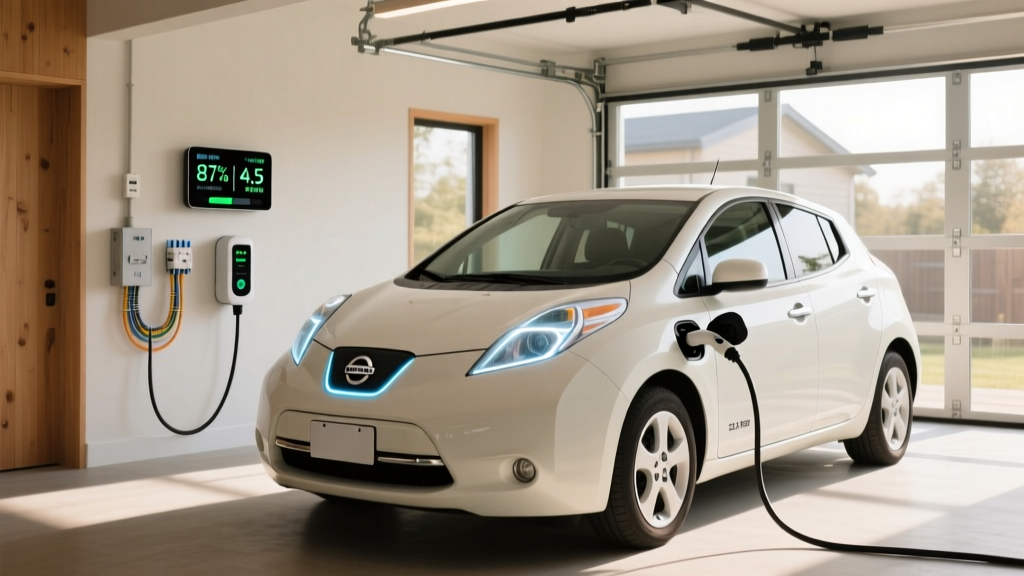
The 2013 Nissan Leaf was a landmark EV — one of the first mass-market battery-electric vehicles sold in the United States. More than a decade later, thousands of these cars remain on the road as affordable used EVs, second cars, and commuter runabouts. But if you're considering buying one, or you've just inherited one, understanding the 2013 Nissan Leaf range, its charging limitations, and how to set up home charging is critical to making ownership practical.
This guide covers the original EPA range, real-world expectations with battery degradation factored in, every charging level available to the 2013 Leaf, home Level 2 installation costs, connector compatibility (CHAdeMO), and what you'll actually pay per mile to drive it in 2026.
| Battery (usable) | 21.3 kWh (24 kWh gross), NMC lithium-ion |
| EPA Range (new) | 75 miles (84 miles for late-2013 models with updated software) |
| EPA Efficiency | 115 MPGe combined / 29 kWh/100 mi |
| Motor Output | 80 kW (107 hp), 187 lb-ft torque |
| 0-60 mph | ~9.9 seconds |
| Max DC Fast Charge | ~50 kW (CHAdeMO only) |
| Max AC Level 2 Charge | 3.3 kW (6.6 kW optional on SL trim) |
| Connector (AC) | J1772 |
| Connector (DC) | CHAdeMO (optional on S, standard on SV/SL) |
| Original MSRP (2013) | $28,800–$34,840 (before incentives) |
2013 Nissan Leaf Range: EPA Sticker vs. Real-World in 2026
When new, the 2013 Leaf carried an EPA-rated range of 75 miles for most production runs, bumped to 84 miles for late-2013 models that received a software update unlocking more usable battery capacity. According to fueleconomy.gov, the combined efficiency is 115 MPGe.
EPA range (new): 75–84 miles
Expected real-world range in 2026 (10+ year-old battery): 45–65 miles depending on State of Health (SoH). Highway driving at 70 mph may yield as little as 40 miles. Cold weather (below 40°F) can reduce range by an additional 20–35%.
Check the dashboard's battery capacity bars — a 2013 Leaf originally had 12 bars. If you see 9 or fewer, expect range toward the lower end.
The 2013 Leaf's 24 kWh battery pack (21.3 kWh usable when new) uses NMC (nickel manganese cobalt) chemistry. Over 10–13 years, these packs typically lose 20–35% of their original capacity depending on climate, charging habits, and how often the car was fast-charged or stored at 100% SoC. Nissan's original battery warranty was 8 years/100,000 miles against loss below 9 capacity bars — most 2013 Leafs are now well outside that window.
If you're evaluating a used 2013 Leaf, ask the seller for a LeafSpy reading (a popular third-party OBD-II app that reads the battery's actual State of Health percentage). A pack at 70% SoH will deliver roughly 52 miles of real-world range — adequate for short commutes but limiting for anything else.
Charging Levels Explained: How Fast Can a 2013 Leaf Charge?
Understanding the difference between kW (kilowatts — the rate of power delivery, like water pressure from a hose) and kWh (kilowatt-hours — the total energy stored, like the size of the bucket) is essential. Your 2013 Leaf's battery holds about 21.3 kWh of usable energy when new. The charger's kW rating determines how quickly that bucket fills.
| Level | Power (kW) | Miles of Range Added per Hour | Full Charge Time (0–100%) | Connector |
|---|---|---|---|---|
| Level 1 (120V outlet) | 1.2–1.4 kW | ~4–5 miles/hr | ~18–22 hours | J1772 (included trickle cable) |
| Level 2 (240V, base) | 3.3 kW | ~11–13 miles/hr | ~7 hours | J1772 |
| Level 2 (240V, optional 6.6 kW) | 6.6 kW | ~22–25 miles/hr | ~3.5–4 hours | J1772 |
| DC Fast (CHAdeMO) | Up to ~50 kW | ~80–100 miles/hr (peak) | ~30 min (0–80%) | CHAdeMO |
Important nuance: The 2013 Leaf's onboard charger is limited to 3.3 kW on the base S trim. Even if you plug into a 48-amp Level 2 station capable of delivering 11.5 kW, the Leaf will only accept 3.3 kW. The SL trim (and SV with the optional $1,800 charge package) includes a 6.6 kW onboard charger — a significant upgrade that cuts Level 2 charging time in half.
For DC fast charging, the Leaf uses the CHAdeMO standard and peaks around 50 kW — but only up to roughly 80% State of Charge. Above 80%, the charge rate tapers sharply to protect the battery. On a degraded 2013 battery, you may also see lower peak charge rates due to increased internal resistance.
Connector Compatibility: CHAdeMO in a NACS/CCS World
The connector landscape has shifted dramatically since 2013. Here's where the Leaf stands today:
| Connector Standard | Compatible with 2013 Leaf? | Notes |
|---|---|---|
| J1772 (Level 1 & 2 AC) | ✅ Yes — native | All public Level 2 stations and home chargers with J1772 connectors work directly. |
| NACS (Tesla/J3400) | ❌ No — adapter required | No widely available J1772-to-NACS adapter for AC charging as of 2026. Tesla destination chargers won't work without one. |
| CCS1 (DC Fast) | ❌ No — not compatible | CCS1 DC fast chargers (Electrify America, most non-Tesla networks) cannot charge a Leaf. No practical adapter exists. |
| CHAdeMO (DC Fast) | ✅ Yes — native | The Leaf's DC fast-charge port. However, CHAdeMO stations are increasingly rare in the US as networks standardize on CCS1/NACS. |
The CHAdeMO problem: In 2026, CHAdeMO infrastructure is shrinking. Electrify America has removed many CHAdeMO connectors from newer stations, and EVgo's CHAdeMO availability varies by location. Before relying on DC fast charging with a 2013 Leaf, use apps like PlugShare to verify CHAdeMO availability along your routes. For most 2013 Leaf owners in 2026, home Level 2 charging is the primary fueling strategy.
Home Level 2 Charger Installation: Electrical Requirements and Costs
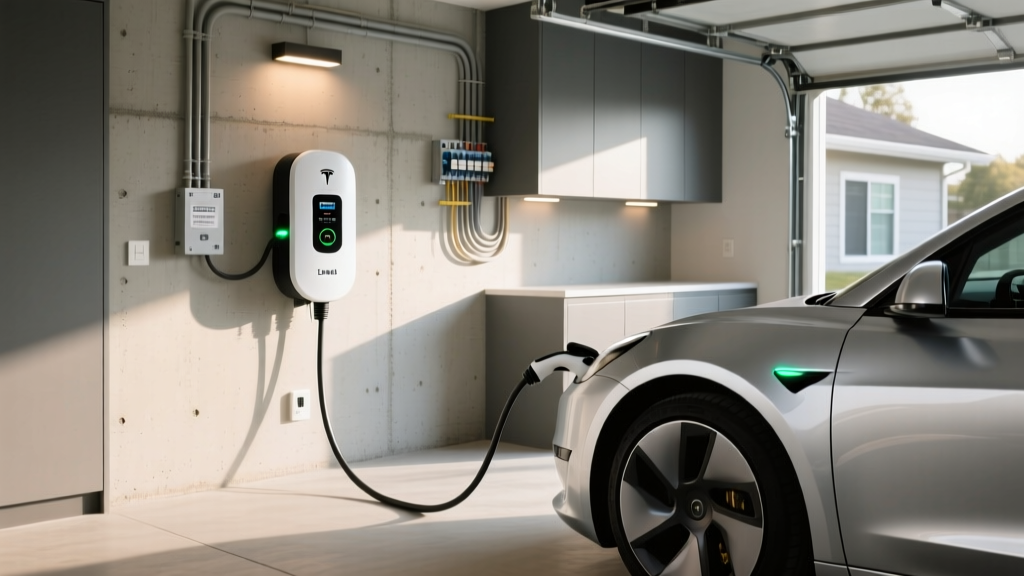
Installing a Level 2 home charger is the single most impactful upgrade for 2013 Leaf ownership. Here's what's involved:
Electrical requirements: A Level 2 charger requires a dedicated 240-volt circuit. For the 2013 Leaf's 3.3 kW onboard charger, a 20-amp circuit (delivering up to 3.8 kW) is sufficient. If your Leaf has the optional 6.6 kW charger, you'll want a 40-amp circuit (delivering up to 7.7 kW with headroom). The National Electrical Code (NEC) requires that continuous loads like EV charging use no more than 80% of a circuit's rated capacity — so a 40-amp breaker delivers a maximum continuous 32 amps (7.7 kW at 240V).
Panel upgrade possibility: Many homes built before 2000 have 100-amp electrical panels. Adding a 40-amp dedicated EV circuit to an already-loaded 100-amp panel may require a panel upgrade to 200 amps, which costs $1,500–$3,000 on its own. A licensed electrician will perform a load calculation to determine if your panel can handle the additional circuit. Do not skip this step — overloading a panel is a fire hazard.
| Component | Low Estimate | High Estimate | Notes |
|---|---|---|---|
| Level 2 Charger (equipment) | $200 | $650 | Varies by brand, amperage, smart features, cable length |
| Electrician labor (simple install) | $300 | $800 | Outlet or hardwire near panel, short conduit run |
| Electrician labor (complex install) | $800 | $2,000 | Long conduit run, trenching, sub-panel, garage wiring |
| Permit & inspection | $50 | $250 | Varies by municipality; some utilities bundle this |
| Panel upgrade (if needed) | $1,500 | $3,000 | 100A → 200A upgrade; not always required |
| Total (no panel upgrade) | $550 | $3,700 | Most homeowners pay $800–$1,500 for a straightforward install |
| Total (with panel upgrade) | $2,050 | $6,700 | Older homes with 100A service |
Level 2 Charger Recommendations for the 2013 Leaf
Because the 2013 Leaf's onboard charger caps at 3.3 kW (or 6.6 kW with the upgrade package), you don't need a 48-amp charger. However, buying a higher-amperage unit future-proofs your installation for a next EV. Here are practical picks:
Emporia Level 2 EV Charger
- Power: Up to 48 amps (11.5 kW at 240V)
- Connector: J1772 (NACS version available)
- Cable length: 24 ft
- Smart features: Wi-Fi, app scheduling, energy monitoring, solar integration
- Price: ~$350–$400
- Why for Leaf: Budget-friendly, energy monitoring helps track degraded battery efficiency
ChargePoint Home Flex
- Power: Configurable 16–50 amps (up to 12 kW)
- Connector: J1772 (NACS adapter available)
- Cable length: 23 ft
- Smart features: Wi-Fi, Alexa, app scheduling, amperage adjustable via dip switches
- Price: ~$550–$650
- Why for Leaf: Adjustable amperage lets you match your circuit exactly; UL-listed
Tesla Universal Wall Connector
- Power: Up to 48 amps (11.5 kW)
- Connector: NACS with integrated J1772 adapter
- Cable length: 24 ft
- Smart features: Wi-Fi, OTA updates, power sharing between two units
- Price: ~$599
- Why for Leaf: Built-in J1772 adapter means one charger serves both a Leaf and a future Tesla/NACS vehicle
Lectron V-BOX Pro (Budget Pick)
- Power: 40 amps (9.6 kW at 240V)
- Connector: J1772
- Cable length: 21 ft
- Smart features: Basic LED status, no Wi-Fi/app
- Price: ~$200–$250
- Why for Leaf: Lowest-cost UL-listed option; more than enough power for the Leaf's 3.3 or 6.6 kW limit
Cost to Charge a 2013 Leaf: Per-Mile Cost vs. Gasoline
The 2013 Leaf's efficiency is approximately 29 kWh per 100 miles (or about 3.45 miles per kWh). Here's what that translates to in dollars across different charging scenarios:
| Scenario | Rate ($/kWh or $/gal) | Cost per Mile | Annual Cost (10,000 mi) |
|---|---|---|---|
| Home charging (off-peak) | $0.09/kWh | $0.026 | $261 |
| Home charging (national avg) | $0.16/kWh | $0.046 | $464 |
| Public Level 2 (network) | $0.25/kWh | $0.073 | $725 |
| DC Fast Charging (CHAdeMO) | $0.35/kWh | $0.102 | $1,015 |
| Gas car (28 MPG, $3.40/gal) | $3.40/gal | $0.121 | $1,214 |
Even at public DC fast-charging rates, the 2013 Leaf costs less per mile than a 28 MPG gas car. At home off-peak rates, the Leaf's fuel cost is roughly one-fifth of the equivalent gas car. For a commuter driving 30 miles round-trip, five days a week, home charging a 2013 Leaf adds about $7–$13 per month to your electric bill.
Safety, Electrical Code, and Installation Best Practices
EV charging is a continuous high-draw load — your charger may run at full power for 4–7 hours straight. This places demands on your home's electrical system that a typical appliance never does. Key safety and code requirements:
- Dedicated circuit: Your Level 2 charger must be on its own dedicated breaker — never shared with other outlets or appliances.
- GFCI protection: The 2020 NEC (and most current local codes) requires GFCI protection for outdoor EV receptacles. Many hardwired chargers have built-in ground-fault protection, eliminating the need for a GFCI breaker. Check with your local inspector.
- Outdoor rating: If your charger is installed outdoors or in an unenclosed carport, it must carry a NEMA 4 (or IP65+) weather rating. All chargers recommended above meet this standard.
- Wire gauge: A 40-amp circuit requires 8 AWG copper wire; a 50-amp circuit requires 6 AWG. Your electrician will size wire to the breaker — do not undersize.
- Permit and inspection: Most jurisdictions require an electrical permit for a new 240V circuit. The inspection verifies wire gauge, breaker sizing, grounding, and proper mounting. Skipping the permit can void your homeowner's insurance coverage for electrical fires.
- NEMA 14-50 vs. hardwired: A NEMA 14-50 outlet gives you portability (take the charger when you move), but some jurisdictions now require GFCI breakers for 14-50 receptacles used for EV charging — adding $50–$150 in cost. Hardwired installations avoid this requirement and are often simpler for inspectors to approve.
Frequently Asked Questions
How much does it cost to install a home EV charger for a 2013 Nissan Leaf?
For a straightforward Level 2 installation (charger within 20 feet of your electrical panel, no panel upgrade needed), expect to pay $550–$1,500 total including equipment, electrician labor, and permit. Complex installations with long conduit runs can reach $2,000–$3,700. If your home needs a panel upgrade from 100A to 200A service, add $1,500–$3,000.
How fast will each charging level add range to a 2013 Leaf?
Level 1 (120V) adds roughly 4–5 miles per hour. Level 2 at 3.3 kW adds about 11–13 miles per hour. Level 2 at 6.6 kW (optional on SL/SV) adds about 22–25 miles per hour. DC fast charging at a CHAdeMO station can add up to 60 miles in 30 minutes, but availability of CHAdeMO stations is declining.
Which connector and charger are compatible with the 2013 Nissan Leaf?
For AC charging (Level 1 and Level 2), the Leaf uses the J1772 connector — the universal standard for non-Tesla EVs in North America. Any J1772 home charger or public Level 2 station will work. For DC fast charging, the Leaf requires CHAdeMO — a connector that is being phased out at most US public charging networks in favor of CCS1 and NACS.
How much does charging a 2013 Leaf cost per mile compared to gas?
At the US average residential electricity rate of ~$0.16/kWh, the Leaf costs about $0.046 per mile to fuel. A comparable 28 MPG gas car at $3.40/gallon costs about $0.121 per mile. That's a savings of roughly $750 per year for every 10,000 miles driven when charging at home.
What electrical upgrades might I need for a Level 2 charger?
The most common upgrade is a new dedicated 240V circuit (20-amp for 3.3 kW Leafs, 40-amp recommended for future-proofing). Homes with older 100-amp electrical panels may need a panel upgrade to 200 amps to safely accommodate the additional load. A licensed electrician will perform a load calculation per NEC Article 220 to determine if your existing panel has sufficient capacity. Always get a permit and inspection — this protects your home and insurance coverage.
Is the 2013 Leaf still practical as a daily driver in 2026?
It depends on your commute and battery health. A 2013 Leaf with a battery at 70–80% State of Health will deliver 50–65 real-world miles — enough for a sub-30-mile round-trip commute with margin. Home Level 2 charging is essential; relying on Level 1 (120V) trickle charging means 18+ hours for a full charge. The declining CHAdeMO fast-charging network makes road trips impractical. As a second car or dedicated commuter, the Leaf remains one of the cheapest EVs to own and operate in 2026.